
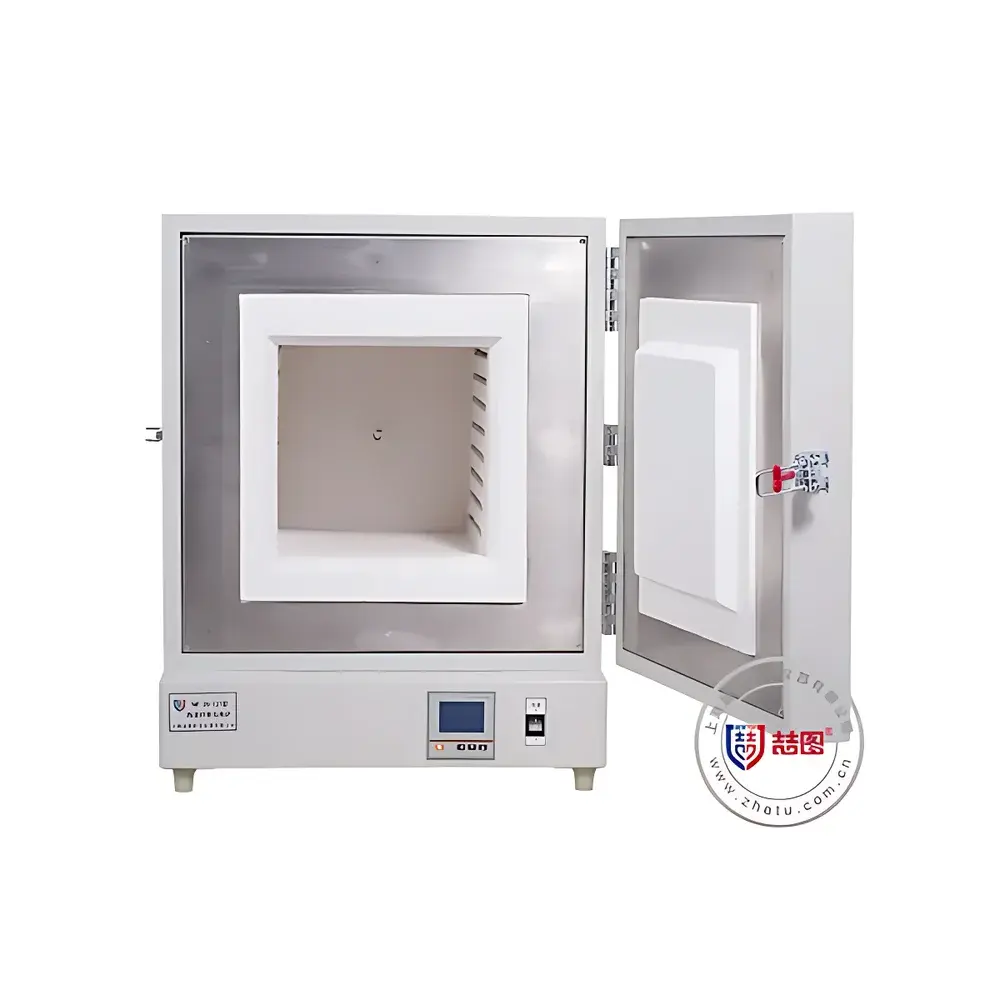
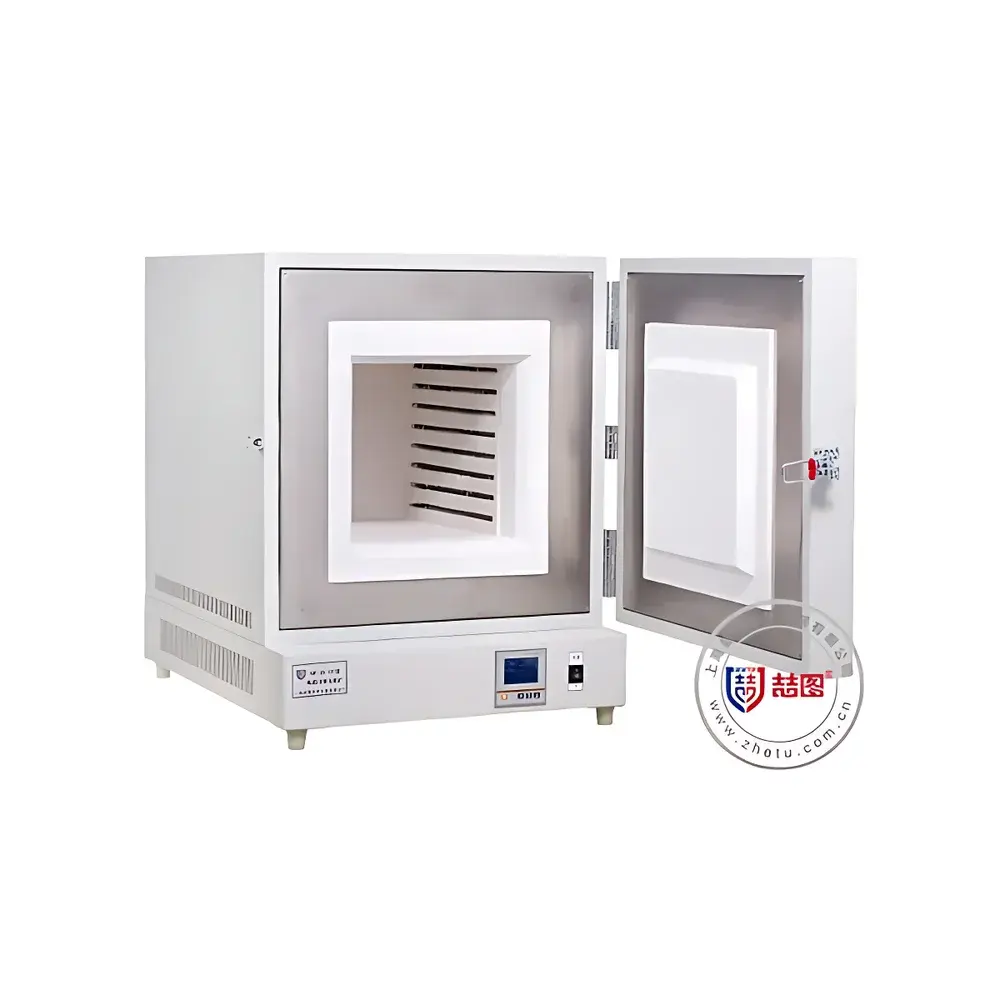
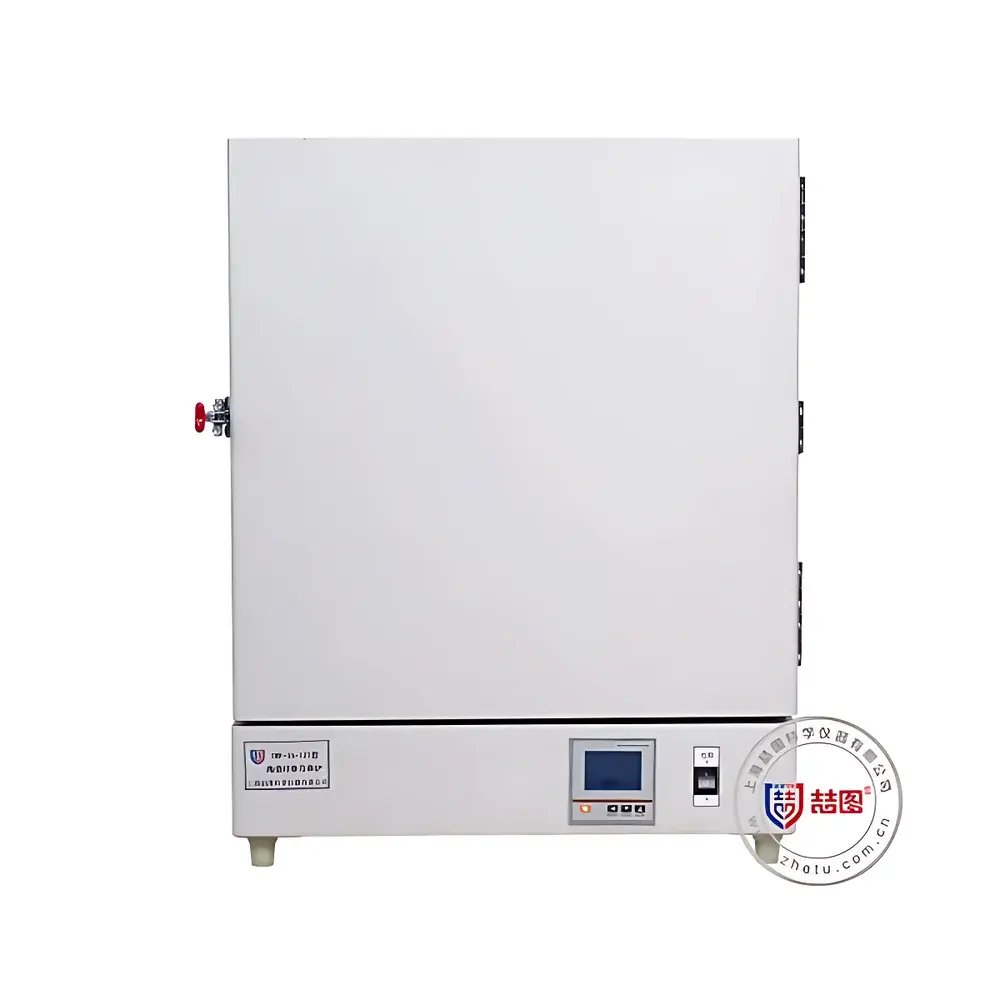
DRETOP TMF-120-14AI Ceramic Fiber Muffle Furnace
| Brand | DRETOP |
|---|---|
| Origin | Shanghai, China |
| Manufacturer Type | Direct Manufacturer |
| Instrument Type | Box-Type Muffle Furnace |
| Maximum Temperature | 1400 °C |
| Temperature Control Accuracy | ±1 °C |
| Rated Power | 26 kW |
| Heating Time to Max Temp | ≤60 min |
| Heating Element | Silicon Carbide Rods |
| Internal Chamber Dimensions | 450 × 600 × 450 mm |
| Nominal Volume | 120 L |
| Control Interface | Color Touchscreen (AI Series) |
| Compliance | CE-marked design principles |
Overview
The DRETOP TMF-120-14AI is a high-performance ceramic fiber box-type muffle furnace engineered for precision thermal processing in research laboratories, materials science facilities, and industrial quality control environments. Operating on resistive heating via silicon carbide rods, it delivers rapid, uniform, and highly stable temperature fields up to 1400 °C—optimized for applications demanding strict thermal reproducibility, such as ash content analysis (ASTM D3174, ISO 1171), ceramic sintering, powder metallurgy densification, and controlled atmosphere heat treatments. Its lightweight ceramic fiber insulation—comprising vacuum-microporous alumina-silica boards—ensures exceptional thermal efficiency, low external surface temperature (<50 °C at 1400 °C ambient), and minimized energy consumption relative to traditional refractory brick furnaces.
Key Features
- Advanced ceramic fiber chamber with stainless steel inner door frame and high-purity refractory挡热 plate at the furnace mouth to suppress heat loss and improve axial/radial temperature uniformity (±3 °C across working zone at 1300 °C).
- Intelligent AI-PID temperature controller with 30-segment programmable ramp/soak capability—enabling user-defined non-linear heating curves, multi-step annealing protocols, and automatic power-down upon cycle completion.
- Full-color capacitive touchscreen interface (7-inch diagonal) supporting real-time temperature curve visualization, parameter logging, and intuitive navigation without physical buttons or membrane switches.
- Dual-stage overtemperature protection: primary electronic cut-off triggered at user-set limit; secondary independent mechanical safety switch activated by bimetallic sensor—both compliant with IEC 61000-4-2 EMC and EN 60519-2 electrical safety standards.
- Integrated ambient temperature compensation algorithm automatically adjusts initial ramp rate based on measured room temperature, reducing pre-heat latency and improving inter-batch repeatability.
- Rugged enclosure fabricated from phosphate-treated cold-rolled steel with electrostatically applied matte gray epoxy coating—resistant to thermal cycling-induced flaking and laboratory chemical splashes.
- Modular internal architecture with detachable heating element mounts and front-accessible terminal blocks simplifies maintenance and extends service life of silicon carbide rods (rated for >3000 cycles at 1400 °C).
Sample Compatibility & Compliance
The TMF-120-14AI accommodates standard crucibles (alumina, quartz, graphite, Pt–Rh), ceramic setters, and custom fixtures within its 120 L workspace. It supports inert gas purging (via optional N₂/Ar inlet valve) and active fume extraction (via rear-mounted exhaust port compatible with 100–150 mm ducting), making it suitable for ASTM E1111-compliant combustion residue analysis and USP heavy metal testing. While not certified to FDA 21 CFR Part 11 out-of-the-box, its data logging system (with timestamped CSV export via USB) meets ALCOA+ principles for audit-ready records when paired with validated SOPs. All electrical components conform to IEC 61000-3-2 harmonic emission limits and RoHS 2.0 material restrictions.
Software & Data Management
The embedded firmware includes an on-device historian storing ≥10,000 temperature/time stamps with millisecond resolution. Optional RS485 Modbus RTU interface enables integration into LabVantage, Empower, or custom SCADA systems for centralized thermal process monitoring. The included PC software (Windows/macOS compatible) provides graphical overlay of multiple runs, deviation analysis against setpoints, and PDF report generation—including operator ID, batch number, and calibration certificate references. Audit trail functionality logs all parameter changes with user credentials and timestamps—supporting GLP-compliant validation per ISO/IEC 17025 Clause 7.8.2.
Applications
- Thermal gravimetric analysis (TGA) sample preparation and residue quantification
- Sintering of advanced ceramics (ZrO₂, SiC, AlN), battery cathode precursors (NMC, LFP), and ferrite powders
- Heat treatment of metallic alloys: solution annealing, stress relieving, and tempering per AMS 2750E pyrometry requirements
- Crucible-based fusion for XRF sample preparation (ISO 20058)
- Controlled oxidation studies of nanomaterials and thin-film substrates
- Calibration of thermocouples and reference standards under ISO/IEC 17025-accredited conditions
FAQ
What is the maximum recommended continuous operating temperature?
The furnace is rated for continuous operation at 1300 °C; 1400 °C is specified as short-term peak capability (≤2 hours per cycle) to preserve insulation integrity and heating element longevity.
Does the unit include factory calibration documentation?
Yes—each TMF-120-14AI ships with a NIST-traceable calibration certificate covering three points (600 °C, 1000 °C, 1300 °C) verified using Class 1 platinum resistance thermometers per ASTM E220.
Can this furnace be integrated into a nitrogen glovebox environment?
Yes—when equipped with the optional inert gas inlet valve and sealed feedthrough ports, it achieves leak rates <1×10⁻³ mbar·L/s, enabling direct coupling to argon/nitrogen-purged enclosures per ISO 10648-2 Class 3 specifications.
Is remote monitoring supported via Ethernet or Wi-Fi?
Ethernet connectivity is available via optional RS485-to-Ethernet gateway (sold separately); native Wi-Fi is not supported due to electromagnetic interference constraints in high-power thermal environments.
What maintenance intervals are recommended for silicon carbide heating elements?
Visual inspection every 200 operational hours; resistance measurement every 500 hours; replacement advised when cold resistance deviates >15% from initial value or visible cracking appears on rod surfaces.



