
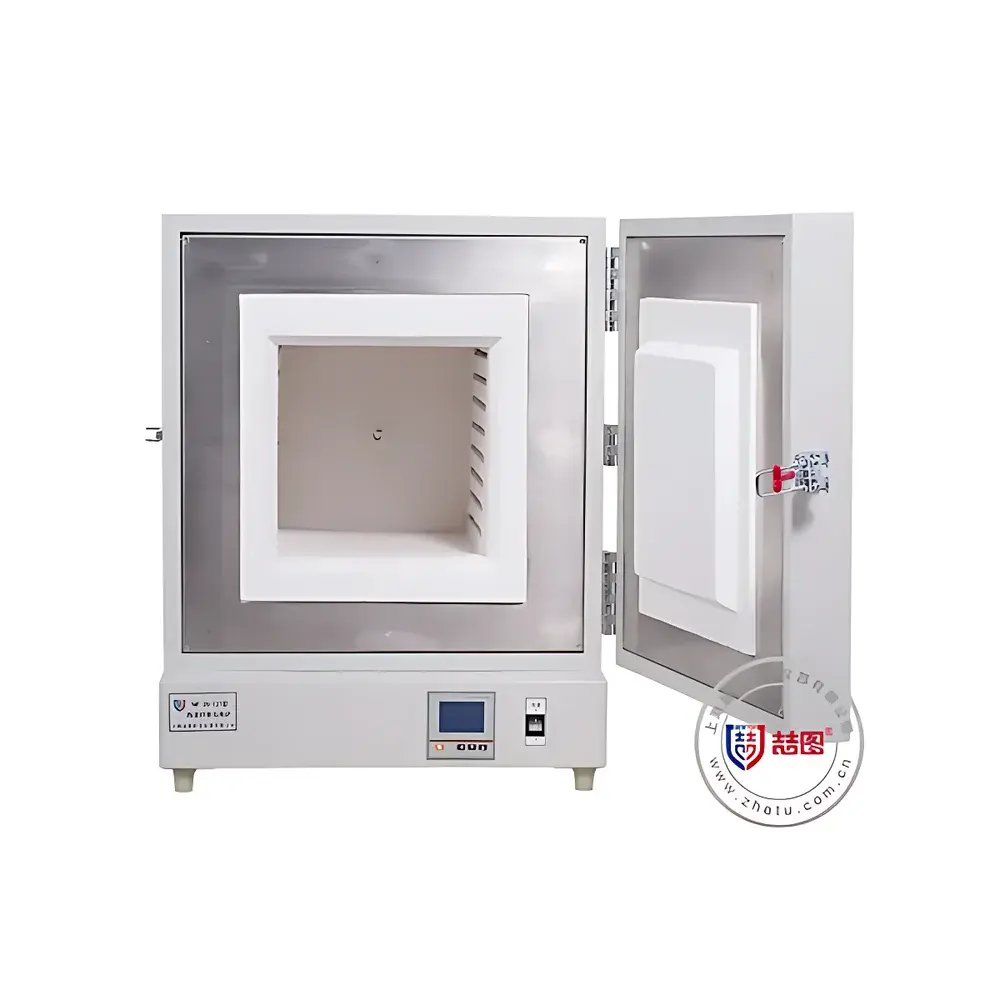
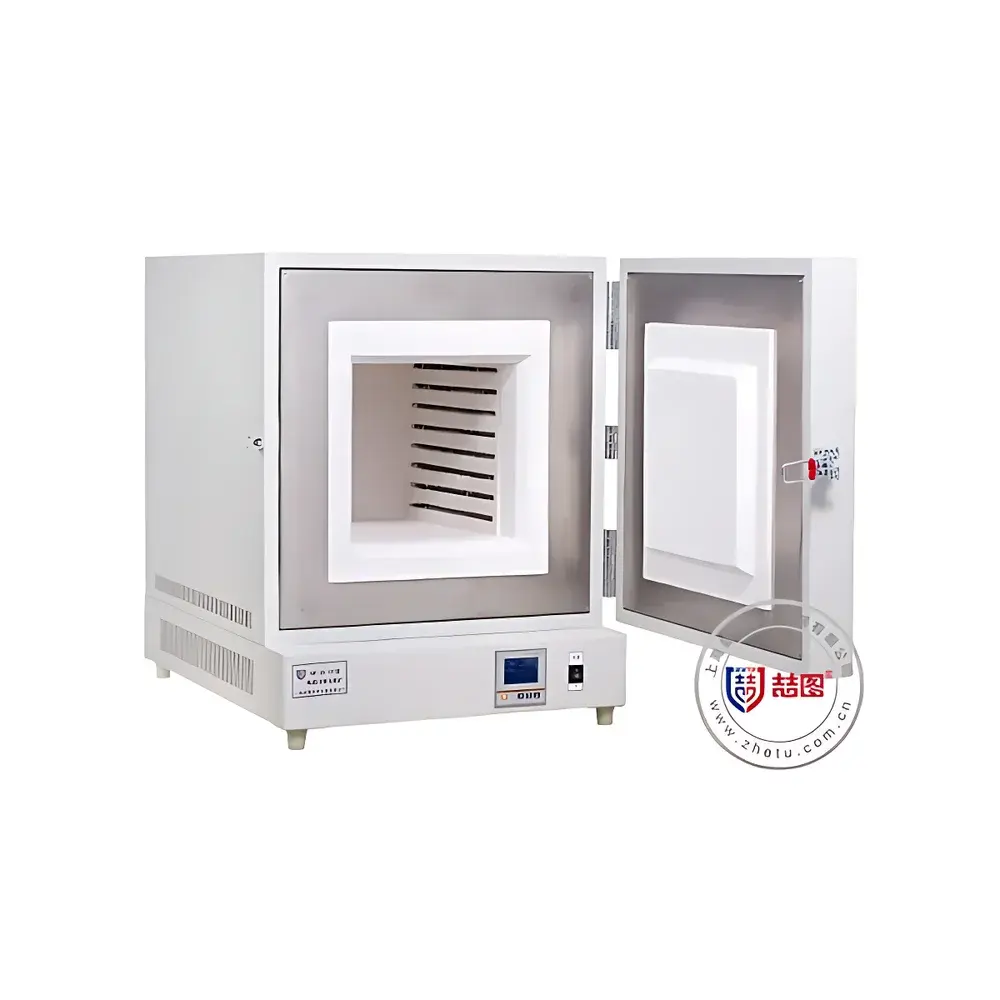
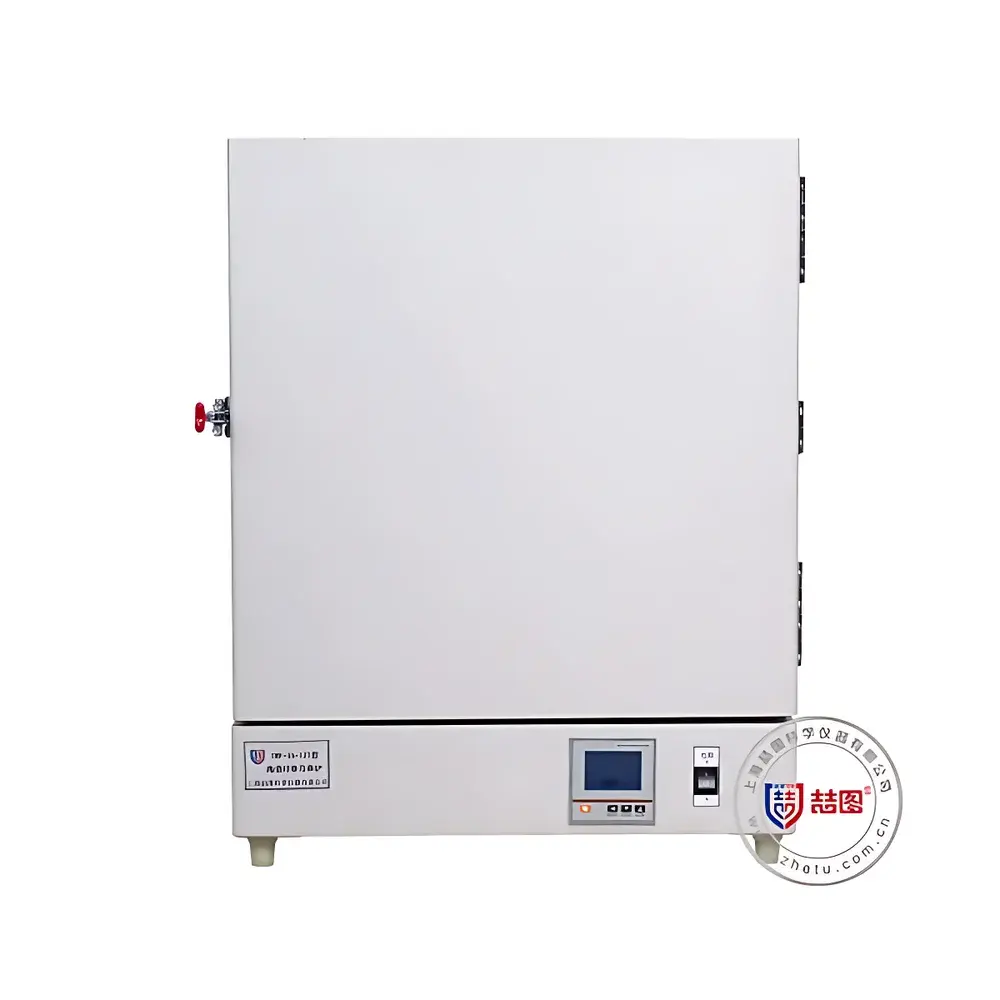
DRETOP TMF-120-14TP Ceramic Fiber Muffle Furnace
| Brand | DRETOP |
|---|---|
| Origin | Shanghai, China |
| Manufacturer Type | Direct Manufacturer |
| Product Category | Domestic |
| Model | TMF-120-14TP |
| Instrument Type | Box-Type Muffle Furnace |
| Maximum Temperature | 1400 °C |
| Temperature Control Accuracy | ±1 °C |
| Rated Power | 26 kW |
| Heating Time to Max Temp | 60 min |
| Heating Element | Silicon Carbide Rods |
| Internal Chamber Dimensions | 450 × 600 × 450 mm |
| Control System | Programmable LCD Controller |
| Nominal Volume | 120 L |
Overview
The DRETOP TMF-120-14TP Ceramic Fiber Muffle Furnace is a high-performance, front-loading box-type thermal processing system engineered for precision temperature control and rapid thermal response in demanding laboratory and industrial R&D environments. Utilizing a lightweight, low-thermal-mass ceramic fiber insulation structure—vacuum-formed micro-porous boards with high emissivity and low thermal conductivity—the furnace achieves exceptional energy efficiency and superior thermal uniformity across its 120 L working chamber. Unlike traditional refractory brick furnaces, this design eliminates thermal lag, reduces standby power consumption by up to 40%, and enables stable operation at up to 1400 °C with minimal external surface temperature rise (<50 °C above ambient at rated conditions). The heating mechanism relies on dual-zone silicon carbide (SiC) rods arranged symmetrically within the chamber walls, delivering uniform radiant heat distribution and minimizing axial and radial temperature gradients (±3 °C within ±25 mm of setpoint at 1400 °C, per ASTM C177-22 calibration protocol). Its structural architecture complies with IEC 61000-6-3 (EMC emissions) and IEC 61000-6-2 (immunity), ensuring stable integration into shared laboratory infrastructure.
Key Features
- Integrated programmable controller with 30-segment ramp-soak profiles, supporting linear, stepwise, and custom-slope thermal cycles—including automatic start/stop, hold-to-completion, and slope correction algorithms;
- Ceramic fiber chamber lined with stainless steel inner door frame and reinforced alumina-silica refractory baffle plates at the furnace mouth to suppress convective heat loss and improve zone stability;
- Intelligent PID temperature regulation with auto-tuning, real-time environmental temperature compensation, and dual-stage overtemperature protection (mechanical cut-off + digital alarm shutdown);
- Robust cold-rolled steel outer casing treated with phosphate conversion coating and electrostatically applied matte-gray high-temp powder coating (ISO 2093 Class 2 corrosion resistance);
- Modular internal geometry accommodating standard crucibles (up to Φ200 mm × 300 mm height), boat trays, and custom fixtures—compatible with ISO/IEC 17025-compliant sample loading protocols;
- Embedded safety interlocks: door-open power cutoff, memory retention during power interruption (with auto-resume on restoration), and fail-safe cooling logic preventing thermal shock to samples;
- Low thermal inertia design enabling ≤60 min ramp from ambient to 1400 °C while maintaining ±1 °C steady-state accuracy (verified per ISO 8573-1:2010 thermal mapping procedure).
Sample Compatibility & Compliance
The TMF-120-14TP supports a broad spectrum of thermally sensitive and high-stability materials including ceramic powders (e.g., Al₂O₃, ZrO₂, SiC), metallurgical alloys (Fe-Ni-Cr, Ti-6Al-4V), graphite-based composites, and inorganic oxides used in catalyst synthesis. It meets essential requirements for GLP-compliant thermal treatment workflows, including traceable calibration records (NIST-traceable S-type thermocouple input), audit-ready event logging (power status, temperature deviation >±2 °C, door state), and compatibility with FDA 21 CFR Part 11–enabled data archiving when paired with optional RS485/USB-connected software. All electrical components conform to UL 61010-1 and CE EN 61010-1 safety standards; furnace operation adheres to ISO 9001:2015 manufacturing controls and ISO/IEC 17025 validation support documentation.
Software & Data Management
The programmable LCD interface provides real-time display of setpoint, actual temperature, segment number, elapsed time, and remaining soak duration—all visible simultaneously without menu navigation. Optional AI-series firmware (available as field-upgrade) adds color touchscreen operation, graphical temperature curve visualization, embedded trend logging (≥10,000 points), and direct USB export of CSV-formatted datasets. When integrated with DRETOP’s LabLink™ PC software (Windows 10/11 compatible), users gain access to remote monitoring, multi-furnace synchronization, automated report generation (PDF/Excel), and electronic signature-enabled batch record compliance aligned with GMP Annex 11 principles. Communication modules support Modbus RTU over RS485 and TCP/IP Ethernet for SCADA integration.
Applications
This furnace is routinely deployed in accredited laboratories for: ash content determination (ASTM D3174, ISO 1171), loss-on-ignition (LOI) analysis of geological and environmental samples; sintering of advanced ceramics and battery cathode precursors (e.g., NMC, LFP); controlled oxidation/reduction annealing of thin-film substrates; thermal gravimetric pre-conditioning prior to XRD or SEM analysis; and heat treatment validation for aerospace-grade superalloys (per AMS 2750E pyrometry requirements). Its rapid ramp capability and tight uniformity make it especially suitable for process development in powder metallurgy, nuclear fuel pellet fabrication, and optical glass devitrification studies.
FAQ
What type of thermocouple is used for temperature sensing?
The furnace uses an S-type (Platinum-10% Rhodium / Platinum) thermocouple mounted in a ceramic protection tube, certified to ITS-90 traceability and calibrated annually per ISO/IEC 17025.
Is inert atmosphere operation supported?
Yes—optional inlet/outlet gas ports accommodate argon, nitrogen, or forming gas (5% H₂/95% N₂) flow control via externally regulated mass flow controllers (MFCs), with leak-tested flange connections meeting ISO 15848-1 Class A tightness.
Can the furnace be validated for IQ/OQ/PQ protocols?
DRETOP supplies full validation documentation packages—including FAT/SAT reports, sensor calibration certificates, thermal mapping data (9-point grid), and installation qualification checklists—for seamless integration into regulated quality systems.
What maintenance intervals are recommended?
Silicon carbide rods require visual inspection every 200 operating hours; ceramic fiber integrity should be verified annually using infrared thermography to detect hot spots indicative of localized degradation.
Does the unit comply with European RoHS and REACH directives?
Yes—material declarations (IMDS/SDS) and substance restriction compliance statements are provided with each shipment, confirming absence of lead, cadmium, mercury, hexavalent chromium, PBBs, and PBDEs.



