
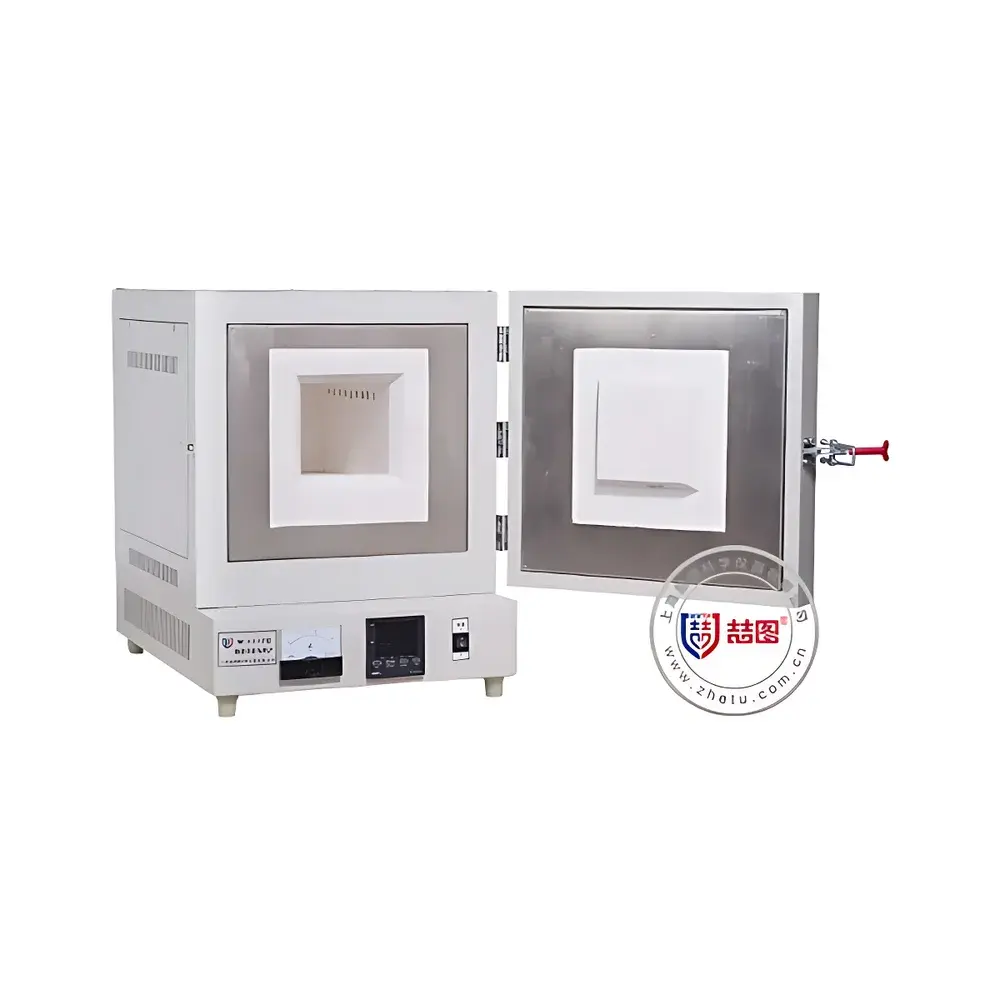
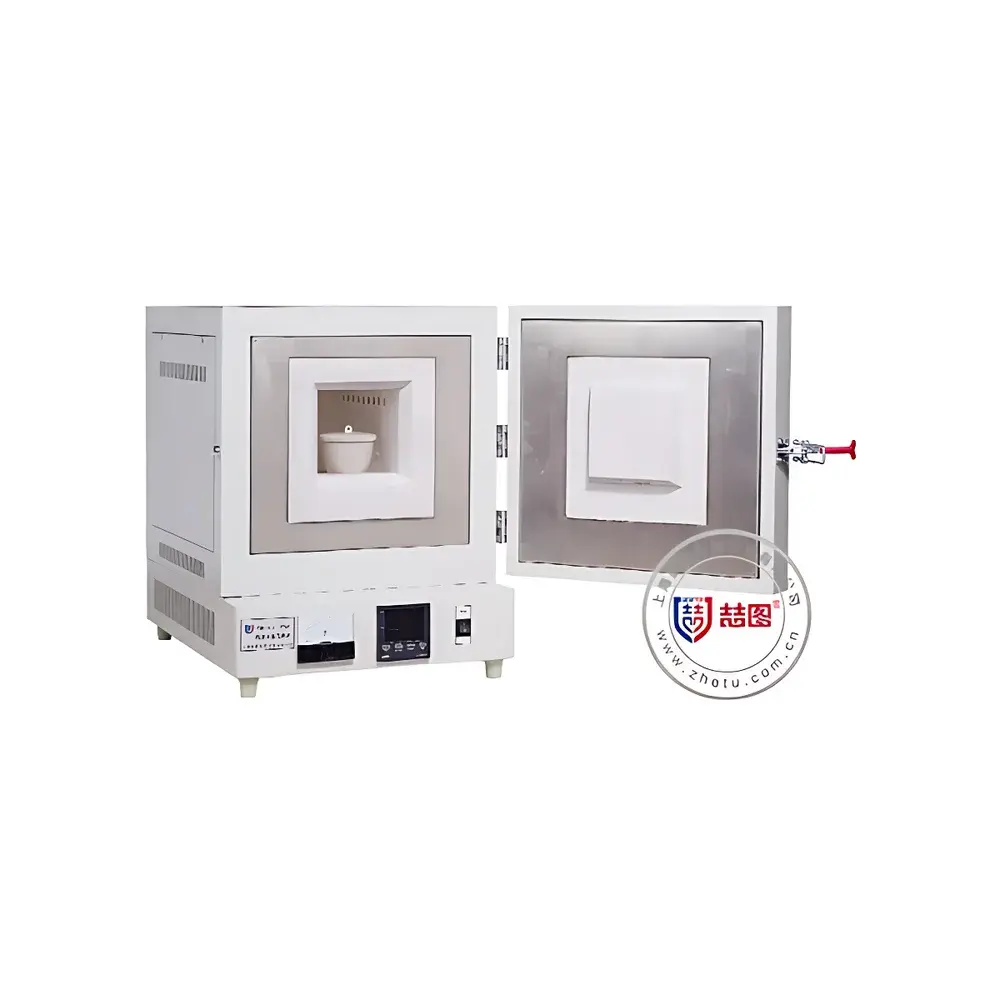
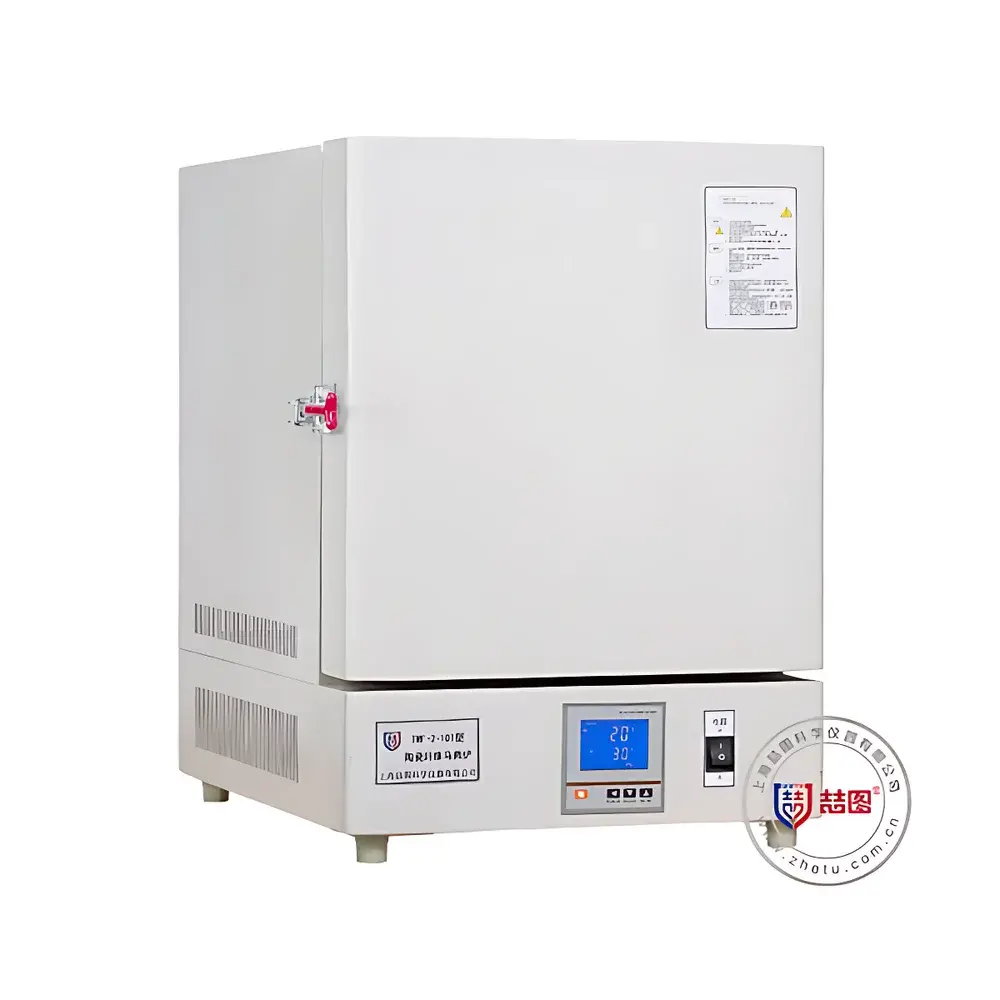
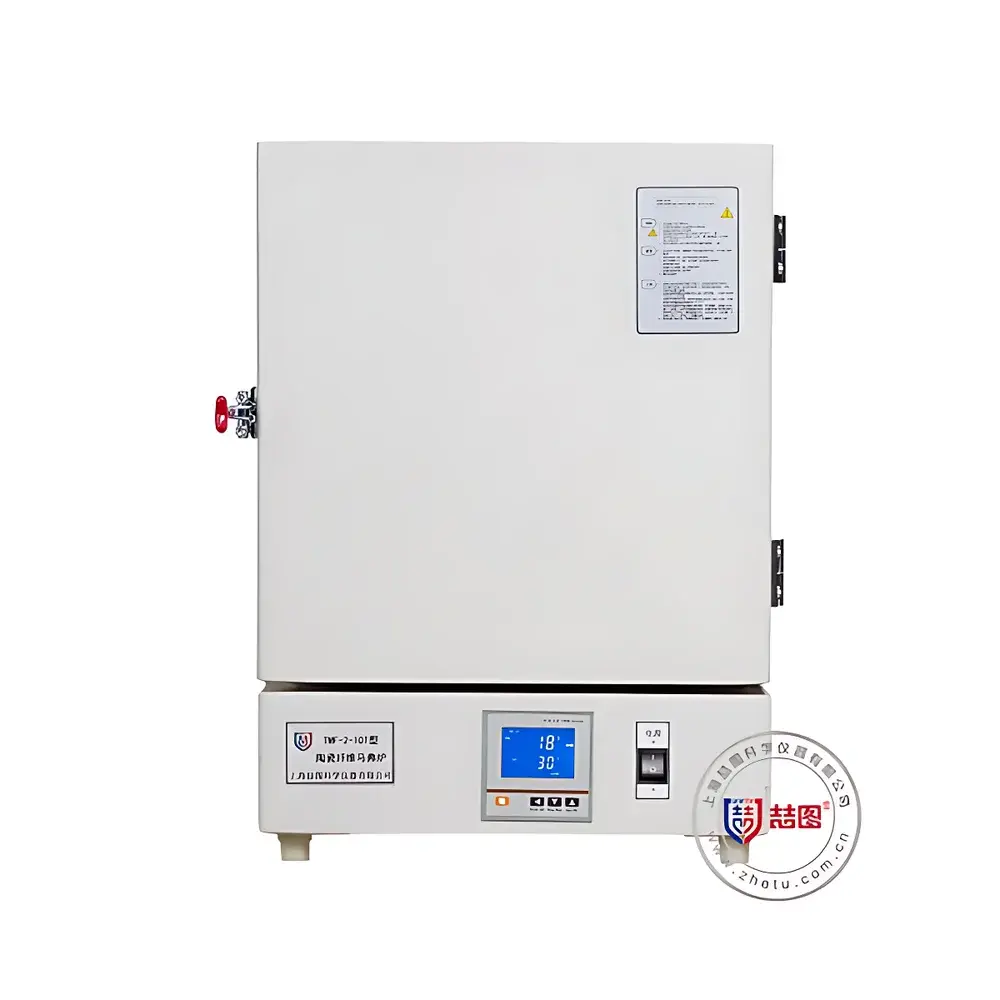
DRETOP TMF-2-12TP Programmable Muffle Furnace
| Brand | DRETOP |
|---|---|
| Origin | Shanghai, China |
| Manufacturer Type | Direct Manufacturer |
| Instrument Type | Box-Type Muffle Furnace |
| Maximum Temperature | 1200 °C |
| Temperature Control Accuracy | ±1 °C |
| Rated Power | 3 kW |
| Heating Time to Max Temp | 45 min |
| Heating Element Material | High-Temperature Alloy |
| Internal Chamber Dimensions | 120 × 200 × 80 mm |
| Control System | Microcomputer-Based P.I.D Controller with 30-Stage Programmability |
| Nominal Volume | 2 L |
| Insulation Material | Vacuum-Microporous Ceramic Fiber Board |
| Heating Configuration | Triple-Wall Radiant Heating (Front, Back, Top) |
| Safety Features | Dual-Stage Over-Temperature Protection, Door-Interlocked Power Cut-off, Automatic Ambient Temperature Compensation, Voltage/Current Digital Monitoring,断电记忆功能 (Power-Failure Memory) |
Overview
The DRETOP TMF-2-12TP Programmable Muffle Furnace is a compact, high-performance box-type laboratory furnace engineered for precise thermal processing across materials science, metallurgy, ceramics, and analytical chemistry applications. Designed around a vacuum-microporous ceramic fiber insulation architecture, it eliminates traditional refractory brick mass and associated thermal inertia—enabling rapid, energy-efficient heating to 1200 °C with exceptional thermal uniformity and minimal heat loss. Its triple-wall radiant heating configuration—achieved via helically wound high-temperature alloy elements embedded in the front, back, and top furnace walls—ensures symmetrical heat flux distribution across the 2 L chamber (120 × 200 × 80 mm), critical for reproducible sintering, ashing, annealing, and calcination protocols. Unlike conventional muffle furnaces, the TMF-2-12TP integrates real-time ambient temperature sensing to dynamically adjust ramp initiation, reducing total cycle time without compromising setpoint fidelity.
Key Features
- Microcomputer-based P.I.D temperature controller with 30-stage programmability—supports customizable ramp rates, dwell times, cooling profiles, and auto-termination.
- Dual-level over-temperature protection: primary electronic cut-off at user-defined limit + secondary independent mechanical safety thermostat with fail-safe latching.
- Door-interlocked power interruption system: heating ceases instantly upon door opening; resumes automatically upon closure—ensuring operator safety and thermal stability during sample insertion/removal.
- Vacuum-microporous ceramic fiber chamber lining (density < 200 kg/m³) provides superior thermal insulation, low thermal mass, and resistance to thermal shock—maintaining structural integrity after repeated cycling to 1200 °C.
- Triple-wall radiant heating geometry ensures ±3 °C temperature uniformity across the working zone (per ASTM E220-22 Annex A1 methodology), verified at 1000 °C and 1200 °C.
- Integrated digital voltage and current meters enable real-time electrical diagnostics—facilitating preventive maintenance and compliance with lab equipment validation SOPs.
- Phosphate conversion coating + high-temp epoxy powder coating on carbon steel housing delivers corrosion resistance and long-term dimensional stability under laboratory environmental conditions.
- Front-mounted control panel with large LCD display (TP-series) includes password-protected engineering access levels, data logging timestamps, and power-failure memory retention.
Sample Compatibility & Compliance
The TMF-2-12TP accommodates standard crucibles (alumina, quartz, silicon carbide, platinum) up to Ø60 mm × 50 mm height, supporting routine applications including ASTM C114 ash content analysis, ISO 1171 cement residue determination, USP <231> heavy metal testing, and ISO 5660-1 cone calorimetry specimen conditioning. Its sealed muffle design prevents direct flame contact and cross-contamination, making it suitable for GLP-compliant elemental analysis workflows. The furnace meets IEC 61000-6-3 (EMC emission limits) and IEC 61010-1:2010 (safety requirements for electrical equipment for measurement, control, and laboratory use). Optional inert gas inlet (N₂/Ar) and exhaust chimney enable controlled-atmosphere operation per ISO 8501-1 surface preparation standards or ASTM D5630 polymer thermogravimetric conditioning.
Software & Data Management
While the base TP-series model operates via standalone front-panel programming, optional RS485 Modbus RTU interface enables integration into centralized lab automation systems (e.g., LabWare LIMS, Thermo Fisher SampleManager). Logged temperature profiles—including actual vs. setpoint deviation, power consumption, and alarm events—are timestamped and exportable as CSV. The controller supports FDA 21 CFR Part 11–compliant audit trails when paired with validated third-party data acquisition software (e.g., WinWedge Pro with digital signature module). Password-protected administrator mode allows calibration offset adjustment, sensor linearization, and firmware updates—all traceable via internal event log.
Applications
- Ceramic and glass research: controlled nucleation annealing, glaze fusing, microcrystallization studies.
- Powder metallurgy: solid-state sintering of Fe-Cu-Ni compacts, oxide dispersion strengthening (ODS) alloy densification.
- Nanomaterial synthesis: thermal decomposition of precursors (e.g., Ni(NO₃)₂·6H₂O → NiO nanoparticles), graphitization of carbon nanotubes.
- Quality control labs: LOI (loss on ignition) testing per ASTM C136, residue-on-ignition per USP <281>, sulfate ash per EP 2.4.14.
- Metallurgical heat treatment: stress relief of tool steels, austenitizing of stainless components prior to quenching, tempering verification.
- Environmental analysis: TSP filter ashing (EPA Method 201A), sediment organic carbon quantification (ASTM D7575).
FAQ
What is the maximum recommended continuous operating temperature?
The TMF-2-12TP is rated for continuous operation at 1200 °C. Sustained use above this temperature voids warranty and risks irreversible degradation of heating elements and insulation integrity.
Can the furnace be used under inert or reducing atmospheres?
Yes—when equipped with the optional inert gas inlet valve and exhaust chimney, it supports N₂, Ar, or forming gas (5% H₂/95% N₂) purging. Ensure gas flow rate is calibrated to maintain positive pressure and prevent air ingress.
Is calibration certificate included with shipment?
A factory-as-tested calibration report (covering 200 °C, 600 °C, 900 °C, and 1200 °C) is provided. NIST-traceable calibration with uncertainty budget is available as a paid add-on service.
How is temperature uniformity validated?
Uniformity is verified using a 9-point thermocouple mapping procedure per ASTM E220-22, conducted at three load conditions: empty, 50% volume loaded with alumina bricks, and full load—with results documented in the performance qualification (PQ) report.
Does the controller support remote monitoring via Ethernet or Wi-Fi?
The standard RS485 interface supports Modbus RTU only. Ethernet/Wi-Fi connectivity requires an external protocol converter (e.g., Moxa EDS-G205A) and custom SCADA integration—DRETOP does not supply native TCP/IP firmware.



