
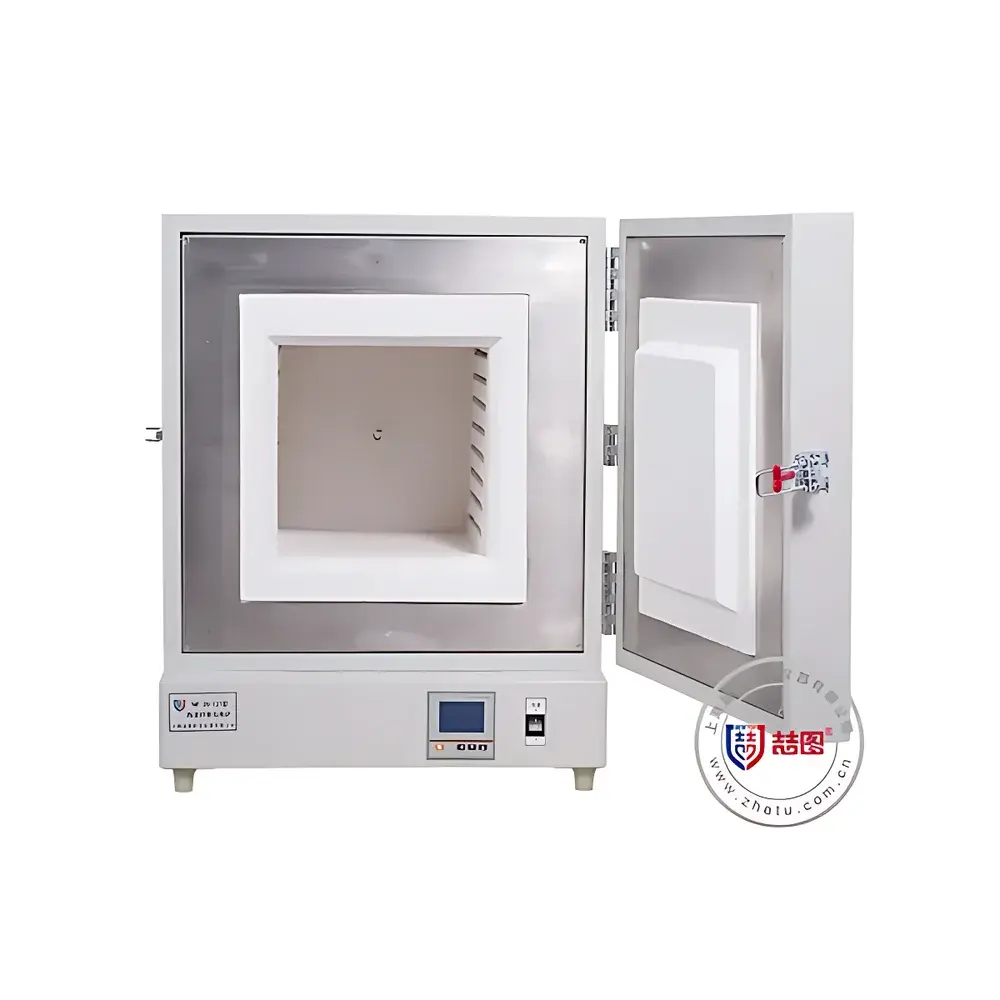
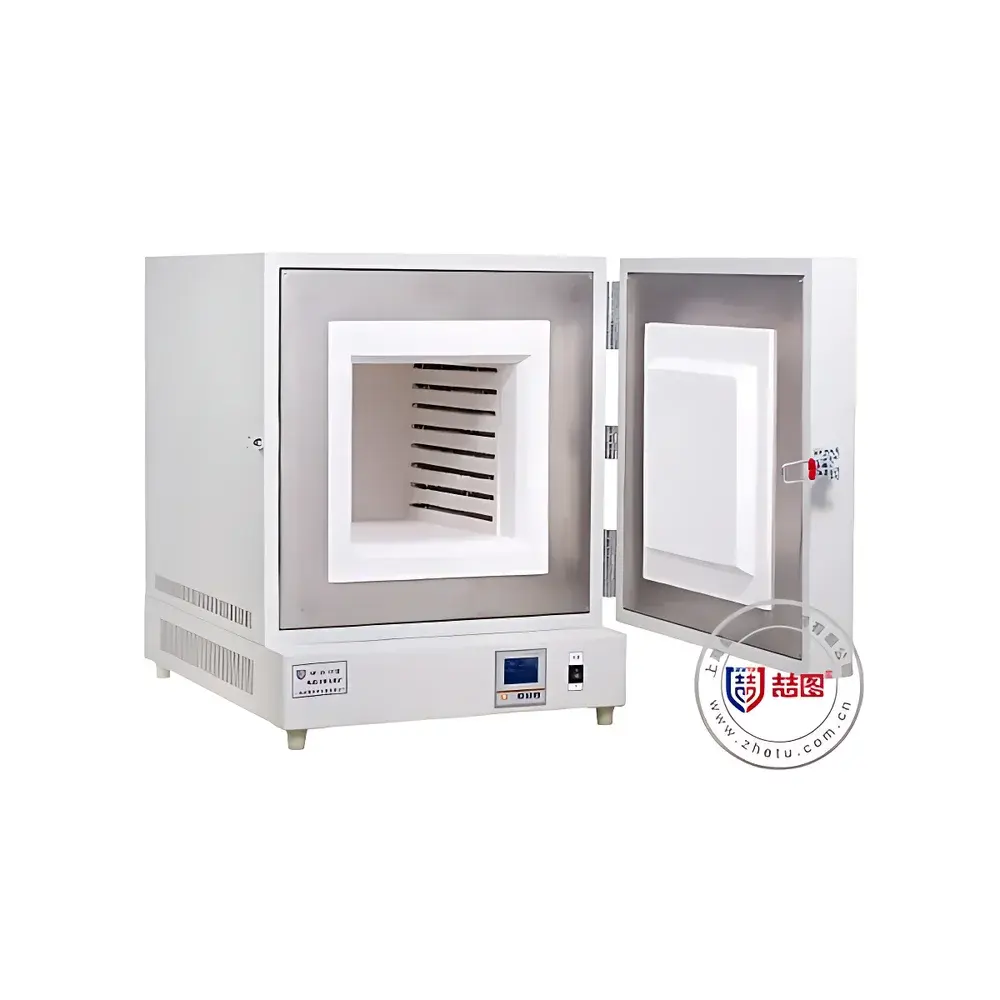
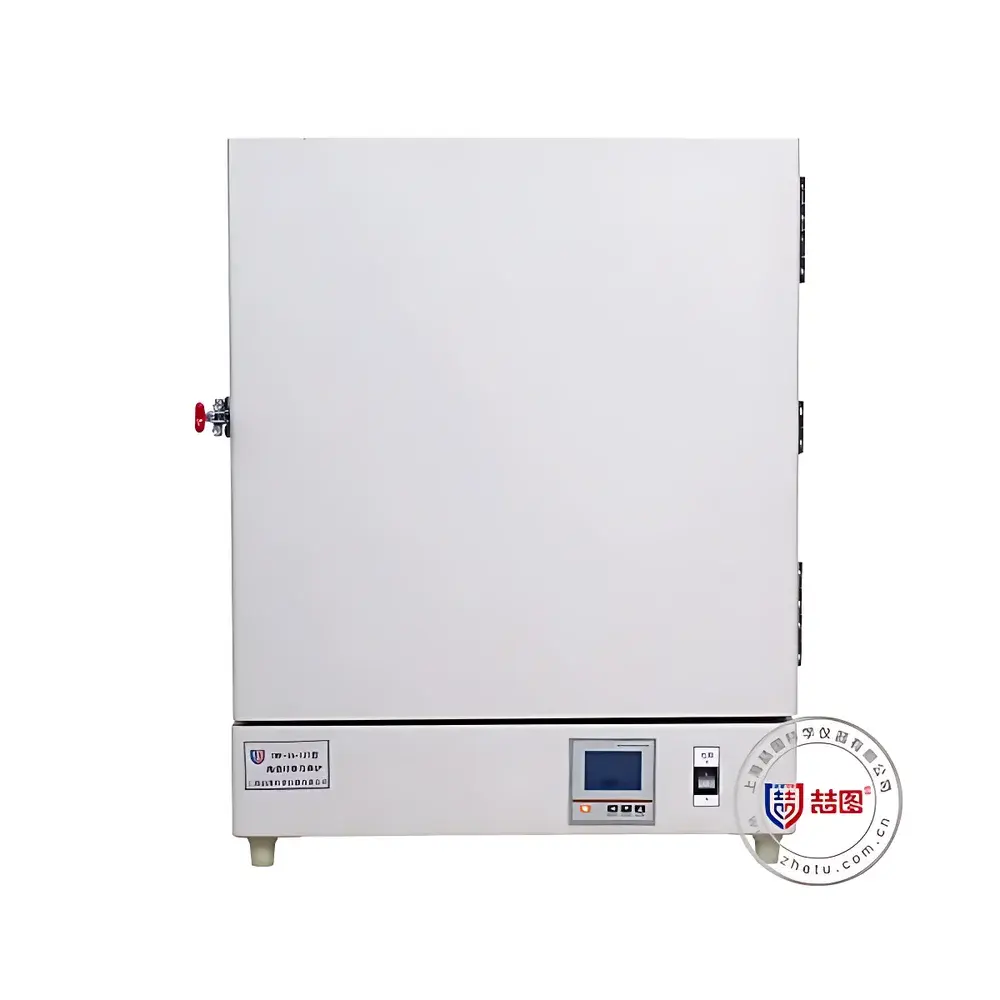
DRETOP TMF-210-13TP Ceramic Fiber Muffle Furnace
| Brand | DRETOP |
|---|---|
| Origin | Shanghai, China |
| Manufacturer Type | Direct Manufacturer |
| Product Category | Domestic |
| Model | TMF-210-13TP |
| Instrument Type | Box-Type Muffle Furnace |
| Maximum Temperature | 1300 °C |
| Temperature Control Accuracy | ±1 °C |
| Rated Power | 35 kW |
| Heating Time to Max Temp | ≤50 min |
| Heating Element | Silicon Carbide Rods |
| Internal Chamber Dimensions | 600 × 600 × 600 mm |
| Control System | Programmable LCD Controller |
| Nominal Volume | 210 L |
Overview
The DRETOP TMF-210-13TP Ceramic Fiber Muffle Furnace is a high-performance, laboratory-grade box-type thermal processing system engineered for precision heat treatment applications requiring rapid ramp rates, exceptional temperature uniformity, and long-term operational stability up to 1300 °C. Unlike traditional refractory-brick muffle furnaces, this model employs a vacuum-microporous ceramic fiber insulation architecture—offering superior thermal efficiency, reduced thermal mass, and significantly lower surface temperatures during operation (typically <50 °C at ambient conditions). Its heating mechanism relies on high-purity, equal-diameter silicon carbide (SiC) rods arranged in a symmetrical configuration to ensure balanced radiant and convective heat transfer across the entire 210 L chamber. The furnace operates on a three-phase AC380 V/50 Hz supply and is designed for continuous-duty industrial and academic use under ISO/IEC 17025-compliant laboratory environments.
Key Features
- Ultra-low thermal inertia design enabled by high-density ceramic fiber board (density ≥128 kg/m³) with vacuum micro-pore structure—achieves ≤50 min ramp from room temperature to 1300 °C while maintaining external casing surface temperature below 45 °C.
- Programmable 30-segment PID controller with auto-tuning capability, supporting linear and non-linear ramp/soak profiles; includes built-in power compensation and cold-junction temperature auto-detection for improved thermal start-up repeatability.
- Robust mechanical construction: outer shell fabricated from cold-rolled steel treated with phosphate conversion coating and electrostatically applied matte-gray high-temp powder coating (curing temp >200 °C); inner door frame constructed from 304 stainless steel for corrosion resistance and easy post-ceramic cleaning.
- Dual-stage overtemperature protection: primary limit set via independent S-type thermocouple circuit; secondary hardware cutoff triggered at 1350 °C using fail-safe relay logic—compliant with IEC 61000-4-5 surge immunity and EN 60519-1 safety standards for industrial heating equipment.
- Integrated thermal barrier system: high-alumina refractory baffle plate mounted at furnace mouth reduces radiant heat loss by >35%, enhancing axial temperature uniformity (±3 °C within ±25 mm of center at 1300 °C per ASTM C177).
- Modular control architecture: embedded controller located beneath furnace base with shielded compensation wire connection (type S extension grade), minimizing EMI susceptibility and ensuring signal integrity over extended service life.
Sample Compatibility & Compliance
The TMF-210-13TP accommodates standard crucibles (alumina, quartz, silicon carbide, graphite), ceramic setters, sintering boats, and metallurgical specimens up to 550 mm × 550 mm × 550 mm. It supports inert-atmosphere processing when paired with optional N₂/Ar inlet valves (rated for ≤0.2 MPa pressure differential) and exhaust chimney assemblies meeting ASME B31.1 venting guidelines. All electrical components conform to CE marking requirements (EMC Directive 2014/30/EU, LVD Directive 2014/35/EU), and thermal performance data is traceable to national metrology institutes via factory calibration certificates (NIST-traceable S-type thermocouples). The unit satisfies GLP audit requirements for thermal validation documentation, including as-found/as-left calibration reports, temperature mapping protocols (per ISO/IEC 17025 Clause 5.10), and electronic audit trail logs (when equipped with RS485 or USB interface modules).
Software & Data Management
While the base TP-series controller provides local programming and real-time parameter display, optional communication interfaces enable integration into centralized lab management systems. RS485 Modbus RTU protocol support allows bidirectional data exchange—including setpoint, PV, alarm status, segment progress, and event logs—with SCADA platforms or LIMS software. For enhanced traceability, the AI-series upgrade includes an embedded color touchscreen HMI with built-in paperless recorder functionality: waveform visualization of up to 72 hours of temperature history, CSV export via USB 2.0, and configurable print-on-event output (via optional integrated thermal printer). All firmware versions comply with FDA 21 CFR Part 11 requirements for electronic records and signatures when deployed with user access controls and audit trail activation.
Applications
This furnace serves critical roles across materials science, geochemistry, metallurgy, and pharmaceutical development laboratories. Typical use cases include: ash content determination per AOAC 942.05 and ASTM D3174; ceramic sintering and glaze firing (ISO 10545-9); glass annealing and nucleation studies (ASTM C148); catalyst calcination (USP ); powder metallurgy densification (MPIF Standard 35); thermal gravimetric pre-conditioning prior to SEM/EDS analysis; and high-temperature stability testing of battery cathode materials (e.g., NMC, LFP) per UL 1642 Annex B. Its fast thermal response and tight uniformity make it especially suitable for process qualification studies requiring DoE-based thermal profiling.
FAQ
What is the maximum recommended continuous operating temperature?
The furnace is rated for continuous operation at 1300 °C; however, for optimal element longevity and calibration stability, sustained use above 1200 °C should be limited to ≤4 hours per cycle.
Is the furnace compatible with inert or reducing atmospheres?
Yes—when fitted with the optional gas inlet valve kit (max inlet pressure 0.2 MPa) and exhaust chimney, it supports N₂, Ar, or forming gas (5% H₂/95% N₂) purging per ASTM E29-22 Section 8.2.
Does the controller support data logging without external hardware?
The base TP-series requires external dataloggers; only AI-series models include onboard memory (≥128 MB) and USB export for autonomous recording.
How is temperature uniformity verified during factory calibration?
Each unit undergoes 9-point mapping per AMS2750E Zone Certification requirements at 1000 °C and 1300 °C, with results documented in the Certificate of Calibration supplied with shipment.
Can the furnace be integrated into a networked lab infrastructure?
Yes—RS485 interface enables connection to Ethernet gateways (e.g., MOXA EDS-G205A) for SNMP-based monitoring and OPC UA server integration in modern smart lab deployments.



