
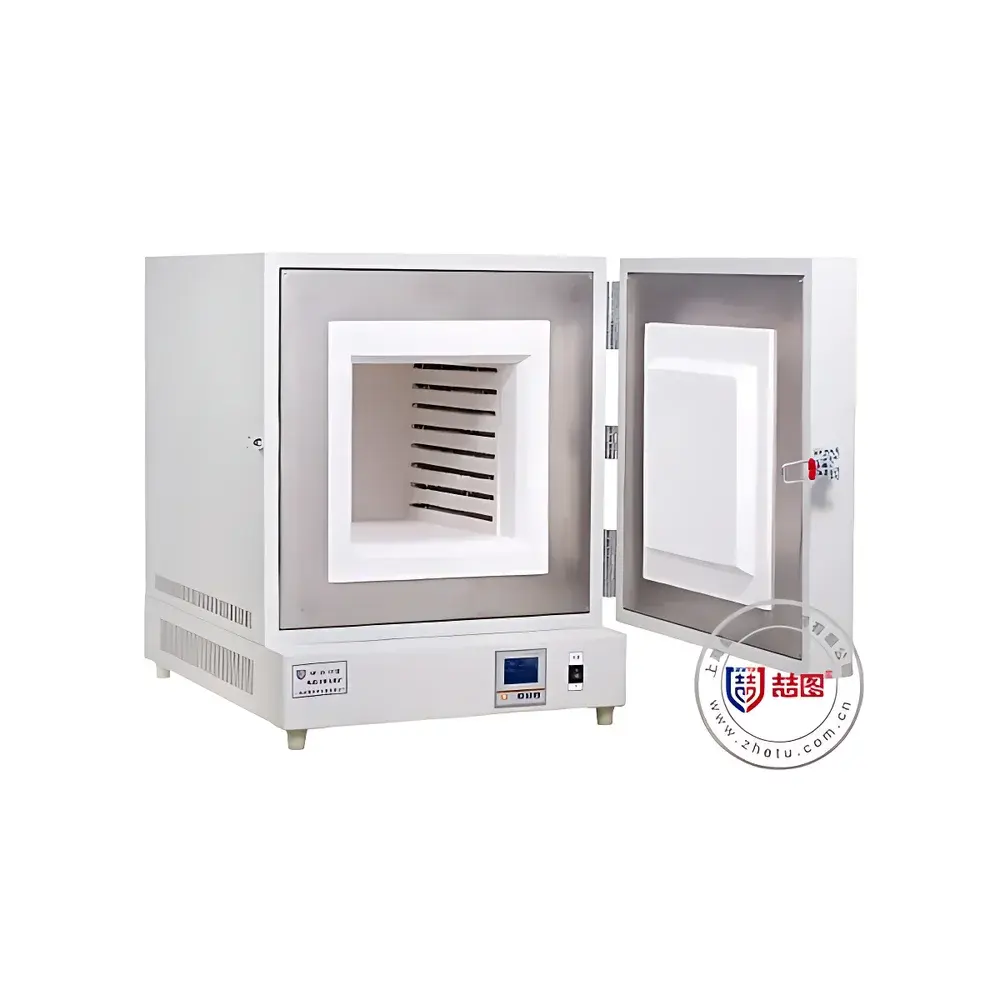
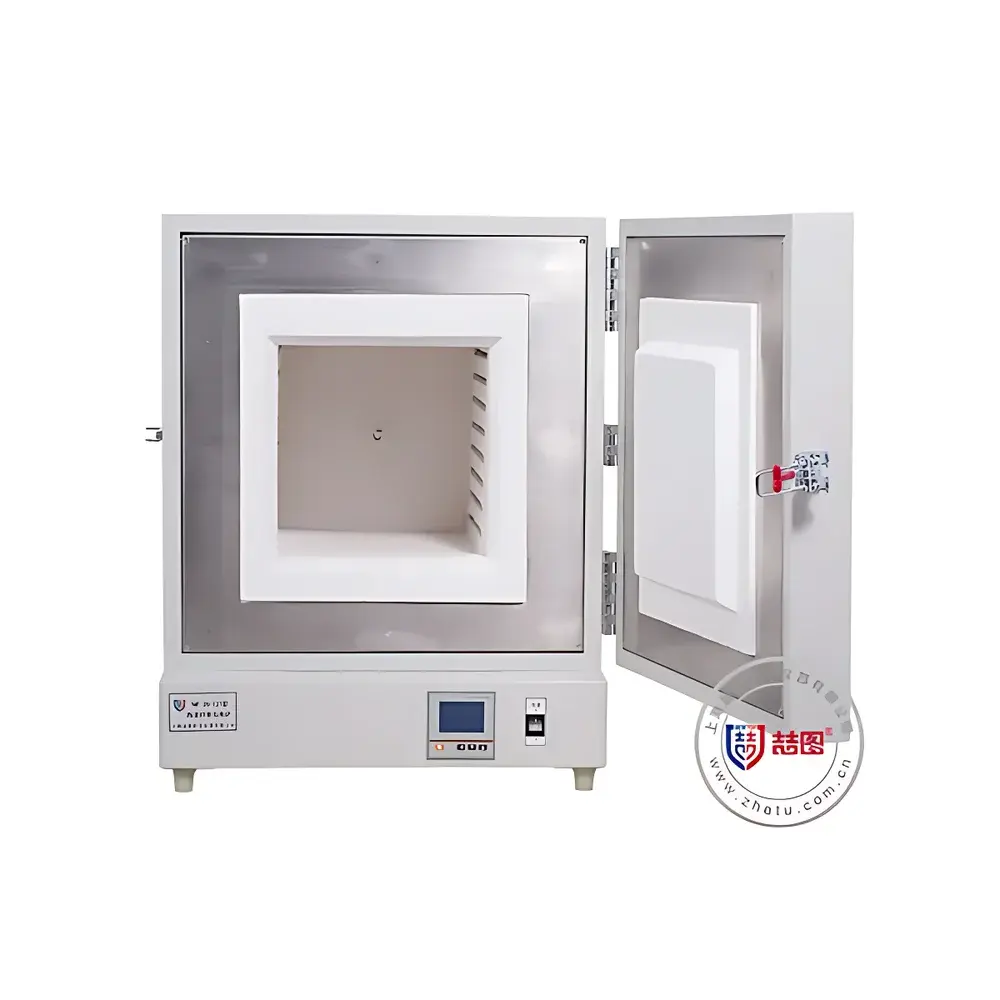
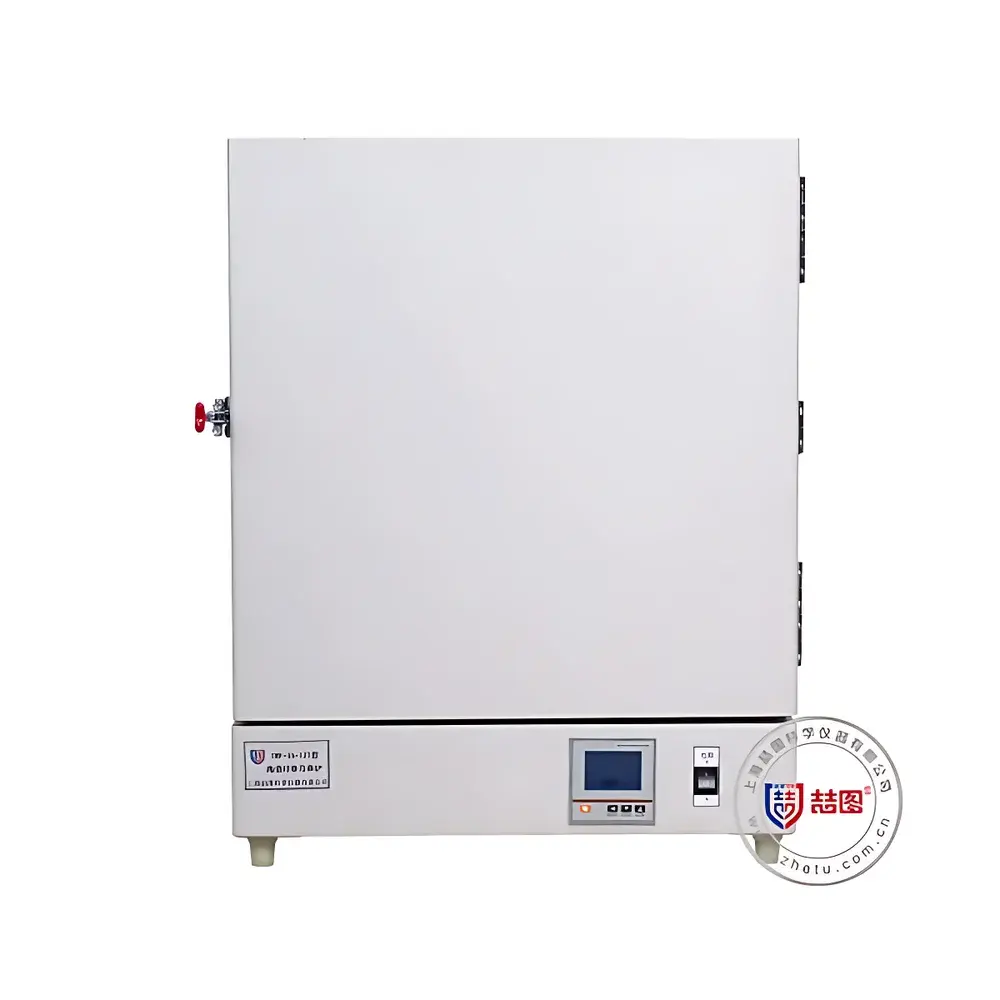
DRETOP TMF-210-14TP Ceramic Fiber Muffle Furnace
| Brand | DRETOP |
|---|---|
| Origin | Shanghai, China |
| Manufacturer Type | Direct Manufacturer |
| Product Category | Domestic |
| Model | TMF-210-14TP |
| Instrument Type | Box-Type Muffle Furnace |
| Maximum Temperature | 1400 °C |
| Temperature Control Accuracy | ±1 °C |
| Rated Power | 40 kW |
| Heating Rate to Max Temp | ≤60 min |
| Heating Element | Silicon Carbide Rods |
| Internal Chamber Dimensions | 600 × 600 × 600 mm |
| Control System | Programmable LCD Controller |
| Nominal Volume | 210 L |
Overview
The DRETOP TMF-210-14TP Ceramic Fiber Muffle Furnace is a high-performance, laboratory-grade box-type thermal processing system engineered for precision heat treatment up to 1400 °C. Unlike traditional refractory brick furnaces, it employs low-density, high-purity ceramic fiber insulation—vacuum-formed micro-porous boards with exceptional thermal resistance and low heat storage. This architecture enables rapid heating (≤60 minutes to 1400 °C), minimized thermal inertia, and superior temperature uniformity across the 210 L chamber (±3 °C at 1400 °C per ASTM E220). The furnace operates on a robust 380 V / 50 Hz three-phase supply and utilizes silicon carbide (SiC) heating elements in an optimized double-sided configuration to ensure symmetrical radiant heat distribution and long-term resistance stability. Its design conforms to IEC 61000-6-3 (EMC emission standards) and meets mechanical safety requirements per EN 61000-6-2.
Key Features
- High-efficiency ceramic fiber insulation: Achieves surface temperatures <45 °C at ambient conditions during operation at 1400 °C—eliminating external cooling requirements and reducing facility HVAC load.
- Programmable 30-segment PID controller with auto-tuning capability: Supports ramp-soak-hold profiles, slope correction, and automatic power modulation to maintain ±1 °C setpoint accuracy under dynamic thermal loads.
- Dual-stage overtemperature protection: Independent hardware-based limit controller (S-type thermocouple input) cuts power if primary control fails—compliant with IEC 60519-1 safety standards for industrial electroheating equipment.
- Integrated environmental compensation: Built-in ambient temperature sensor adjusts cold-junction reference automatically, improving startup repeatability and reducing preheat time variance by up to 12%.
- Ergonomic front-loading door with stainless steel inner frame and ceramic fiber gasket: Ensures gas-tight sealing, minimizes radiant loss at the aperture, and withstands repeated thermal cycling without warping or degradation.
- Modular control architecture: Controller mounted below furnace chamber with shielded compensation cable routing—reducing electromagnetic interference and enhancing long-term signal integrity.
- Structural housing: Cold-rolled steel cabinet treated with phosphate conversion coating and baked epoxy finish (computer gray, RAL 7035), providing corrosion resistance and mechanical rigidity for continuous lab use.
Sample Compatibility & Compliance
The TMF-210-14TP accommodates standard crucibles (alumina, silica, graphite, Pt–Rh), ceramic setters, sintering boats, and metal trays up to 550 mm × 550 mm × 550 mm. It supports inert, oxidizing, and mildly reducing atmospheres when equipped with optional N₂/Ar inlet valves (rated for ≤0.1 MPa). For volatile sample processing (e.g., coal ashing, polymer pyrolysis, biomass char production), integration of the factory-certified exhaust chimney (DN100 flange) is strongly recommended to prevent carbon deposition and maintain thermal calibration integrity. The furnace complies with ISO/IEC 17025:2017 requirements for calibration traceability when used with NIST-traceable thermocouples and certified reference materials. Optional RS485 Modbus RTU interface enables integration into LIMS or MES platforms supporting FDA 21 CFR Part 11 audit trail requirements.
Software & Data Management
The TP-series programmable controller features non-volatile memory with power-fail recovery—retaining all program steps, setpoints, and runtime logs after unexpected shutdown. Data logging includes timestamped temperature readings (1-second resolution), power output %, and alarm events. USB export (via optional embedded printer module) generates CSV files compatible with Excel, MATLAB, and JMP for statistical process control (SPC) analysis. When configured with AI-series color touchscreen, users gain access to real-time trend graphs, multi-curve overlay, historical profile recall, and password-protected user roles (operator, technician, administrator). All firmware updates are performed via secure USB flash drive—no internet connectivity required, preserving network isolation in regulated environments.
Applications
This furnace serves critical thermal processes across materials science, geochemistry, metallurgy, and quality assurance laboratories. Typical applications include: ash content determination per ASTM D3174 and ISO 1171; ceramic sintering and glaze firing (ISO 10545-10); glass annealing and nucleation studies (ASTM C148); catalyst calcination (USP ); powder metallurgy densification; thermal gravimetric analysis (TGA) sample pre-conditioning; metal heat treatment (annealing, stress relieving per AMS 2750E); and residue ignition in pharmaceutical excipient testing (EP 2.2.32). Its rapid thermal response and stable soak performance make it suitable for DOE-driven process optimization and accelerated aging protocols per IPC-TM-650 2.6.25.
FAQ
Is the TMF-210-14TP suitable for vacuum or hydrogen atmosphere operation?
No. This model is designed for air or inert gas (N₂, Ar) environments only. Hydrogen or vacuum operation requires specialized furnace variants with welded gas-tight chambers and explosion-proof controls.
What thermocouple type is used for primary temperature measurement?
Standard configuration uses an S-type (Platinum/Rhodium 10%) thermocouple conforming to IEC 60584-2 Class 1 tolerance, installed in a ceramic protection tube with direct contact to the chamber wall.
Can the furnace be integrated into a central building management system (BMS)?
Yes—via optional RS485 Modbus RTU interface or Ethernet gateway (sold separately), enabling remote monitoring of temperature, status, alarms, and energy consumption.
Does the unit include calibration documentation?
A factory calibration certificate (as-found/as-left data against NIST-traceable reference) is provided with each shipment. On-site IQ/OQ validation support documents are available upon request.
What maintenance intervals are recommended for routine operation?
Visual inspection of door seal integrity and heating element continuity every 200 operating hours; full thermocouple verification and controller recalibration annually or per internal QA schedule.



