
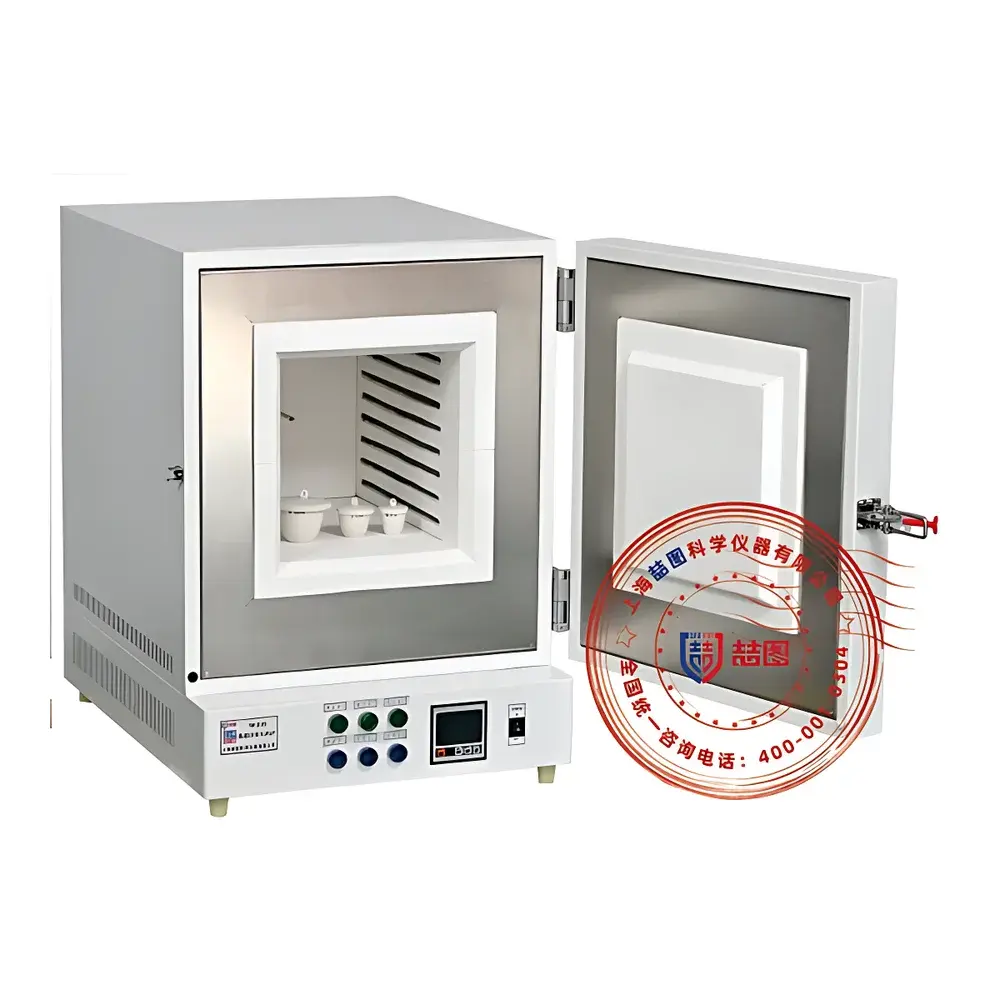
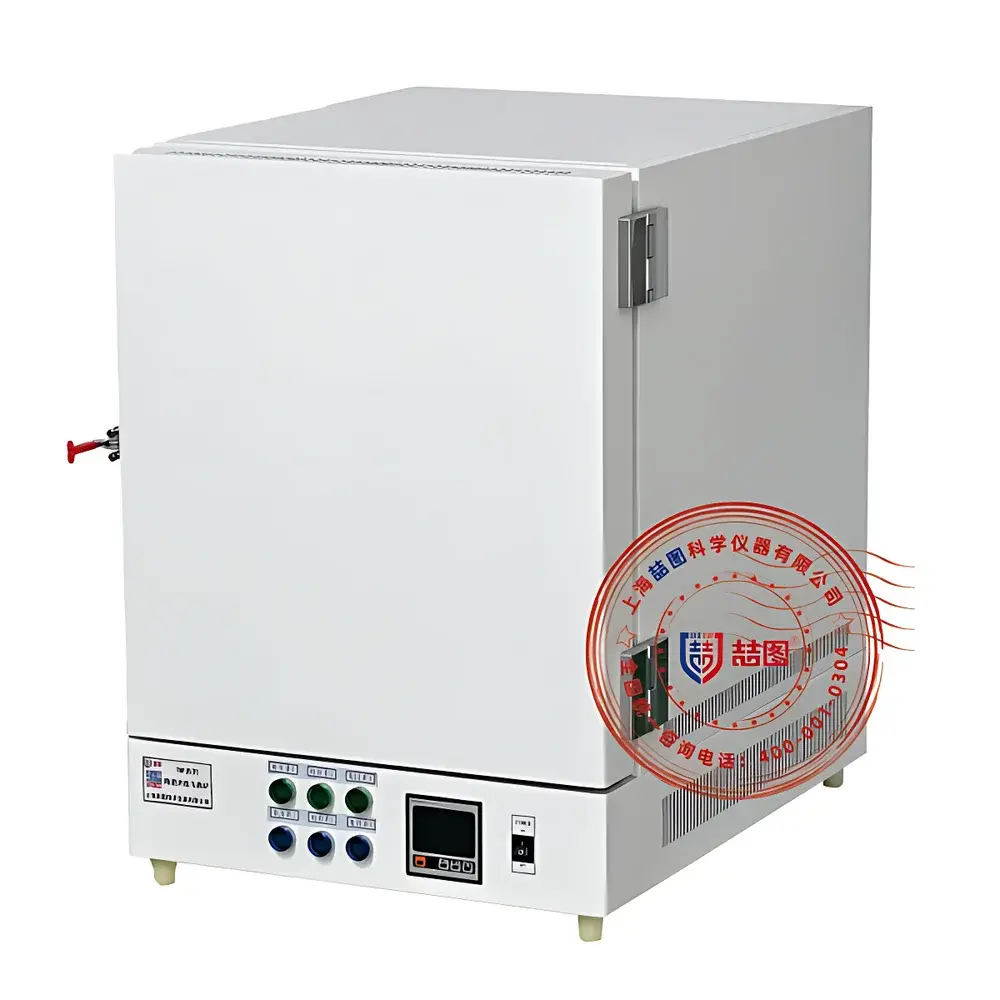
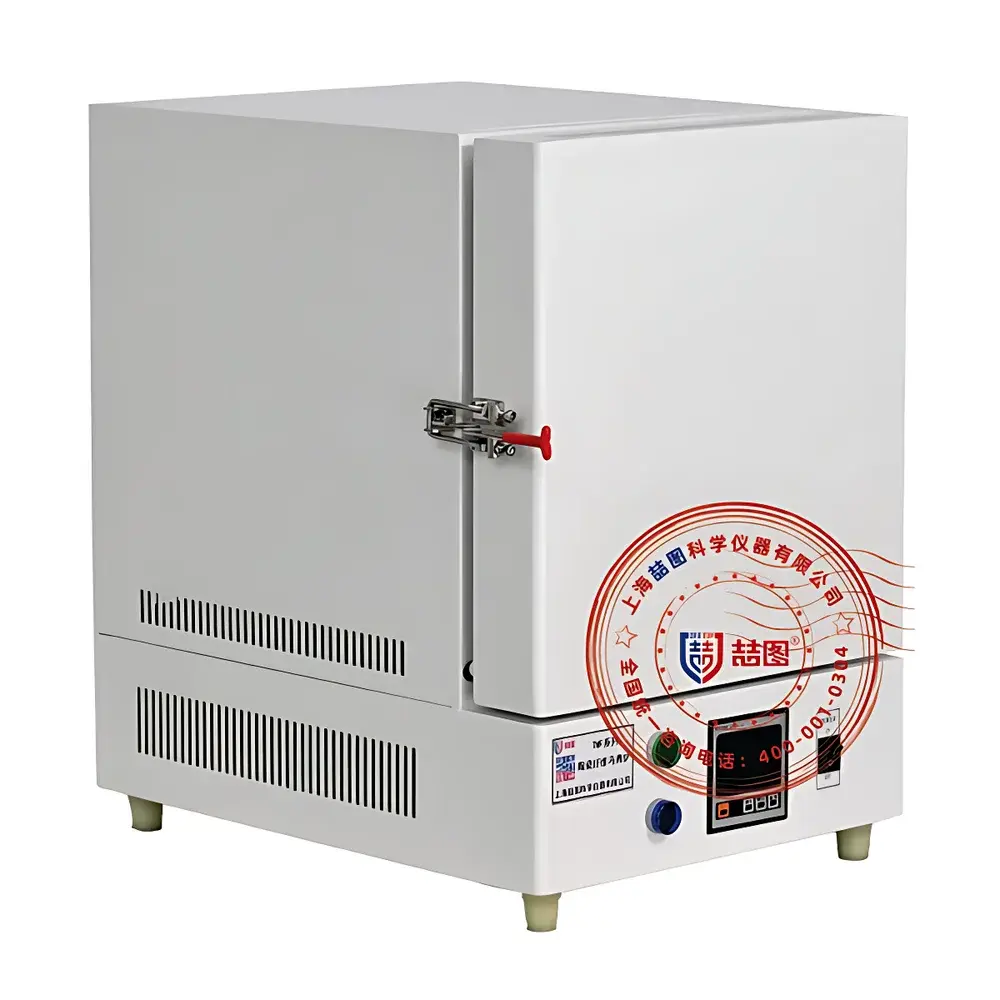
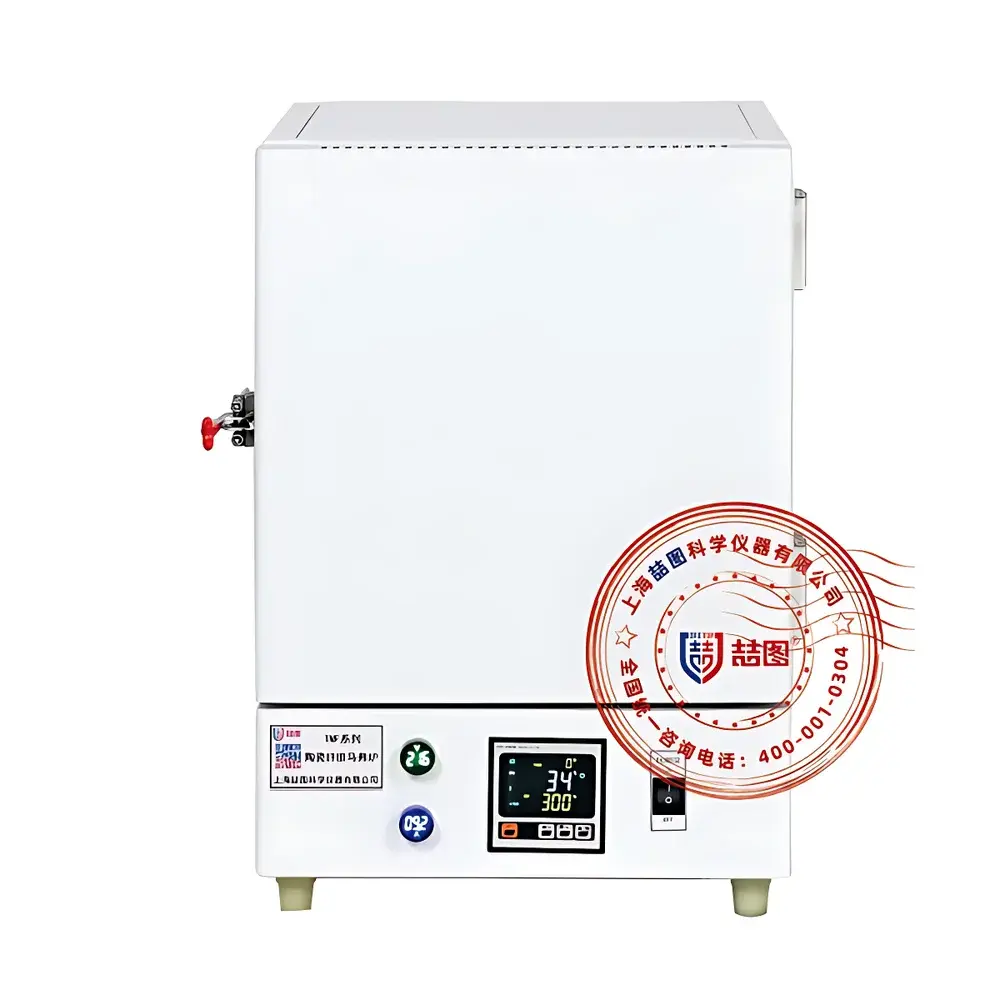
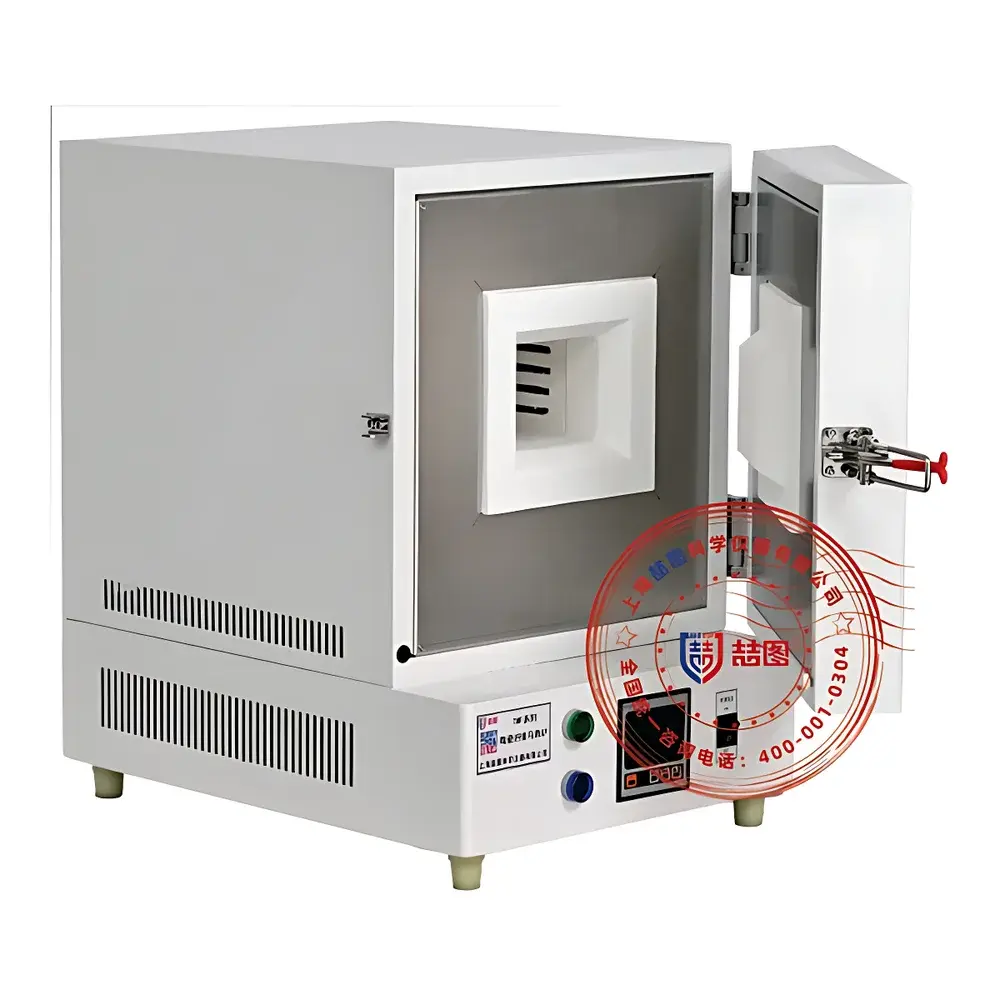
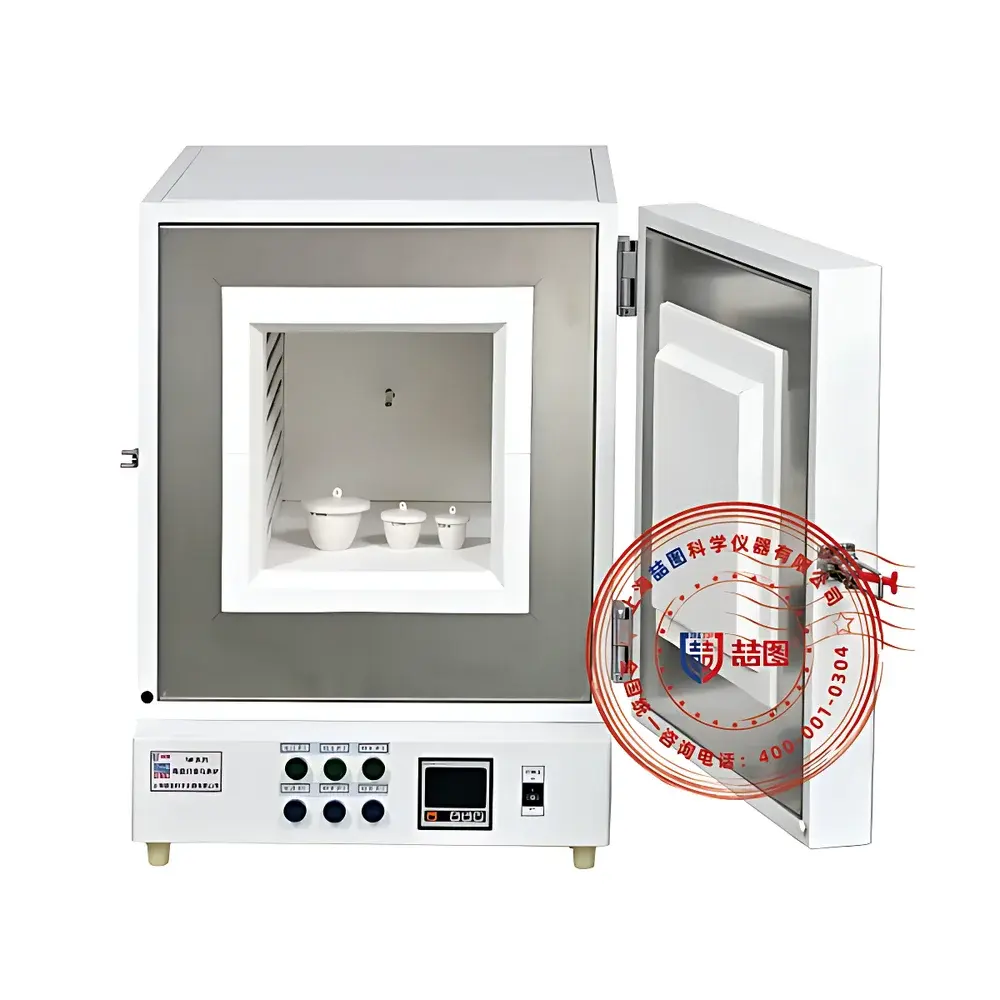
DRETOP TMF-30-12TC Ceramic Fiber Muffle Furnace
| Brand | DRETOP |
|---|---|
| Origin | Shanghai, China |
| Model | TMF-30-12TC |
| Instrument Type | Box-Type Muffle Furnace |
| Max Temperature | 1200 °C |
| Temperature Control Accuracy | ±1 °C |
| Max Power | 10 kW |
| Internal Dimensions (W×D×H) | 300×400×320 mm |
| Nominal Volume | 33 L |
| Heating Method | Triple-Side Heating |
| Control System | Programmable PID Controller (30-Stage) |
| Insulation Material | Vacuum-Microporous Ceramic Fiber Board |
Overview
The DRETOP TMF-30-12TC is a high-performance ceramic fiber box-type muffle furnace engineered for precision thermal processing in research laboratories, materials science facilities, and quality control environments. It operates on resistive heating principles using high-temperature alloy heating elements embedded within a vacuum-microporous ceramic fiber insulation matrix—enabling rapid thermal response, exceptional energy efficiency, and uniform temperature distribution across the 33 L chamber. Unlike traditional refractory brick furnaces, its lightweight ceramic fiber construction reduces thermal mass by over 70%, allowing typical ramp rates of 10–15 °C/min up to 1200 °C while minimizing standby power consumption. The furnace complies with fundamental safety and operational requirements aligned with IEC 61000-6-3 (EMC emissions) and IEC 61000-6-2 (immunity), and its design supports integration into GLP-compliant workflows where traceable thermal profiles and repeatable soak conditions are essential.
Key Features
- Triple-side heating architecture with spiral-wound high-alloy heating elements ensures radial and axial thermal uniformity ≤±3 °C at 1200 °C (measured per ASTM E220 calibration methodology)
- 30-segment programmable PID controller with ramp/soak capability, automatic shutdown, and power-failure memory retention
- Dual-stage overtemperature protection: primary electronic cutoff at setpoint +15 °C; secondary mechanical limiter at 1250 °C
- Integrated door-safety interlock: heating halts immediately upon door opening and resumes automatically after closure
- Front-panel digital ammeter and voltmeter provide real-time electrical load monitoring for preventive maintenance planning
- Phosphate-conversion coated steel enclosure with high-temp epoxy powder coating resists oxidation and mechanical abrasion under repeated thermal cycling
- Reinforced ceramic fiber door seal and internal heat baffle minimize peripheral heat loss and improve cross-chamber uniformity
Sample Compatibility & Compliance
The TMF-30-12TC accommodates standard crucibles (alumina, quartz, silicon carbide), ceramic setters, metal sintering trays, and graphite boats—supporting sample loads up to 8 kg without compromising thermal stability. Its Class A insulation system meets ISO 8501-4 requirements for low-dust, low-outgassing operation in inert or air atmospheres. While not certified for explosive or reducing gas environments without optional modifications, the furnace is compatible with N₂, Ar, and forming gas (5% H₂/95% N₂) when equipped with the optional inert gas inlet valve (G-VALVE-TC). It supports method validation per USP , ISO 13485 Annex C (for medical device thermal sterilization process development), and ASTM C1171 (ceramic matrix composite densification protocols).
Software & Data Management
The TC-series variant includes RS485 Modbus RTU interface (standard) for integration with SCADA or LIMS platforms. Optional data logging firmware enables timestamped temperature recording at 1-second intervals, with CSV export via USB port. All program sequences—including ramp rates, hold durations, and cooling profiles—are password-protected under three-tier access levels (Operator / Technician / Administrator), satisfying FDA 21 CFR Part 11 audit trail requirements when paired with compliant network time protocol (NTP) synchronization. Raw thermal data can be exported for post-run analysis in MATLAB, Python (NumPy/Pandas), or JMP.
Applications
- Thermal gravimetric analysis (TGA) sample pre-conditioning and residue ashing (e.g., ASTM D3174, ISO 1171)
- Sintering of oxide ceramics (Al₂O₃, ZrO₂), ferrites, and battery cathode precursors (LiCoO₂, NMC)
- Heat treatment of metallic alloys: annealing, stress-relieving, and tempering per AMS 2750E pyrometry class requirements
- Crucible-based flux fusion for XRF sample preparation (ASTM E2117)
- Controlled atmosphere calcination of catalyst supports and MOFs
- Microstructural homogenization of optical glass blanks prior to annealing cycles
- Pre-burnout of investment casting molds (lost-wax processes)
FAQ
What is the maximum recommended continuous operating temperature?
Continuous operation is rated at 1150 °C; 1200 °C is specified as short-term maximum (≤2 hours per cycle) to preserve insulation integrity and heating element service life.
Does the furnace support inert gas purging?
Yes—when fitted with the optional inert gas inlet valve (part #G-VALVE-TC), it maintains positive pressure up to 0.05 MPa and supports purge flow rates of 0.5–5 L/min.
Can temperature uniformity be verified per AMS 2750E?
Yes—the chamber geometry and triple-side heating allow qualification to AMS 2750E Zone 2 (±5 °C uniformity) using a 9-point sensor array; full qualification documentation package available upon request.
Is the controller compliant with 21 CFR Part 11 for electronic records?
The TC-series firmware provides electronic signatures, audit trails, and role-based access control—fully compliant when deployed on validated IT infrastructure meeting Part 11 Annex A requirements.
What maintenance intervals are recommended for optimal performance?
Ceramic fiber integrity inspection every 500 operating hours; heating element resistance check every 1000 hours; door gasket replacement every 2 years or after 2000 thermal cycles—whichever occurs first.



