
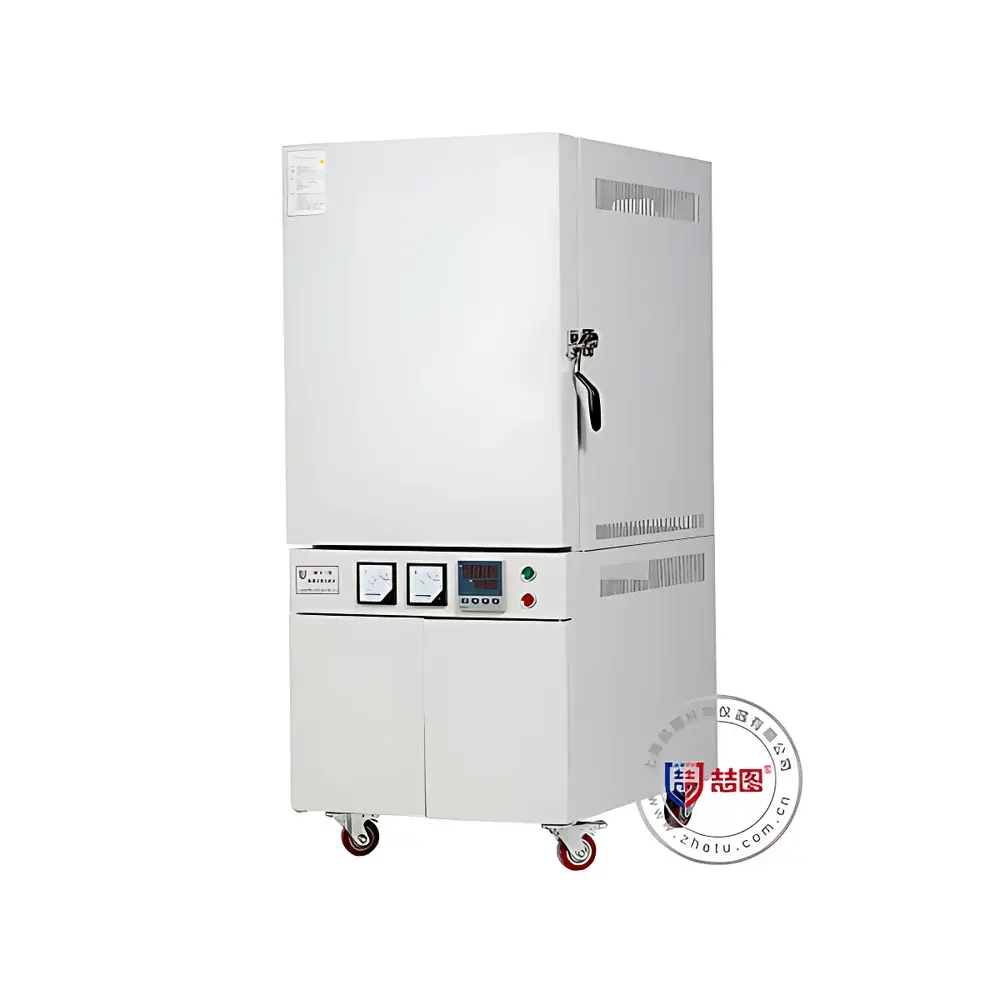
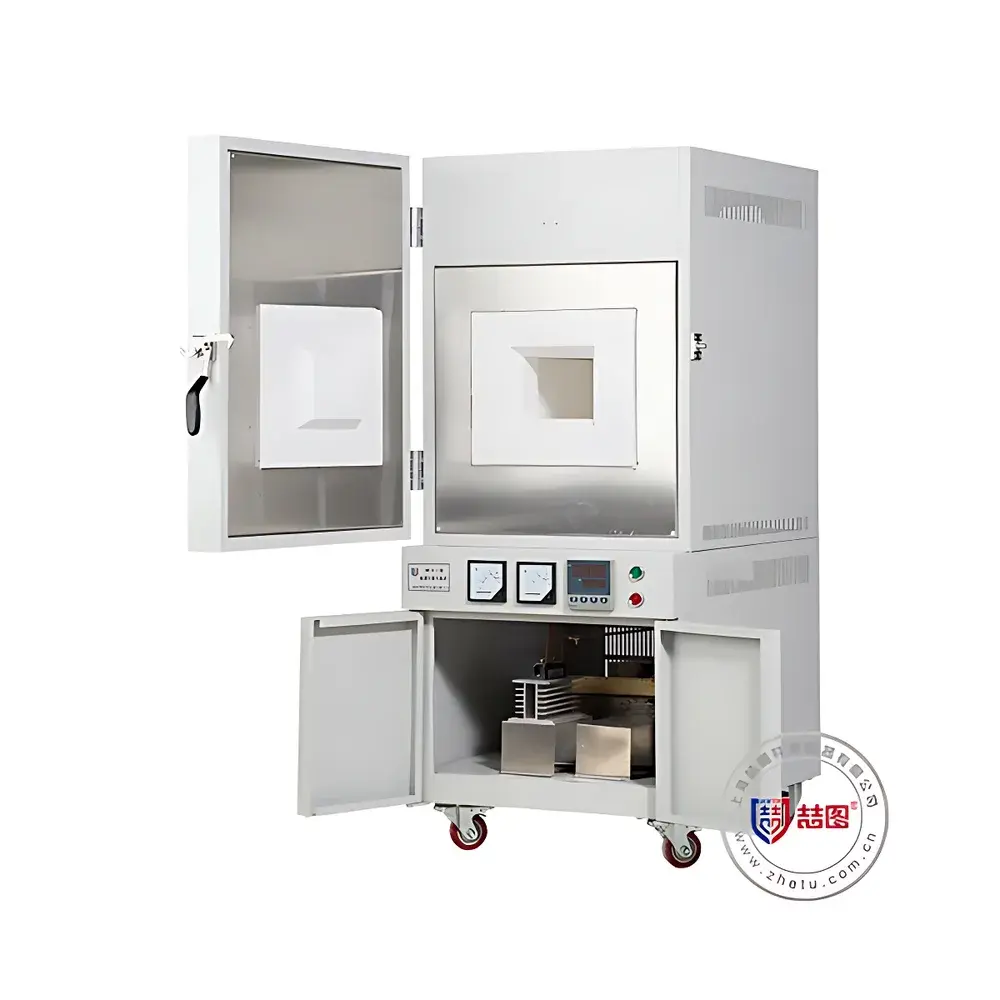
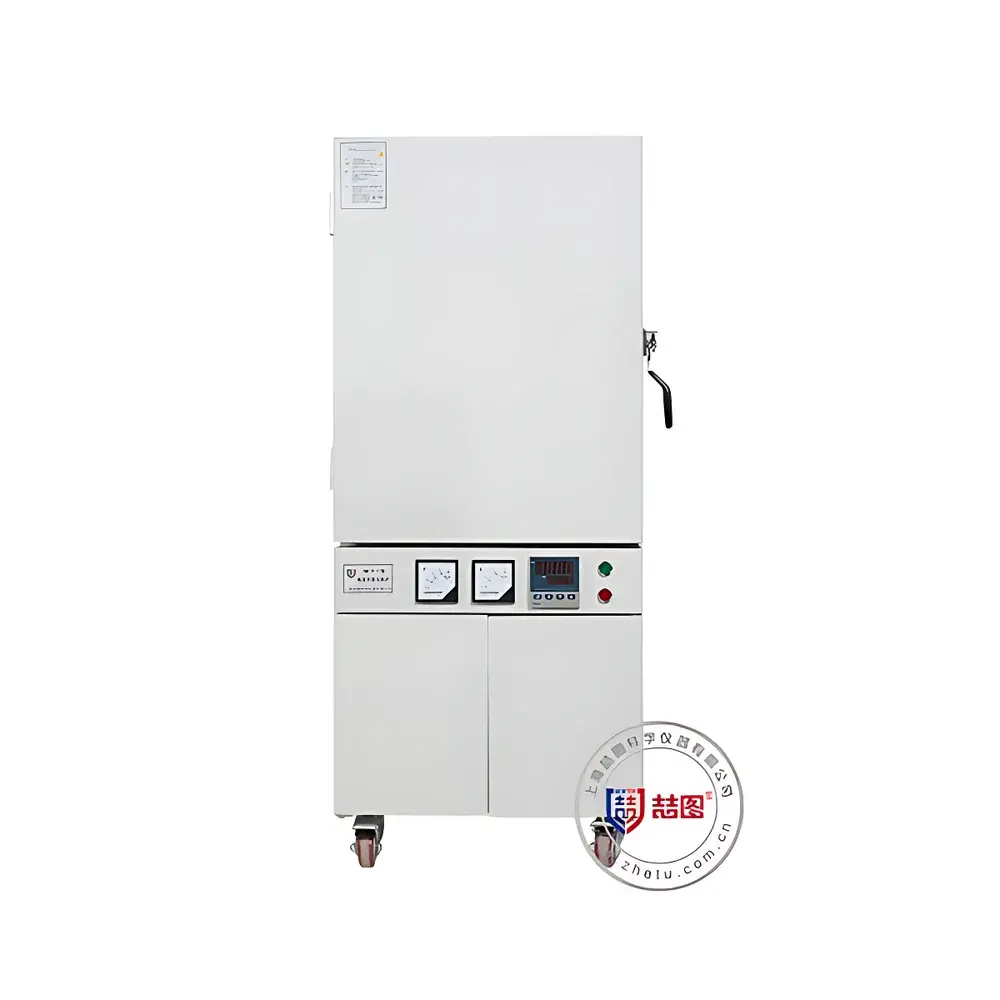
DRETOP TMF-5-17TP Ceramic Fiber Muffle Furnace
| Brand | DRETOP |
|---|---|
| Origin | Shanghai, China |
| Manufacturer Type | Direct Manufacturer |
| Product Category | Domestic |
| Model | TMF-5-17TP |
| Instrument Type | Box-Type Muffle Furnace |
| Maximum Temperature | 1700 °C |
| Temperature Control Accuracy | ±1 °C |
| Rated Power | 10 kW |
| Heating Time to Max Temp | 80 min |
| Heating Element | Silicon Molybdenum (MoSi₂) Rods |
| Internal Chamber Dimensions | 150 × 300 × 120 mm |
| Nominal Volume | 5 L |
| Control System | Programmable LCD Controller with 30-Stage Ramp/Soak Capability |
Overview
The DRETOP TMF-5-17TP Ceramic Fiber Muffle Furnace is a high-temperature box-type thermal processing instrument engineered for precision and reproducibility in demanding laboratory and industrial R&D environments. Operating on resistive heating principles via silicon molybdenum (MoSi₂) rods, it achieves stable, uniform thermal fields up to 1700 °C—optimized for applications requiring rapid thermal cycling, precise temperature ramping, and extended hold periods at extreme temperatures. Its lightweight ceramic fiber insulation architecture eliminates the thermal inertia and energy inefficiency associated with traditional refractory brick furnaces, enabling faster heat-up rates (≤80 min to 1700 °C), reduced standby power consumption, and significantly lower external surface temperatures (<60 °C at ambient conditions), enhancing operator safety and lab energy efficiency.
Key Features
- High-purity alumina-silica ceramic fiber chamber and insulation system—low thermal mass, excellent thermal shock resistance, and long service life under repeated 1700 °C operation;
- MoSi₂ heating elements mounted in dual-sided vertical configuration—resistive stability over time, minimal aging-induced resistance drift, and uniform axial/radial temperature distribution (±3 °C across working zone per ASTM E220 calibration protocol);
- 30-segment programmable PID controller with ramp/soak logic, automatic cold-junction compensation, and real-time deviation alarm—supports complex thermal profiles including multi-slope heating, dwell sequences, and controlled cooling;
- Integrated dual-stage overtemperature protection: primary control-loop cutoff at user-set limit + independent mechanical backup relay activated at 1750 °C;
- Ergonomic right-hinged door with stainless-steel inner frame and high-density ceramic fiber gasket—ensures vacuum-tight seal integrity and minimizes heat leakage during operation;
- Front-mounted controller housing with IP54-rated enclosure—separates electronics from furnace body, reduces electromagnetic interference, and simplifies maintenance;
- Auto-start function with ambient temperature sensing—calculates optimal initial ramp rate based on startup environment, reducing overshoot and stabilizing setpoint acquisition within ±0.5 °C of target;
- Cold-rolled steel outer shell with phosphate conversion coating and electrostatically applied matte gray powder finish—corrosion-resistant, low-maintenance, and compliant with ISO 9001 manufacturing traceability requirements.
Sample Compatibility & Compliance
The TMF-5-17TP accommodates standard crucibles (alumina, zirconia, graphite, platinum) and sample boats up to 120 mm height × 280 mm depth × 140 mm width. It supports inert, oxidizing, and weakly reducing atmospheres when used with optional gas inlet valves (N₂, Ar, forming gas). The furnace meets structural and electrical safety requirements per IEC 61000-6-3 (EMC emissions) and IEC 61000-6-2 (immunity), and its temperature control architecture supports audit-ready data logging for GLP/GMP-regulated workflows when paired with RS485-modbus or USB-connected third-party SCADA systems. While not intrinsically rated for Class I Div 1 hazardous locations, it may be installed in ventilated fume hoods or equipped with exhaust chimneys (optional) for combustion-derived volatiles—critical for coal ash analysis, polymer char quantification, or biomass pyrolysis per ASTM D3174/D7582.
Software & Data Management
The built-in programmable controller provides non-volatile memory for ≥100 thermal programs, each with independent segment parameters (ramp rate in °C/min, soak time in minutes, target temperature resolution of 0.1 °C). Optional RS485 Modbus RTU interface enables integration into LabVIEW, MATLAB, or custom MES platforms for remote monitoring, automated batch logging, and electronic record retention. When configured with AI-series touchscreen variants (not included in base TMF-5-17TP), the system delivers embedded trend visualization, real-time curve overlay, CSV export via USB, and configurable audit trails meeting FDA 21 CFR Part 11 requirements—including user authentication, electronic signatures, and change history logs. All firmware revisions are traceable via embedded serial number and version stamp.
Applications
This furnace serves critical roles in materials science, geochemistry, metallurgy, and pharmaceutical quality control laboratories. Typical use cases include: ash content determination (AOAC 942.05, USP <281>); high-temperature sintering of advanced ceramics (Al₂O₃, SiC, YSZ); thermal gravimetric pre-treatment prior to XRD/XRF; controlled oxidation of metal powders; annealing of optical crystals (e.g., LiNbO₃, sapphire wafers); catalyst calcination (Ni/Al₂O₃, Pt/CeO₂); and thermal stability testing of battery cathode materials (NMC, LFP) per IEEE 1625 protocols. Its rapid thermal response and tight uniformity make it especially suitable for process development where thermal history directly impacts phase formation kinetics and microstructural evolution.
FAQ
What is the maximum continuous operating temperature?
The TMF-5-17TP is rated for continuous operation at 1700 °C; however, sustained use above 1600 °C is recommended only with periodic calibration verification and MoSi₂ element inspection.
Is the furnace compatible with inert gas purging?
Yes—optional front-panel-mounted inert gas inlet valves (N₂, Ar) allow dynamic atmosphere control; gas flow rate must be regulated externally to maintain positive pressure and prevent air ingress.
Does the unit include data logging capability?
The standard TP-series controller records setpoint and actual temperature at 1-second intervals internally; full traceable export requires optional RS485 interface and host software.
What maintenance is required for MoSi₂ heating elements?
No scheduled replacement is needed under normal operation; avoid thermal shock by limiting ramp rates below 10 °C/min below 800 °C and ensure crucible placement avoids direct contact with rods.
Can this furnace be integrated into an automated production line?
Yes—via Modbus RTU or analog 4–20 mA output signals (optional), enabling PLC-based sequencing, interlocked door safety circuits, and centralized HMI supervision.



