

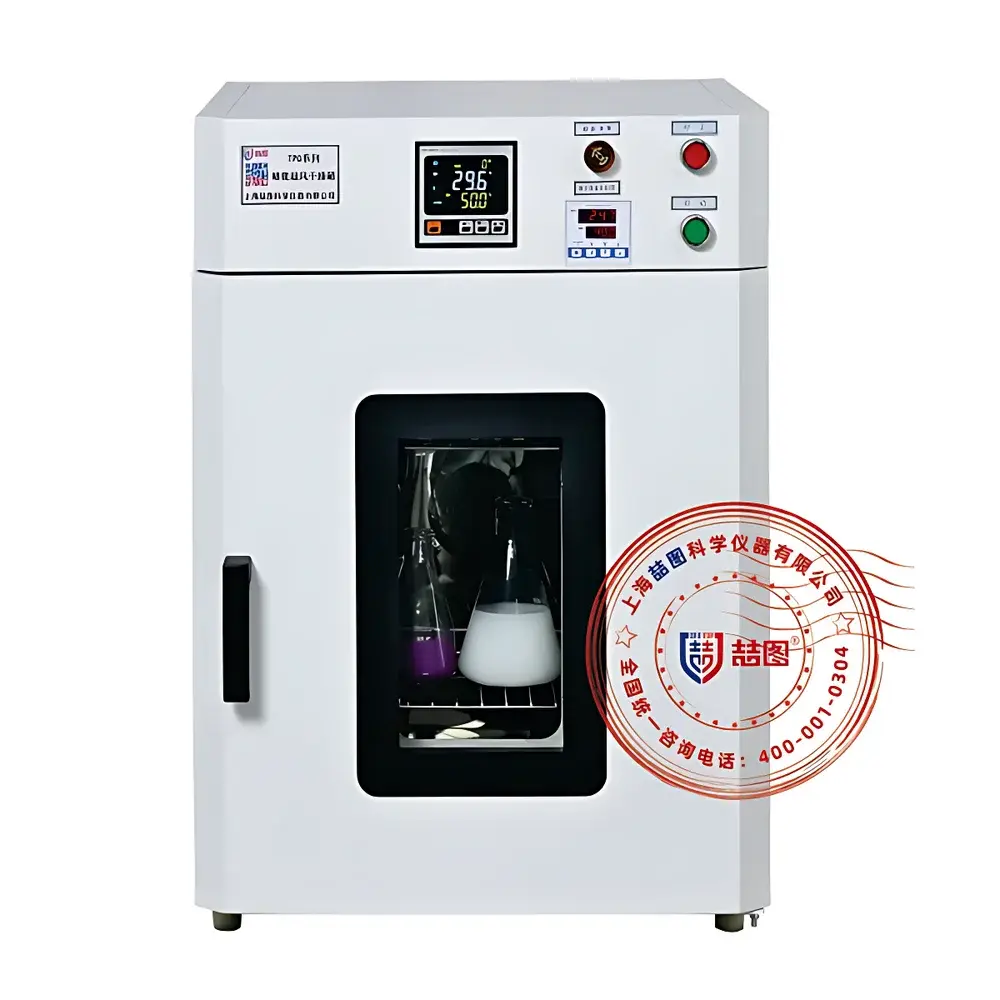
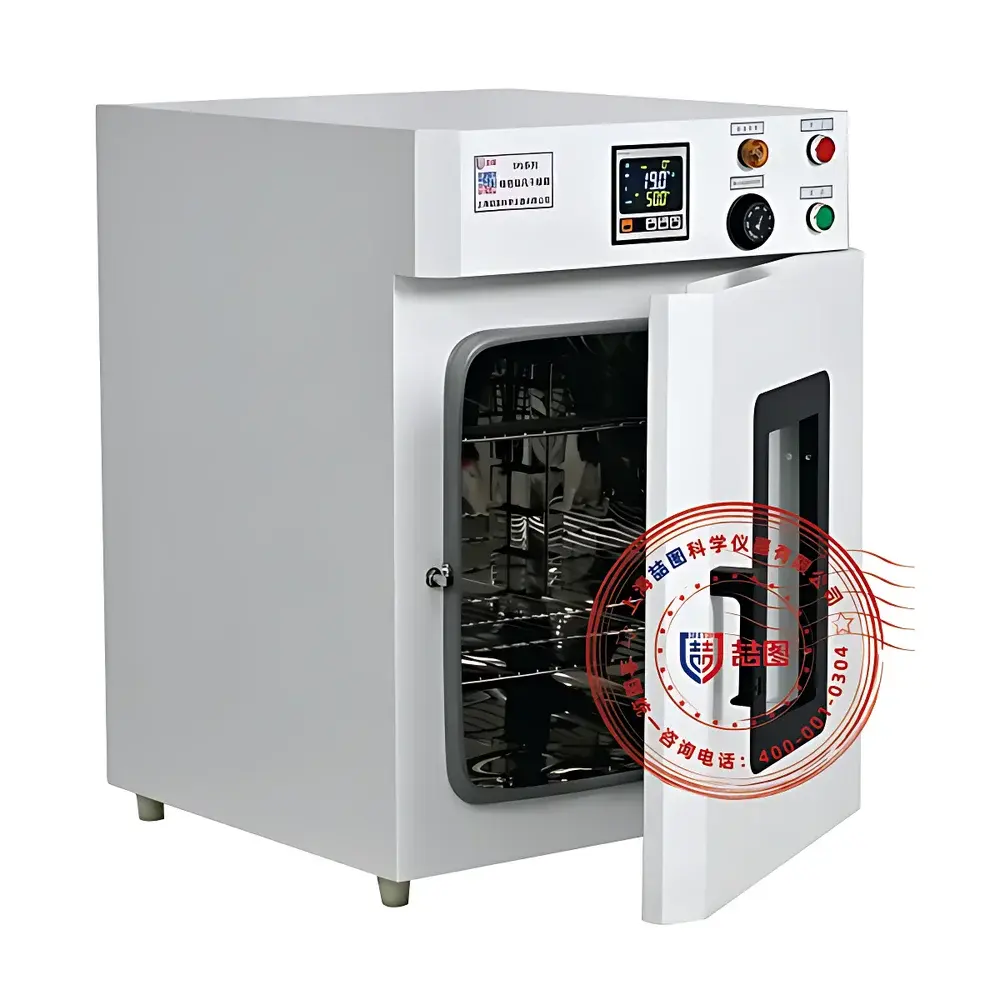
DRETOP TPG-F30AP Precision Forced-Air Drying Oven
| Brand | DRETOP |
|---|---|
| Origin | Shanghai, China |
| Manufacturer Type | Direct Manufacturer |
| Product Category | Domestic |
| Model | TPG-F30AP |
| Instrument Type | Precision Drying Oven |
| Temperature Range | RT+10–250 °C |
| Temperature Fluctuation | ±0.2 °C |
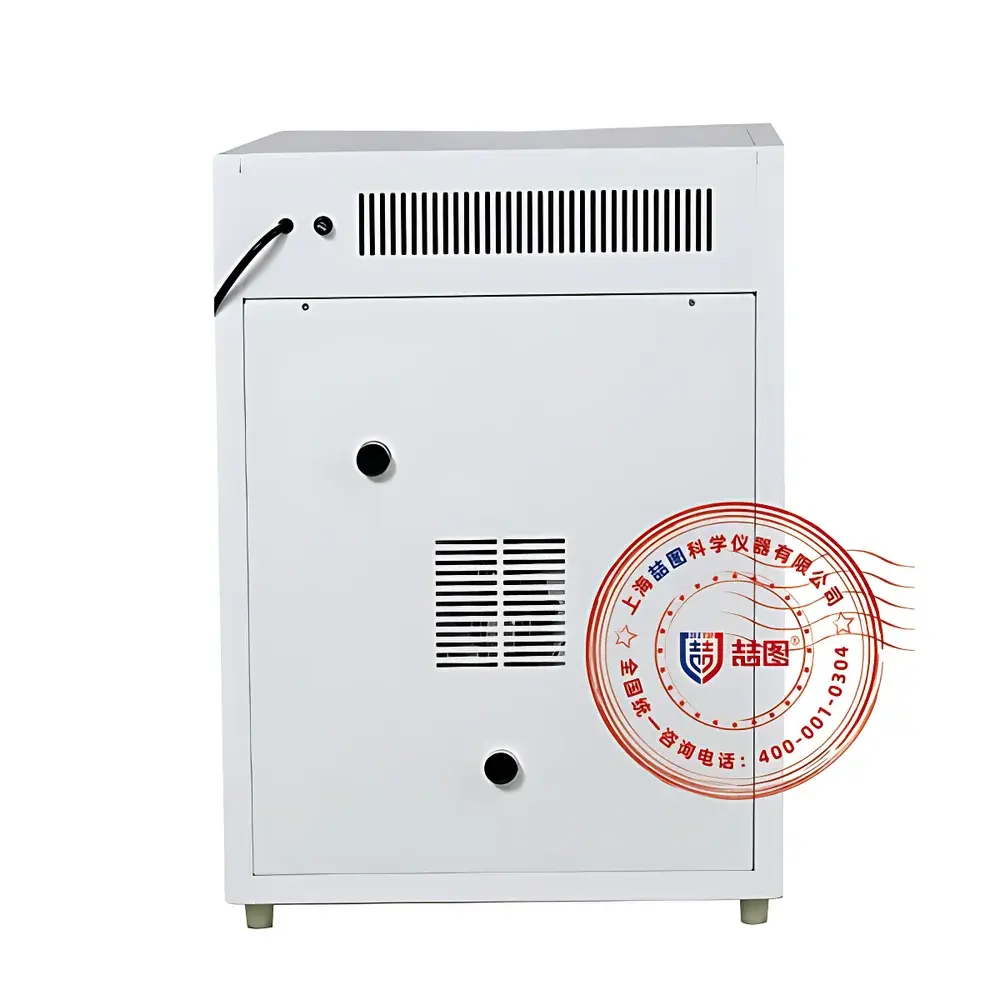
| External Dimensions (W×D×H) | 445×560×667 mm |
| Internal Chamber Dimensions (W×D×H) | 300×300×350 mm |
| Temperature Resolution | 0.1 °C |
| Operating Ambient Temperature | 5–45 °C |
| Interior Material | Stainless Steel (304) |
| Heating Method | Forced-Air Convection |
| Temperature Uniformity | ±1.5 °C (@100 °C) |
| Vacuum Capability | Not Applicable (Standard Atmospheric Operation) |
Overview
The DRETOP TPG-F30AP Precision Forced-Air Drying Oven is an engineered laboratory thermal processing system designed for high-stability, repeatable drying, curing, sterilization, and pre-conditioning applications under ambient-pressure conditions. It operates on the principle of forced convection—using a high-temperature-rated centrifugal blower and optimized internal airflow channels—to ensure rapid thermal equilibration and minimal spatial temperature gradients across the working chamber. Unlike natural convection ovens, this model delivers uniform heat distribution through precisely directed horizontal and vertical air circulation paths, minimizing thermal stratification and reducing process variability. Its microprocessor-based PID temperature control architecture, combined with dual-sensor feedback (working chamber + independent safety limiter), enables stable setpoint maintenance within ±0.2 °C fluctuation and uniformity of ±1.5 °C at 100 °C—performance metrics aligned with ISO 17025-compliant calibration practices for thermal equipment validation.
Key Features
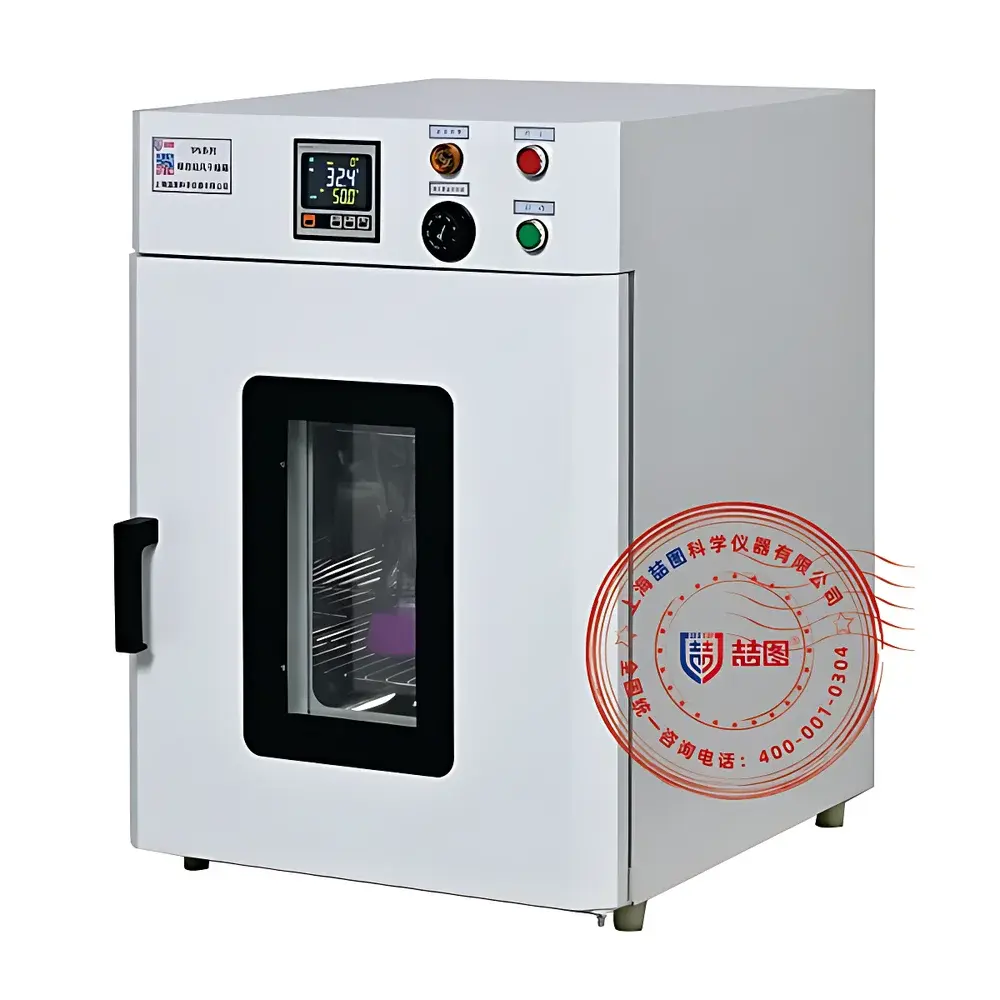
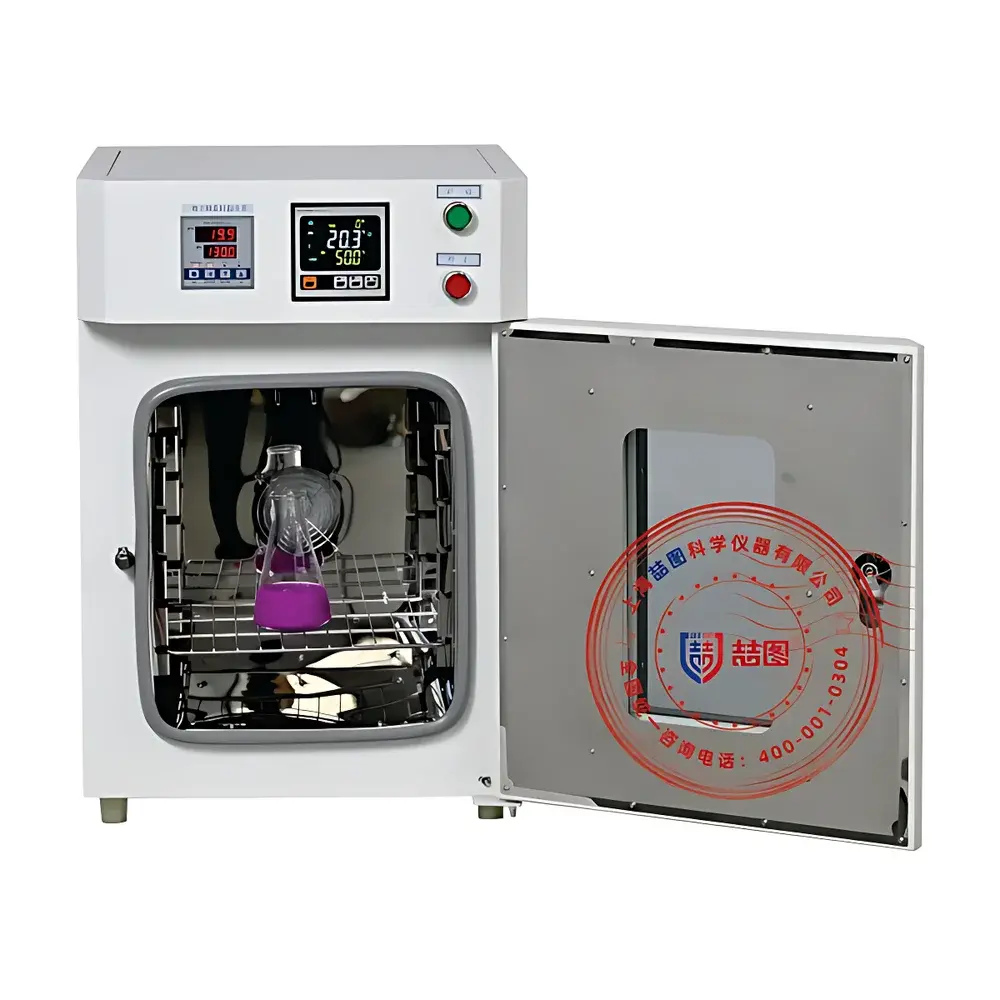
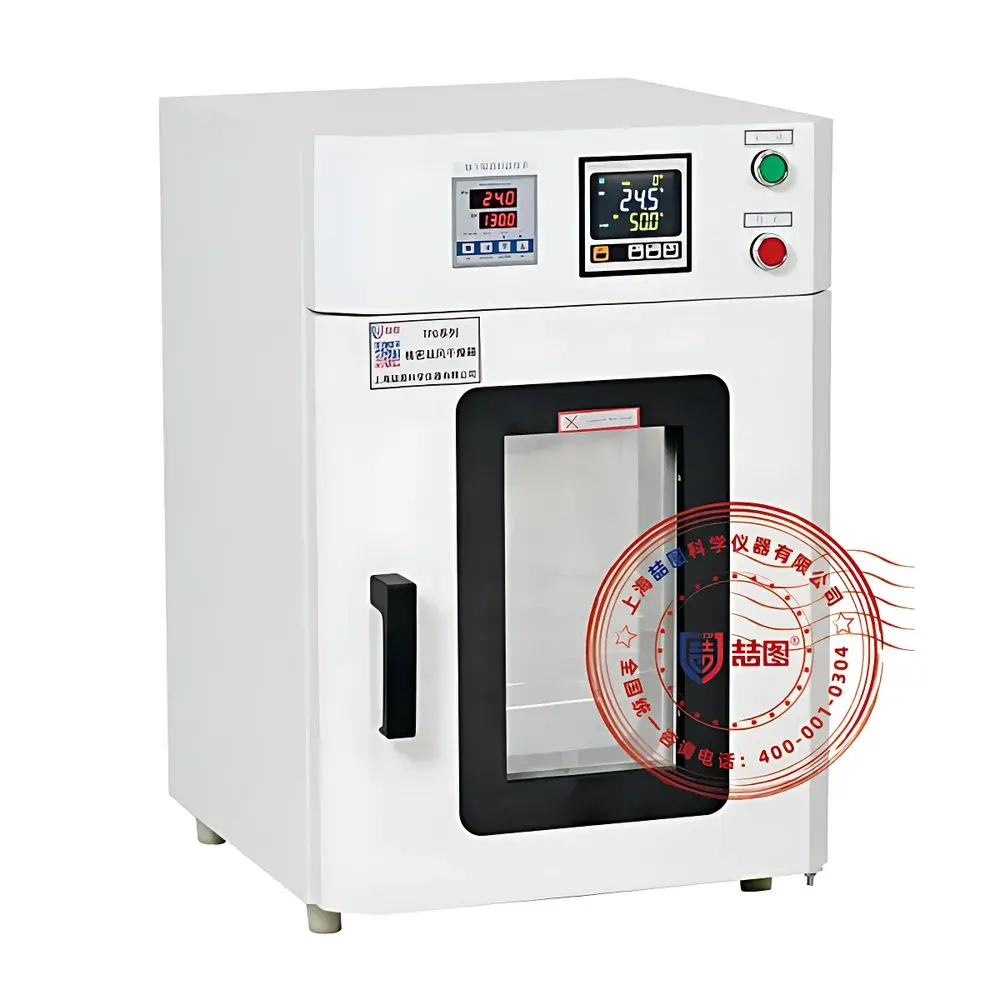
- High-precision microcomputer PID temperature controller with real-time digital display (three-color LCD screen), supporting multi-parameter simultaneous visualization including setpoint, actual temperature, elapsed time, and fault codes.
- Dual-stage mechanical door locking mechanism with zinc-alloy handle and high-temperature silicone rubber gasket ensures long-term sealing integrity and thermal retention—critical for energy efficiency and process reproducibility.
- Double-layer tempered glass observation window with anti-fog coating permits unobstructed visual monitoring without compromising insulation or safety.
- Adjustable and removable stainless steel (304) shelving system (2 standard trays included); shelf spacing is fully configurable to accommodate diverse sample geometries and loading configurations.
- Integrated over-temperature protection circuitry includes both primary PID-controlled cutoff and a redundant independent mechanical limit controller—complying with IEC 61000-4-5 surge immunity and EN 61010-1 safety requirements for Class II laboratory equipment.
- Low-noise, continuous-duty fan motor coupled with multi-blade impeller design maintains consistent airflow velocity (>0.5 m/s average at chamber center) even during extended operation at 250 °C.
- Electrostatically applied powder-coated carbon steel exterior and seamless 304 stainless steel interior resist corrosion, facilitate cleaning, and meet GLP documentation standards for material traceability.
Sample Compatibility & Compliance
The TPG-F30AP accommodates a broad range of non-volatile, thermally stable samples—including polymer films, metal oxide powders, pharmaceutical excipients, ceramic precursors, and electronic substrates—within its 30 L working volume. Its atmospheric operation excludes volatile organic solvents or moisture-sensitive materials requiring inert gas purging or vacuum environments. The unit complies with key international safety and electromagnetic compatibility directives: CE marking per EN 61010-1:2019 (Safety Requirements for Electrical Equipment for Measurement, Control, and Laboratory Use) and EN 61326-1:2013 (EMC for Laboratory Equipment). While not intrinsically rated for hazardous locations, it supports integration into ISO/IEC 17025-accredited laboratories where documented thermal mapping, periodic verification, and preventive maintenance records are maintained per SOPs.
Software & Data Management
The TPG-F30AP supports optional RS485 serial interface (Modbus RTU protocol) and USB data export for external logging via third-party SCADA or LIMS platforms. When equipped with the optional intelligent program controller, users may configure up to 30 segment ramp-soak profiles with real-time timestamped temperature logging at user-defined intervals (1–600 seconds). All operational parameters—including start/stop timestamps, alarm events, and temperature deviation logs—are stored in non-volatile memory with battery-backed retention (>10 years), satisfying FDA 21 CFR Part 11 audit trail requirements when paired with validated software clients. No proprietary cloud platform is required; raw CSV exports enable direct import into Excel, MATLAB, or statistical process control (SPC) tools.
Applications
This oven serves critical roles in quality control laboratories across aerospace component manufacturing (e.g., adhesive curing verification per ASTM D2559), semiconductor packaging (die attach pre-bake per JEDEC J-STD-020), battery electrode drying (NMC cathode conditioning per IEEE 1625), and academic materials science research (sol-gel synthesis annealing, MOF activation). It is routinely deployed for gravimetric moisture analysis (ASTM E180–22), residual solvent determination (USP ), and accelerated aging studies (ISO 11341). Its stability profile also supports calibration lab use as a secondary reference source for thermocouple and RTD verification fixtures operating below 250 °C.
FAQ
Is the TPG-F30AP suitable for vacuum or inert-atmosphere applications?
No. This model is configured exclusively for ambient-pressure forced-air operation. Vacuum or nitrogen-purged variants are available under separate model designations (e.g., TPG-V series).
What calibration documentation is provided with shipment?
Each unit ships with a factory calibration certificate traceable to NIM (National Institute of Metrology, China), covering temperature uniformity and fluctuation verification at 100 °C and 200 °C using calibrated Class A PT100 probes.
Can the oven be integrated into a central building management system (BMS)?
Yes—via optional RS485 Modbus RTU interface, enabling remote status monitoring, setpoint adjustment, and alarm relay output signaling compatible with BACnet/IP gateways.
Does the unit comply with FDA 21 CFR Part 11 for electronic records?
When used with the optional programmable controller and validated third-party data acquisition software, full Part 11 compliance—including electronic signatures, audit trails, and role-based access—is achievable per customer-specific validation protocols.
What maintenance intervals are recommended for sustained accuracy?
Annual verification of temperature uniformity and sensor drift is advised; biannual inspection of door gasket compression force and fan bearing lubrication ensures long-term performance consistency.



