
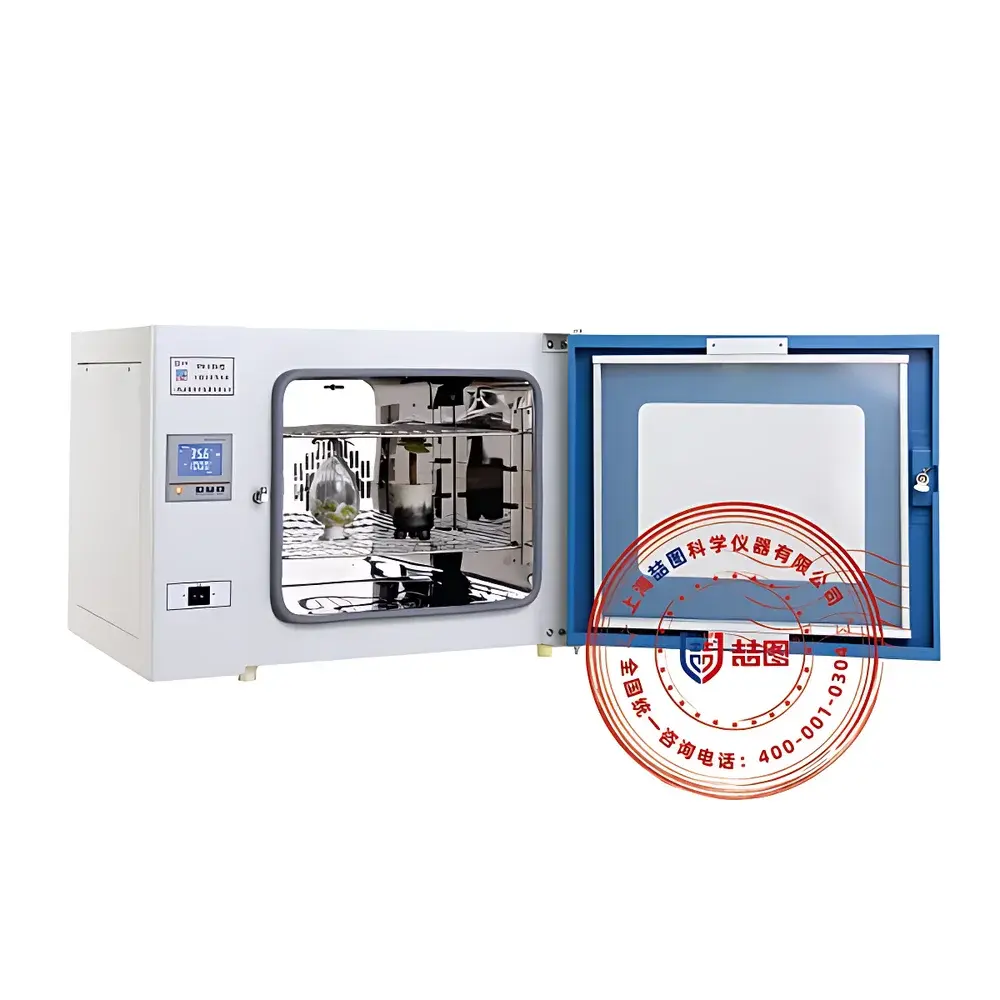
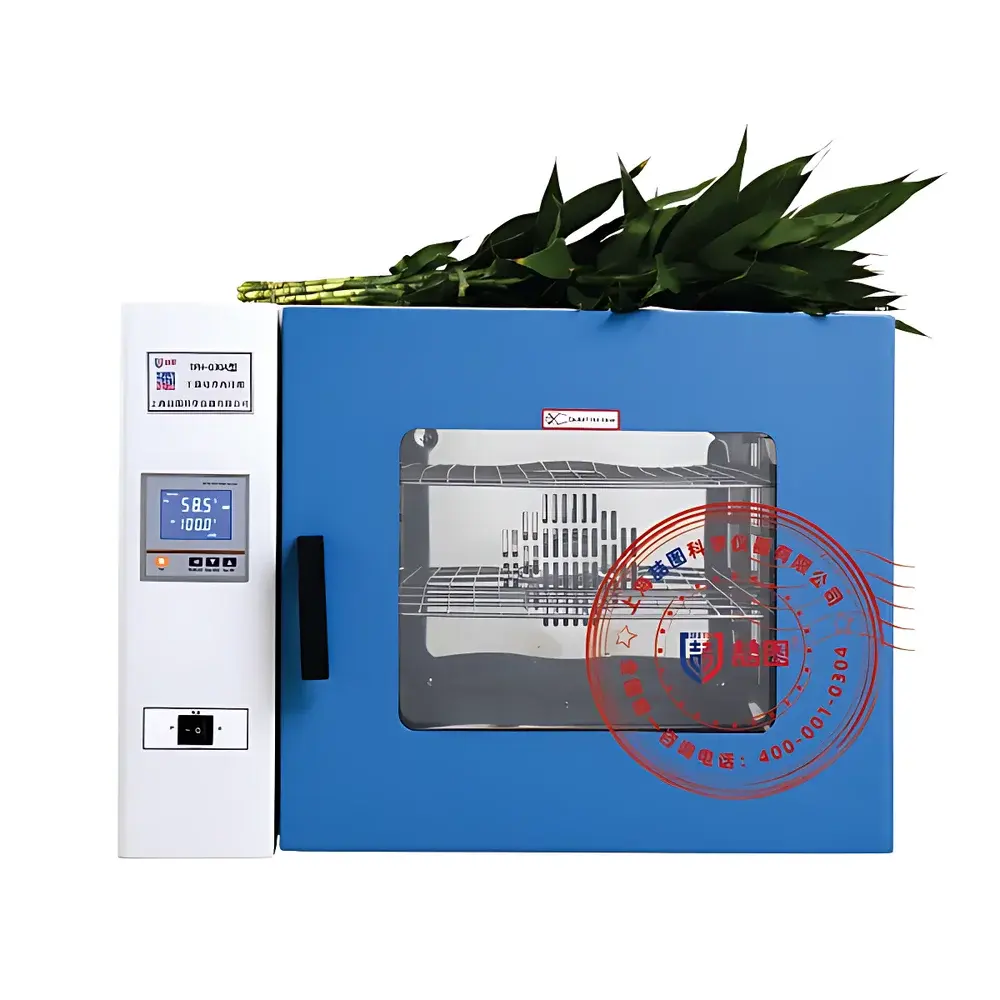
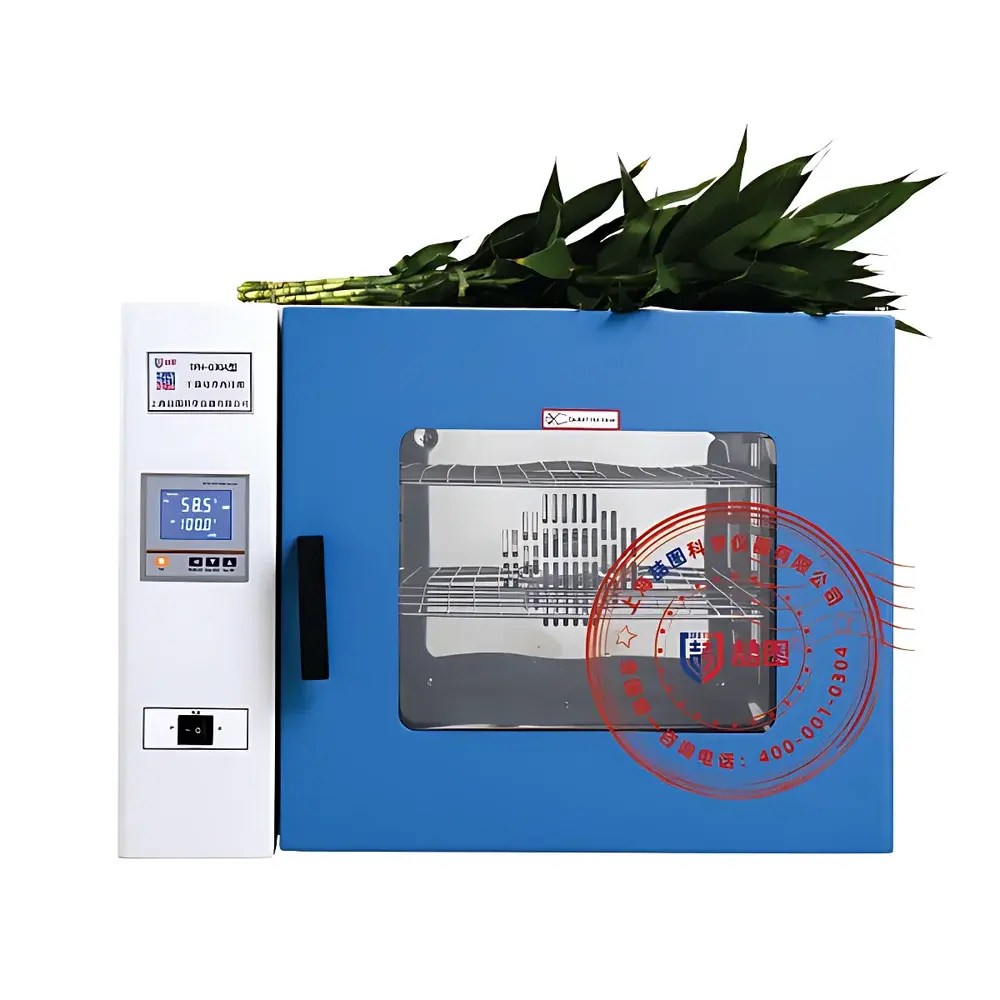
DRETOP TPH-010A Dual-Mode Incubator-Drying Oven
| Brand | DRETOP |
|---|---|
| Origin | Shanghai, China |
| Manufacturer | Yes |
| Product Type | General-purpose forced-air oven |
| Model | TPH-010A |
| Temperature Range | RT+5–80°C (incubation mode) / 80–250°C (drying mode) |
| Temperature Uniformity | ±2.5°C |
| Temperature Fluctuation | ±0.5°C (incubation), ±1°C (drying) |
| Temperature Resolution | 0.1°C |
| External Dimensions | 535 × 480 × 430 mm |
| Internal Chamber Dimensions | 250 × 260 × 250 mm |
| Chamber Material | Stainless steel (SUS304) |
| Heating Method | Forced-air convection with axial fan |
| Insulation | Fiberglass insulation between chamber and outer casing |
| Operating Ambient Temperature | 5–45°C |
| Door Seal | High-temperature silicone rubber gasket |
| Safety Features | Over-temperature alarm, thermal cutoff, short-circuit/overload protection, data retention during power failure |
| Optional Accessories | USB data export port, programmable controller, RS-485 interface, thermal printer output |
Overview
The DRETOP TPH-010A Dual-Mode Incubator-Drying Oven is a compact, benchtop-grade laboratory oven engineered for dual operational regimes: low-temperature biological incubation (RT+5°C to 80°C) and high-temperature dry-heat processing (80°C to 250°C). Unlike conventional ovens limited to either drying or incubation, the TPH-010A integrates intelligent mode-switching logic—automatically transitioning between regimes based on setpoint temperature—enabling seamless use across microbiological culture maintenance, moisture removal, thermal sterilization of heat-stable materials, and pre-conditioning of samples prior to analytical testing. Its measurement principle relies on precision PID-controlled resistive heating combined with forced-air convection, ensuring rapid thermal equilibration and minimal spatial temperature gradients within the stainless-steel chamber. Designed for compliance-driven environments, the unit supports documentation requirements for GLP and GMP workflows through optional data logging and audit-trail-capable controllers.
Key Features
- Microprocessor-based PID temperature controller with 0.1°C resolution, ±0.5°C stability in incubation mode and ±1°C in drying mode
- Forced-air circulation system with rear-mounted axial fan and optimized internal airflow ducting to achieve ±2.5°C temperature uniformity across the full chamber volume
- Double-layer door with large-view tempered glass window and high-temperature silicone rubber gasket for visual monitoring without thermal interruption
- Electrostatically coated cold-rolled steel exterior and electropolished SUS304 stainless-steel interior chamber resistant to corrosion and repeated cleaning with ethanol or mild alkaline solutions
- Self-diagnostic function displaying alphanumeric fault codes (e.g., E01 = sensor open circuit, E02 = over-temperature) directly on the backlit LCD screen
- Dual independent safety systems: primary PID control loop + independent mechanical over-temperature cut-off switch with manual reset
- Energy-efficient fiberglass insulation layer minimizing standby heat loss and supporting ambient operating temperatures up to 45°C
Sample Compatibility & Compliance
The TPH-010A is validated for applications requiring dry-heat sterilization per ISO 17665-1 and ASTM E530 standards, particularly for glassware (e.g., pipettes, Petri dishes, test tubes), metal instruments (forceps, scalpels, hypodermic needles), and thermally stable pharmaceutical excipients such as anhydrous lactose or mineral oils. It is not suitable for sterilizing heat-labile polymers (e.g., PVC, polyethylene), rubber components, or aqueous solutions. The chamber geometry (250 × 260 × 250 mm) accommodates standard ISO-compliant microbiological trays and stacked culture vessels. All electrical components meet IEC 61010-1 safety requirements for laboratory equipment. Optional RS-485 communication enables integration into centralized facility monitoring systems compliant with FDA 21 CFR Part 11 when paired with validated software.
Software & Data Management
The base configuration includes a real-time clock with timer function (1–9999 minutes) and automatic shutdown. For regulated environments, optional upgrades include: (1) USB data export module enabling CSV-formatted temperature/time logs to be saved onto removable flash drives; (2) multi-segment programmable controller supporting up to 30 steps with ramp-soak profiles; (3) RS-485 Modbus RTU interface for SCADA connectivity; and (4) thermal printer output for hard-copy validation records. All logged data include timestamp, setpoint, actual chamber temperature, and alarm status—supporting traceability under GLP and ISO/IEC 17025 quality management systems.
Applications
- Microbiological incubation of bacterial and fungal cultures at controlled sub-sterilization temperatures (e.g., 37°C for E. coli, 25–30°C for environmental isolates)
- Dry-heat sterilization of surgical instruments and glass containers per USP guidelines
- Moisture content determination in pharmaceutical raw materials (e.g., active ingredients, excipients) prior to tablet compression
- Pre-drying of filter membranes and chromatography columns before solvent conditioning
- Thermal aging studies of polymer films and packaging materials per ASTM D3045
- Conditioning of desiccants and reference standards in metrology laboratories
FAQ
What is the maximum recommended continuous operating temperature for long-term chamber integrity?
The TPH-010A is rated for continuous operation up to 250°C; however, sustained use above 200°C may accelerate gasket aging and should be verified against material compatibility specifications.
Can this unit be used for depyrogenation of glass vials?
Yes—when operated at ≥250°C for ≥30 minutes, it meets depyrogenation criteria outlined in USP , provided load configuration allows unobstructed air circulation.
Is the stainless-steel chamber passivated or electropolished?
The interior surfaces are electropolished SUS304, providing enhanced corrosion resistance and ease of decontamination per ISO 14644-1 cleanroom maintenance protocols.
Does the oven support external calibration verification?
Yes—the PT100 sensor is accessible via terminal block; users may connect external calibrated reference thermometers for periodic verification per ISO/IEC 17025 Section 6.5.
What is the warm-up time from ambient to 180°C?
Typical stabilization time is ≤22 minutes under no-load conditions, measured at geometric center per ASTM E145 Annex A3 methodology.



