
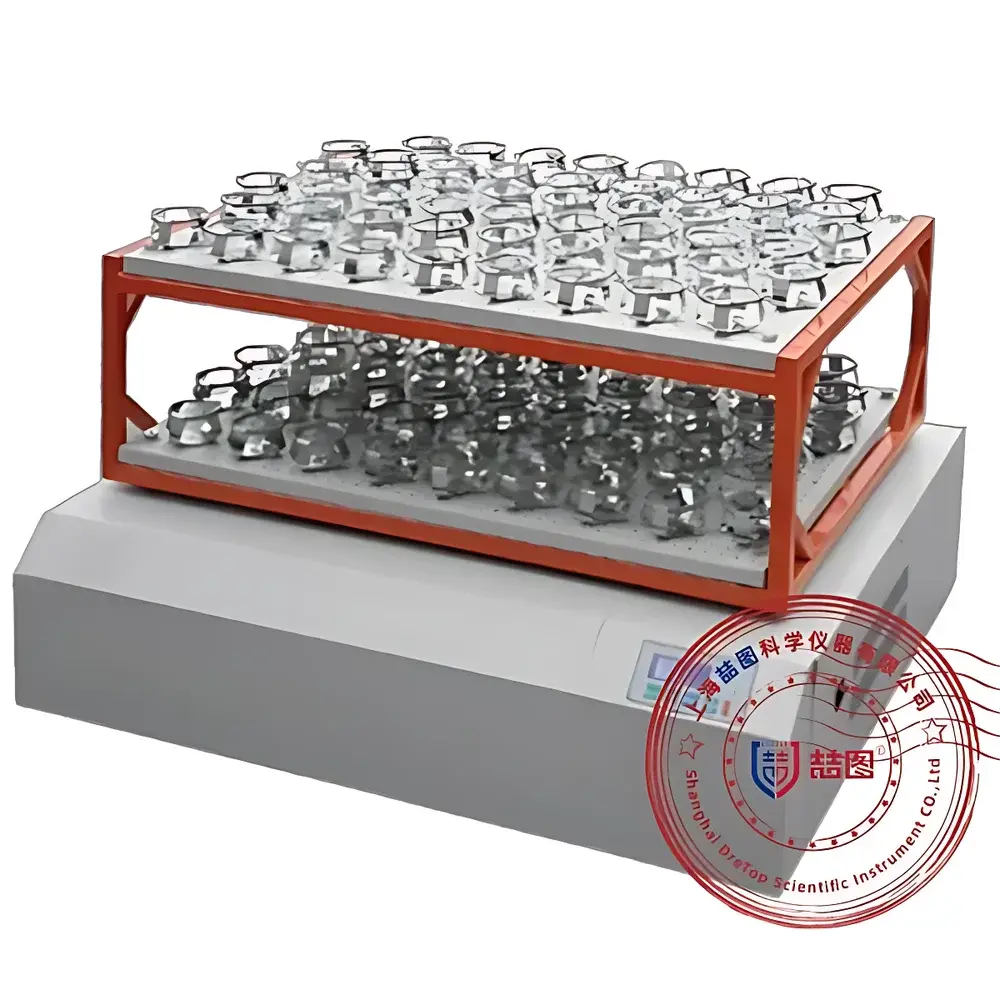
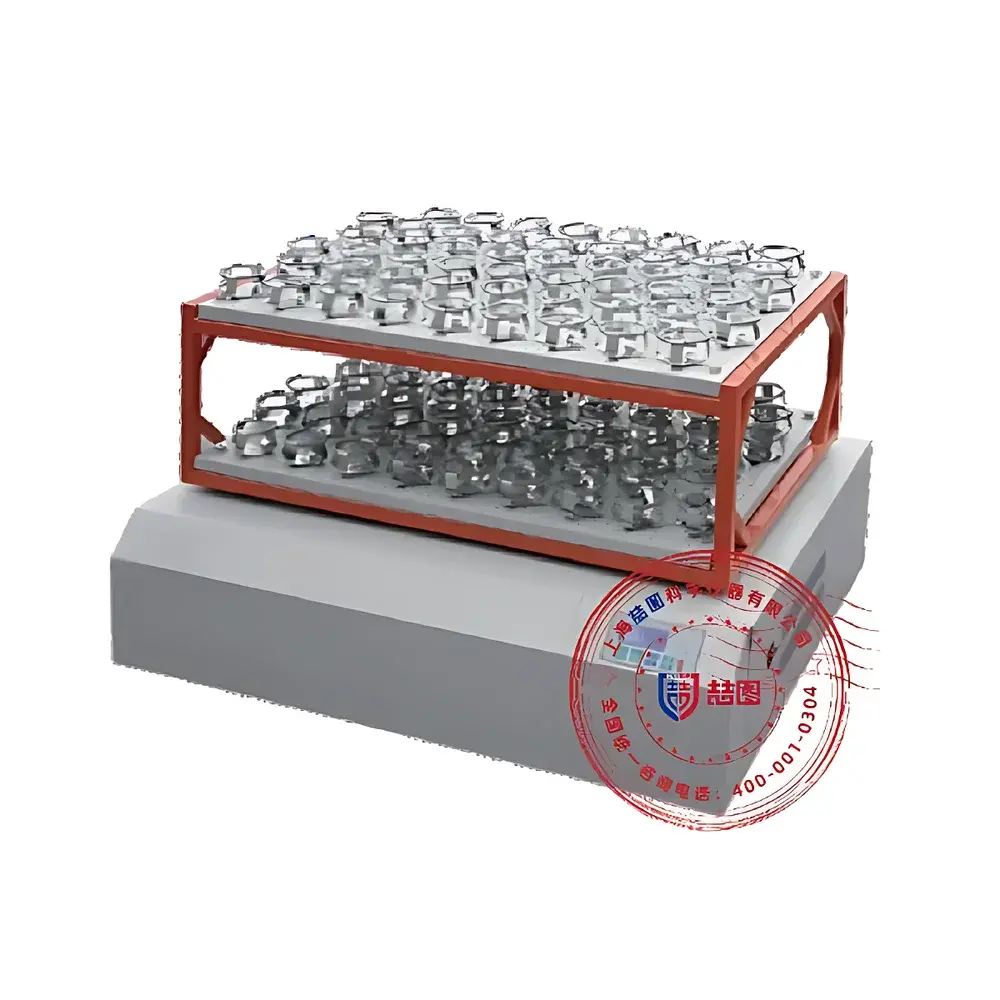
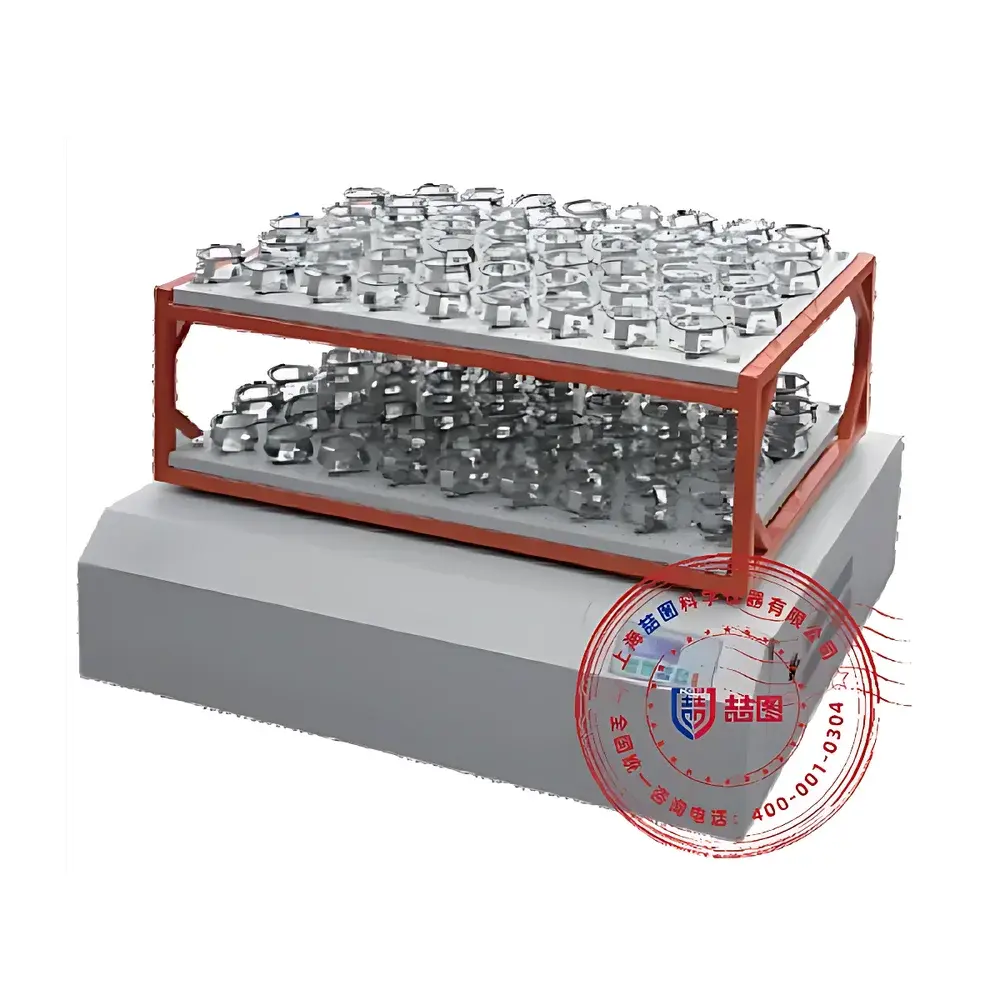
DRETOP TRB-3838 Open-Deck Orbital Shaker
| Brand | DRETOP |
|---|---|
| Origin | Shanghai, China |
| Manufacturer Type | Direct Manufacturer |
| Instrument Category | Domestic (China-Made) |
| Model | TRB-3838 |
| Price Range | USD 700–4,200 (FOB) |
| Instrument Type | General-Purpose Orbital Shaker |
| Timer Range | 0–9999 minutes |
| Oscillation Frequency | 40–300 rpm |
| Orbit Diameter | 26 mm (customizable to 35 mm) |
| Temperature Control | Not integrated (ambient-only operation) |
| Platform Quantity | 1 stainless steel platform |
Overview
The DRETOP TRB-3838 Open-Deck Orbital Shaker is an engineered solution for scalable, reproducible liquid mixing in life science laboratories and bioprocess development environments. Designed on the principle of orbital motion—where a circular drive mechanism imparts uniform, low-shear agitation to culture vessels—the TRB-3838 delivers consistent oxygen transfer and suspension homogeneity across flasks, tubes, and multi-well plates. Unlike enclosed incubator shakers, its open-deck architecture enables rapid loading/unloading of large-volume vessels and facilitates integration with auxiliary equipment such as gas manifolds or external pH/DO probes. The unit operates exclusively at ambient temperature, making it suitable for applications where thermal control is managed externally (e.g., in cold rooms or climate-controlled rooms), or where heat generation from motor operation must be minimized during long-duration cultures.
Key Features
- Large backlit LCD display with real-time monitoring of setpoint and actual speed, timer countdown, and operational status—controlled via intuitive capacitive touch keys.
- Precision-machined one-piece eccentric drive shaft ensures smooth startup, minimal vibration transmission, and long-term mechanical stability—even under unbalanced loads up to 15 kg.
- Non-volatile memory retains all user-defined parameters (speed, time, ramp profile) after power interruption or system reset, eliminating reconfiguration and reducing procedural variability.
- Orbit diameter fixed at 26 mm (standard), with optional factory calibration for 35 mm orbit upon request—optimized for high-viscosity media or large-diameter baffled flasks requiring enhanced mixing efficiency.
- Single-platform configuration features a 380 × 380 mm corrosion-resistant stainless steel deck with raised edge and non-slip silicone mat compatibility for secure vessel retention during high-RPM operation.
Sample Compatibility & Compliance
The TRB-3838 accommodates standard laboratory glassware and plastic vessels including Erlenmeyer flasks (100–2000 mL), test tubes, deep-well plates, and custom bioreactor bottles. Its load capacity supports up to 15 kg distributed evenly across the platform—validated for use with common configurations such as six 1000-mL flasks or thirty 150-mL flasks. The device complies with IEC 61010-1:2010 for electrical safety in laboratory equipment and meets CE marking requirements for EMC (EN 61326-1) and low-voltage directive (2014/35/EU). While not certified for GMP manufacturing environments per se, its parameter memory, audit-ready operation log (via optional RS-232/USB data export), and absence of internal temperature regulation make it suitable for GLP-aligned research workflows where traceability and protocol adherence are required.
Software & Data Management
The TRB-3838 operates via embedded firmware without dependency on PC-based software. All settings—including speed ramping profiles (linear acceleration/deceleration), timer presets, and password-protected parameter locking—are configured directly on the front panel. Optional serial (RS-232) or USB interface enables connection to laboratory information management systems (LIMS) or custom SCADA platforms for remote monitoring and event logging. Data output includes timestamped speed/time records, error codes (e.g., overload, timeout), and runtime statistics—compatible with CSV import for compliance reporting under FDA 21 CFR Part 11 when paired with validated third-party software and electronic signature protocols.
Applications
This shaker is routinely deployed in microbial strain screening, aerobic bacterial cultivation (e.g., E. coli, Bacillus spp.), yeast propagation, enzyme kinetics assays, hybridization buffer equilibration, and cell suspension maintenance for transfection or harvesting. Its robust mechanical design supports extended operation (>72 h continuous run) in academic core facilities, contract development labs, and QC departments performing raw material solubility testing or excipient dispersion studies. In environmental microbiology, it serves for wastewater inoculum preparation and biodegradation assay setups requiring standardized aeration across replicate vessels.
FAQ
Is the TRB-3838 compatible with incubators or environmental chambers?
Yes—its ambient-only operation and compact vertical profile (H = 350 mm) allow placement inside most standard-sized reach-in incubators or walk-in environmental chambers, provided clearance for airflow and heat dissipation is maintained.
Can the shaker be used with viscous media such as agar-containing or glycerol-supplemented cultures?
It is recommended to limit viscosity to ≤200 cP at operating temperature; for higher-viscosity applications, reduce maximum speed to ≤150 rpm and verify mixing uniformity empirically using dye dispersion tests.
Does the unit support validation documentation (IQ/OQ/PQ)?
DRETOP provides factory calibration certificates and mechanical performance test reports. Full IQ/OQ/PQ packages—including protocol templates and traceable sensor verification—can be supplied upon request for regulated laboratory deployment.
What maintenance is required for long-term reliability?
Annual inspection of drive belt tension (if applicable), cleaning of ventilation grilles, and verification of platform leveling are sufficient. No lubrication of the sealed eccentric drive assembly is required throughout its service life.
Is there a version with dual independent platforms?
The TRB-3838-II variant offers two synchronized but separately controllable platforms—ideal for comparative experiments or parallel process optimization under identical mechanical conditions.





