
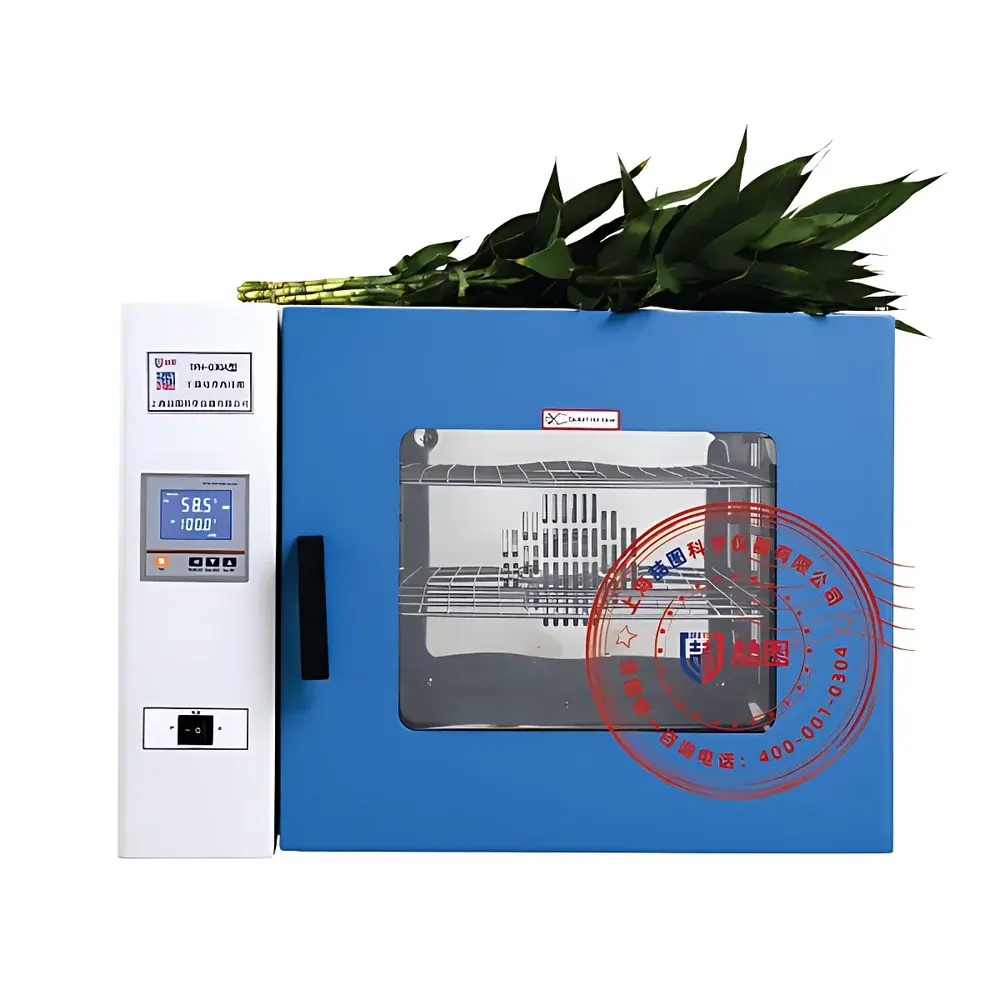
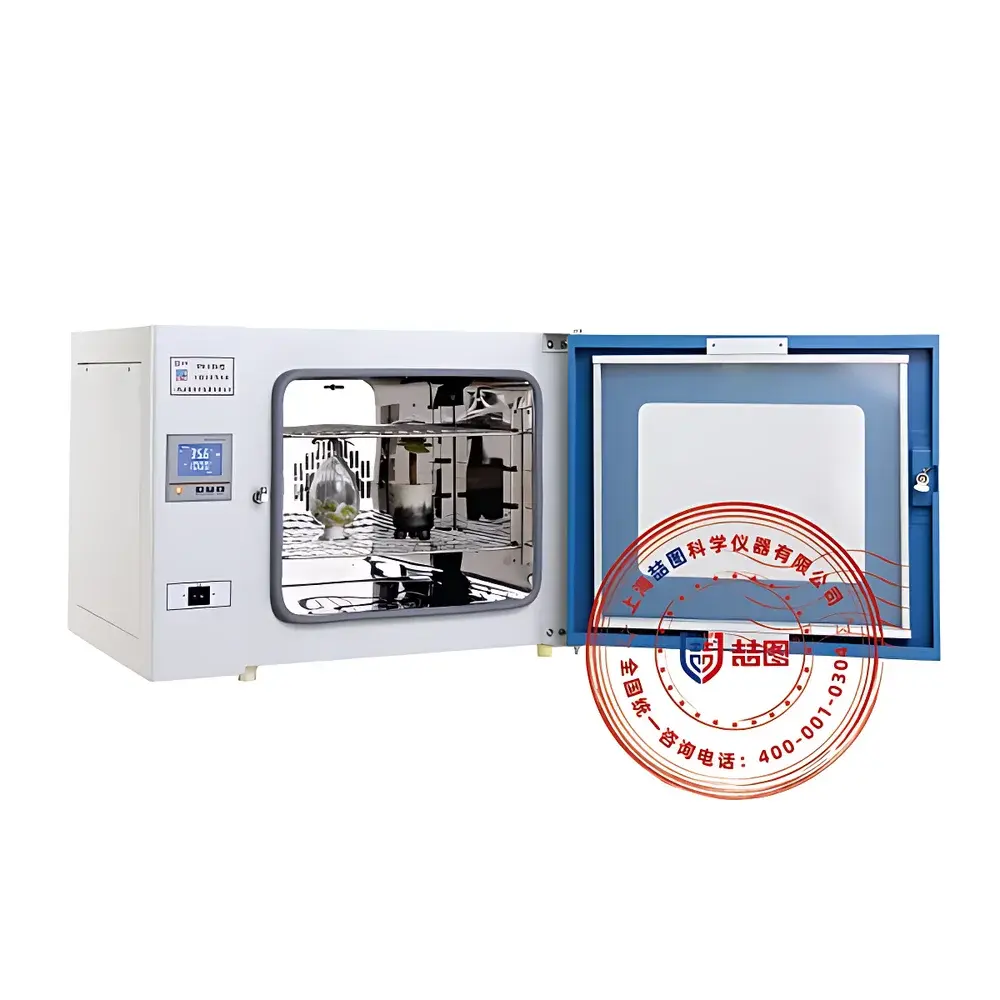
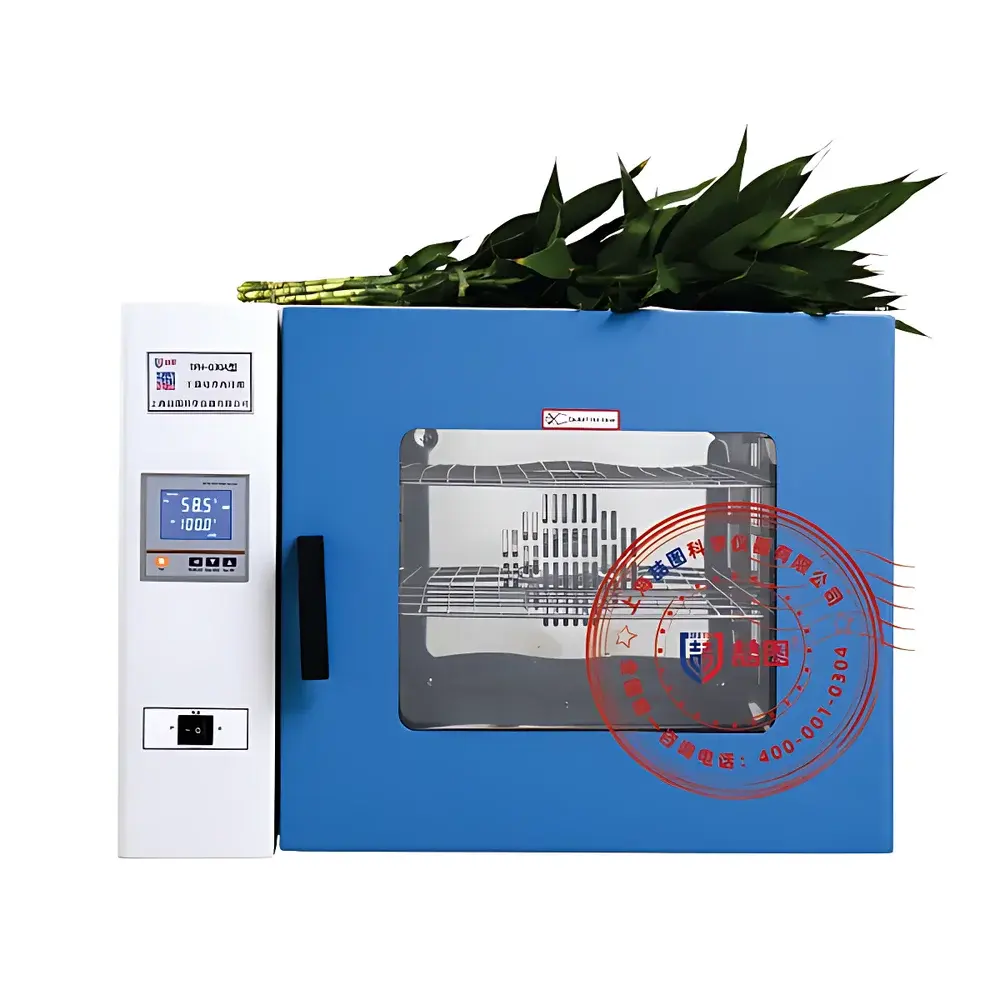
DRETOP TRX-9013A Forced-Air Dry Heat Sterilizer
| Brand | DRETOP |
|---|---|
| Origin | Shanghai, China |
| Manufacturer | Yes |
| Country of Origin | China |
| Model | TRX-9013A |
| Price Range | USD 420–700 (FOB) |
| Air Circulation | Forced convection |
| Temperature Range | Ambient +10°C to 250°C |
| Temperature Resolution | 0.1°C |
| Temperature Uniformity | ±2.5°C |
| Heating Power | 500 W |
| Internal Chamber Dimensions (W×D×H) | 250 × 260 × 250 mm |
Overview
The DRETOP TRX-9013A Forced-Air Dry Heat Sterilizer is a compact, precision-engineered laboratory sterilization system designed for reliable thermal decontamination of heat-stable materials via dry heat convection. Unlike moist-heat methods (e.g., autoclaving), dry heat sterilization relies on sustained elevated temperatures in low-humidity environments to achieve microbial inactivation through oxidative degradation of cellular components, irreversible protein denaturation, and electrolyte concentration-induced cytotoxicity. The primary lethal mechanism is aerobic oxidation of essential cell constituents—particularly membrane lipids and enzymatic proteins—rendering microorganisms nonviable after defined exposure durations at validated temperatures (e.g., ≥160°C for 120 min or ≥180°C for 30 min per ISO 17665-1 and USP ). This unit operates within a rigorously controlled temperature envelope of ambient +10°C to 250°C, making it suitable for terminal sterilization of glassware (e.g., Petri dishes, pipettes, test tubes), stainless steel instruments (e.g., forceps, scalpels, hypodermic needles), and thermally stable pharmaceutical excipients—including anhydrous oils (e.g., injectable sesame oil), ointment bases (e.g., petrolatum), and powdered APIs resistant to thermal decomposition.
Key Features
- Microprocessor-based P.I.D. temperature controller with 0.1°C resolution, ±2.5°C uniformity across the chamber, and programmable timer functionality for repeatable cycle execution.
- Forced-air convection system with optimized internal airflow ducting ensures rapid thermal equilibration and minimizes vertical/horizontal temperature gradients—critical for validation-compliant sterilization processes.
- Double-layer insulated chamber: inner liner and adjustable stainless steel shelves constructed from 304-grade stainless steel; outer casing finished with electrostatic epoxy powder coating for corrosion resistance and mechanical durability.
- High-temperature ceramic fiber door gasket rated for continuous operation up to 250°C, maintaining consistent seal integrity and reducing thermal leakage during extended cycles.
- Integrated safety architecture including independent over-temperature cut-off, audible/visual alarm triggers, short-circuit protection, ground-fault detection, and power-loss data retention (non-volatile memory for setpoints and runtime parameters).
- Large-angle tempered glass observation window with dual-stage rotary latch mechanism ensures visual monitoring without compromising thermal stability or operator safety.
Sample Compatibility & Compliance
The TRX-9013A is explicitly intended for sterilizing materials that are incompatible with steam or moisture—such as silicone-free lubricants, mineral oils, talc-based powders, and borosilicate glassware requiring residue-free treatment. It is not suitable for rubber, polymeric tubing, most active pharmaceutical ingredients (APIs), or biological tissues. The unit complies with fundamental design principles outlined in ISO 13408-2 (Sterilization of health care products — Part 2: Validation and routine control of sterilization by dry heat) and supports user-defined validation protocols aligned with FDA 21 CFR Part 11 requirements when paired with optional data logging accessories. Its construction meets GLP/GMP environmental control expectations for cleanroom-adjacent lab spaces, and all electrical components conform to IEC 61010-1 safety standards for laboratory equipment.
Software & Data Management
While the base TRX-9013A operates via embedded firmware with local LCD interface, optional digital enhancements extend traceability and regulatory readiness. A USB data export port enables direct transfer of temperature logs to external storage devices for offline analysis. For advanced process documentation, users may integrate an optional programmable controller supporting multi-segment ramp-soak profiles and real-time curve visualization. Optional RS-485 communication allows connection to centralized LIMS or SCADA systems, while thermal printer integration provides hard-copy records of cycle start/end times, peak temperatures, dwell durations, and deviation alerts—facilitating audit-ready documentation per ISO 17025 and EU Annex 11 guidelines.
Applications
- Sterilization of reusable glass and metal labware prior to aseptic processing in microbiology and cell culture laboratories.
- Depyrogenation of glass vials and ampoules used in parenteral manufacturing (when validated per USP ).
- Thermal treatment of inert excipients, including pharmaceutical-grade oils and waxes, where water content must remain below 0.1% w/w.
- Pre-sterilization conditioning of analytical sample holders (e.g., crucibles, weighing boats) to eliminate organic carryover in trace elemental analysis (ICP-MS, AAS).
- Heat stabilization of calibration standards and reference materials requiring dry, oxygen-controlled environments.
FAQ
What is the minimum recommended sterilization temperature and time for bacterial spores using this unit?
For Bacillus atrophaeus (formerly B. subtilis) spores—the standard biological indicator for dry heat—the validated minimum is 160°C for 120 minutes or 180°C for 30 minutes. Cycle parameters must be verified using calibrated thermocouples placed at multiple chamber locations.
Can the TRX-9013A be used for depyrogenation?
Yes—when operated at ≥250°C for ≥45 minutes, it achieves >3-log reduction of endotoxin activity per USP , provided load configuration permits uniform air exchange and surface exposure.
Is the unit suitable for sterilizing plastic labware?
No. Most thermoplastics (e.g., polypropylene, polycarbonate) deform or degrade below 150°C. Only high-temperature engineering polymers such as polyimide or quartz-composite materials may be considered—and only after manufacturer-specific thermal stability verification.
Does the device support IQ/OQ/PQ documentation packages?
The hardware platform supports installation qualification (IQ) and operational qualification (OQ) protocols. Performance qualification (PQ) requires user-generated mapping studies and biological indicator challenges; DRETOP provides technical specifications and dimensional drawings to facilitate protocol development.
What maintenance is required to ensure long-term calibration stability?
Annual verification of temperature sensors against NIST-traceable references is recommended. Cleaning of the air intake filter and inspection of the ceramic gasket for compression set or cracking should occur every 6 months under continuous use.
Related Products



