
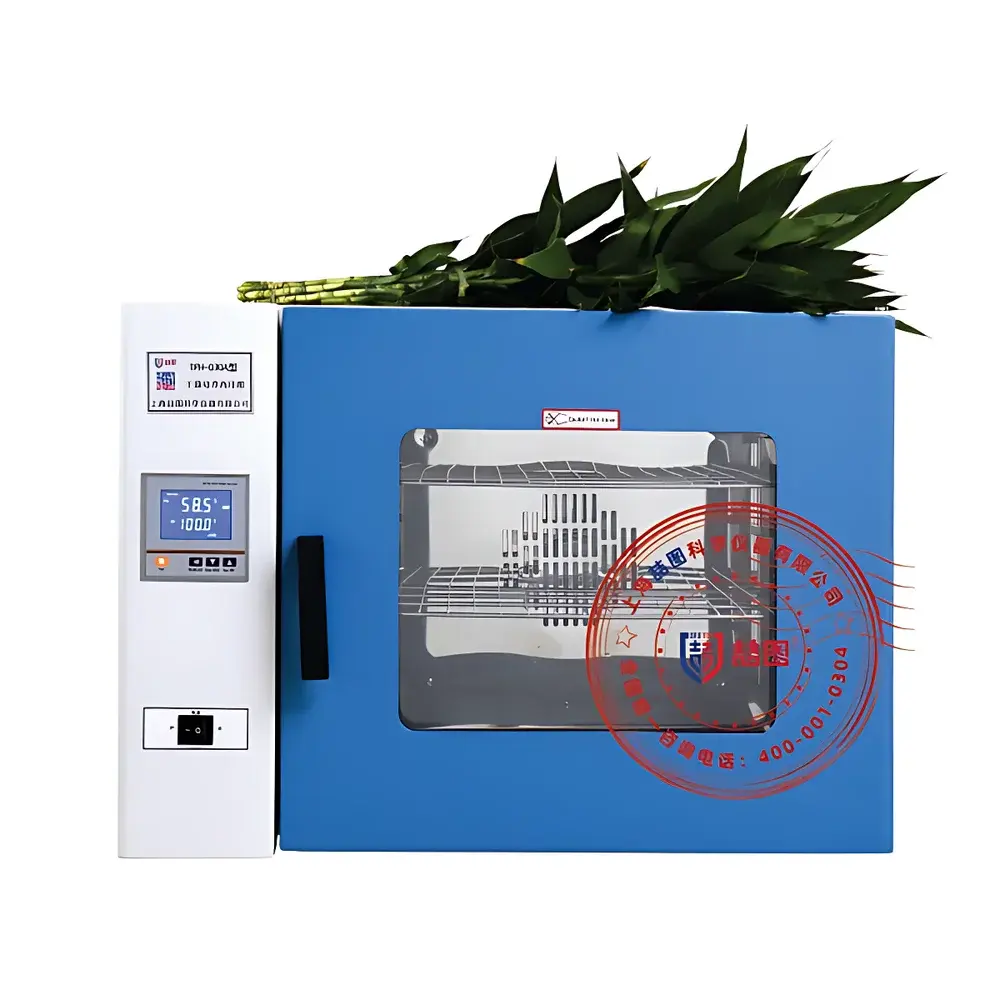
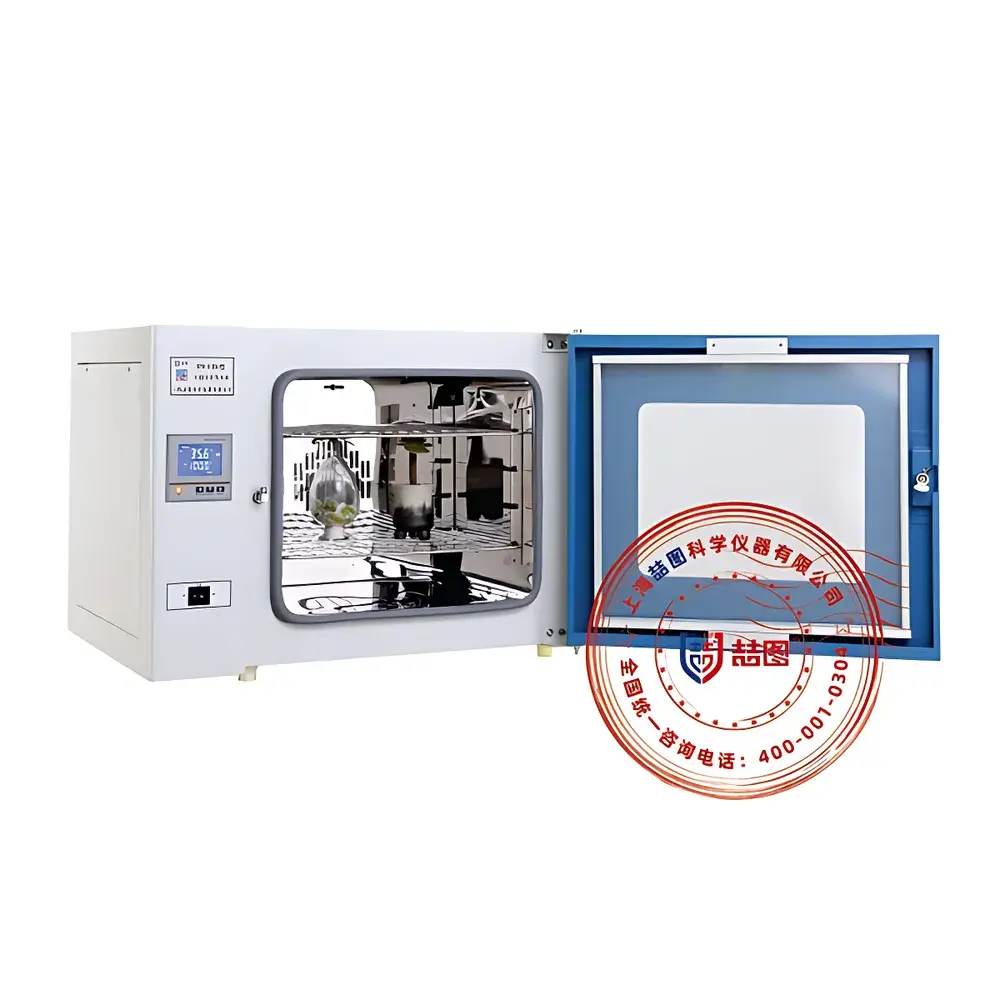
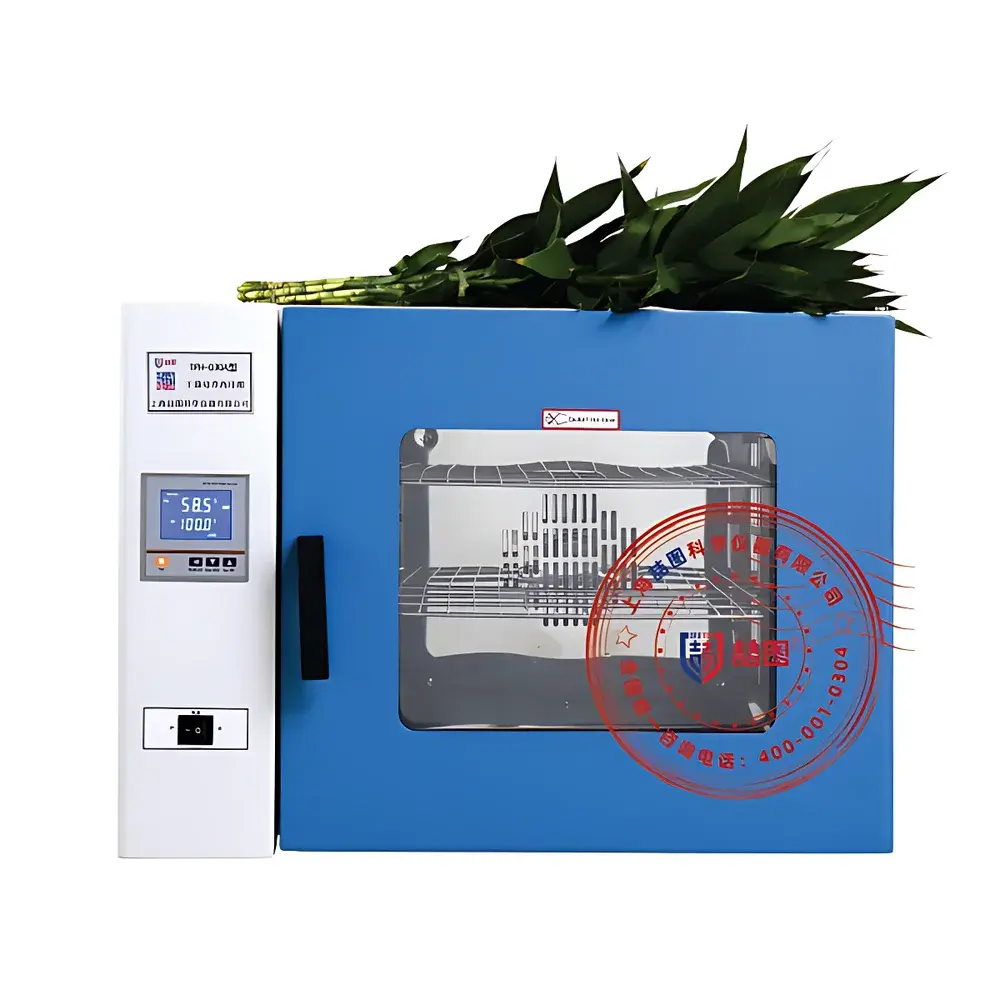
DRETOP TRX-9023A Forced-Air Dry Heat Sterilizer
| Brand | DRETOP |
|---|---|
| Origin | Shanghai, China |
| Manufacturer | Yes |
| Country of Origin | China |
| Model | TRX-9023A |
| Price Range | USD 550–850 (FOB) |
| Air Circulation | Forced convection |
| Temperature Range | RT +10°C to 250°C |
| Temperature Resolution | 0.1°C |
| Temperature Uniformity | ±2.5°C |
| Heating Power | 850 W |
| Interior Dimensions (W×D×H) | 340 × 330 × 320 mm |
Overview
The DRETOP TRX-9023A Forced-Air Dry Heat Sterilizer is a precision-engineered laboratory instrument designed for terminal sterilization of heat-stable, moisture-sensitive materials using dry, convective hot air. Operating on the principle of oxidative denaturation—where sustained elevated temperatures induce irreversible protein coagulation, lipid peroxidation, and nucleic acid degradation—the TRX-9023A delivers validated microbial inactivation (including spores of *Geobacillus stearothermophilus*) across defined exposure durations at temperatures ≥160°C. Unlike moist-heat methods (e.g., autoclaving), dry heat eliminates reliance on steam penetration, making it indispensable for sterilizing items that are hydrophobic, non-porous, or thermally stable but water-labile—such as glassware (vials, pipettes, Petri dishes), stainless steel instruments (forceps, scalpels, hypodermic needles), anhydrous oils (injectable mineral oil, ointment bases), and powdered pharmaceutical excipients (e.g., lactose, microcrystalline cellulose). Its forced-air architecture ensures rapid thermal equilibration and minimizes cold spots, supporting compliance with ISO 17665-1, ASTM E530, and USP requirements for dry-heat sterilization validation.
Key Features
- Microprocessor-based P.I.D. temperature controller with 0.1°C resolution, ±2.5°C uniformity across the chamber, and programmable ramp-hold profiles;
- Forced-air circulation system with optimized duct geometry and rear-mounted centrifugal blower, enabling uniform airflow distribution and accelerated heating kinetics;
- Double-layer insulated chamber: inner 304 stainless steel liner bonded to outer cold-rolled steel shell, with high-density ceramic fiber insulation (thermal conductivity ≤0.04 W/m·K) minimizing standby heat loss;
- Robust dual-stage door locking mechanism with high-temperature ceramic fiber gasket (rated to 300°C), ensuring hermetic sealing and consistent thermal retention during extended cycles;
- Large-format backlit LCD display with tri-color status indicators, real-time temperature graphing, and self-diagnostic fault code reporting (e.g., E01 = sensor open circuit, E03 = overtemperature);
- Comprehensive safety architecture: independent mechanical overtemperature cutoff (adjustable up to 260°C), ground-fault circuit interrupter (GFCI), thermal fuse, short-circuit protection, and power-loss data retention memory;
- Ergonomic design: full-view tempered glass observation window, pull-out stainless steel trays with adjustable spacing (2-tier configuration), and corrosion-resistant zinc-alloy handle.
Sample Compatibility & Compliance
The TRX-9023A is validated for use with Class I and Class II dry-heat-compatible materials per ISO 11140-1 and EN 554. Compatible substrates include borosilicate glass, austenitic stainless steel (304/316), silicone-free ceramics, and anhydrous organic matrices. It is explicitly unsuitable for polymeric materials (e.g., PVC, polyethylene), rubber compounds, biological tissues, or aqueous solutions due to thermal degradation or oxidation risks. The unit supports GLP/GMP documentation workflows: optional RS-485 Modbus RTU interface enables integration with LIMS or SCADA systems; USB data export (via FAT32-formatted flash drive) logs timestamped temperature/time profiles compliant with FDA 21 CFR Part 11 audit-trail requirements. Calibration traceability follows ISO/IEC 17025 standards via NIST-traceable reference thermocouples.
Software & Data Management
While the base TRX-9023A operates via embedded firmware, optional upgrades extend its digital functionality. The programmable controller variant supports up to 30 multi-segment temperature ramps with soak times, enabling complex sterilization protocols (e.g., 170°C for 60 min → cool-down to 40°C). Data logging records temperature every 10 seconds, storing ≥30 days of continuous operation internally. Exported .CSV files are compatible with Microsoft Excel, MATLAB, or statistical process control (SPC) software. Optional Ethernet or Wi-Fi modules (sold separately) allow remote monitoring, alarm notifications via SMTP/email, and secure HTTPS-based web interface access—facilitating centralized fleet management across multi-site laboratories.
Applications
- Sterilization of glassware and metal instrumentation prior to aseptic processing in pharmaceutical manufacturing (e.g., filling lines, isolators);
- Depyrogenation of containers and closures used in parenteral drug production, meeting USP endotoxin reduction criteria;
- Moisture removal and thermal conditioning of hygroscopic reagents (e.g., anhydrous sodium carbonate, potassium bromide pellets) before FTIR or XRD analysis;
- Pre-sterilization baking of filtration assemblies (e.g., stainless steel housings, sintered metal membranes);
- Validation studies for dry-heat sterilization cycles per ISO 11138-4 and EU Annex 1 (2022) requirements;
- Research applications in microbiology, materials science, and nanotechnology where controlled oxidative environments are required (e.g., catalyst pre-treatment, carbon residue analysis).
FAQ
What is the minimum recommended exposure time for sterilization at 180°C?
Per ISO 11138-4, a minimum dwell time of 30 minutes at 180°C is required for sterility assurance level (SAL) of 10⁻⁶ for common bioburden. Cycle validation must be performed using biological indicators (e.g., *G. stearothermophilus* spores) placed at geometrically challenging locations within the load.
Can the TRX-9023A be used for depyrogenation?
Yes—when operated at ≥250°C for ≥45 minutes, it achieves ≥3-log reduction of bacterial endotoxins, satisfying USP and EP 2.6.14 criteria for depyrogenation of glass vials and syringes.
Is the chamber volume suitable for sterilizing standard 100-mm Petri dishes?
Yes—the internal height of 320 mm accommodates stacked Petri dish racks (up to 12 layers), while the 340 mm width permits lateral placement of up to 8 dishes per shelf.
Does the unit comply with electromagnetic compatibility (EMC) directives?
Yes—it meets EN 61326-1:2013 (industrial environment) for emission and immunity, with CE marking affixed for EU market deployment.
What maintenance intervals are recommended for optimal performance?
Clean interior surfaces weekly with 70% IPA; inspect door gasket integrity monthly; calibrate temperature sensors annually using a NIST-traceable dry-block calibrator; replace air filter (if equipped) every 6 months under continuous operation.



