
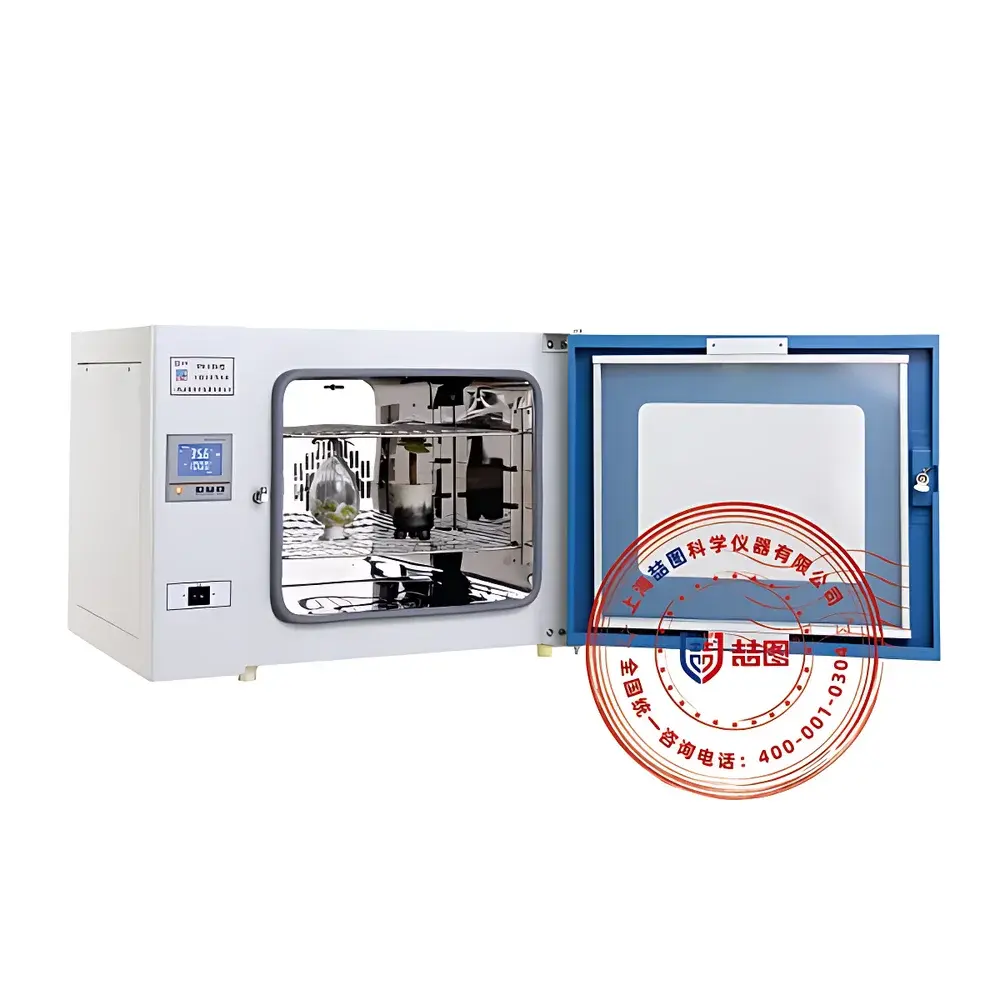
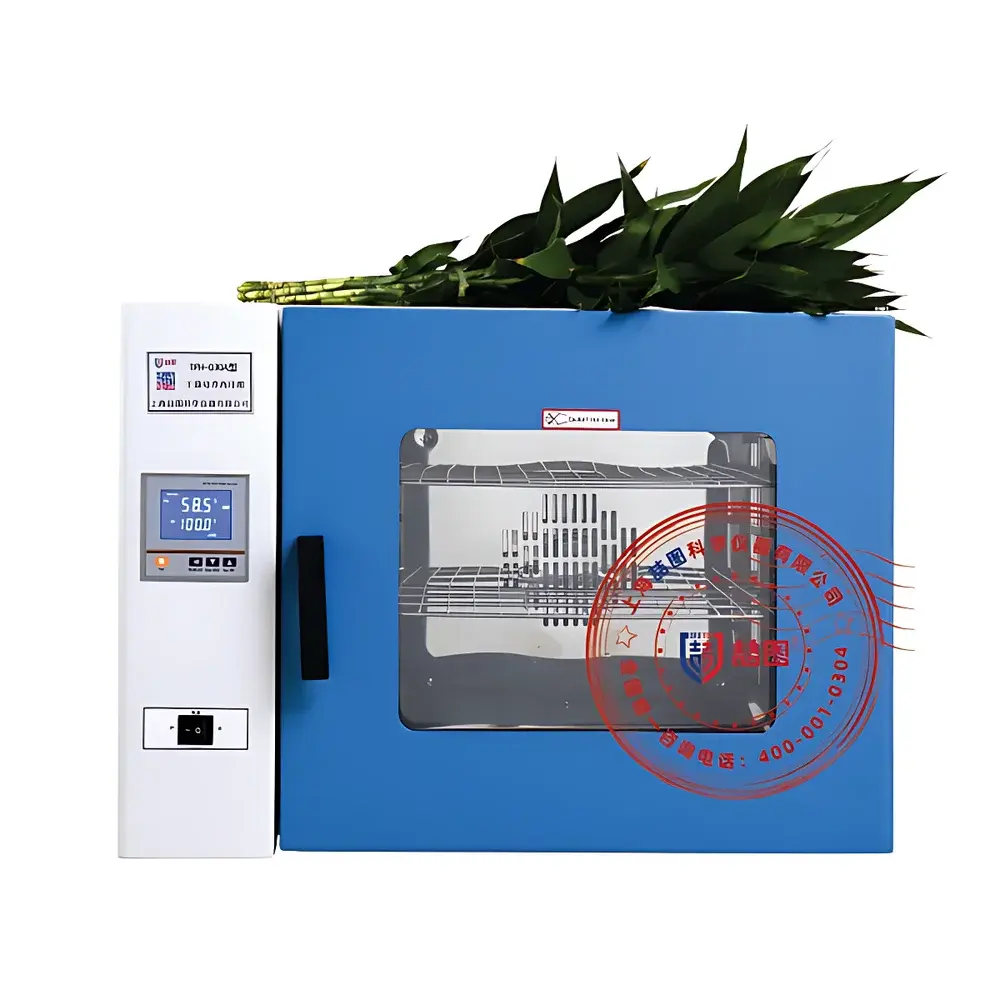
DRETOP TRX-9073A Forced-Air Dry Heat Sterilizer
| Brand | DRETOP |
|---|---|
| Origin | Shanghai, China |
| Manufacturer Type | Direct Manufacturer |
| Product Origin | Domestic (China) |
| Model | TRX-9073A |
| Price Range | USD 700–1,400 (FOB Shanghai) |
| Air Circulation | Forced convection |
| Temperature Range | RT + 10°C to 250°C |
| Temperature Resolution | 0.1°C |
| Temperature Uniformity | ±1°C |
| Heating Power | 1550 W |
| Interior Dimensions (W×D×H) | 450 × 400 × 450 mm |
Overview
The DRETOP TRX-9073A Forced-Air Dry Heat Sterilizer is an industrial-grade laboratory sterilization system engineered for reliable, repeatable thermal decontamination of heat-stable materials via dry heat convection. Unlike moist-heat methods (e.g., autoclaving), dry heat sterilization relies on sustained elevated temperatures in low-humidity environments to induce irreversible microbial inactivation through protein denaturation, oxidative damage to cellular components, and electrolyte concentration-induced cytotoxicity. This mechanism ensures validated lethality against bacterial endospores—including *Geobacillus stearothermophilus*—when exposed to ≥160°C for ≥2 hours or ≥170°C for ≥30 minutes, in accordance with ISO 17665-1 and USP sterility assurance principles. The TRX-9073A is specifically designed for applications where moisture-sensitive or non-porous items must be sterilized without hydrolysis, oxidation, or residual humidity—making it indispensable for glassware, stainless steel instruments, powdered pharmaceuticals, silicone oils, anhydrous ointment bases, and ceramic components used in GMP-compliant manufacturing and analytical laboratories.
Key Features
- Microprocessor-based P.I.D. temperature controller with 0.1°C resolution, ±1°C uniformity across the chamber, and programmable ramp/soak profiles;
- Forced-air convection system with optimized ducted airflow architecture—ensuring rapid thermal equilibration and minimizing cold spots per ASTM F1877-22 validation guidelines;
- Double-layer insulated chamber: inner 304 stainless steel liner bonded to outer cold-rolled steel housing, with high-density ceramic fiber insulation (operational up to 250°C) reducing thermal loss by >40% versus standard mineral wool;
- Two-stage rotary locking door with high-temperature ceramic fiber gasket (rated to 300°C), maintaining positive pressure integrity and minimizing heat leakage during extended cycles;
- Large-format backlit LCD interface displaying real-time temperature, setpoint, elapsed time, and fault codes—supporting intuitive operation and GLP-compliant parameter logging;
- Dual independent safety systems: primary overtemperature cutoff (adjustable limit up to 260°C) and secondary mechanical thermostat; integrated ground-fault circuit interrupter (GFCI), overcurrent protection, and thermal runaway prevention;
- Modular drawer-style stainless steel trays with adjustable vertical spacing (standard configuration: two removable shelves); optional third shelf available upon request;
- Configurable alarm thresholds, data retention during power interruption (non-volatile memory), and automatic shutdown on critical fault detection.
Sample Compatibility & Compliance
The TRX-9073A accommodates standard laboratory glassware (e.g., Petri dishes, pipettes, volumetric flasks), metal surgical tools (forceps, scalpels, biopsy punches), and inert solid matrices including talc, lactose monohydrate, and anhydrous sodium phosphate. It is not suitable for polymeric materials (e.g., PVC, polystyrene), rubber compounds, or thermolabile APIs. Validation-ready design supports IQ/OQ/PQ protocols aligned with ISO 13485:2016, FDA 21 CFR Part 820, and EU Annex 1 requirements for sterile product manufacturing. Temperature mapping reports generated using calibrated Class A PT100 sensors (traceable to NIST standards) confirm compliance with EN 285:2015 Annex C for dry heat sterilizers.
Software & Data Management
While the base model operates via standalone microcontroller firmware, optional digital upgrades include RS-485 Modbus RTU interface for SCADA integration, USB data export (CSV format) for post-cycle analysis, and optional color touchscreen HMI with multi-segment programmable logic (up to 32 steps). All configurations support audit-trail functionality compliant with FDA 21 CFR Part 11 when paired with validated third-party LIMS or ELN platforms. Temperature logs include timestamp, operator ID (via optional RFID badge reader), cycle ID, and deviation flags—enabling full traceability for regulatory submissions and internal quality audits.
Applications
- Sterilization of glass and metal labware prior to aseptic processing in microbiology and cell culture suites;
- Depyrogenation of containers and closures used in parenteral drug manufacturing (per USP and Ph. Eur. 5.1.3);
- Thermal treatment of raw excipients and active ingredients requiring anhydrous stabilization;
- Pre-sterilization conditioning of chromatography columns, crucibles, and weighing boats;
- Residue-free drying of moisture-sensitive calibration standards and reference materials;
- Supporting ISO 11138-4 biological indicator challenge testing using *Bacillus atrophaeus* spore strips.
FAQ
What is the recommended validation protocol for this sterilizer?
Validation follows ISO 14644-3 and ISO 17665-1: perform temperature mapping (≥9 points), biological indicator challenge (10⁶ CFU *B. atrophaeus*), and load penetration studies under worst-case conditions.
Can the TRX-9073A be used for depyrogenation?
Yes—when operated at ≥250°C for ≥45 minutes, it achieves ≥3-log reduction in endotoxin activity per USP , provided load geometry permits uniform air exposure.
Is the unit compliant with CE or UL safety standards?
The TRX-9073A meets IEC 61010-1:2010 for laboratory equipment safety; CE marking is available upon request with EU Representative designation and DoC.
Does the device support continuous monitoring for 21 CFR Part 11 compliance?
With optional RS-485 + validated software stack, yes—full electronic signature, role-based access control, and immutable audit trails are achievable.
What maintenance intervals are recommended?
Inspect door gasket integrity every 6 months; calibrate temperature sensor annually using NIST-traceable reference; clean interior surfaces after each use with ethanol or isopropanol—never abrasive agents.



