
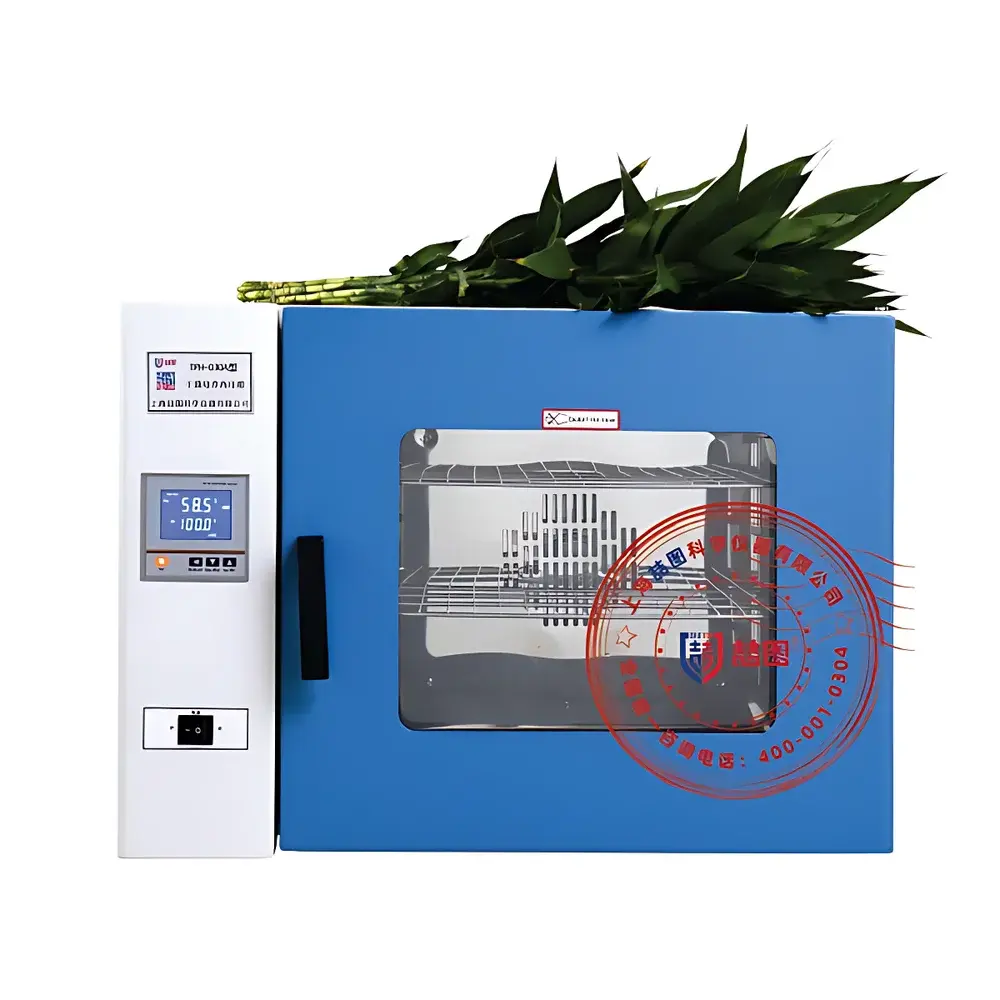
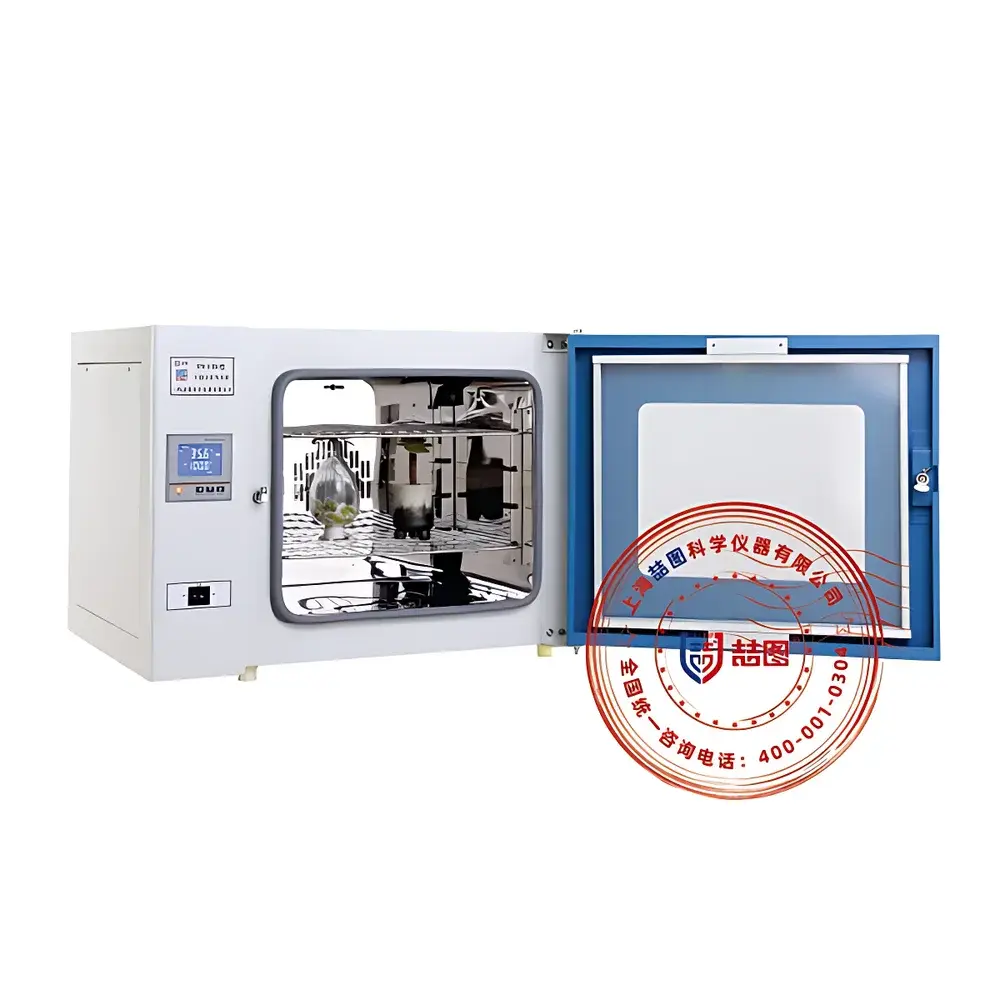
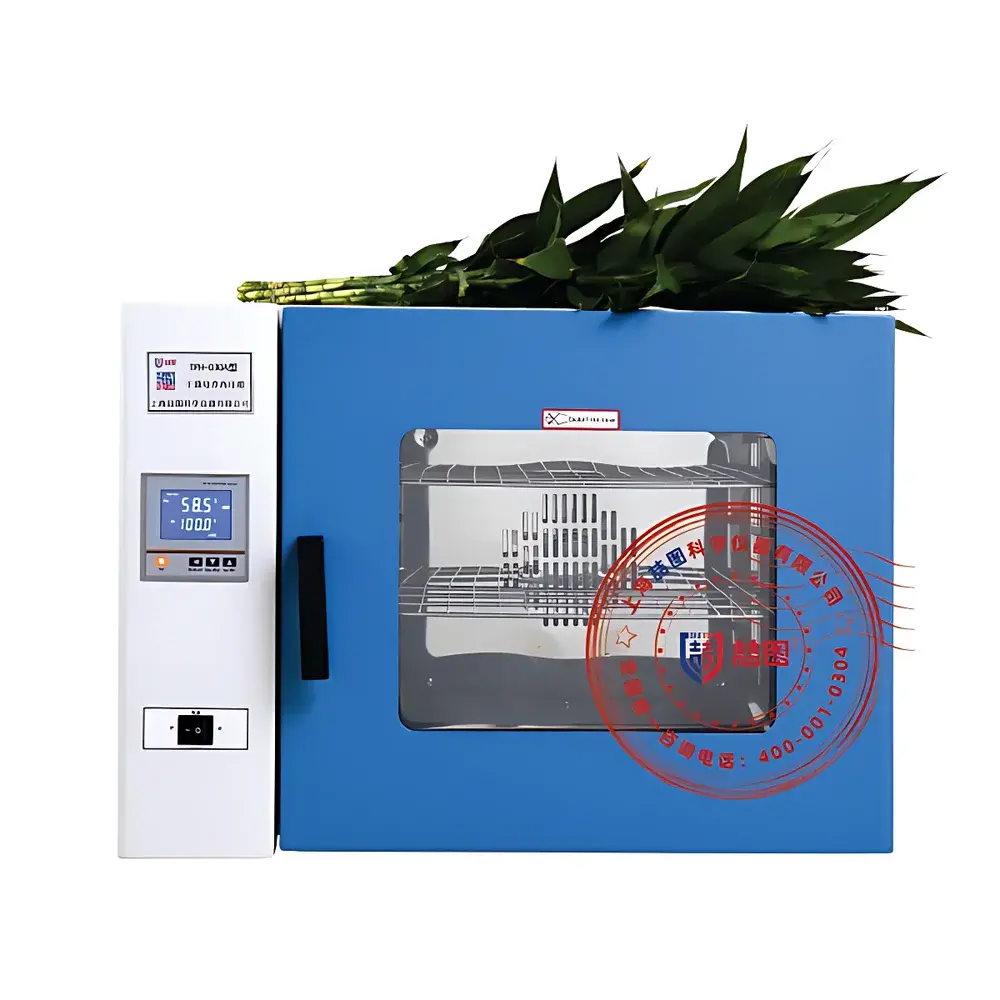
DRETOP TRX-9123A Forced-Air Dry Heat Sterilizer
| Brand | DRETOP |
|---|---|
| Origin | Shanghai, China |
| Model | TRX-9123A |
| Instrument Type | General-Purpose Forced-Air Oven |
| Temperature Range | RT + 10°C to 250°C |
| Temperature Uniformity | ±1°C (at setpoint, measured per ISO 17025-compliant validation protocol) |
| Temperature Resolution | 0.1°C |
| Control Accuracy | ±1°C (steady-state, 30 min dwell at 180°C) |
| Chamber Dimensions (W×D×H) | 550 × 450 × 550 mm |
| External Dimensions (W×D×H) | 835 × 580 × 730 mm |
| Inner Chamber Material | AISI 304 Stainless Steel |
| Heating Method | Horizontal Forced-Air Convection with Dual-Side Heaters & Adjustable Baffle System |
| Insulation | High-Density Glass Fiber (60 mm thickness, thermal conductivity ≤ 0.04 W/m·K) |
| Operating Ambient Temperature | +5°C to +45°C |
| Power Supply | AC 220 V, 50 Hz |
| Rated Power | 2050 W |
| Safety Protections | Independent Over-Temperature Cut-Off (adjustable limit), Leakage Current Protection, Short-Circuit & Overload Protection, Auto Data Retention on Power Failure |
| Optional Interfaces | RS-485 Modbus RTU, USB Data Export Port, Optional Programmable Controller (up to 30 segments) |
Overview
The DRETOP TRX-9123A is a precision-engineered forced-air dry heat sterilizer designed for validated thermal decontamination of heat-stable laboratory and manufacturing materials. It operates on the principle of dry heat sterilization—relying on sustained elevated temperatures (typically ≥160°C for ≥2 hours or ≥180°C for ≥30 minutes) to induce irreversible microbial inactivation via oxidative degradation of cellular components, protein denaturation, and electrolyte imbalance. Unlike moist-heat methods (e.g., autoclaving), dry heat penetrates non-porous, hydrophobic, or moisture-sensitive substrates—including borosilicate glassware, stainless steel instruments, powdered pharmaceuticals, anhydrous oils (e.g., injectable-grade mineral oil), and ointment bases—without risk of hydrolysis, corrosion, or residual moisture. The TRX-9123A is not intended for sterilizing thermolabile polymers (e.g., most plastics, rubber, or biologics), nor for applications requiring vacuum or inert-atmosphere processing.
Key Features
- Microprocessor-based PID temperature controller with dual-stage over-temperature protection: primary control loop plus independent mechanical safety limiter (adjustable up to 260°C).
- High-efficiency horizontal air circulation system featuring dual-side heating elements and a baffle-guided airflow path, ensuring rapid thermal equilibration and minimized vertical/horizontal gradients.
- AISI 304 stainless steel inner chamber with seamless welded corners and electropolished finish—resistant to oxidation, corrosion, and particulate shedding under repeated high-temperature cycling.
- Large-view tempered glass observation window with silicone gasket seal (rated for continuous operation at 250°C), enabling real-time visual monitoring without compromising thermal integrity.
- Three adjustable stainless steel shelves with reinforced support rails; shelf spacing optimized for uniform convective exchange and unrestricted airflow beneath loaded items.
- Intelligent diagnostics interface: LCD display shows real-time temperature, setpoint, elapsed time, and fault codes (e.g., E01 = sensor open circuit; E02 = heater failure), supporting GLP-aligned troubleshooting and maintenance logging.
Sample Compatibility & Compliance
The TRX-9123A is routinely employed for sterilizing reusable laboratory hardware (e.g., pipette tips, Petri dishes, forceps, scalpels), calibration standards, and excipient-grade powders compliant with USP and EP 5.1.2 dry heat sterilization guidelines. Its design supports IQ/OQ/PQ validation per ISO 13408-1 and ISO 17665-1. Chamber geometry and airflow dynamics have been verified using thermocouple mapping (15-point grid) per ASTM F2790-21, confirming ≤±1°C uniformity across the entire working volume at 180°C. The unit meets CE marking requirements (2014/35/EU Low Voltage Directive and 2012/19/EU EMC Directive) and complies with IEC 61010-1:2010 for laboratory electrical safety. It is suitable for use in environments governed by FDA 21 CFR Part 11 when paired with optional audit-trail-capable software (via RS-485 integration).
Software & Data Management
While the base configuration includes a stand-alone microcontroller with local data retention (parameter memory survives power interruption), optional digital upgrades extend traceability and regulatory readiness. The USB export port enables direct download of temperature/time logs to CSV files for post-run analysis in Excel or LIMS platforms. When integrated with DRETOP’s optional programmable controller (model PC-TRX), users can define multi-segment thermal profiles (up to 30 steps), assign user IDs, and generate timestamped PDF reports compliant with GMP Annex 11. RS-485 Modbus RTU output permits bidirectional communication with SCADA systems or centralized lab management software, supporting automated alarm escalation and electronic batch record generation.
Applications
- Sterilization of glassware and metal surgical instruments in academic, clinical, and contract manufacturing laboratories.
- Depyrogenation of vials, ampoules, and stoppers prior to aseptic filling operations (validated per USP ).
- Drying and pre-conditioning of hygroscopic reference standards and analytical reagents.
- Thermal aging studies of packaging materials and polymer stability testing per ISO 11348 and ASTM D3045.
- Residue-free heat treatment of chromatography columns, crucibles, and ceramic filters.
- Pre-sterilization bake-out of environmental monitoring plates and settle plates used in cleanroom qualification.
FAQ
What is the recommended validation protocol for this sterilizer?
We recommend performing thermocouple mapping per ISO 17025-accredited procedures at three load conditions (empty, half-load with stainless steel trays, full-load with worst-case density). Validation should include hold-time verification at 180°C for 60 minutes and biological indicator challenge (e.g., Geobacillus stearothermophilus spores on stainless carriers) per ISO 11138-2.
Can this unit be used for depyrogenation?
Yes—when operated at ≥250°C for ≥45 minutes, the TRX-9123A achieves >3-log reduction of endotoxin activity per USP , provided chamber uniformity and air exchange rate are confirmed during qualification.
Is the stainless steel chamber passivated?
The AISI 304 interior undergoes acid pickling and passivation per ASTM A967 prior to shipment, minimizing free iron contamination and enhancing oxide layer stability during cyclic heating.
Does it support remote monitoring?
With the optional RS-485 interface and compatible SCADA gateway, real-time temperature, status flags, and alarm events can be transmitted to centralized dashboards or cloud-based lab infrastructure platforms.
What maintenance intervals are recommended?
Inspect door gasket integrity and clean chamber interior every 100 operating hours; verify temperature sensor calibration annually or after any impact event; replace glass fiber insulation only if physically compromised or thermally degraded (typical service life >5 years at ≤220°C continuous use).



