
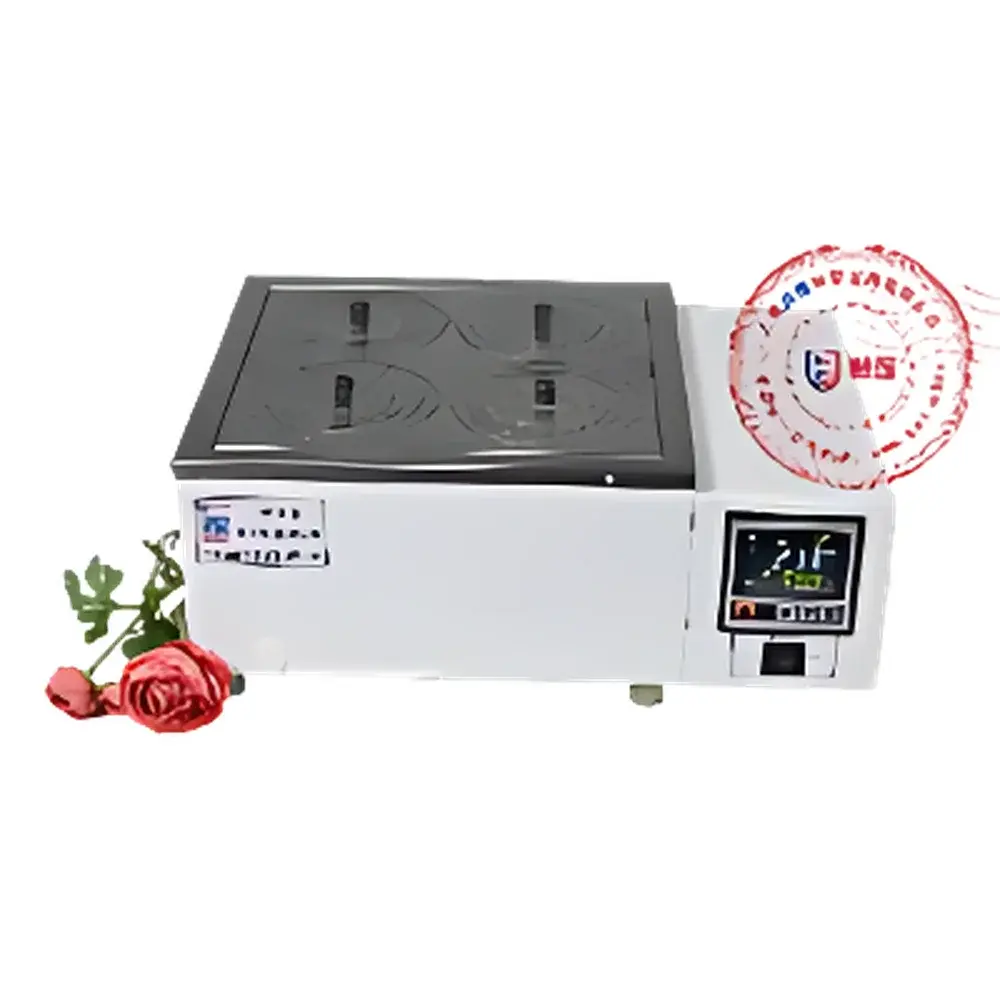
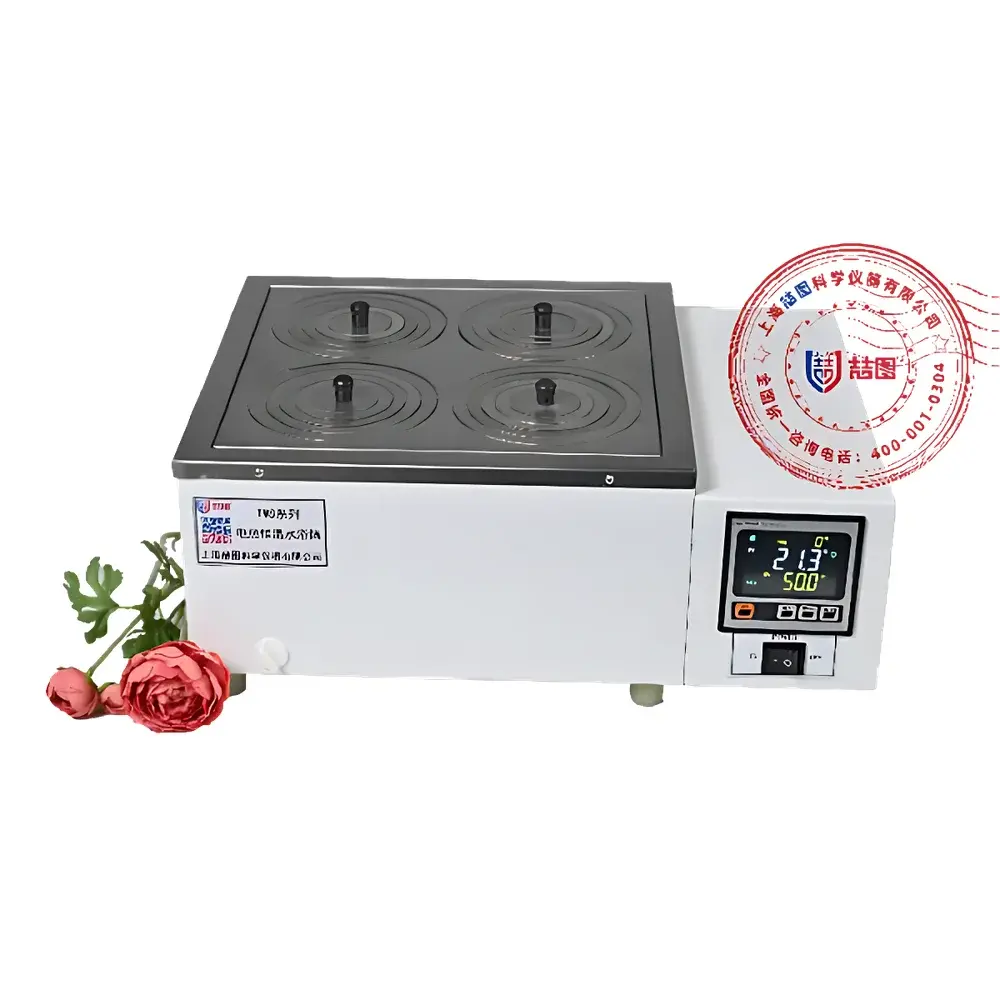
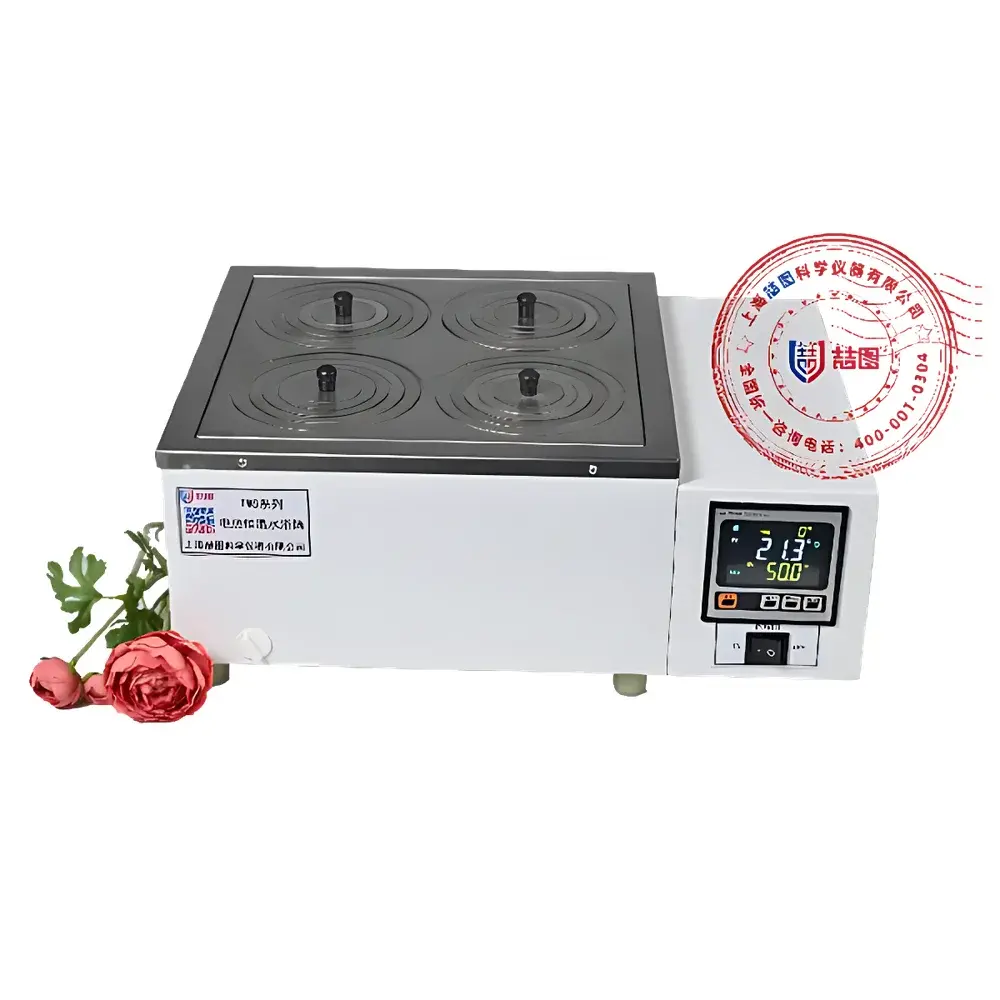
DRETOP TWS-24 Dual-Row Four-Position Electric Constant-Temperature Water Bath
| Brand | DRETOP |
|---|---|
| Origin | Shanghai, China |
| Manufacturer Type | Direct Manufacturer |
| Country of Origin | China |
| Model | TWS-24 |
| Operating Temperature Range | RT + 5°C to 100°C |
| Temperature Control Accuracy | ±0.1°C |
| Bath Capacity | 9.9 L |
| Heating Power | 1000 W |
| External Dimensions (W×D×H) | 450 × 330 × 210 mm |
Overview
The DRETOP TWS-24 Dual-Row Four-Position Electric Constant-Temperature Water Bath is a precision-engineered laboratory thermal platform designed for reproducible, stable temperature control in aqueous environments. Based on resistive heating and PID-regulated feedback loop architecture, it maintains uniform thermal distribution across dual-row, four-well stainless steel bath compartments—each independently accessible yet thermally coupled within a shared water reservoir. Its core function is to provide calibrated, non-contact conductive heating for glassware immersion applications including sample incubation, enzymatic reactions, dissolution testing, solvent evaporation, chemical hydrolysis, and temperature-dependent calibration of analytical instruments. The unit operates within a validated range from ambient +5°C to 100°C, making it suitable for both low-temperature stabilization and near-boiling point protocols under controlled conditions.
Key Features
- Microprocessor-based PID temperature controller with dual digital display: simultaneous readout of setpoint and real-time bath temperature, resolution 0.1°C
- High-stability Pt100 temperature sensor integrated with low-drift analog signal conditioning circuitry for long-term repeatability
- Stainless steel 304 inner tank with PTFE-coated option (ASTM B117 compliant for 500-hr salt spray resistance), minimizing corrosion and facilitating residue-free cleaning
- Integrated anti-dry-burn protection: automatic heater cutoff triggered by ultrasonic or float-switch level detection when water volume falls below operational minimum
- Intelligent power-fail recovery system: EEPROM-backed parameter retention ensures uninterrupted operation after grid interruption—preserves timer status, setpoint, and ramp profiles
- Adjustable over-temperature alarm threshold (±0.1°C programmable deviation), activating audible alert and relay-driven heater disablement
- Ergonomic design with front-mounted drain valve, removable perforated stainless steel support tray, and interchangeable silicone-rubber well inserts for flask diameter adaptability (25–100 mm)
Sample Compatibility & Compliance
The TWS-24 accommodates standard laboratory glassware including Erlenmeyer flasks (up to 1000 mL), volumetric flasks, centrifuge tubes, and reaction vessels with external diameters ranging from 25 mm to 100 mm. Its 9.9 L capacity supports concurrent processing of up to four samples at identical or staggered thermal conditions (when used with optional programmable controller). The device complies with IEC 61010-1:2010 safety standards for electrical equipment for measurement, control, and laboratory use. When configured with audit-trail-enabled firmware (optional upgrade), it meets data integrity requirements under FDA 21 CFR Part 11 and supports GLP/GMP-aligned workflows through timestamped event logging—including temperature deviations, alarm triggers, and manual interventions.
Software & Data Management
While the base model operates via standalone front-panel interface, optional RS-485/Modbus RTU communication enables integration into centralized lab management systems. With the 30-segment programmable controller add-on, users define multi-step thermal profiles (ramp-soak-hold sequences) with independent time/temperature setpoints per segment. All configuration changes, runtime events, and temperature logs are stored in non-volatile memory with UTC timestamps. Optional PC software provides exportable CSV reports, graphical trend visualization, and password-protected user access levels (Operator, Technician, Administrator) aligned with ALCOA+ data governance principles.
Applications
- Pharmaceutical QC: Dissolution testing per USP , stability studies, and extractable/leachable sample conditioning
- Environmental analysis: BOD incubation, nutrient digestion (e.g., Kjeldahl), and EPA Method 1664 lipid extraction
- Food & beverage labs: Enzyme activity assays, fat melting point determination, and AOAC moisture equilibration
- Academic research: Kinetic studies requiring precise thermal initiation, DNA denaturation controls, and polymer solubilization protocols
- Industrial R&D: Catalyst activation, resin curing pre-conditioning, and viscosity reference standard equilibration
FAQ
What is the maximum recommended operating temperature for continuous use?
The TWS-24 is rated for sustained operation at 100°C; however, for optimal sensor longevity and bath fluid stability, prolonged use above 95°C should be verified against local water quality and evaporation rate.
Can the unit maintain temperature uniformity across all four wells simultaneously?
Yes—thermal uniformity is maintained within ±0.3°C across the entire bath volume at steady state, as verified by ISO/IEC 17025-accredited calibration using NIST-traceable PT100 probes.
Is the PTFE coating applied to the entire inner surface, including weld seams and corners?
Yes—the electrostatically bonded fluoropolymer layer fully encapsulates all interior surfaces, including joints and drainage channels, confirmed via cross-sectional SEM imaging and ASTM D3359 tape adhesion testing.
Does the device support external temperature probe input for sample-specific monitoring?
Not by default; however, the optional RS-485 interface allows connection to third-party PT100 or thermistor probes via Modbus register mapping for auxiliary temperature feedback loops.
How often does the system require recalibration to meet ISO/IEC 17025 traceability requirements?
Annual verification against certified reference standards is recommended; internal sensor drift remains below ±0.05°C/year under typical lab conditions, per manufacturer’s accelerated aging test report.



