

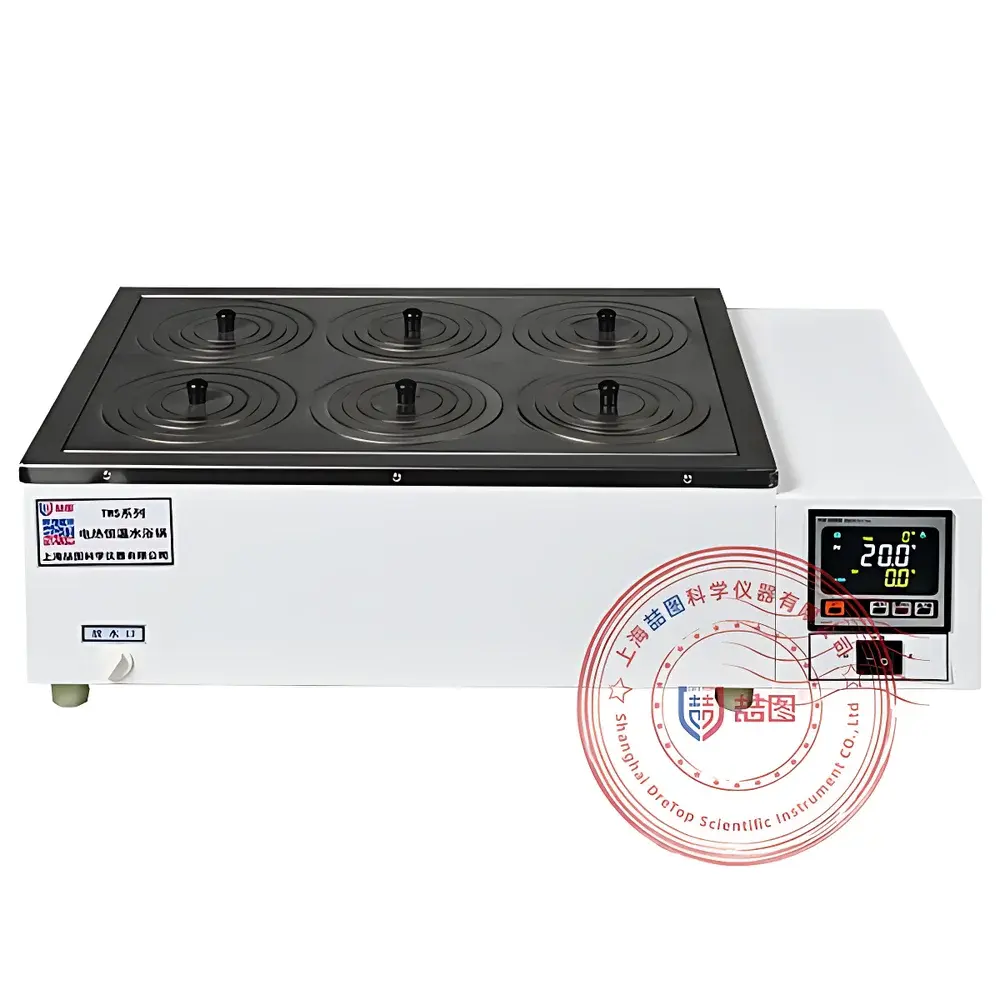
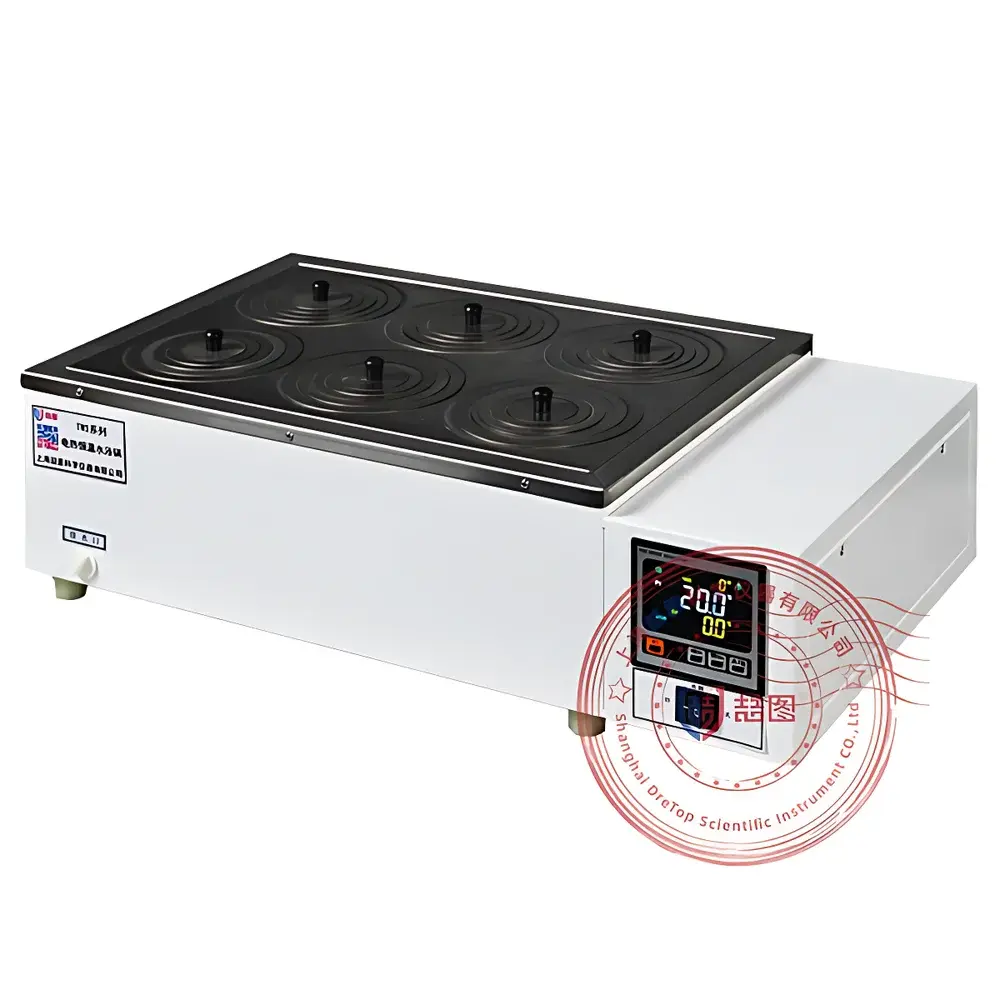
DRETOP TWS-26 Dual-Row Six-Position Electric Constant-Temperature Water Bath
| Brand | DRETOP |
|---|---|
| Origin | Shanghai, China |
| Manufacturer Type | Direct Manufacturer |
| Product Category | Domestic |
| Model | TWS-26 |
| Operating Temperature Range | RT + 5°C to 100°C |
| Bath Capacity | 14.9 L |
| Heating Power | 1500 W |
| External Dimensions (W×D×H) | 600 mm × 330 mm × 210 mm |
Overview
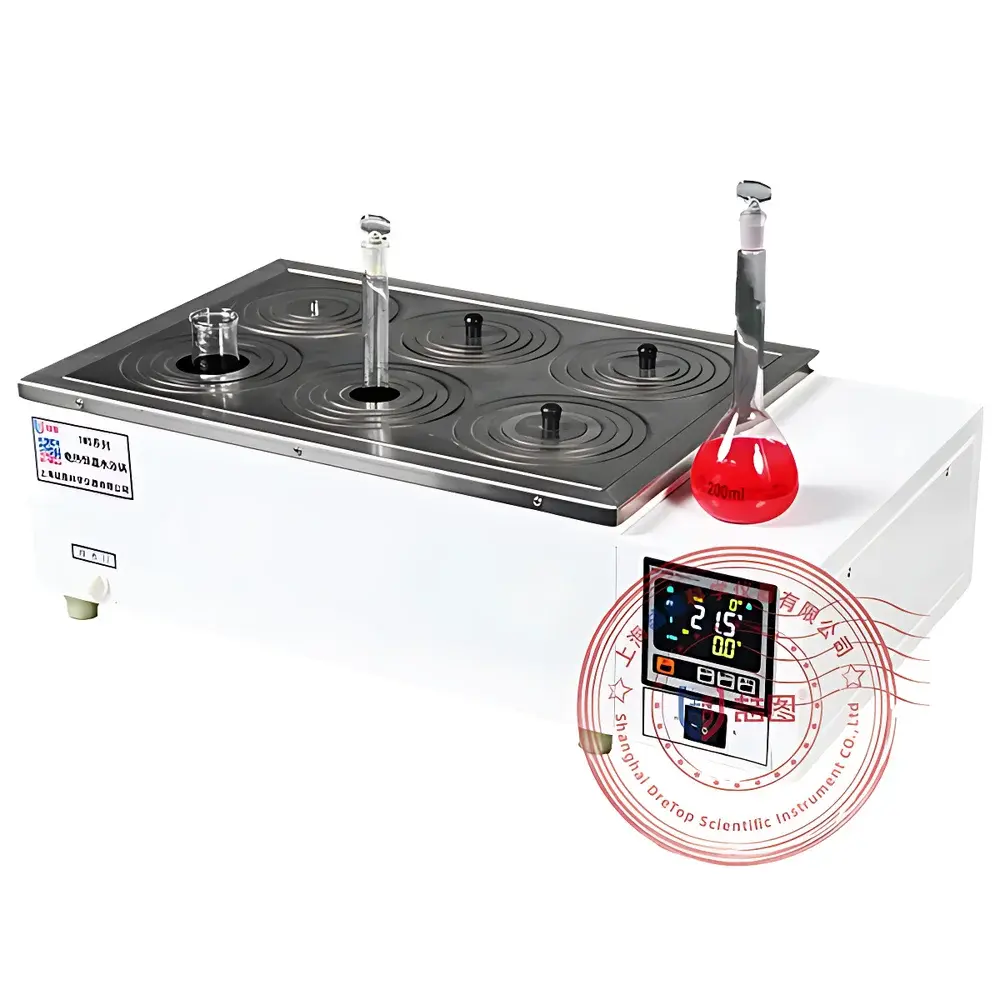
The DRETOP TWS-26 Dual-Row Six-Position Electric Constant-Temperature Water Bath is a precision-engineered laboratory thermal management system designed for stable, uniform, and repeatable temperature control in aqueous environments. It operates on the principle of resistive immersion heating coupled with closed-loop PID feedback regulation, ensuring minimal thermal gradient across the bath chamber and high spatial homogeneity (±0.3°C typical within working volume). The unit is purpose-built for applications requiring sustained isothermal conditions—such as enzymatic reactions, cell culture incubation support, sample thawing, reagent equilibration, dissolution testing, and preparatory steps in analytical workflows (e.g., prior to HPLC or GC injection). Its dual-row six-hole configuration accommodates standard laboratory glassware—including 50 mL to 1000 mL Erlenmeyer flasks, volumetric flasks, and round-bottomed flasks—without cross-contamination risk, while maintaining accessibility and ergonomic loading/unloading.
Key Features
- Microprocessor-based PID temperature controller with dual digital display: simultaneous readout of setpoint and real-time bath temperature (0.1°C resolution); ±0.5°C typical temperature fluctuation at steady state
- High-reliability NTC thermistor sensor integrated into stainless-steel sheath for rapid thermal response and long-term drift stability
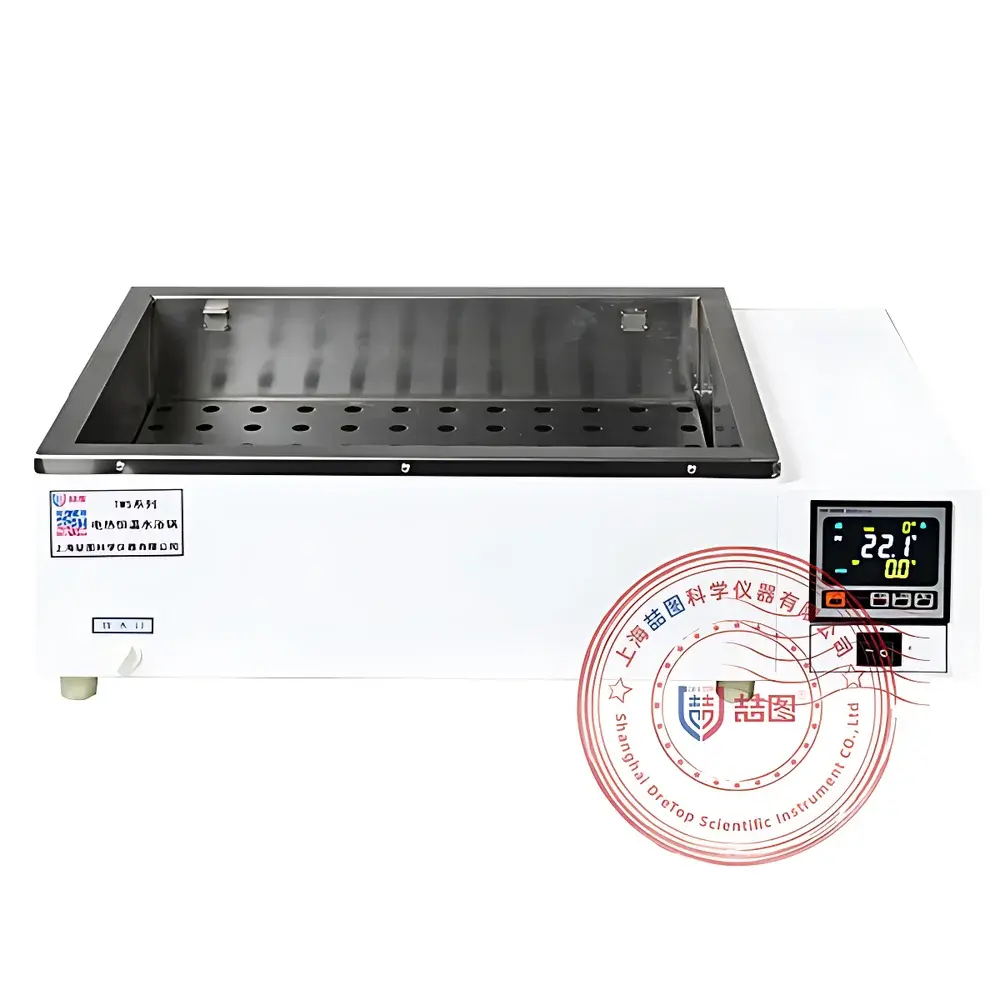
- Stainless-steel inner tank (304 grade) with electropolished finish and optional PTFE-coated variant (ASTM B117 compliant for 500-hr salt spray resistance)
- Integrated anti-dry-burn protection: automatic heater cutoff and audible/visual alarm when water level falls below minimum operational threshold
- Intelligent power-loss recovery: embedded non-volatile memory retains setpoint, timer value, and operating mode; resumes operation automatically upon power restoration
- Front-panel programmable timer (1–9999 minutes) with auto-shutdown function for unattended operation
- Ergonomic design: quick-drain valve at base, removable perforated stainless-steel support tray, and interchangeable silicone-rubber hole inserts for variable flask diameters
Sample Compatibility & Compliance
The TWS-26 supports routine use with borosilicate glass, polypropylene, and PTFE vessels up to 1000 mL capacity. Its open-bath architecture enables direct immersion of reaction vessels without lid constraints, facilitating gas exchange where required. All wetted surfaces comply with ISO 8573-1 (compressed air purity) and USP material compatibility guidelines for pharmaceutical-grade equipment. The device meets IEC 61010-1:2010 safety requirements for electrical equipment used in laboratory environments and conforms to CE marking directives (EMC 2014/30/EU, LVD 2014/35/EU). Optional configurations include GLP/GMP-compliant audit trail logging via RS485 interface (with external data logger), supporting 21 CFR Part 11–aligned electronic record retention when paired with validated software.
Software & Data Management
While the base TWS-26 operates via standalone front-panel controls, it supports optional integration with DRETOP’s LabLink™ PC software suite (v3.2+) via RS485/USB converter. This enables remote parameter setting, real-time temperature graphing, scheduled ramp-soak profiles (up to 30 segments), and CSV export of time-stamped temperature logs. For regulated environments, the optional 30-segment programmable controller (model TWS-PC30) provides deterministic temperature sequencing with user-defined dwell times and ramp rates, traceable via internal event log with timestamped entries for start/stop, deviation alarms, and manual overrides—fully aligned with ALCOA+ data integrity principles.
Applications
- Biological sample preparation: DNA/RNA extraction buffer equilibration, antibody dilution warming, gel electrophoresis buffer conditioning
- Pharmaceutical quality control: disintegration testing per USP , dissolution medium tempering per USP
- Environmental analysis: BOD incubation support, soil extract preheating prior to ICP-MS digestion
- Chemical synthesis: reflux support for low-boiling-point solvents, catalyst activation protocols
- Food & beverage testing: fat extraction (Soxhlet pre-warming), viscosity standardization of emulsions
- Educational labs: kinetic studies, Arrhenius plot generation, enzyme activity assays under controlled thermal conditions
FAQ
What is the maximum recommended operating temperature, and is continuous operation at 100°C supported?
Yes—the TWS-26 is rated for continuous operation from RT + 5°C to 100°C. Sustained boiling-point operation is permitted provided the bath is maintained at ≥80% fill level and ambient ventilation meets minimum 0.5 m/s airflow requirements.
Does the unit include calibration documentation, and is NIST-traceable calibration available?
Each unit ships with a factory calibration certificate (temperature accuracy verified at 37°C, 60°C, and 100°C). NIST-traceable recalibration services are offered by DRETOP’s ISO/IEC 17025-accredited service center (lead time: 5 business days).
Can the TWS-26 be used with corrosive solutions such as diluted acids or alkalis?
Standard units feature 304 stainless steel; for prolonged exposure to >10% HCl, HNO₃, or NaOH, specify the PTFE-coated variant (TWS-26-PTFE), which passes ASTM G154 UV + condensation cycling and demonstrates ≤0.05 mm/yr corrosion rate in 5% H₂SO₄ at 60°C.
Is external temperature monitoring possible, and what interfaces are supported?
RS485 Modbus RTU is standard; optional USB-to-RS485 adapter enables direct connection to Windows/Linux hosts. Analog 4–20 mA output (0–100°C range) is available upon request for PLC integration.
What maintenance intervals are recommended for optimal longevity?
Drain and rinse the bath weekly if used daily; descale every 3 months using 5% citric acid solution (pH 2.5–3.0); inspect drain valve O-ring annually; verify sensor offset biannually using a calibrated reference thermometer (e.g., Fluke 1523).



