
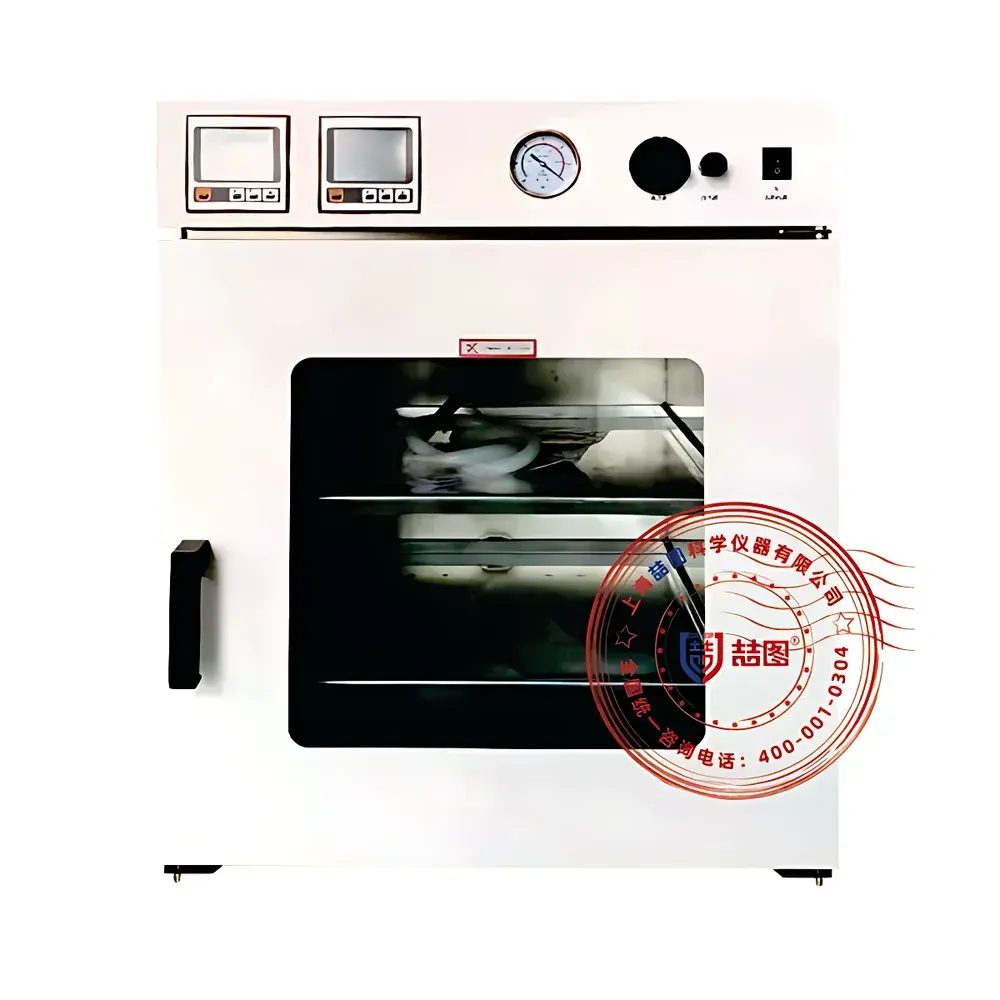
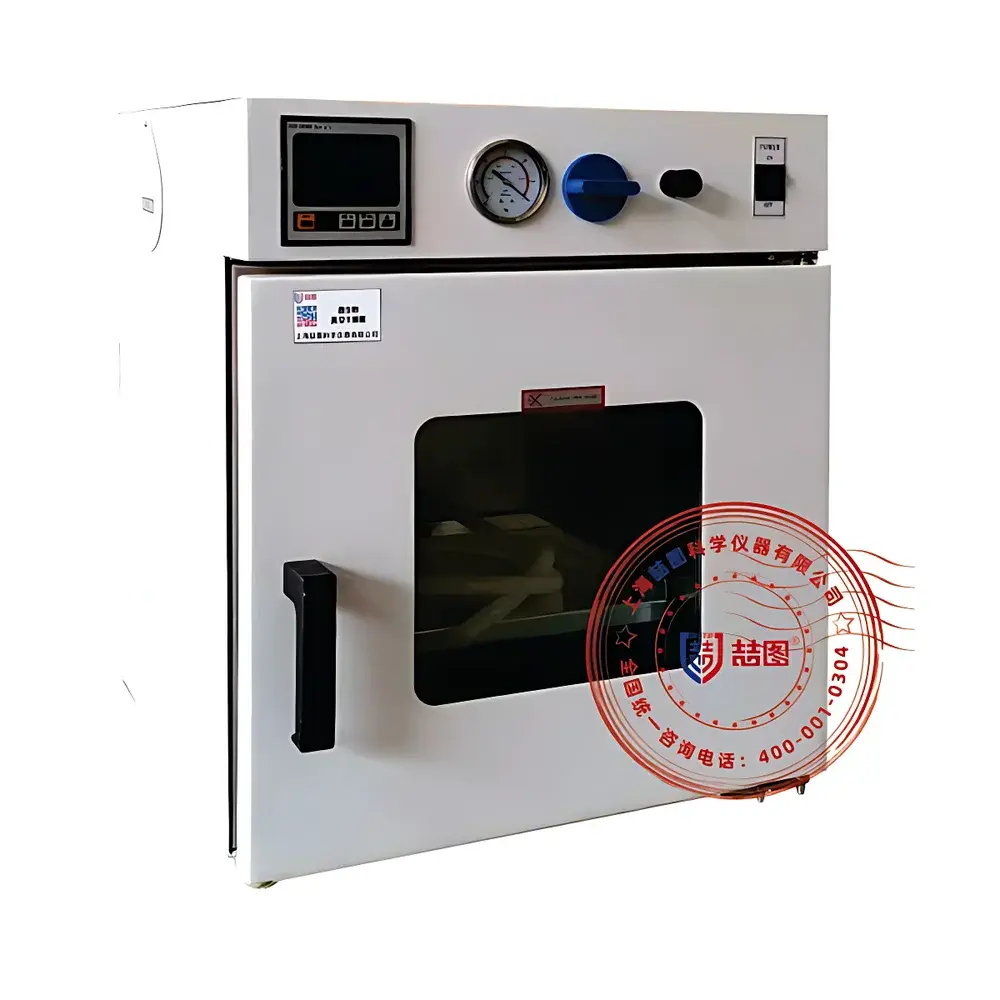
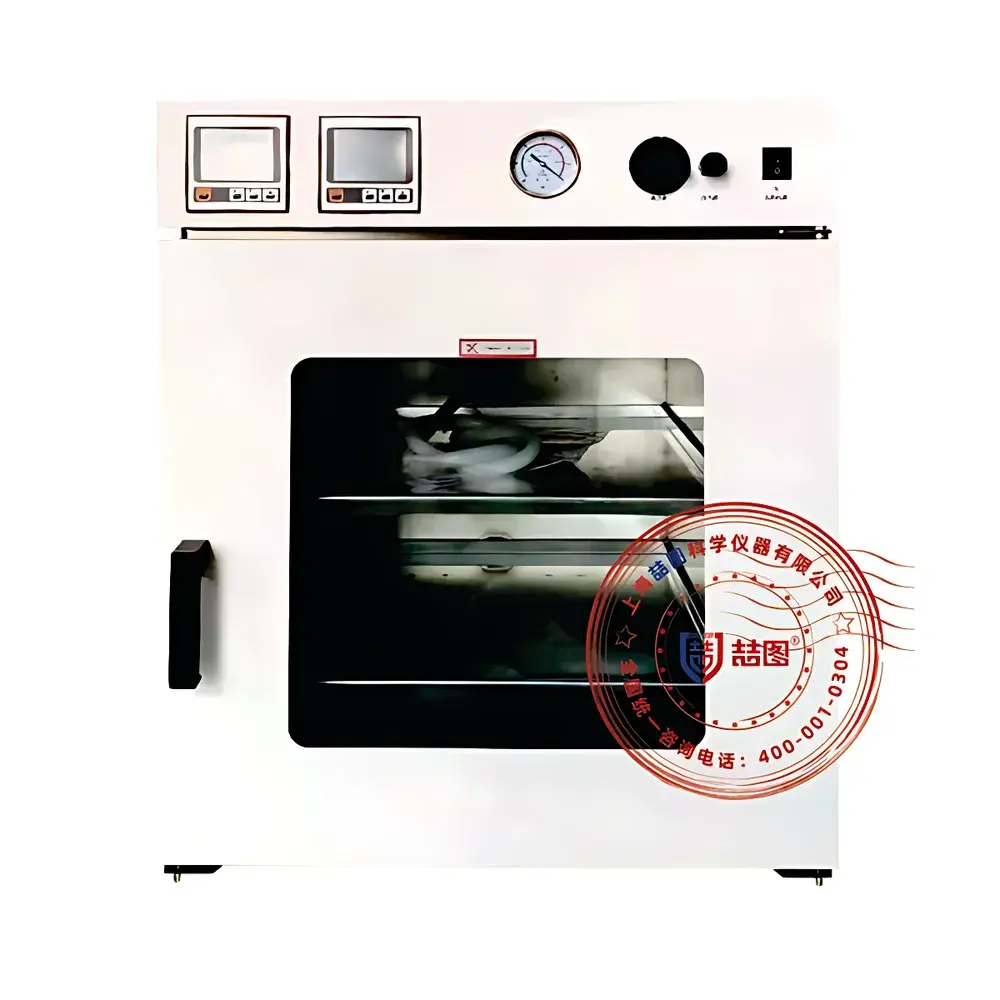
DRETOP TZF-6030BV Microbial Vacuum Drying Oven
| Brand | DRETOP |
|---|---|
| Origin | Shanghai, China |
| Manufacturer Type | Direct Manufacturer |
| Product Category | Domestic |
| Model | TZF-6030BV |
| Instrument Type | Vacuum Oven |
| Temperature Range | RT+10–65°C |
| Temperature Fluctuation | ±0.5°C |
| External Dimensions (W×D×H) | 615×500×505 mm |
| Internal Chamber Dimensions (W×D×H) | 320×320×300 mm |
| Temperature Resolution | 0.1°C |
| Operating Ambient Temperature | 5–40°C |
| Interior Material | 304 Stainless Steel |
| Heating Method | Internal Heating |
| Temperature Uniformity | ±1°C |
| Ultimate Vacuum Level | ≤133 Pa |
Overview
The DRETOP TZF-6030BV Microbial Vacuum Drying Oven is a precision-engineered laboratory vacuum oven designed specifically for the gentle, low-temperature dehydration of thermolabile and oxygen-sensitive biological materials. It operates on the principle of vacuum-assisted drying—reducing ambient pressure inside the chamber to lower the boiling point of water and solvents, thereby enabling effective moisture removal at temperatures as low as RT+10°C. This eliminates thermal degradation pathways common in conventional convection ovens, preserving structural integrity, enzymatic activity, and antigenic stability in microbial cultures, vaccines, proteins, nucleic acids, and sterile labware. Its internal heating architecture—where heating elements are directly bonded to the 304 stainless steel chamber walls—ensures rapid thermal response and superior heat transfer efficiency under vacuum conditions, circumventing the inefficiency of jacketed or air-circulated heating systems that fail in low-pressure environments.
Key Features
- Vacuum-Optimized Internal Heating System: Integrated heating elements embedded within the 304 stainless steel inner chamber deliver uniform conductive and near-field radiative heating—critical for consistent thermal distribution when convective heat transfer is absent.
- Precision PID Temperature Control: Digital microprocessor-based controller with 0.1°C resolution and ±0.5°C fluctuation tolerance ensures reproducible thermal profiles across repeated drying cycles.
- High-Integrity Vacuum Performance: Capable of achieving and maintaining ≤133 Pa (≤1 Torr) ultimate vacuum—sufficient for dehydrating aqueous suspensions, fermentation broths, and lyophilization-precursor samples without phase separation or surface hardening.
- Bio-Compatible Chamber Design: Seamless 304 stainless steel interior with rounded corners and no crevices minimizes microbial retention; smooth finish supports ISO 14644-compliant cleaning protocols and autoclave-compatible accessory handling.
- Multi-Layer Safety Architecture: Includes over-temperature cut-off, real-time vacuum leak detection, and integrated pressure-relief valve compliant with EN 61010-1 safety standards for laboratory equipment.
Sample Compatibility & Compliance
The TZF-6030BV accommodates diverse biological and pharmaceutical sample formats—including Petri dishes, culture tubes, vials, membrane filters, and custom trays—within its 30 L chamber (320 × 320 × 300 mm). Its RT+10–65°C operating range aligns with USP , EU GMP Annex 1, and ISO 11133 requirements for microbiological media drying and sterility assurance. The system supports GLP/GMP documentation workflows when paired with optional RS485 serial interface for data logging and audit trail generation per FDA 21 CFR Part 11. All wetted surfaces meet ASTM F838-22 criteria for non-pyrogenic material contact, and the unit is CE-marked for use in Class II biosafety laboratories.
Software & Data Management
While the base configuration features a standalone digital PID controller with manual setpoint adjustment, the optional programmable version supports up to 8-segment ramp-soak temperature profiles—enabling staged drying protocols (e.g., gentle pre-drying at 30°C followed by final desiccation at 45°C). Real-time vacuum and temperature data can be exported via RS485 to third-party SCADA or LIMS platforms using Modbus RTU protocol. Optional inert gas purge inlet (N₂ or Ar) allows controlled atmosphere operation for redox-sensitive samples, supporting ASTM E2912-21 guidelines for anaerobic sample stabilization during drying.
Applications
- Drying of bacterial/fungal cultures, viral stocks, and cryopreserved cell pellets without loss of viability or genomic integrity.
- Low-temperature concentration of enzyme solutions, monoclonal antibodies, and diagnostic reagents prior to lyophilization or storage.
- Post-sterilization drying of surgical instruments, pipette tips, and agar plates to prevent condensation-induced contamination.
- Removal of residual solvents from bioconjugated nanoparticles and polymer-based drug carriers under inert vacuum conditions.
- Stability testing of probiotic formulations and live biotherapeutic products (LBPs) under accelerated low-moisture stress conditions.
FAQ
What is the maximum allowable load volume for optimal vacuum performance?
For consistent ≤133 Pa vacuum attainment and uniform temperature distribution, the recommended maximum load occupies ≤70% of chamber volume (i.e., ≤21 L of solid + void space). Overloading impedes vapor diffusion and extends pump-down time.
Can this oven be used for sterilization?
No—the TZF-6030BV is not a sterilizer. It performs drying and desiccation only. Sterilization requires validated saturated steam exposure (e.g., autoclaving) or dry-heat cycles ≥160°C, which exceed this unit’s operational ceiling.
Is the vacuum pump included in the standard configuration?
No—a rotary vane vacuum pump is supplied separately and must be selected based on required pumping speed and ultimate vacuum compatibility (e.g., two-stage oil-sealed pump recommended for ≤10 Pa operation).
How does internal heating improve drying efficiency compared to external jacket heating?
Under vacuum, absence of air eliminates convective heat transfer. Internal heating enables direct conductive energy transfer from chamber walls to sample containers—reducing thermal lag, eliminating cold spots, and improving drying rate homogeneity by >40% versus jacketed designs.
Does the unit support validation documentation for regulated environments?
Yes—when equipped with RS485 and compatible data acquisition software, it supports IQ/OQ documentation, calibration traceability (NIST-traceable thermocouple input), and electronic record retention meeting ALCOA+ principles for FDA and EMA submissions.



