
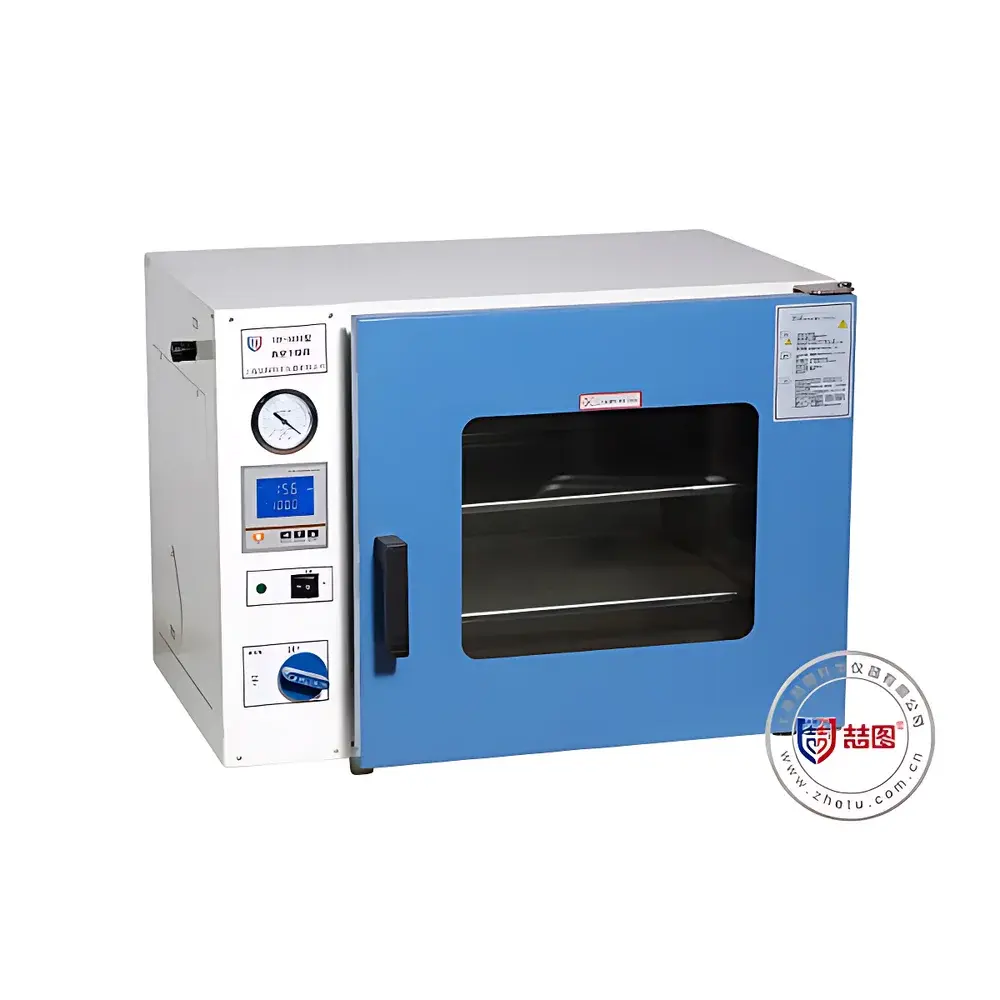
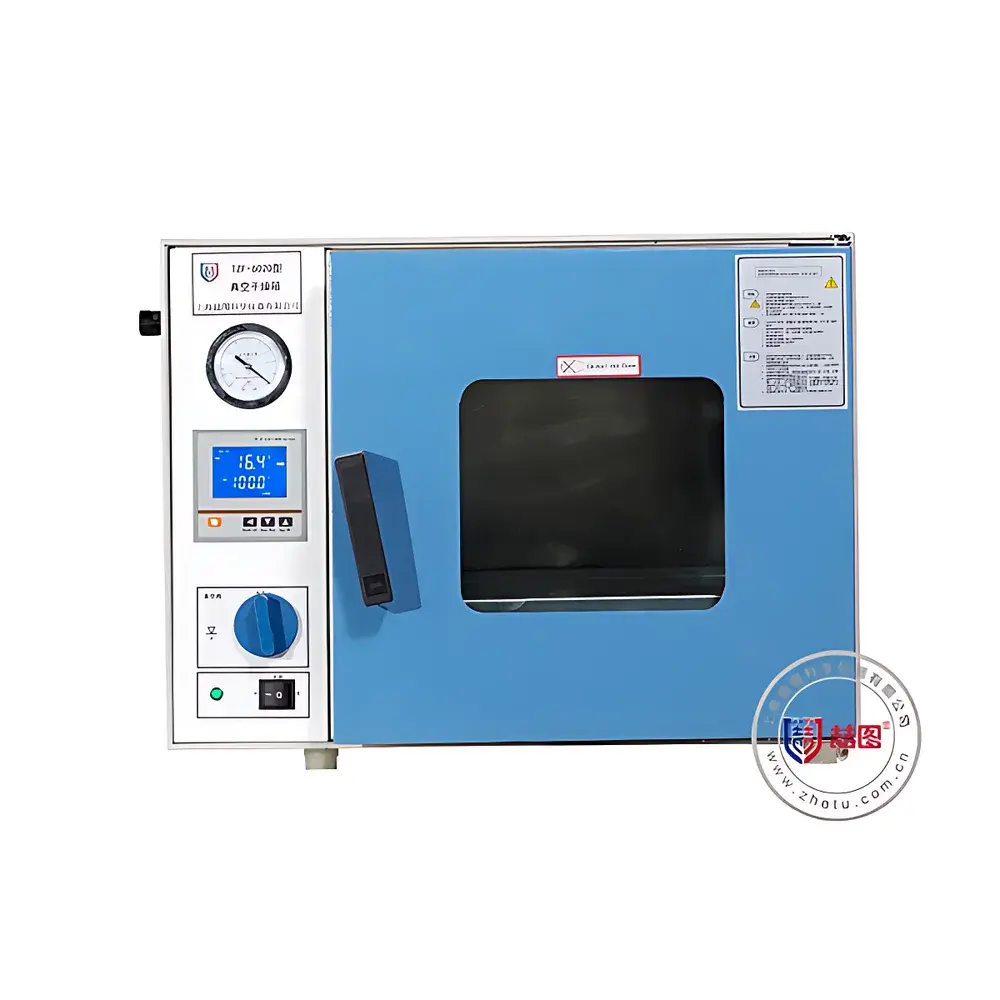
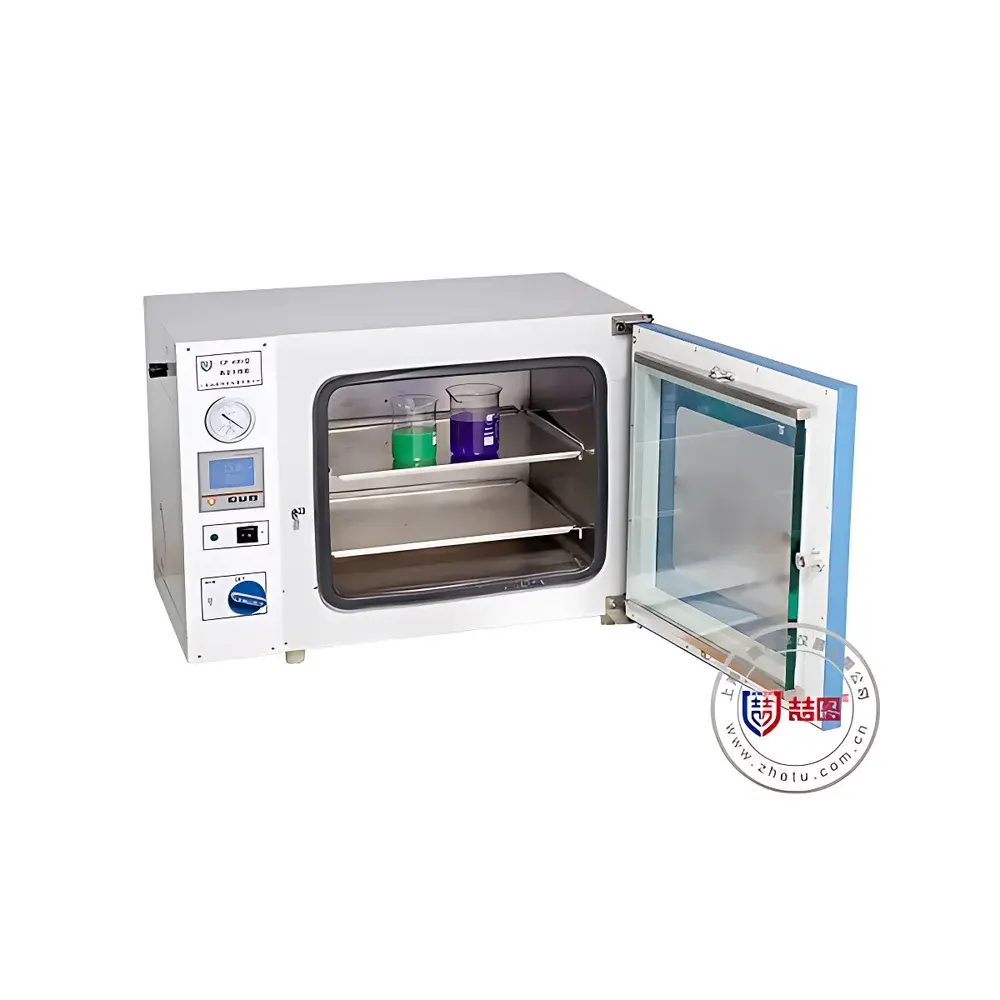
DRETOP TZF-6030UB Vacuum Drying Oven
| Brand | DRETOP |
|---|---|
| Origin | Shanghai, China |
| Manufacturer Type | Direct Manufacturer |
| Product Category | Domestic |
| Model | TZF-6030UB |
| Instrument Type | Vacuum Oven |
| Temperature Range | RT+10°C to 300°C |
| Temperature Fluctuation | ±0.5°C |
| External Dimensions | 615 × 500 × 505 mm |
| Internal Chamber Dimensions | 320 × 320 × 300 mm |
| Temperature Resolution | 0.1°C |
| Operating Ambient Temperature | 5–45°C |
| Chamber Material | 304 Stainless Steel |
| Heating Method | Internal Heating |
| Temperature Uniformity | ±1°C |
| Ultimate Vacuum Level | ≤133 Pa |
Overview
The DRETOP TZF-6030UB Vacuum Drying Oven is an engineered solution for low-temperature, oxygen-sensitive thermal processing of heat-labile and oxidation-prone materials. It operates on the principle of vacuum-assisted evaporation—reducing ambient pressure inside the chamber to lower the boiling point of solvents and moisture, thereby enabling effective drying at significantly reduced temperatures (as low as RT+10°C). This physical principle eliminates thermal degradation pathways common in conventional convection ovens, making it indispensable for applications where molecular integrity, chemical stability, or biological activity must be preserved. Designed for laboratory-scale R&D, quality control testing, and pilot-process validation, the TZF-6030UB supports reproducible vacuum drying under controlled thermal profiles, with full traceability suitable for GLP-compliant workflows.
Key Features
- Internal heating architecture: High-efficiency heating elements are integrated directly into the 304 stainless steel chamber walls, ensuring rapid thermal response and uniform heat transfer via conduction and short-range radiation—critical for maintaining temperature homogeneity under vacuum where convective heat transfer is negligible.
- PID-based intelligent temperature control: Digital microprocessor controller delivers ±0.5°C temperature fluctuation and 0.1°C resolution across the full operating range (RT+10°C to 300°C), supporting both static setpoint operation and optional multi-segment programmable ramp/soak cycles.
- Vacuum integrity assurance: Achieves ultimate vacuum levels ≤133 Pa using compatible rotary vane vacuum pumps (pump not included); optional inert gas inlet valve enables backfilling with nitrogen or argon to prevent oxidation during cooling or sample handling.
- Robust safety system: Includes over-temperature cut-off protection, real-time vacuum leak detection with audible/visual alarm, and pressure-relief safety valve compliant with EN 61000-6-3 EMC standards.
- GLP-ready construction: Seamless 304 stainless steel interior with polished finish (Ra ≤ 0.8 µm) ensures corrosion resistance, ease of decontamination, and compatibility with ISO 14644-1 Class 7 cleanroom practices when used in enclosed lab environments.
Sample Compatibility & Compliance
The TZF-6030UB accommodates a broad spectrum of thermally sensitive samples—including pharmaceutical granules, biologics (e.g., enzymes, monoclonal antibodies, lyophilized vaccines), electronic components (e.g., dielectric layers, encapsulated sensors), catalysts, nanomaterials, and food-grade extracts—without inducing denaturation, polymerization, or volatile loss. Its design aligns with key regulatory expectations: temperature uniformity (±1°C) and stability meet ASTM E2297-22 requirements for thermal validation of drying equipment; vacuum performance supports USP <1211> guidelines for sterile product drying; and optional RS485 interface enables audit-trail-capable data logging aligned with FDA 21 CFR Part 11 Annex 11 principles when integrated with validated SCADA systems.
Software & Data Management
While the base configuration features a standalone digital PID controller with LED display, the optional programmable version supports up to 30 segment temperature ramps with user-defined dwell times, slope rates, and hold conditions. All models provide analog output (4–20 mA) for external recording and support third-party integration via RS485 Modbus RTU protocol. When paired with DRETOP’s optional data acquisition module, users can generate timestamped CSV logs containing chamber temperature, vacuum pressure (via optional digital vacuum gauge), and operational status—enabling full traceability for IQ/OQ/PQ documentation and internal quality audits.
Applications
- Pharmaceutical development: Low-temperature solvent removal from active pharmaceutical ingredients (APIs) and excipients prior to tablet compression or capsule filling.
- Biotechnology: Stabilization of labile proteins, viral vectors, and microbial cultures via gentle dehydration without cryoprotectant additives.
- Materials science: Degassing of polymer precursors, drying of MOFs and aerogels, and residual solvent extraction from thin-film coatings.
- Electronics manufacturing: Post-curing desorption of volatile organic compounds (VOCs) from PCB substrates and encapsulated semiconductor packages.
- Food & agriculture research: Preservation of probiotic strains, botanical extracts, and enzymatic preparations while retaining functional activity.
FAQ
Is a vacuum pump included with the TZF-6030UB?
No—the unit requires an externally connected rotary vane vacuum pump (recommended pumping speed ≥2 L/s) for operation. A compatible pump and noise-dampening enclosure are available as optional accessories.
Can the chamber be purged with inert gas?
Yes—optional inert gas inlet valve allows controlled nitrogen or argon backfilling before opening the door, minimizing oxidation risk during sample retrieval.
What is the maximum load capacity for uniform drying?
For optimal temperature uniformity (±1°C), the recommended maximum sample volume is 60% of the 30 L chamber capacity (i.e., ≤18 L total volume including trays and fixtures).
Does the oven support validation protocols for GMP environments?
Yes—its stable thermal performance, stainless steel construction, and optional data logging interface support installation qualification (IQ), operational qualification (OQ), and performance qualification (PQ) per ISO 13485 and EU GMP Annex 15 guidelines.
How is calibration verified?
The unit includes dual PT100 sensor inputs—one for control, one for independent monitoring—enabling simultaneous verification against NIST-traceable reference thermometers during SAT (system accuracy tests).



