
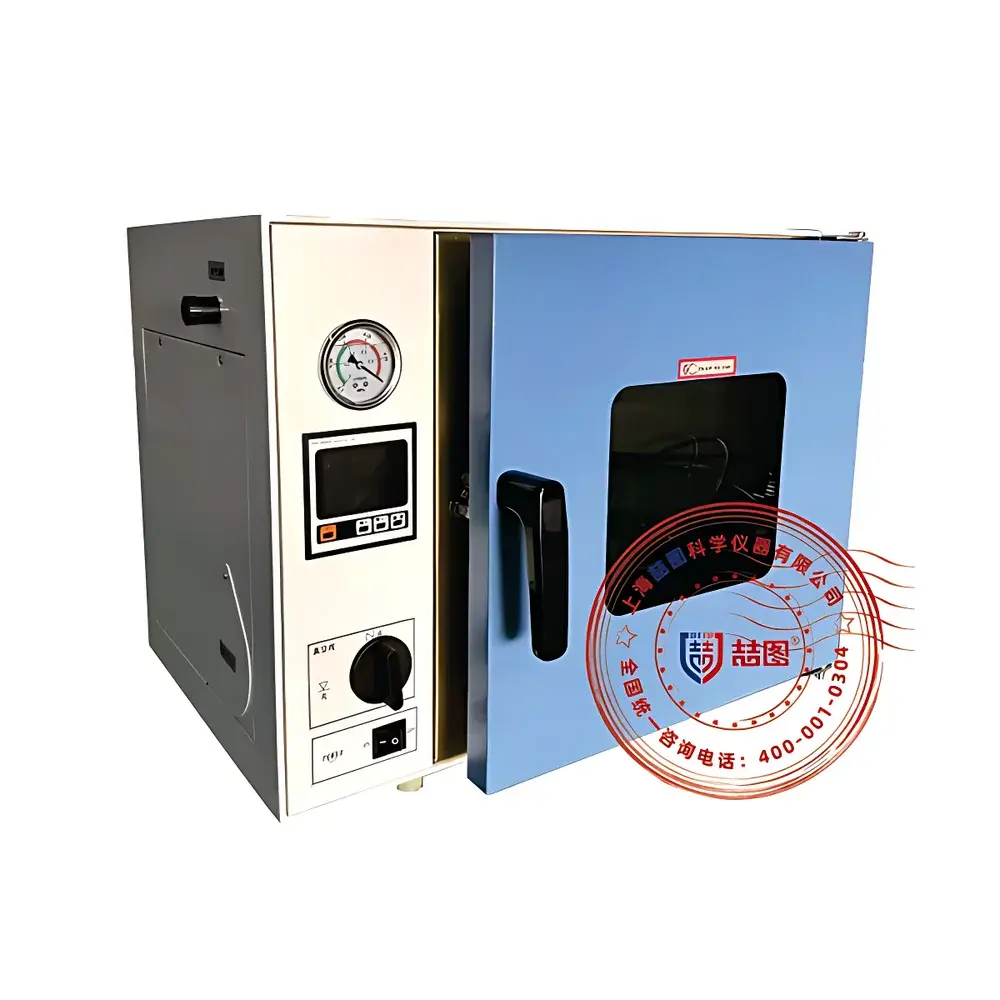
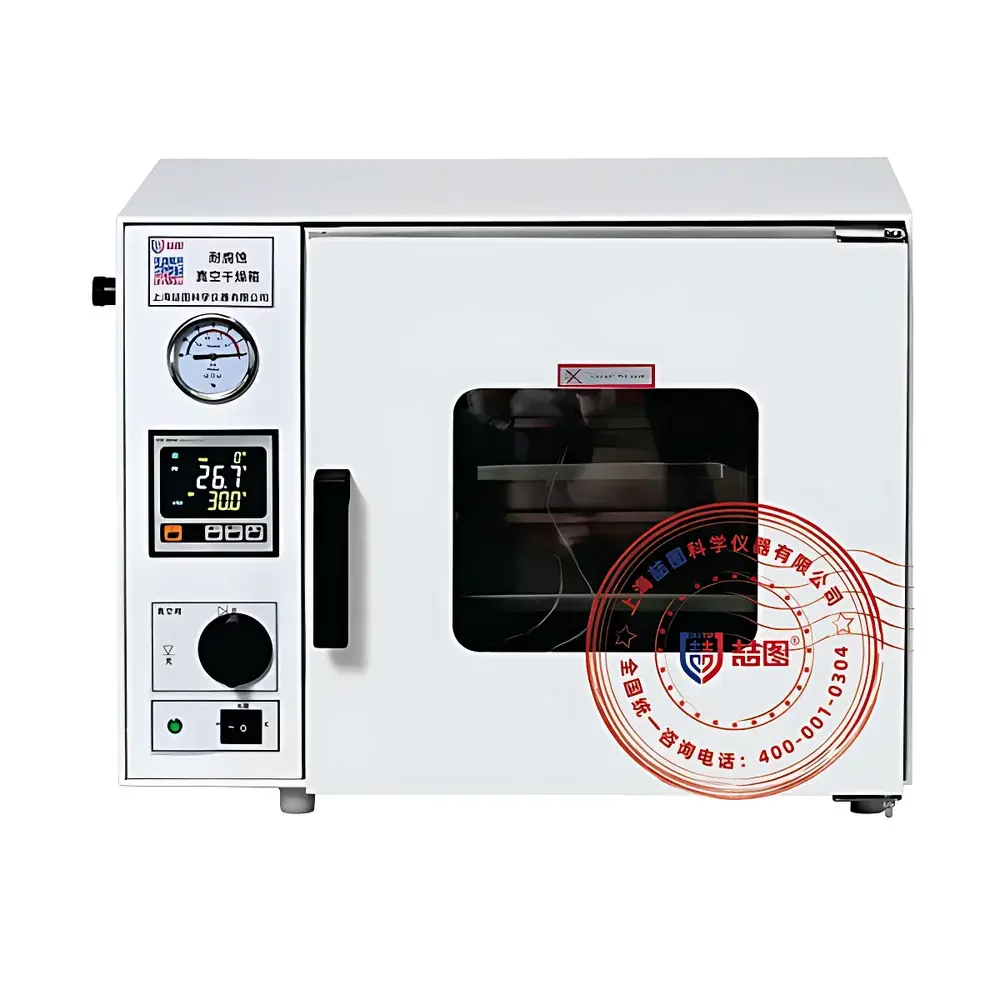
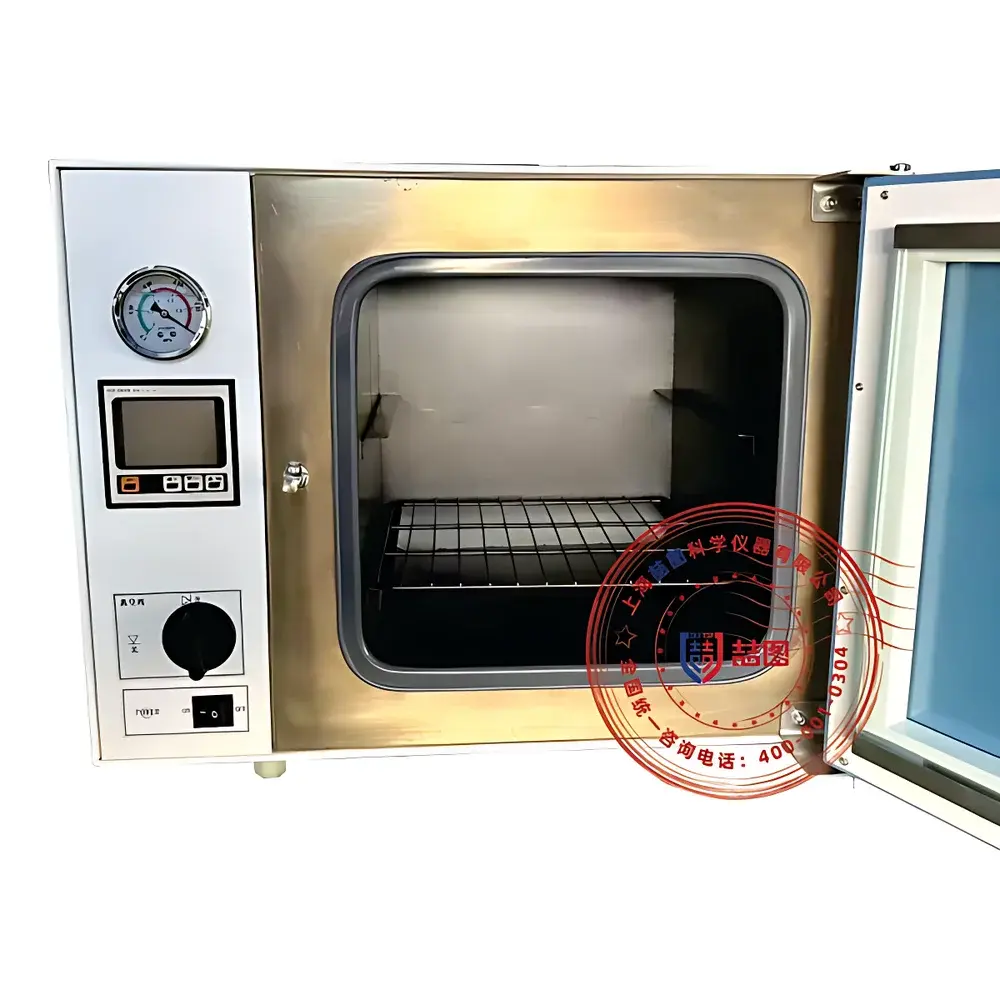
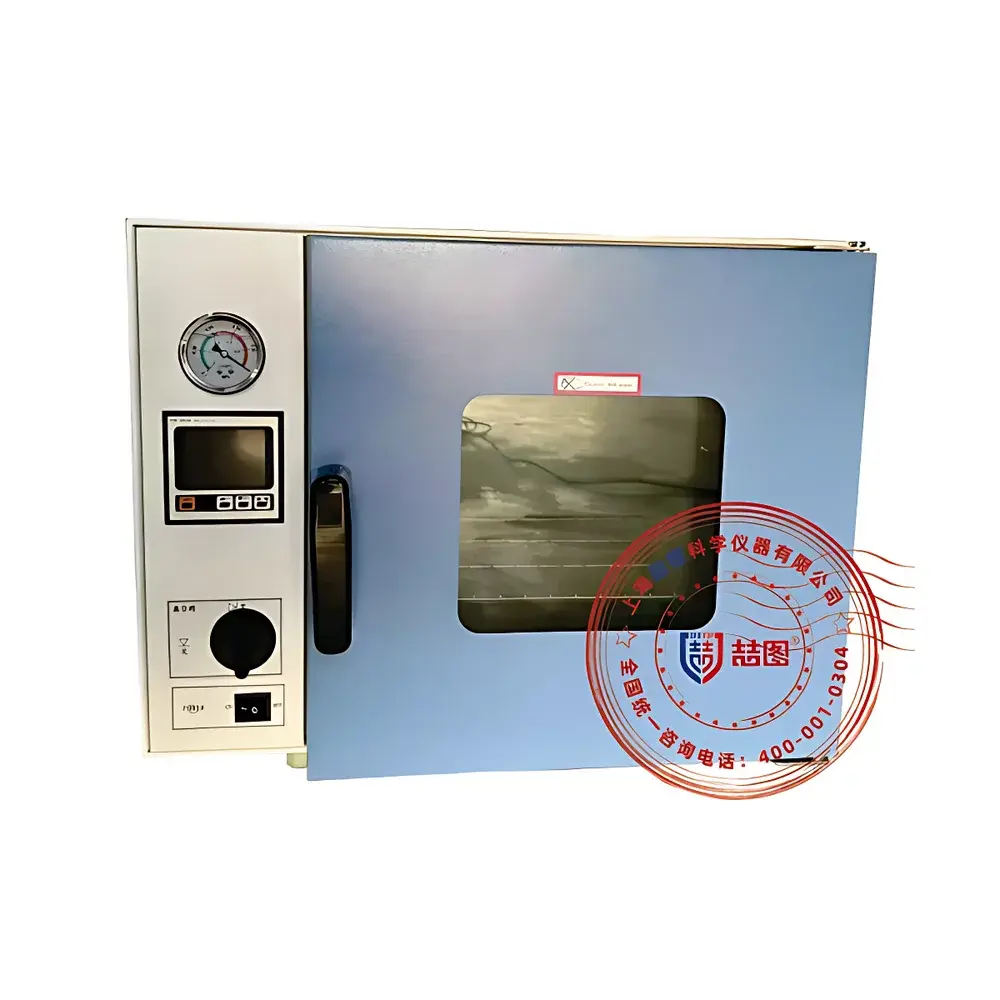
DRETOP TZF-6050A Corrosion-Resistant Vacuum Drying Oven
| Brand | DRETOP |
|---|---|
| Origin | Shanghai, China |
| Manufacturer Type | Direct Manufacturer |
| Product Category | Domestic |
| Model | TZF-6050A |
| Instrument Type | Vacuum Oven |
| Temperature Range | RT+10 to 250 °C |
| Temperature Uniformity | ±1 °C |
| Temperature Fluctuation | ±0.5 °C |
| Temperature Resolution | 0.1 °C |
| Vacuum Level | ≤133 Pa |
| Internal Chamber Dimensions (W×D×H) | 415 × 370 × 345 mm |
| Chamber Material | 316L Stainless Steel |
| Heating Method | Forced-Air Circulation |
| Operating Ambient Temperature | 5–40 °C |
Overview
The DRETOP TZF-6050A Corrosion-Resistant Vacuum Drying Oven is an engineered solution for laboratories and industrial facilities requiring precise, contamination-free thermal processing under vacuum conditions—particularly when handling chemically aggressive materials. It operates on the fundamental principle of vacuum-assisted drying: by reducing ambient pressure inside the chamber, the boiling point of solvents and moisture is significantly lowered, enabling effective dehydration, degassing, and solvent removal at temperatures well below atmospheric boiling points. This mitigates thermal degradation, oxidation, hydrolysis, or catalytic decomposition—critical for thermolabile pharmaceuticals, battery electrode slurries, catalyst precursors, and high-purity electronic chemicals. The unit integrates a robust 316L stainless steel inner chamber, which delivers superior resistance to chloride-induced pitting, acidic etching, and alkaline stress corrosion cracking—far exceeding the performance of standard 304 stainless steel or coated carbon steel alternatives. Its forced-air circulation heating system ensures rapid thermal response and stable setpoint maintenance across the full operating range (RT+10 °C to 250 °C), while maintaining temperature uniformity within ±1 °C and short-term fluctuation within ±0.5 °C.
Key Features
- Chamber construction from ASTM A240-certified 316L stainless steel—fully welded, electropolished interior surfaces minimize crevice corrosion and facilitate cleaning;
- High-resolution backlit LCD controller with intuitive touch interface, supporting real-time temperature/vacuum monitoring and manual setpoint adjustment with 0.1 °C resolution;
- Dual-layer anti-explosion tempered glass observation window with integrated resistive heating to prevent condensation fogging during low-temperature or high-humidity operation;
- Comprehensive safety architecture: independent over-temperature cutoff (mechanical backup), sensor fault diagnostics, power-loss memory retention, and automatic heater deactivation upon vacuum breach;
- Modular shelf system with height-adjustable external-heated stainless steel trays; optional internal-heated fixed shelves available for enhanced thermal coupling in low-mass samples;
- Standard N₂/Ar inert gas inlet and exhaust ports (ISO-KF 25) enable vacuum-inert gas cycling—essential for oxygen-sensitive materials such as Li-ion cathode precursors or photoresist-coated wafers.
Sample Compatibility & Compliance
The TZF-6050A is validated for use with corrosive process streams including concentrated mineral acids (e.g., HCl, HNO₃, H₂SO₄), caustic alkalis (NaOH, KOH), halogenated solvents (CH₂Cl₂, CHCl₃), and polar organics (acetone, methanol, acetonitrile). Its 316L chamber meets ASTM A262 Practice E intergranular corrosion test requirements and demonstrates no visible attack after 72-hour exposure to 10% HCl at 60 °C per ISO 3651-2. For ultra-high-purity applications—such as semiconductor-grade chemical drying or nuclear trace analysis—the unit can be upgraded with PTFE or PFA-lined chambers (available under TRA and PFA series configurations), reducing extractable metal content to sub-ppq levels. All configurations comply with IEC 61010-1:2010 for laboratory electrical equipment safety. Optional IQ/OQ/PQ documentation packages support GMP/GLP environments, including audit-ready calibration records, alarm log histories, and 21 CFR Part 11–compliant electronic signature readiness via optional Ethernet-enabled controllers.
Software & Data Management
While the base model features a standalone microprocessor controller, optional programmable modules support up to 32-segment ramp-soak profiles with real-time curve visualization and USB data export (CSV format). Logged parameters include chamber temperature, vacuum pressure, elapsed time, and event timestamps (e.g., door open/close, alarm activation). Data integrity is preserved through non-volatile EEPROM storage with cyclic redundancy checking (CRC). When integrated with DRETOP’s LabLink™ software suite (sold separately), users gain remote monitoring via TCP/IP, automated report generation (PDF/Excel), and role-based access control—facilitating multi-user lab environments and regulatory traceability. All firmware updates are digitally signed and verified prior to installation to ensure system integrity.
Applications
- Pharmaceutical & Biotech: Drying of acid-labile APIs (e.g., β-lactam intermediates), lyophilization pre-conditioning of vaccine formulations, and moisture removal from herbal extracts without Maillard browning;
- Battery Materials: Solvent evaporation from NMC/LFP slurry coatings, residual electrolyte removal from separator films, and water content control in LiPF₆ solutions per ASTM D1364;
- Electronics Manufacturing: Post-clean drying of silicon wafers, photomask baking, PCB moisture desorption per IPC-CC-830B, and conformal coating cure acceleration;
- Fine Chemicals: Catalyst activation (e.g., Pd/C, Raney Ni), dye intermediate purification, and polymerization inhibitor removal from acrylic monomers;
- Research & Metrology: Preparation of certified reference materials (CRMs), gravimetric standardization of hygroscopic salts (e.g., Na₂CO₃), and long-term storage stability testing under controlled dew-point conditions.
FAQ
What vacuum level is achievable with the standard configuration?
The TZF-6050A achieves ≤133 Pa (1 Torr) using the included light-duty corrosion-resistant oil-sealed rotary vane pump. For deeper vacuum (≤10 Pa), a separate dry scroll or turbomolecular pump is recommended.
Can the oven operate continuously at 250 °C under vacuum?
Yes—thermal insulation, sealing materials (fluoroelastomer O-rings rated to 250 °C), and heater design are qualified for continuous operation at maximum setpoint under vacuum, per EN 60519-12 thermal hazard assessment.
Is validation support available for regulated industries?
Yes—DRETOP provides configurable IQ/OQ protocols aligned with ASTM E2500 and EU Annex 15, including factory-assembled test reports, calibration certificates traceable to NIST standards, and user-executable PQ templates.
How does 316L compare to PTFE/PFA lining for acid resistance?
316L offers excellent structural rigidity and broad-spectrum corrosion resistance but may exhibit slow dissolution in hot HF or aqua regia. PTFE/PFA linings provide near-universal chemical inertness—including against hydrofluoric acid—but require mechanical protection against abrasion and thermal cycling fatigue.
What maintenance intervals are recommended for the vacuum system?
Oil changes every 500 operational hours; filter replacement every 1,000 hours; annual leak-check verification using helium mass spectrometry per ISO 10071.



