
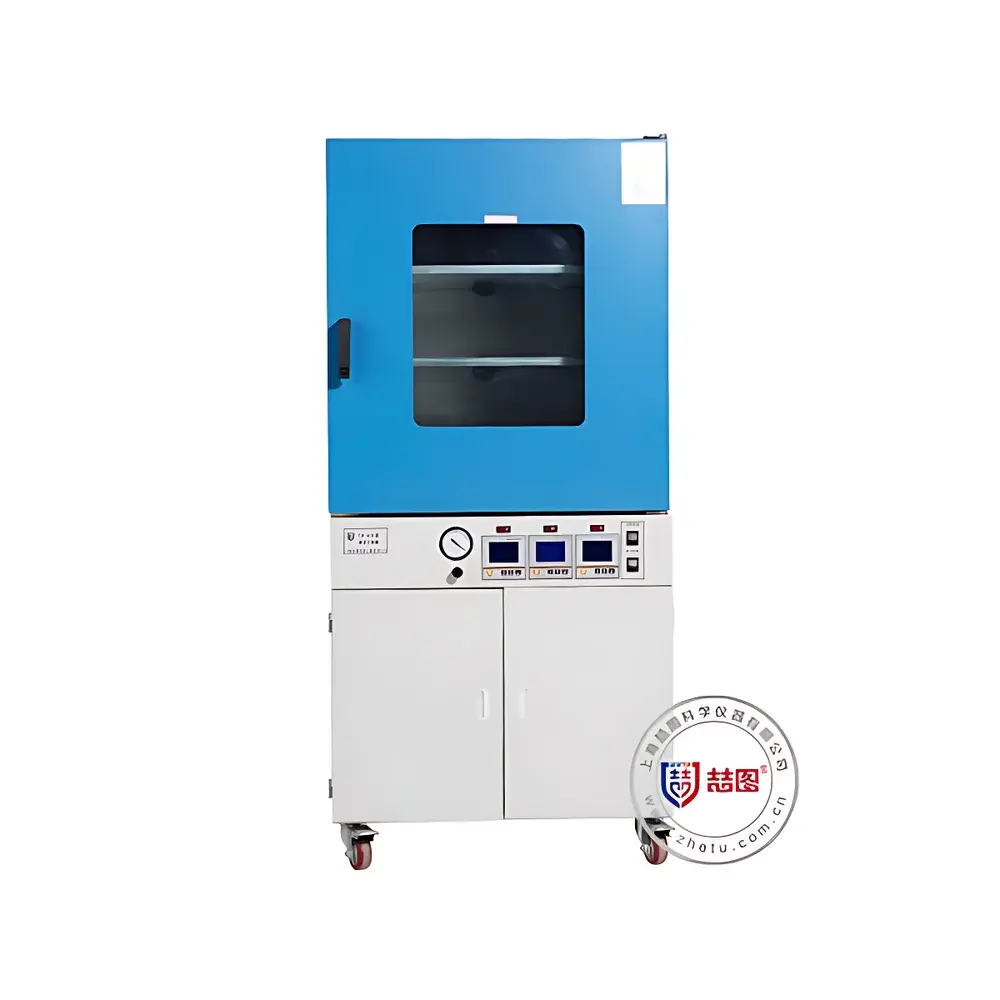
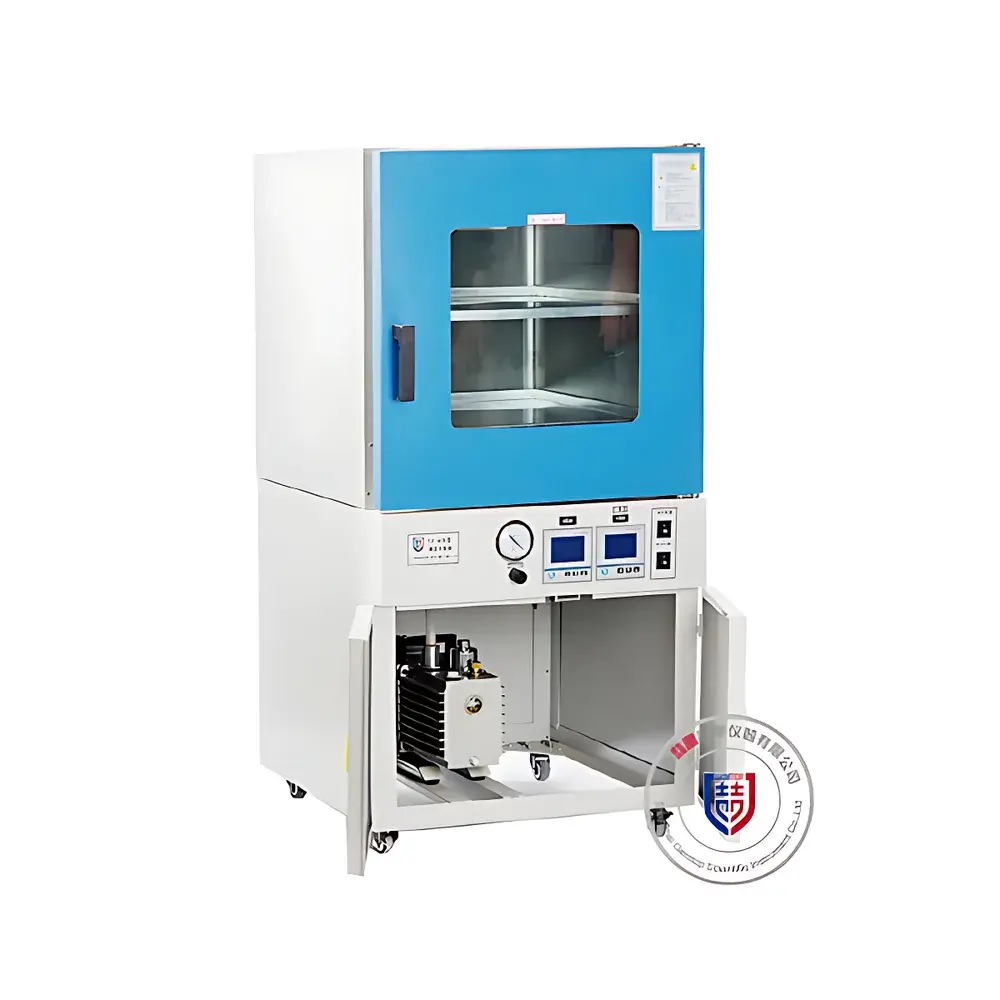
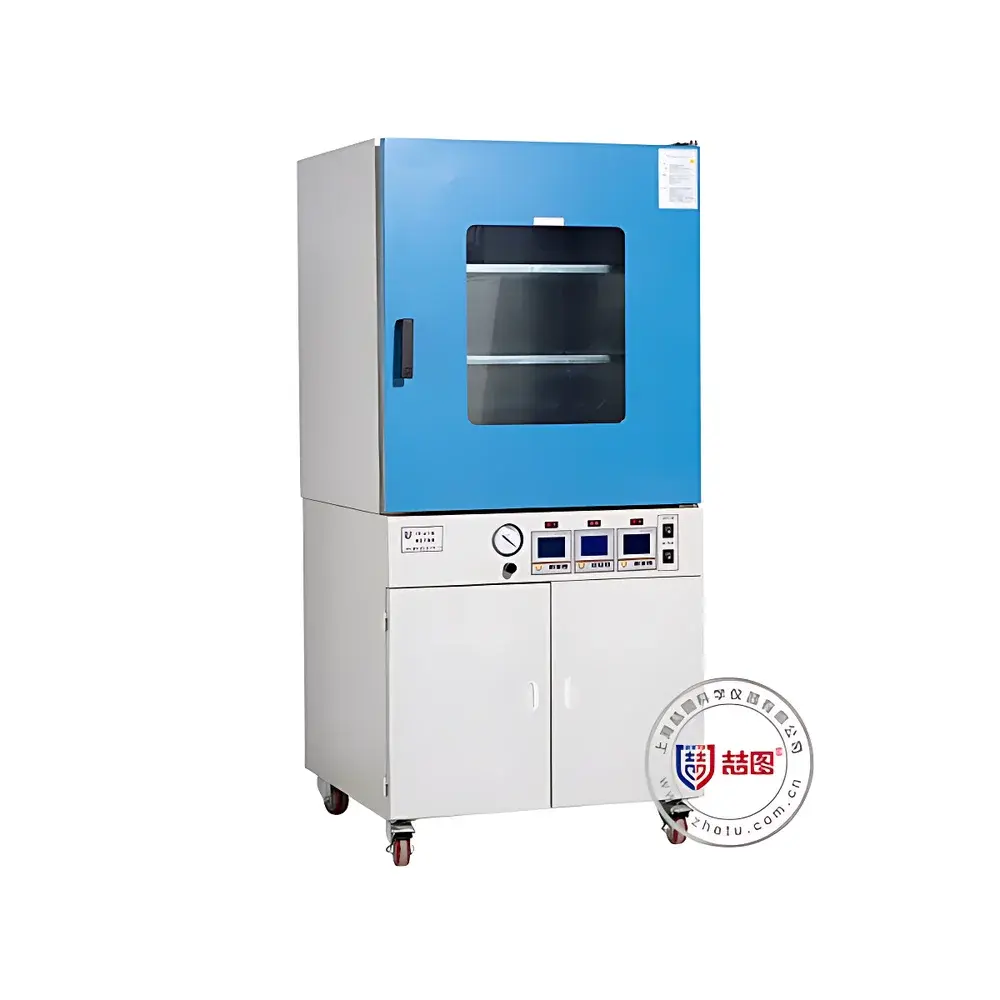
DRETOP TZF-6125L Vertical Vacuum Drying Oven
| Brand | DRETOP |
|---|---|
| Origin | Shanghai, China |
| Manufacturer Type | Direct Manufacturer |
| Product Category | Domestic |
| Model | TZF-6125L |
| Instrument Type | Vacuum Oven |
| Temperature Range | RT+10 to 250 °C |
| Temperature Fluctuation | ±0.5 °C |
| External Dimensions | 660 × 640 × 1290 mm |
| Control Temperature Range | RT+10 to 250 °C |
| Internal Chamber Dimensions | 500 × 500 × 500 mm |
| Temperature Resolution | 0.1 °C |
| Operating Ambient Temperature | +5 to 40 °C above ambient |
| Chamber Material | 304 Stainless Steel |
| Heating Method | External (Perimeter) Heating |
| Temperature Uniformity | ±1 °C |
| Ultimate Vacuum Level | ≤133 Pa |
Overview
The DRETOP TZF-6125L Vertical Vacuum Drying Oven is an engineered solution for thermally sensitive, oxidation-prone, or compositionally complex samples requiring moisture removal, solvent evaporation, or thermal stabilization under controlled low-pressure conditions. It operates on the principle of vacuum-assisted drying: a rotary vane vacuum pump evacuates the chamber to ≤133 Pa, reducing the boiling point of volatile components and enabling dehydration at lower temperatures than atmospheric ovens. This minimizes thermal degradation, prevents surface oxidation, and eliminates convective disturbance—critical for powders, gels, thin-film coatings, battery electrode slurries, and biological matrices. Designed for laboratory-scale R&D and pilot production, the TZF-6125L integrates precision temperature regulation with robust vacuum integrity, making it suitable for applications governed by ISO 554, ASTM D1711, USP , and GLP-compliant workflows where trace moisture control and process repeatability are essential.
Key Features
- Vertical cabinet architecture with 125 L stainless steel chamber (500 × 500 × 500 mm), optimized for high sample throughput without compromising footprint efficiency.
- External perimeter heating system using embedded tubular heaters in all four chamber walls—eliminates internal heating elements that could cause arcing or carbon buildup under vacuum, ensuring long-term reliability and contamination-free operation.
- Microprocessor-based PID temperature controller with 0.1 °C resolution, ±0.5 °C fluctuation tolerance, and programmable timer (1–9999 min); includes over-temperature alarm and independent safety cut-off circuitry.
- Double-layer tempered glass observation window with silicone-sealed, dual-stage zinc alloy latch mechanism—maintains vacuum integrity while enabling real-time visual monitoring of sample state.
- 304 stainless steel interior and reinforced cold-rolled steel exterior with electrostatic powder coating; thermal insulation via high-density glass fiber between chamber and shell reduces standby heat loss by >35% versus conventional designs.
- Integrated fault diagnostics: alphanumeric error codes displayed on LCD interface for rapid identification of sensor failure, heater open-circuit, or vacuum leakage events.
- Comprehensive electrical protection suite: leakage current detection, short-circuit interruption, over-current limiting, and power-loss data retention memory to preserve setpoints and runtime logs.
Sample Compatibility & Compliance
The TZF-6125L accommodates diverse sample forms—including hygroscopic powders, ceramic pastes, polymer films, lithium-ion cathode/anode materials, pharmaceutical granules, and enzymatic reagents—without particle displacement or oxidation artifacts. Its external heating design ensures uniform thermal distribution across the full 500 mm × 500 mm × 500 mm volume (±1 °C uniformity), validated per ASTM E2203. The 304 stainless steel chamber complies with FDA-recommended material contact standards for non-sterile lab equipment and resists mild organic solvents and aqueous residues. Optional configurations include 316L stainless steel chambers or PTFE-coated interiors for enhanced corrosion resistance against halogenated acids, strong alkalis, or aggressive electrolytes—meeting requirements outlined in ISO 15190 for laboratory safety infrastructure.
Software & Data Management
While the base model features a dedicated LCD controller with local parameter entry, optional upgrades support regulatory-compliant data governance. The LT-series color touchscreen interface (available as retrofit or factory configuration) provides integrated vacuum and temperature profiling, real-time trend logging, and password-protected user roles. All recorded data—including setpoints, actual values, alarms, and timestamps—can be exported via USB or RS485 to external LIMS or ELN systems. Audit trail functionality meets FDA 21 CFR Part 11 requirements when paired with optional electronic signature modules and time-stamped event logs. Optional PLC integration enables synchronized vacuum ramping, multi-step temperature programs, and interlocked inert gas purging (via optional N₂ inlet valve and mass flow controller).
Applications
- Electronics manufacturing: De-gassing of encapsulants, desiccation of OLED substrates, post-lamination drying of flexible PCBs, and moisture removal from Li-ion battery electrodes prior to cell assembly.
- Pharmaceutical development: Residual solvent reduction in API intermediates, lyophilization pre-drying, and stability testing of moisture-sensitive excipients per ICH Q1A(R3).
- Materials science: Thermal aging studies of polymer nanocomposites, binder burnout in ceramic green bodies, and vacuum annealing of metal-organic frameworks (MOFs).
- Academic research: Low-temperature dehydration of botanical extracts, preservation of cryo-sectioned tissue specimens, and solvent-free drying of graphene oxide dispersions.
- Quality control labs: Moisture content validation per AOAC 950.46, ASTM D2297, and USP , particularly for hygroscopic reference standards and calibration materials.
FAQ
What vacuum level can the TZF-6125L achieve, and how is it verified?
The system achieves ≤133 Pa (1 Torr) using a standard 2 L/s rotary vane pump; vacuum performance is confirmed via built-in analog or optional digital vacuum gauge calibrated per ISO 27874.
Is the chamber suitable for acidic or alkaline sample processing?
Standard 304 stainless steel is compatible with neutral and mildly corrosive environments; for aggressive media (e.g., >10% HCl, >50% NaOH), specify 316L or PTFE-coated chamber variants.
Can the oven operate unattended for extended periods?
Yes—programmable timer, over-temperature cutoff, and power-fail memory ensure safe autonomous operation up to 9999 minutes, with optional remote monitoring via RS485 Modbus RTU.
How does external heating improve vacuum process reliability compared to internal heating?
External heating eliminates exposed resistive elements inside the vacuum chamber, preventing arcing, hot-spot formation, and carbon deposition—key failure modes in high-vacuum thermal processing.
What accessories are required for moisture-laden sample drying?
For high-water-content samples, integrate the W-series condensate trap (3 L capacity) upstream of the vacuum pump to prevent water vapor ingress and extend pump oil life.



