
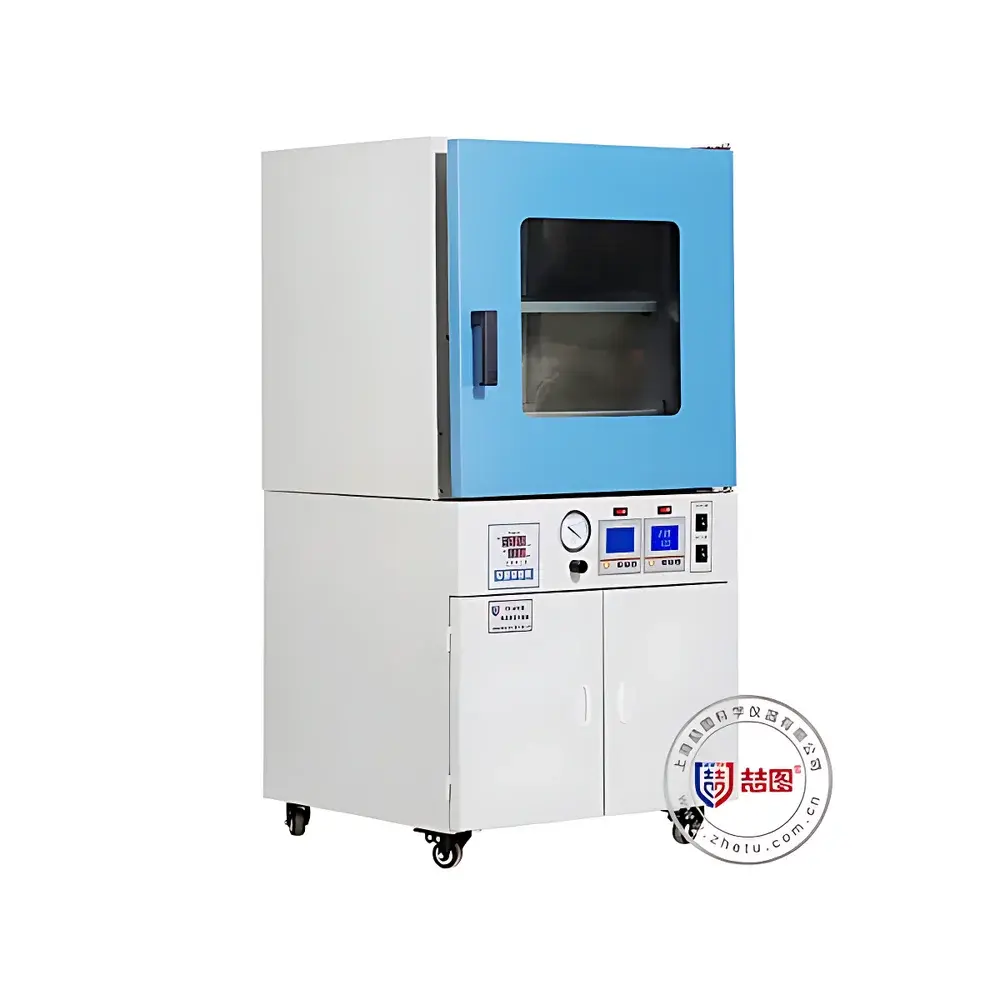
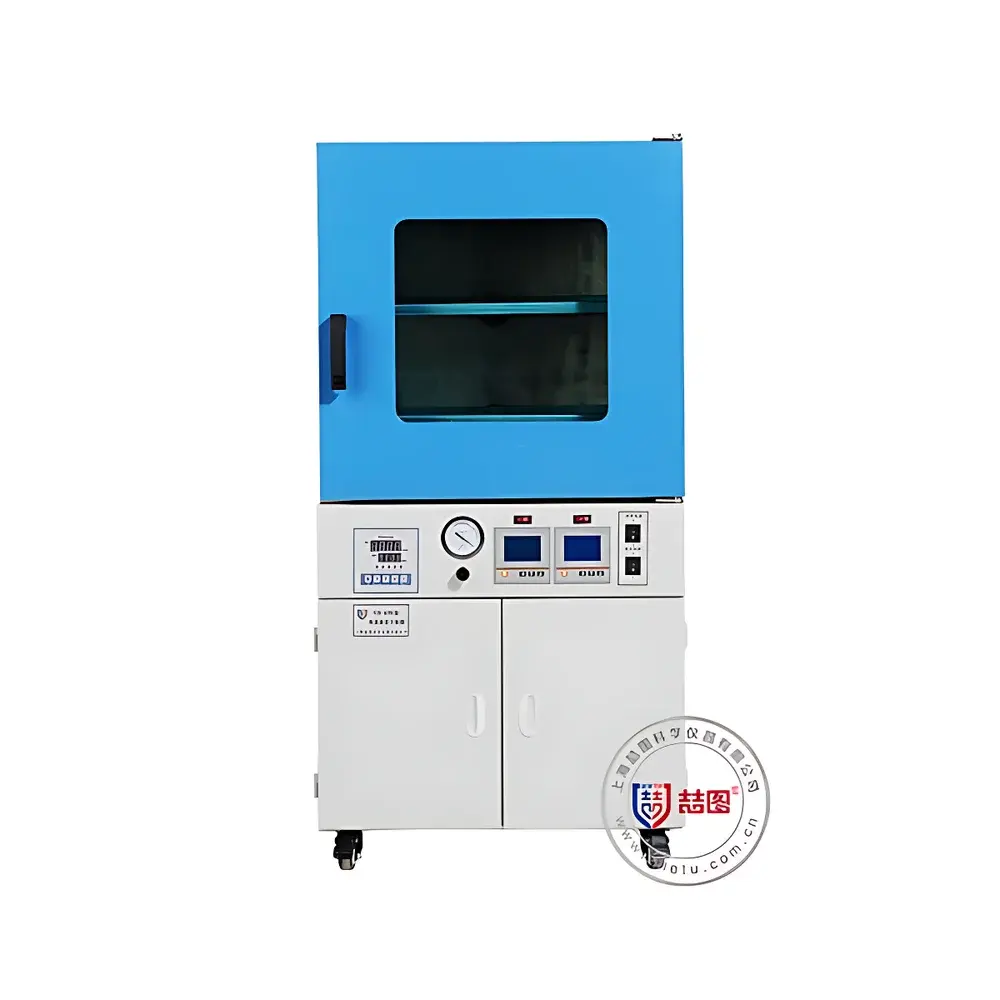
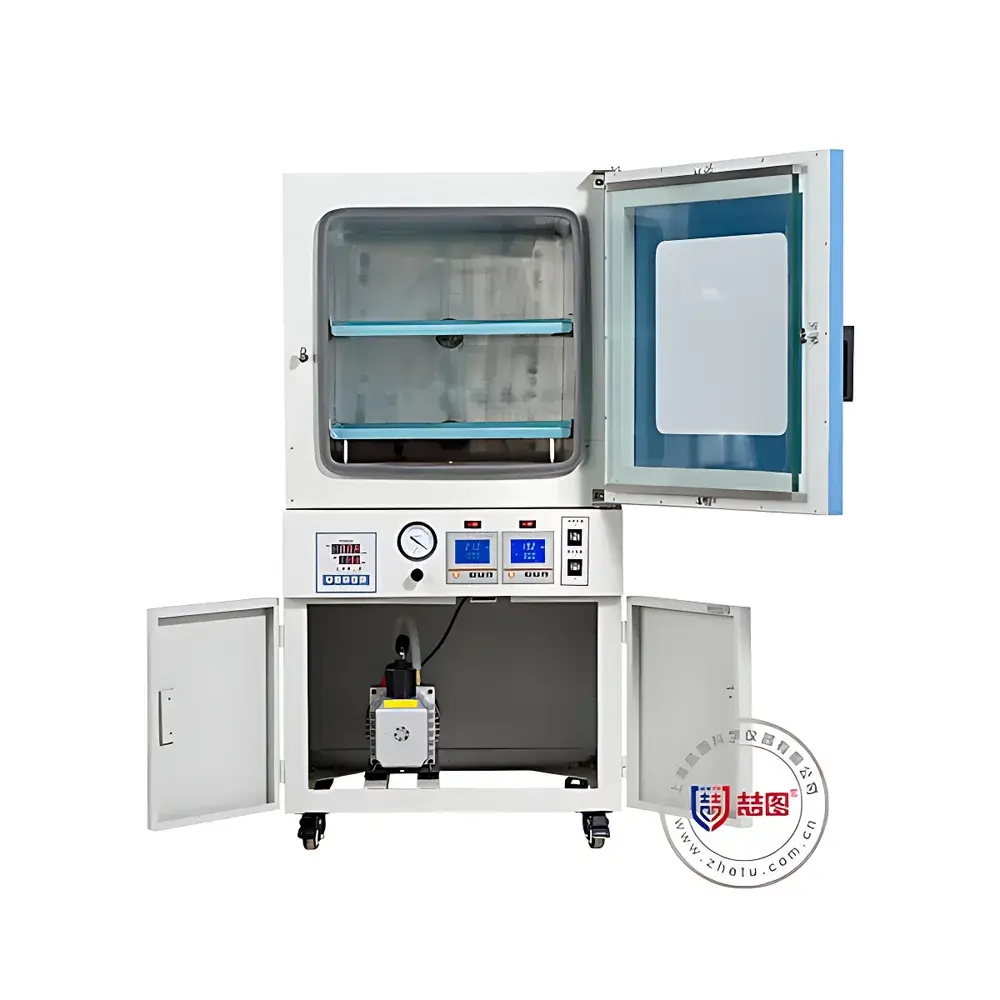
DRETOP TZS-6050L Digital Vacuum Drying Oven
| Brand | DRETOP |
|---|---|
| Origin | Shanghai, China |
| Manufacturer Type | Direct Manufacturer |
| Product Category | Domestic |
| Model | TZS-6050L |
| Instrument Type | Vacuum Oven |
| Temperature Range | RT+10 to 250 °C |
| Temperature Fluctuation | ±0.5 °C |
| External Dimensions | 575 × 510 × 1130 mm |
| Control Temperature Range | RT+10 to 250 °C |
| Internal Chamber Dimensions | 415 × 370 × 345 mm |
| Temperature Resolution | 0.1 °C |
| Operating Ambient Temperature | 5–45 °C |
| Chamber Material | 304 Stainless Steel |
| Heating Method | External (Four-Side) Radiant Heating |
| Temperature Uniformity | ±1 °C |
| Ultimate Vacuum Level | ≤133 Pa |
Overview
The DRETOP TZS-6050L Digital Vacuum Drying Oven is an engineered solution for thermally sensitive, oxidation-prone, or compositionally complex samples requiring controlled low-pressure thermal processing. It operates on the principle of vacuum-assisted convective and conductive heat transfer: by evacuating ambient air via integrated vacuum pump systems (typically 2 L/s rotary vane), the chamber pressure is reduced to ≤133 Pa, thereby lowering the boiling point of volatile components—including water, solvents, and residual monomers—while suppressing oxidative degradation pathways. This enables gentle yet efficient moisture removal, solvent recovery, curing, and outgassing without thermal decomposition. Designed for ISO/IEC 17025-aligned laboratories and GMP-compliant manufacturing environments, the TZS-6050L delivers stable, repeatable performance across extended cycles—critical for semiconductor packaging, lithium-ion battery electrode drying, LED encapsulant curing, and pharmaceutical lyophilization pre-drying stages.
Key Features
- Microprocessor-based PID temperature controller with programmable timer (1–9999 minutes), over-temperature alarm, and auto-shutdown protection.
- Digital dual-display interface: simultaneous real-time readout of chamber temperature (0.1 °C resolution) and vacuum level (digital vacuum gauge).
- Robust 304 stainless steel interior chamber (415 × 370 × 345 mm) with reinforced double-layer tempered glass observation window for non-intrusive process monitoring.
- External four-side radiant heating system eliminates internal heating element exposure to vacuum, preventing arcing, carbon deposition, and localized hot spots—ensuring long-term reliability and uniform thermal distribution (±1 °C).
- Two-tier zinc alloy door latch with compression-sealed silicone gasket guarantees vacuum integrity and thermal insulation; door opening angle optimized for ergonomic access.
- High-efficiency thermal insulation using high-density glass fiber between chamber and outer casing minimizes standby power consumption and improves energy efficiency.
- Comprehensive safety architecture: leakage current protection, short-circuit interruption, overheat cutoff, motor overload safeguard, and parameter retention during power failure.
- Modular design supports integration with optional accessories including inert gas purge valves (N₂/Ar), RS485 communication modules, embedded thermal printers, and PLC-based process sequencing.
Sample Compatibility & Compliance
The TZS-6050L accommodates a broad spectrum of sample formats—including wafers, pouch cells, polymer films, biological tissues, ceramic precursors, and powdered pharmaceutical intermediates—without mechanical disturbance or oxidation. Its vacuum environment prevents particle dispersion of friable or nanoparticulate materials and eliminates explosive vapor-air mixtures during solvent evaporation. The unit complies with general electrical safety standards (IEC 61010-1) and is suitable for use in facilities adhering to GLP, ISO 9001, and ISO 14001 frameworks. While not certified for Class I Div 1 hazardous locations, its construction meets requirements for cleanroom-compatible operation (ISO 14644-1 Class 8). Optional 316L stainless steel or PTFE-coated variants are available for aggressive chemical exposure per ASTM D1308 and ISO 9227 salt-spray testing protocols.
Software & Data Management
The standard configuration includes a programmable LCD controller supporting up to 99 segment ramp-soak profiles. For advanced traceability, optional LT-series color touchscreen controllers integrate vacuum and temperature control into a single HMI platform with built-in data logging (timestamped, CSV-exportable), audit trail functionality, and user-access-level management—facilitating compliance with FDA 21 CFR Part 11 electronic record requirements when paired with networked server backup. RS485 Modbus RTU interface enables centralized SCADA integration for multi-oven fleet monitoring. All firmware versions undergo version-controlled validation and support secure remote diagnostics via encrypted maintenance port.
Applications
- Semiconductor manufacturing: Wafer baking, photoresist hardening, and die-attach adhesive curing under inert atmosphere.
- Lithium-ion battery R&D: Electrode drying prior to cell assembly, electrolyte impregnation, and separator moisture control (≤50 ppm H₂O).
- Optoelectronics: LED phosphor coating drying, lens epoxy curing, and micro-LED transfer substrate conditioning.
- Pharmaceutical development: Active pharmaceutical ingredient (API) solvent removal, excipient drying, and stability study sample preparation per USP <1208>.
- Materials science: Metal-organic framework (MOF) activation, aerogel supercritical drying pre-treatment, and nanocomposite matrix degassing.
- Academic research: Polymer crosslinking kinetics studies, biomass pyrolysis precursor stabilization, and catalyst support dehydration.
FAQ
What vacuum level does the TZS-6050L achieve, and how is it maintained?
The chamber reaches ≤133 Pa (1 Torr) using a标配 2 L/s oil-sealed rotary vane pump. Vacuum integrity is sustained via dual-seal door gasketing, leak-tested chamber welds, and optional vacuum waveguide connectors (KF16/KF25) for external system coupling.
Can the oven operate under inert gas purging?
Yes—optional inert gas inlet valves (N₂ or Ar) allow controlled backfilling to <1% O₂ residual, enabling oxygen-sensitive processes such as lithium metal anode handling or perovskite solar cell fabrication.
Is the temperature uniformity validated per industry standards?
Temperature uniformity (±1 °C at 100 °C) is verified per ASTM E2207 using nine calibrated PT100 sensors across the working volume; calibration certificates traceable to NIST standards are available upon request.
What maintenance intervals are recommended for the vacuum pump?
Oil changes every 500 operating hours; full pump service—including vane replacement and bearing inspection—every 3,000 hours. Optional E-series condensate traps extend pump life when processing high-moisture loads.
Does the unit support regulatory-compliant data archiving?
With LT-series touchscreen controllers and enabled audit trail settings, all setpoints, deviations, alarms, and operator actions are logged with digital signatures and tamper-proof timestamps—meeting ALCOA+ principles for data integrity.
Related Products



