
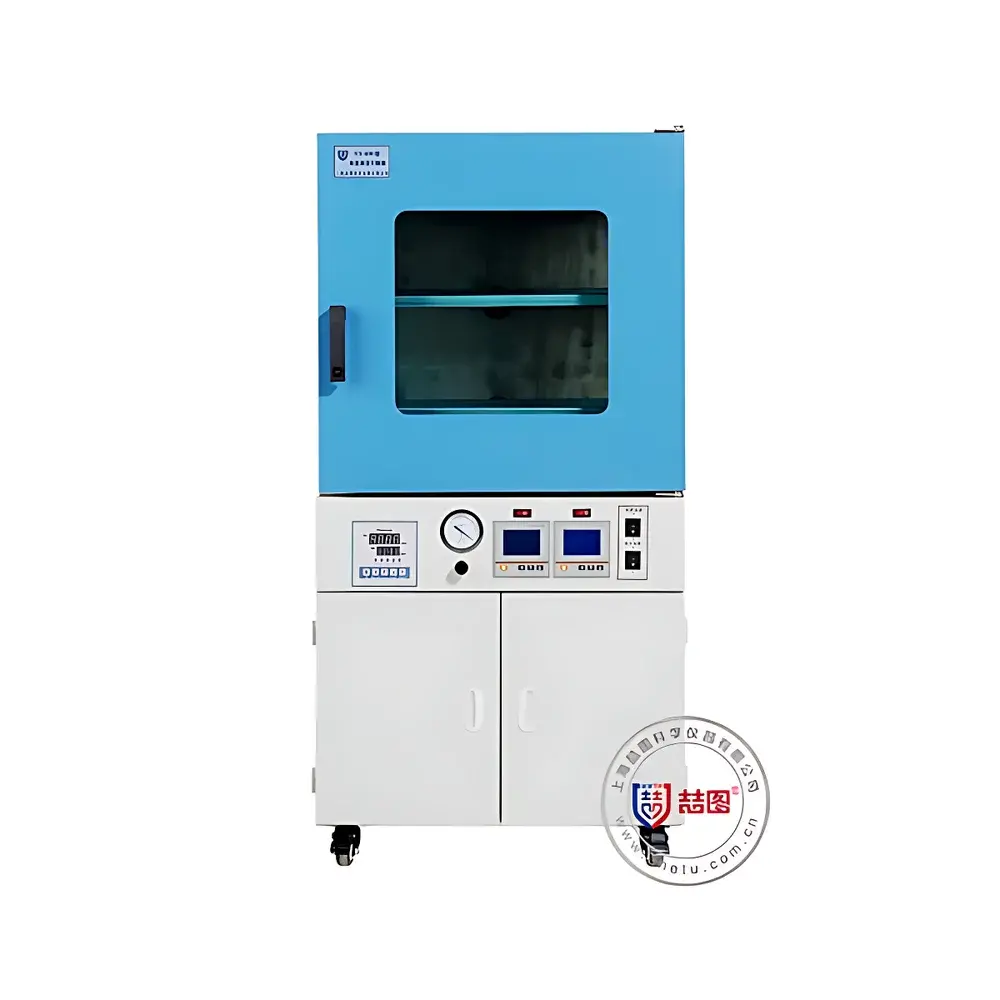
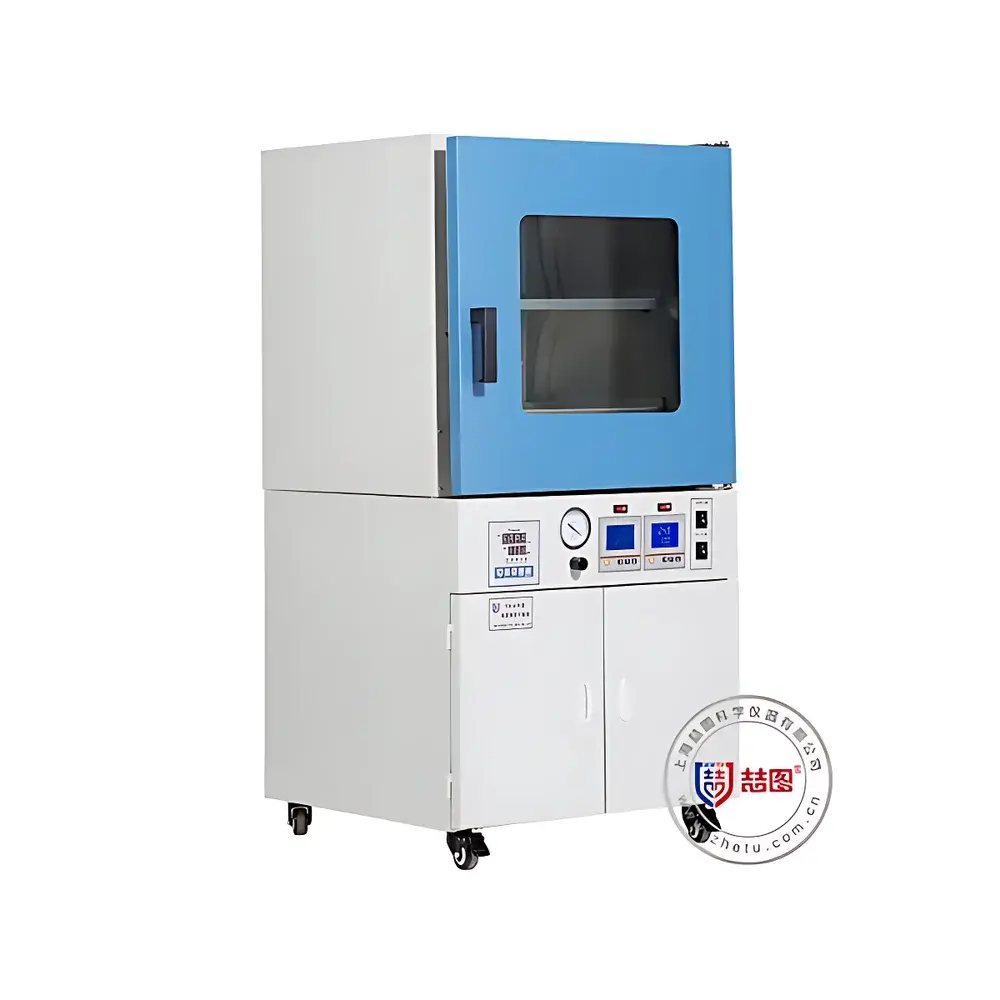
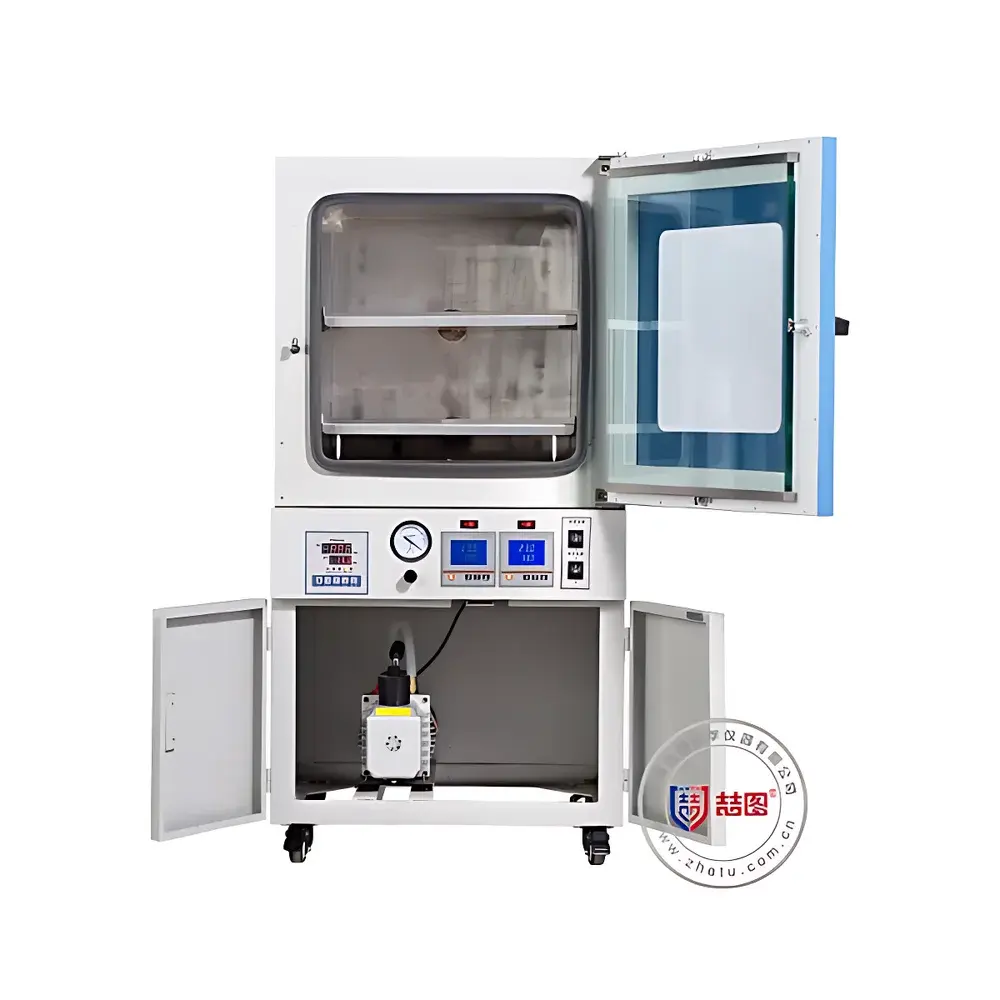
DRETOP TZS-6090LP Programmable Digital Vacuum Drying Oven
| Brand | DRETOP |
|---|---|
| Origin | Shanghai, China |
| Manufacturer Type | Direct Manufacturer |
| Product Category | Domestic |
| Model | TZS-6090LP |
| Instrument Type | Vacuum Oven |
| Temperature Range | RT+10 to 250 °C |
| Temperature Fluctuation | ±0.5 °C |
| External Dimensions | 615 × 590 × 1235 mm |
| Control Temperature Range | RT+10 to 250 °C |
| Internal Chamber Dimensions | 450 × 450 × 450 mm |
| Temperature Resolution | 0.1 °C |
| Operating Ambient Temperature | 5–45 °C |
| Inner Chamber Material | 304 Stainless Steel |
| Heating Method | External Radiant Heating |
| Temperature Uniformity | ±1 °C |
| Ultimate Vacuum Level | ≤133 Pa |
Overview
The DRETOP TZS-6090LP Programmable Digital Vacuum Drying Oven is an engineered solution for thermal processing under controlled low-pressure environments. It operates on the principle of vacuum-assisted dehydration—removing moisture and volatile components by lowering the ambient pressure below atmospheric levels, thereby reducing the boiling point of solvents and enabling gentle, uniform drying without thermal degradation. Unlike conventional convection ovens, this system eliminates oxidative pathways during heating, making it indispensable for thermally labile, oxygen-sensitive, or compositionally complex samples. Its robust stainless-steel chamber, precise microprocessor-based PID temperature control, and integrated digital vacuum monitoring deliver repeatable performance across R&D, QC, and production-scale applications in electronics manufacturing, pharmaceutical development, battery materials research, and life sciences.
Key Features
- Programmable digital controller with dual-channel display: simultaneous real-time readout of chamber temperature and vacuum pressure (0–133 Pa range), supporting user-defined ramp-soak profiles and multi-step drying sequences.
- External radiant heating architecture: four-sided 304 stainless-steel sheathed heating elements ensure uniform thermal distribution while eliminating internal hot spots, arcing risks, or carbon buildup associated with internal heating configurations.
- High-integrity vacuum sealing: dual-stage rotary latch mechanism with high-compliance silicone gasket ensures long-term leak integrity; validated vacuum hold stability ≤133 Pa for ≥24 h under standard operating conditions.
- Intelligent safety architecture: includes over-temperature cut-off, short-circuit protection, ground-fault detection, and automatic power-loss data retention—preserving setpoints and active program states during unexpected outages.
- Optimized thermal insulation: double-layer chamber wall with high-density glass fiber insulation minimizes heat loss, achieving >30% energy efficiency improvement versus legacy single-wall designs.
- Ergonomic observation and access: large-area double-glazed tempered glass viewport with anti-fog coating enables continuous visual monitoring without compromising vacuum integrity; full-extension drawer-style stainless-steel trays facilitate safe sample loading/unloading.
Sample Compatibility & Compliance
The TZS-6090LP accommodates a broad spectrum of sample formats—including wafers, electrode coatings, polymer films, lyophilized biologics, ceramic precursors, and nanoparticle dispersions—without risk of oxidation, delamination, or mechanical disturbance. Its 90 L internal volume (450 × 450 × 450 mm) supports up to three adjustable 304 stainless-steel trays, each rated for 15 kg static load. The chamber conforms to ISO 554 (standard atmosphere for conditioning and testing), and its temperature uniformity (±1 °C at 100 °C) meets ASTM E2203 requirements for vacuum oven qualification. When equipped with optional RS485 interface and audit-trail-enabled controllers, the system supports GLP/GMP documentation workflows compliant with FDA 21 CFR Part 11 for electronic records and signatures.
Software & Data Management
The integrated programmable controller supports up to 99 segments per program, with ramp rates configurable from 0.1 to 10 °C/min and soak durations ranging from 1 minute to 9999 minutes. Optional PLC-based expansion modules enable synchronized vacuum-pump sequencing, inert gas purging (via N₂/Ar inlet valve), and real-time data logging to external USB storage (FAT32 format). All temperature and vacuum data are timestamped and exportable as CSV files for traceability. Firmware supports password-protected parameter lockdown, user-level access tiers (operator/engineer/admin), and event-driven alarm notifications (e.g., vacuum breach, temperature deviation >±2 °C). Calibration certificates for temperature sensors (PT100 Class A) and vacuum transducers (capacitance manometer) are provided with each unit.
Applications
- Electronics: De-gassing of encapsulants, moisture removal from PCB assemblies, post-lithography solvent evaporation in LED packaging, and thermal curing of die-attach adhesives under inert vacuum.
- Battery R&D: Drying of cathode/anode slurries (NMC, LFP, silicon composites), electrolyte impregnation validation, and solid-state electrolyte sintering pre-treatment.
- Pharmaceuticals: Residual solvent reduction in API intermediates, sterile powder drying prior to aseptic filling, and stability testing per ICH Q1A(R3) guidelines.
- Materials Science: Outgassing of metal-organic frameworks (MOFs), activation of catalyst supports, and controlled pyrolysis of polymer-derived ceramics.
- Academic Research: Solvent-free drying of hydrogels, preservation of enzyme activity during lyophilization, and vacuum annealing of 2D material heterostructures.
FAQ
What vacuum pump is recommended for optimal performance with the TZS-6090LP?
A 2–4 L/s two-stage rotary vane pump (oil-lubricated) is standard; for solvent-rich applications, pairing with a cold trap (W-series) and oil mist filter is advised to extend pump service life.
Can the oven operate continuously at 250 °C under full vacuum?
Yes—the chamber and insulation system are rated for continuous operation at 250 °C and ≤133 Pa; however, prolonged exposure above 200 °C requires periodic verification of gasket compression set per ISO 3601-3.
Is the temperature sensor calibrated traceable to NIST standards?
Each unit ships with a factory calibration certificate referencing PT100 sensors calibrated against NIST-traceable reference standards (uncertainty ±0.15 °C at 100 °C).
How is temperature uniformity verified across the working volume?
Uniformity is validated using nine-point mapping per ASTM E2203: sensors placed at center, six face centers, and two diagonally opposite corners, all recorded simultaneously under stabilized conditions.
Does the system support remote monitoring via Ethernet or Wi-Fi?
Ethernet connectivity (RS485-to-Ethernet bridge) is available as an option; native Wi-Fi is not supported due to electromagnetic interference concerns in vacuum environments.



