
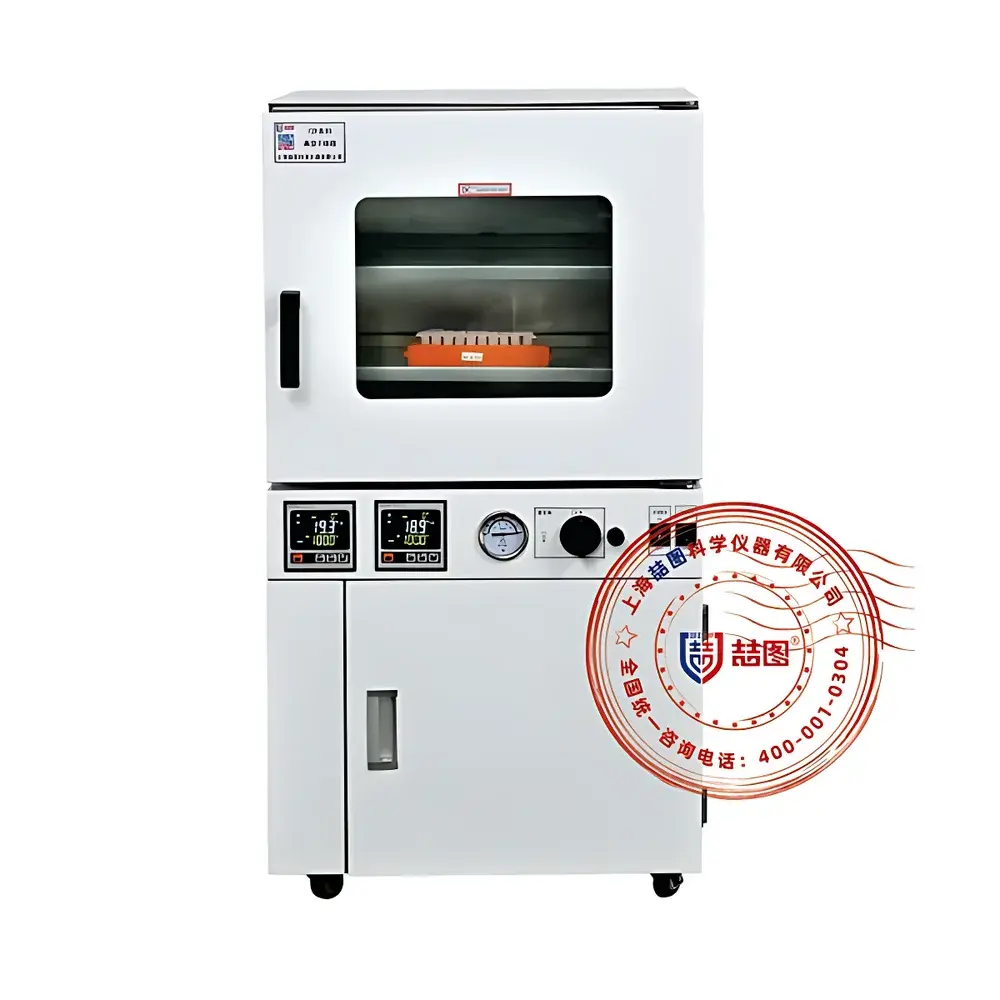
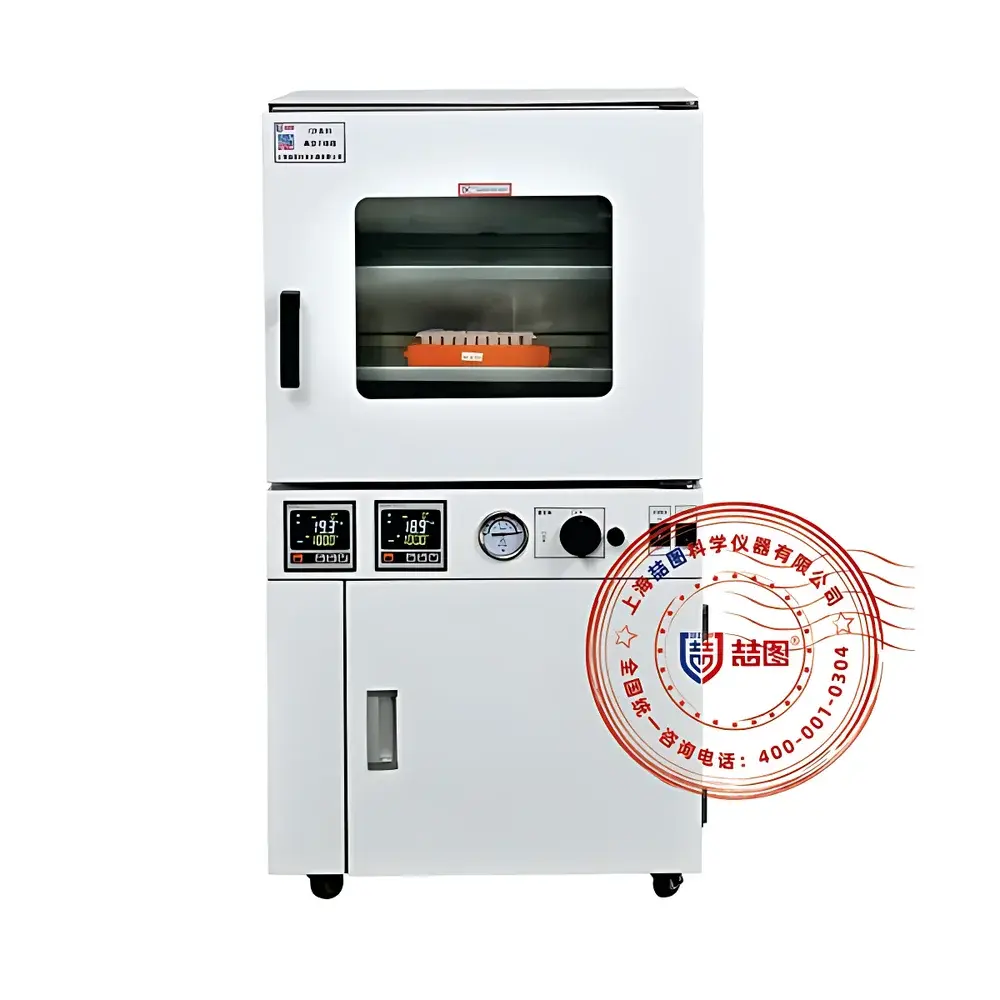
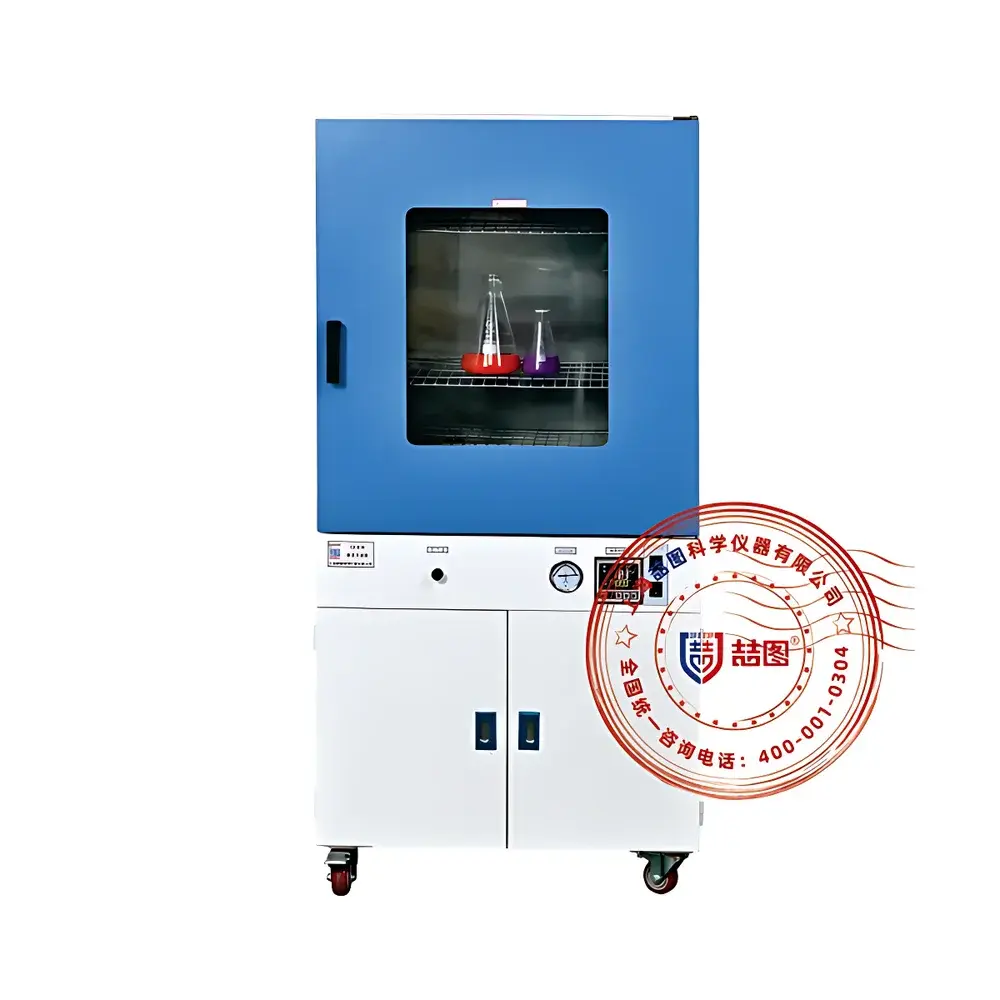
DRETOP TZS-6210VT Programmable Vacuum Drying Oven
| Brand | DRETOP |
|---|---|
| Origin | Shanghai, China |
| Manufacturer Type | Direct Manufacturer |
| Product Category | Domestic |
| Model | TZS-6210VT |
| Instrument Type | Vacuum Oven |
| Temperature Range | RT+10 to 250 °C |
| Temperature Fluctuation | ±0.5 °C |
| External Dimensions | 720 × 735 × 1560 mm |
| Control Temperature Range | RT+10 to 250 °C |
| Internal Chamber Dimensions | 560 × 600 × 640 mm |
| Temperature Resolution | 0.1 °C |
| Operating Ambient Temperature | 5–45 °C |
| Interior Material | 304 Stainless Steel |
| Heating Method | External Four-Side Radiant Heating |
| Temperature Uniformity | ±1 °C |
| Ultimate Vacuum Level | ≤133 Pa |
Overview
The DRETOP TZS-6210VT Programmable Vacuum Drying Oven is an engineered solution for controlled thermal processing under reduced-pressure environments. It operates on the fundamental principle of vacuum-assisted drying—removing ambient air via a mechanical vacuum pump to lower the partial pressure of water vapor, thereby significantly reducing the boiling point of solvents and moisture. This enables gentle, low-temperature dehydration of thermally sensitive materials without oxidative degradation or structural collapse. Designed for laboratory and pilot-scale manufacturing applications, the unit maintains precise temperature stability (±0.5 °C fluctuation) and uniformity (±1 °C across chamber volume) while achieving a base vacuum level of ≤133 Pa—placing it firmly within the low-to-medium vacuum regime per ISO 27874 and ASTM E2912 classifications. Its stainless-steel construction, external radiant heating architecture, and programmable microprocessor control make it suitable for GMP-compliant processes in semiconductor packaging, lithium-ion battery electrode conditioning, LED phosphor annealing, and pharmaceutical active ingredient stabilization.
Key Features
- Microprocessor-based PID temperature controller with integrated timer function, offering programmable ramp-hold profiles and automatic over-temperature cut-off for process safety and repeatability.
- Large-format backlit LCD display showing real-time chamber temperature, setpoint, vacuum level (via optional digital vacuum gauge), elapsed time, and fault diagnostics—including alphanumeric error codes for rapid troubleshooting.
- Robust 304 stainless-steel interior chamber (560 × 600 × 640 mm) with seamless welded corners and polished finish, resistant to corrosion from organic solvents, acids, and moisture-laden vapors.
- External four-side radiant heating system eliminates internal heating elements, preventing vacuum arcing, carbon deposition, and localized hot spots—critical for cleanroom-compatible operation and long-term calibration stability.
- Dual-layer tempered glass observation window with silicone-sealed gasket ensures visual monitoring without compromising vacuum integrity; reinforced zinc-alloy dual-stage door latch guarantees consistent sealing force and pressure retention.
- Multi-layer thermal insulation using high-density fiberglass between inner chamber and outer casing minimizes heat loss, improves energy efficiency, and maintains safe external surface temperatures (<45 °C at ambient 25 °C).
- Comprehensive safety suite includes over-current, short-circuit, ground-fault, and over-temperature protection, plus non-volatile memory to retain user parameters during power interruption.
Sample Compatibility & Compliance
The TZS-6210VT accommodates heterogeneous sample geometries—from delicate biological tissues and polymer films to granular cathode powders and multi-layer PCB assemblies—without risk of particle dispersion or oxidation. Its vacuum environment (≤133 Pa) suppresses oxidative reactions and volatile decomposition pathways, making it appropriate for ASTM D2243 (plastic film drying), USP (pharmaceutical packaging moisture control), and IEC 62133-2 (battery cell preconditioning). The unit complies with CE marking requirements (2014/30/EU EMC Directive and 2014/35/EU LVD Directive), and its electrical design conforms to IEC 61010-1:2010 for laboratory equipment safety. When equipped with optional RS485 interface and audit-trail-capable software, it supports FDA 21 CFR Part 11 compliance for electronic records and signatures in regulated environments.
Software & Data Management
While the standard configuration features a standalone LCD controller, the VT-series variant supports integration with DRETOP’s optional color touchscreen HMI (Human-Machine Interface), enabling full-cycle programming—including multi-step vacuum hold, temperature ramp, dwell time, and inert gas purging sequences. Data logging is available via USB export (CSV format) or real-time transmission through RS485 Modbus RTU protocol to SCADA or LIMS platforms. Optional embedded printer output provides hard-copy traceability for batch records. All firmware versions maintain backward-compatible parameter storage and support GLP/GMP-aligned audit trails when paired with validated data acquisition software—ensuring full traceability from setup to completion.
Applications
- Semiconductor manufacturing: Post-lithography bake, die-attach adhesive curing, and wafer-level encapsulation drying under inert atmosphere.
- Lithium-ion battery R&D: Electrode slurry solvent removal, separator pore structure preservation, and solid-electrolyte interphase (SEI) layer stabilization.
- Optoelectronics: Phosphor coating drying for LEDs, OLED encapsulation moisture scavenging, and laser diode submount degassing.
- Pharmaceutical development: Lyophilized product secondary drying, excipient moisture profiling, and API crystallization under controlled partial pressure.
- Materials science: Metal-organic framework (MOF) activation, aerogel supercritical drying pre-conditioning, and nanocomposite matrix densification.
- Environmental testing labs: Soil moisture content determination per ISO 11465, and filter media conditioning prior to particulate capture efficiency testing.
FAQ
What vacuum level does the TZS-6210VT achieve, and how is it measured?
The unit achieves a base pressure of ≤133 Pa (1 Torr) using a standard rotary vane vacuum pump. Vacuum level is monitored via optional digital vacuum gauges compliant with ISO 27874 Class B accuracy specifications.
Can inert gas be introduced during vacuum cycles?
Yes—optional inert gas inlet valves (N₂ or Ar) with mass flow controllers enable controlled backfilling and purge-dry-repeat sequences, critical for oxygen-sensitive materials.
Is the oven compatible with regulatory audit requirements?
When configured with touchscreen HMI, RS485 interface, and validated software, it supports 21 CFR Part 11 compliance—including electronic signatures, audit trails, and secure user access levels.
What maintenance is required for long-term vacuum integrity?
Routine inspection of silicone door gaskets, periodic cleaning of vacuum port filters, and annual calibration of temperature sensors and vacuum transducers are recommended per ISO/IEC 17025 guidelines.
How does external heating improve process consistency compared to internal heating designs?
External four-side radiant heating avoids direct contact between heating elements and chamber atmosphere, eliminating risks of vacuum arcing, contamination from heater outgassing, and non-uniform thermal gradients—resulting in higher reproducibility across qualification batches.



