
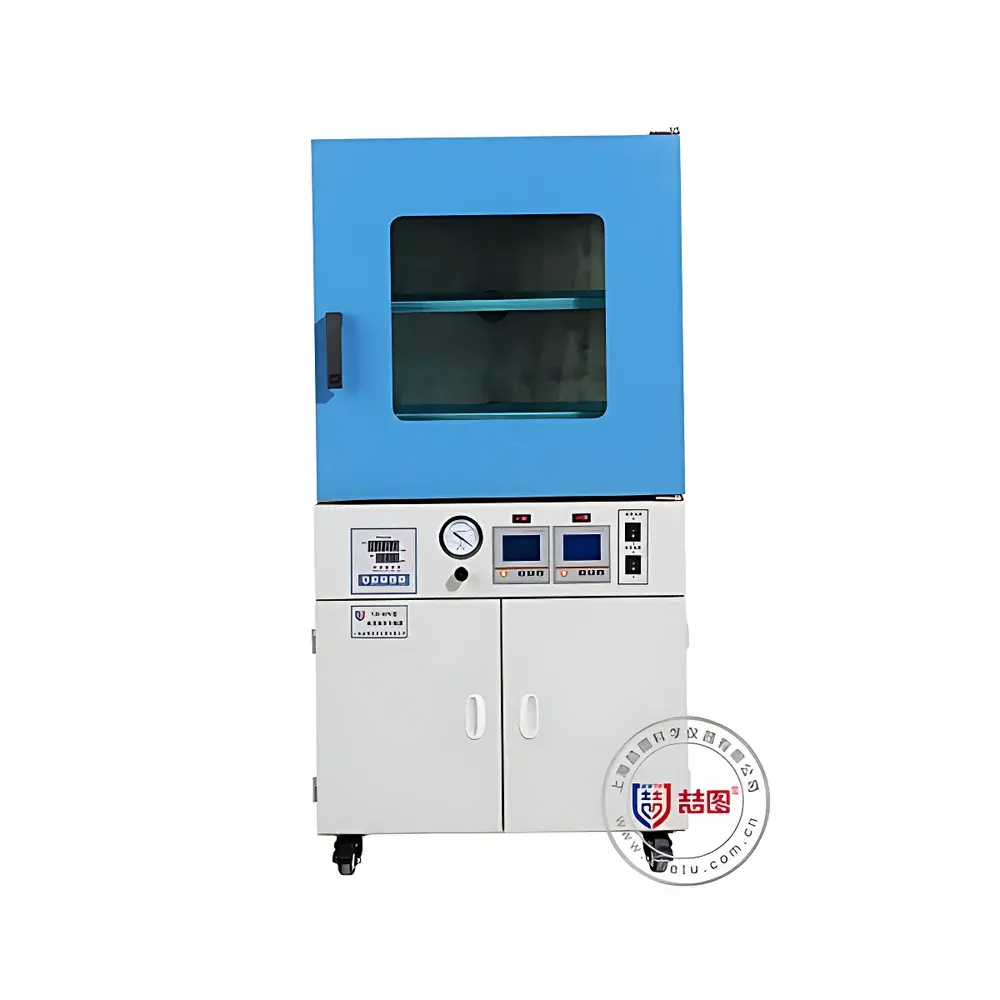
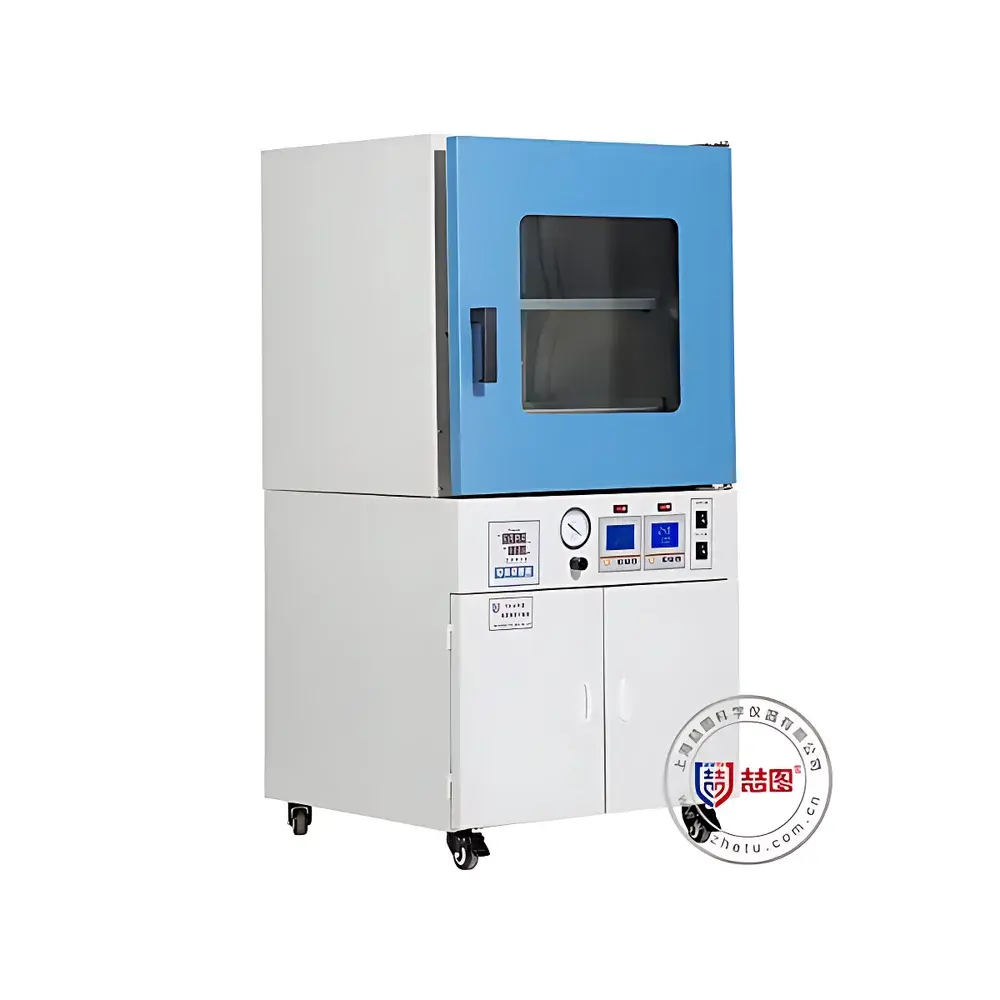
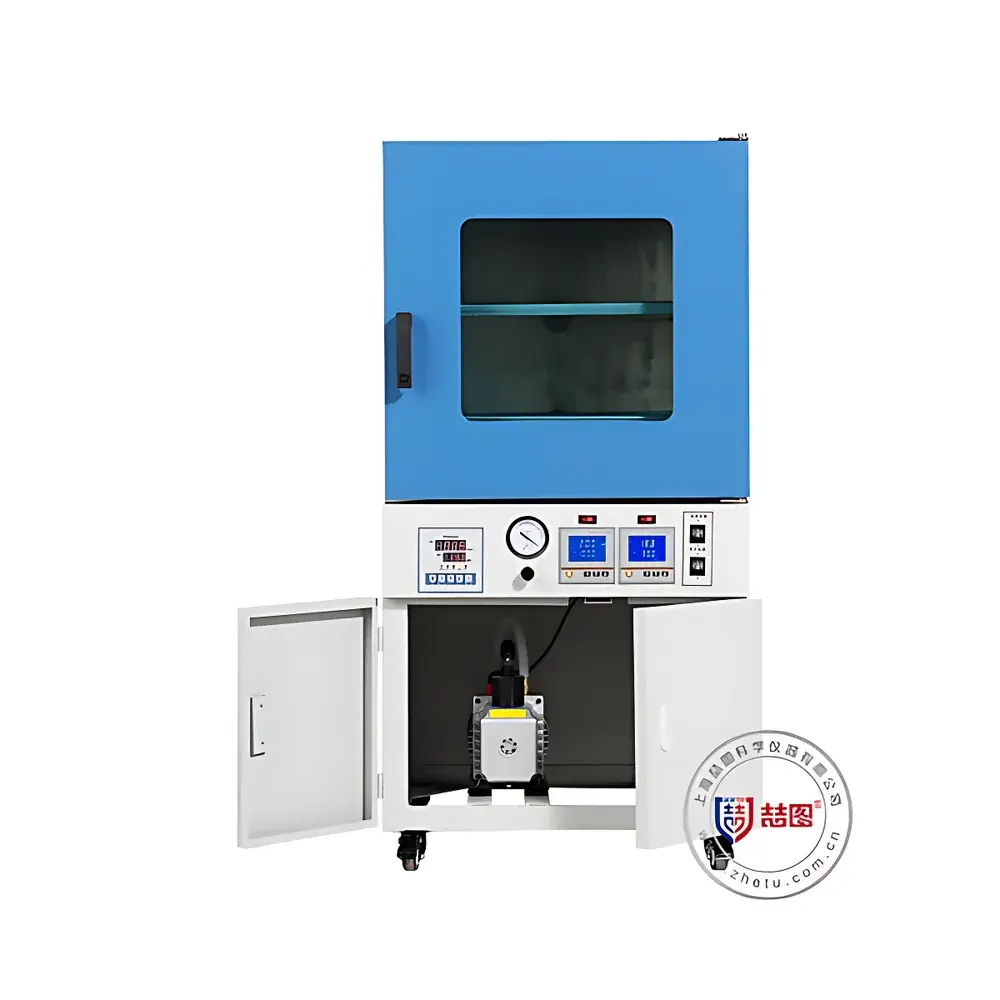
DRETOP TZS-6250L Digital Vacuum Drying Oven
| Brand | DRETOP |
|---|---|
| Origin | Shanghai, China |
| Manufacturer Type | Direct Manufacturer |
| Product Category | Domestic |
| Model | TZS-6250L |
| Instrument Type | Vacuum Oven |
| Temperature Range | RT+10 to 250 °C |
| Temperature Fluctuation | ±0.5 °C |
| External Dimensions | 760 × 740 × 1610 mm |
| Control Temperature Range | RT+10 to 250 °C |
| Internal Chamber Dimensions | 600 × 600 × 700 mm |
| Temperature Resolution | 0.1 °C |
| Operating Ambient Temperature | 5–45 °C |
| Chamber Material | Stainless Steel (304) |
| Heating Method | External Radiant Heating |
| Temperature Uniformity | ±1 °C |
| Ultimate Vacuum | ≤133 Pa |
Overview
The DRETOP TZS-6250L Digital Vacuum Drying Oven is a precision-engineered thermal processing system designed for controlled dehydration, solvent removal, and thermal stabilization of sensitive materials under reduced-pressure conditions. Operating on the principle of vacuum-assisted heat transfer—where lowered ambient pressure reduces the boiling point of volatile components—the oven enables gentle, oxidation-free drying without thermal degradation. Unlike atmospheric ovens, this system eliminates convective air currents that may disturb delicate samples (e.g., powders, thin-film coatings, or porous biomaterials), while preventing oxidation, hydrolysis, or decomposition reactions common in oxygen-rich environments. Its robust stainless steel chamber, external radiant heating architecture, and integrated vacuum management make it suitable for applications demanding strict process repeatability and environmental control—particularly in R&D, QC/QA laboratories, and pilot-scale manufacturing across electronics, pharmaceuticals, and advanced materials sectors.
Key Features
- Microprocessor-based PID temperature controller with programmable timer (1–9999 minutes), offering ±0.5 °C temperature fluctuation and 0.1 °C resolution for high reproducibility.
- Dual-layer tempered glass observation window with silicone-sealed gasket, enabling real-time visual monitoring without vacuum interruption.
- Externally mounted heating elements surrounding the chamber walls ensure uniform radiant heat distribution (±1 °C uniformity), eliminate internal hot spots, and prevent vacuum arcing or carbon deposition associated with internal heaters.
- Stainless steel (AISI 304) interior chamber and adjustable perforated stainless steel shelves support corrosion resistance, easy cleaning, and compatibility with mild acidic or alkaline residues.
- Integrated fault-diagnostic system displays alphanumeric error codes on the large backlit LCD interface, streamlining troubleshooting and minimizing downtime.
- Multi-layer thermal insulation using high-density glass fiber minimizes heat loss and improves energy efficiency—critical for extended-duration vacuum cycles.
- Comprehensive safety architecture includes over-temperature cut-off, leakage current protection, short-circuit interruption, overloading safeguards, and non-volatile parameter memory to retain settings after power failure.
- Ergonomic dual-stage zinc alloy door latch ensures consistent compression of the fluorosilicone door seal, maintaining vacuum integrity up to 133 Pa even during prolonged operation.
Sample Compatibility & Compliance
The TZS-6250L accommodates diverse sample forms—including powders, granules, wafers, coated substrates, lyophilized biologicals, polymer films, and electrode assemblies—without mechanical disturbance or cross-contamination. Its 250 L usable volume (600 × 600 × 700 mm chamber) supports batch processing of large-area or multi-tiered specimens. The vacuum environment (<133 Pa) is compatible with ASTM E145-22 (Standard Specification for Gravity-Convection and Forced-Ventilation Ovens) and aligns with ISO 17025 requirements for method validation when used in accredited testing labs. While not inherently GLP/GMP-certified, its data logging capability (via optional RS485 or USB interface), alarm-triggered event recording, and configurable setpoint limits support traceability in regulated environments. For pharmaceutical applications involving moisture-sensitive APIs, the system can be validated per USP (Residual Solvents) and ICH Q5C (Stability Testing) protocols when paired with calibrated sensors and documented SOPs.
Software & Data Management
The standard control interface features a high-contrast LCD display showing real-time vacuum level (digital readout), chamber temperature, setpoint, elapsed time, and status indicators. Optional upgrades include a full-color touchscreen HMI (LT-series) integrating vacuum and temperature control into a single programmable logic platform—enabling multi-step profiles (e.g., ramp-hold-vacuum purge cycles), password-protected user levels, and audit-trail generation compliant with FDA 21 CFR Part 11 when connected to validated data acquisition software. All digital controllers log operational parameters (start/stop times, max/min temperatures, vacuum deviations) into non-volatile memory; export via USB or RS485 enables integration into LIMS or ELN systems. Optional embedded printers provide hard-copy records for batch documentation, while RS485 connectivity allows remote supervision via SCADA or lab automation networks.
Applications
This vacuum drying oven serves critical roles across multiple technical domains: In semiconductor and lithium-ion battery manufacturing, it performs post-coating solvent evaporation from cathode/anode slurries and pre-encapsulation moisture removal from packaged ICs and flexible OLED substrates. In pharmaceutical development, it dries hygroscopic excipients, stabilizes amorphous solid dispersions, and removes residual solvents from lyophilized formulations per ICH Q3C guidelines. Academic and materials science labs utilize it for graphene oxide reduction, MOF activation, and ceramic precursor calcination under inert gas purging (optional inlet valve). Environmental and agrochemical labs apply it to soil moisture analysis (per ASTM D2216), pesticide residue extraction prep, and botanical extract concentration—where low-temperature vacuum drying preserves thermolabile phytochemicals. Its external heating design also makes it ideal for curing epoxy encapsulants and silicone adhesives without introducing particulate contamination.
FAQ
What vacuum pump is recommended for optimal performance with the TZS-6250L?
A 4 L/s rotary vane vacuum pump (e.g., DRETOP V-4000 series) is standard-equipped for rapid evacuation to ≤133 Pa; for moisture-laden samples, pairing with a W-series liquid trap or E-series thermal buffer is advised to protect pump longevity.
Can inert gas (e.g., N₂ or Ar) be introduced during drying?
Yes—optional inert gas inlet valves and mass flow controllers enable controlled backfilling or dynamic purge cycles, essential for oxygen-sensitive materials like metal-organic frameworks or reduced graphene oxide.
Is the chamber suitable for acidic vapor exposure?
The standard 304 stainless steel chamber resists mild organic acids; for aggressive inorganic acids (e.g., concentrated HCl or H₂SO₄), specify the TZF-6250A variant with 316L stainless steel or PTFE-coated interior.
How is temperature uniformity verified and maintained?
Uniformity is validated per ASTM E2203 using nine calibrated PT100 probes; periodic recalibration of the chamber sensor and controller ensures sustained ±1 °C spatial consistency across the full load volume.
Does the system support automated validation protocols?
With optional PLC integration and digital I/O modules, the oven supports IQ/OQ execution—including mapping studies, alarm response verification, and vacuum decay testing—as part of GxP-compliant equipment qualification.



