
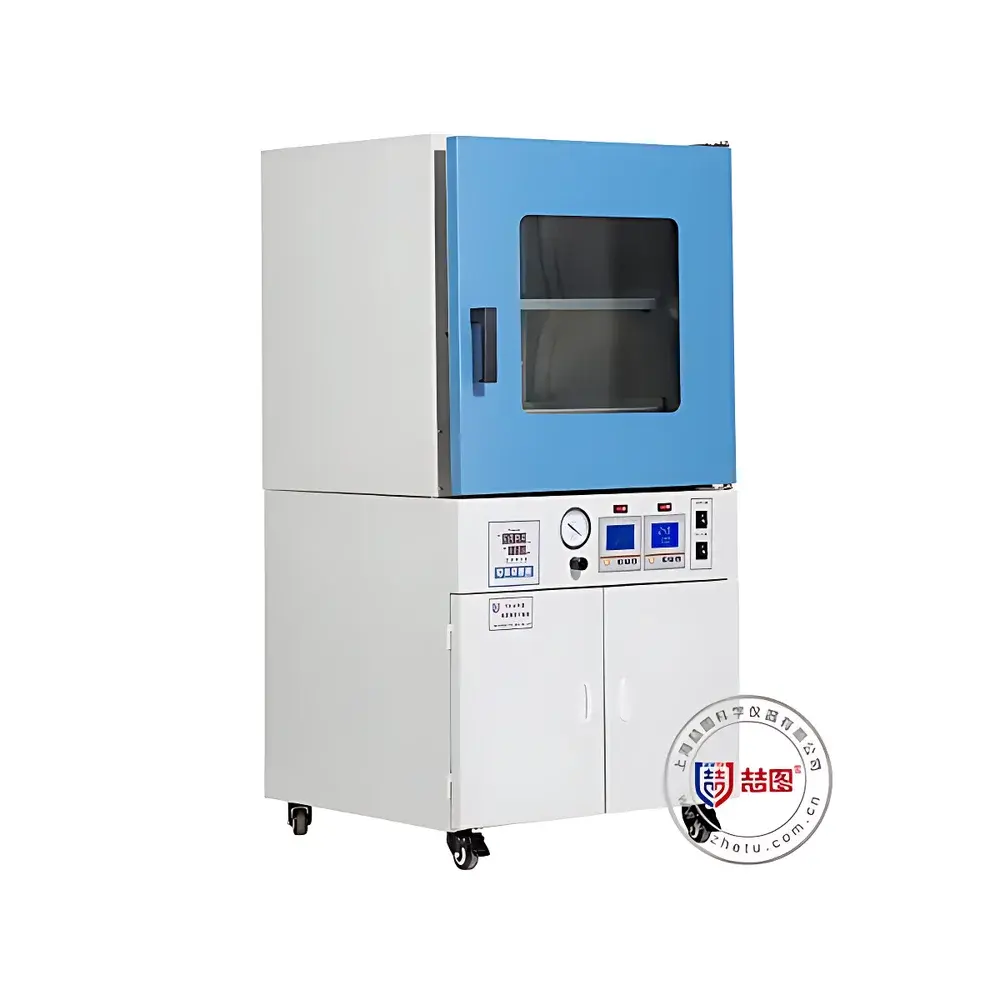
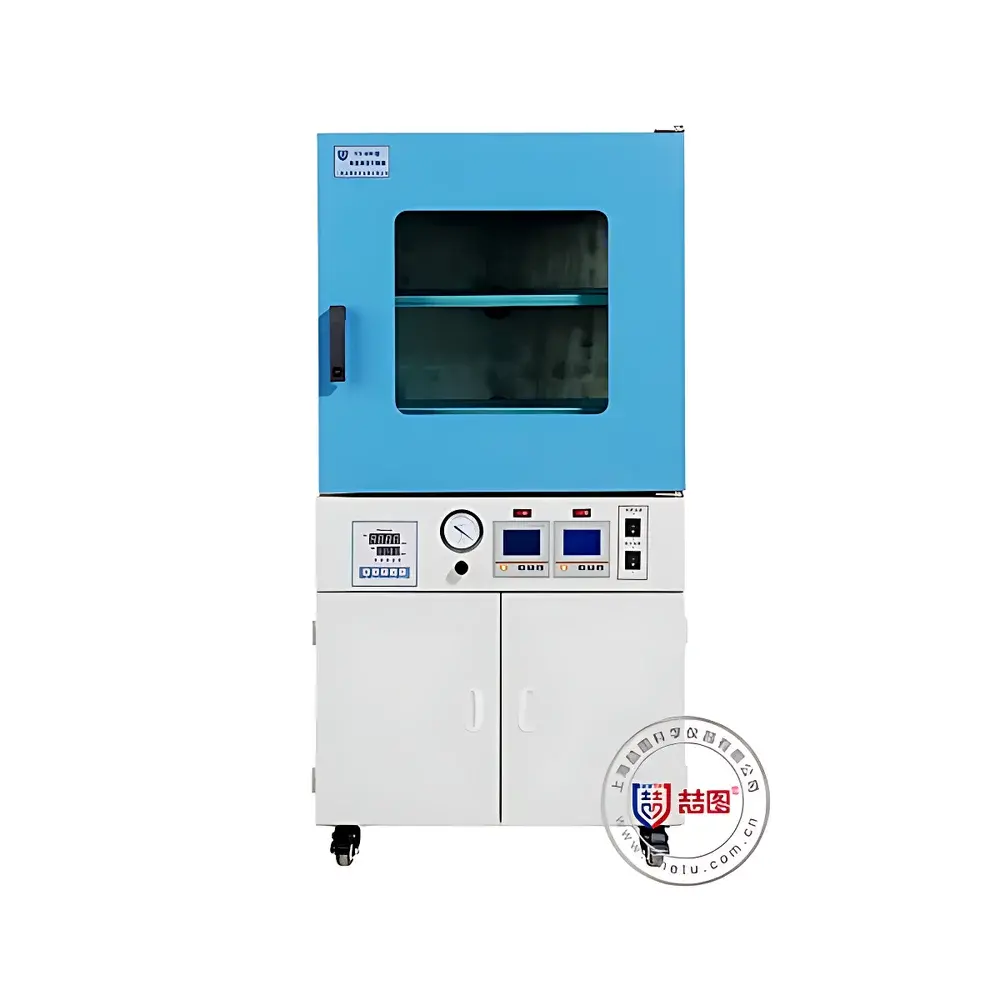
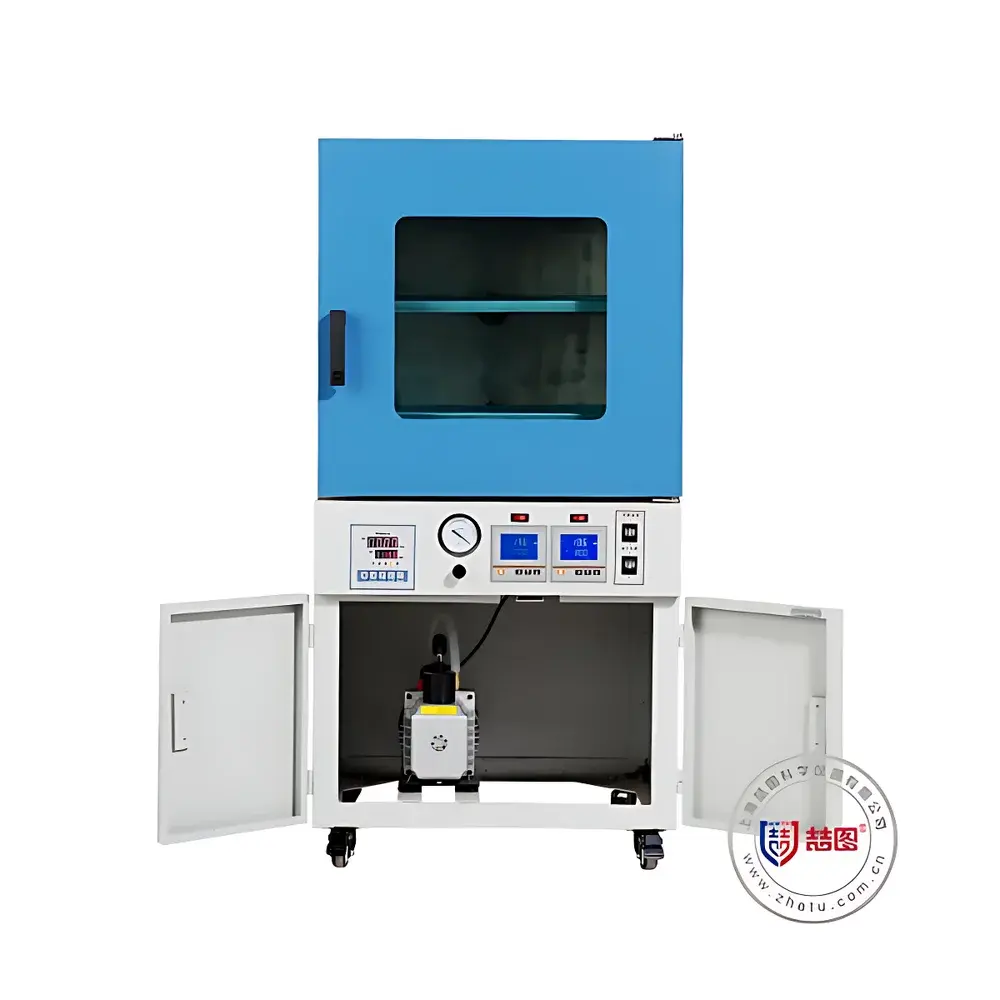
DRETOP TZS-6430LP Programmable Digital Vacuum Drying Oven
| Brand | DRETOP |
|---|---|
| Origin | Shanghai, China |
| Manufacturer Type | Direct Manufacturer |
| Product Category | Domestic |
| Model | TZS-6430LP |
| Instrument Type | Vacuum Oven |
| Temperature Range | RT+10 to 250 °C |
| Temperature Fluctuation | ±0.5 °C |
| External Dimensions | 1000 × 1040 × 1855 mm |
| Control Temperature Range | RT+10 to 250 °C |
| Internal Chamber Dimensions | 630 × 810 × 845 mm |
| Temperature Resolution | 0.1 °C |
| Operating Ambient Temperature | 5–45 °C |
| Interior Material | 304 Stainless Steel |
| Heating Method | External Radiant Heating |
| Temperature Uniformity | ±1 °C |
| Ultimate Vacuum Level | ≤133 Pa |
Overview
The DRETOP TZS-6430LP Programmable Digital Vacuum Drying Oven is an industrial-grade thermal processing system engineered for precise, repeatable vacuum drying under controlled temperature conditions. It operates on the principle of pressure reduction via mechanical vacuum pumping—typically using a rotary vane pump—to lower the partial pressure of water vapor and volatile solvents within the chamber. This enables evaporation at significantly reduced temperatures, minimizing thermal degradation of heat-sensitive materials such as polymers, pharmaceutical intermediates, lithium-ion battery electrode slurries, and biological specimens. Unlike atmospheric convection ovens, the TZS-6430LP eliminates oxidative pathways during drying by maintaining an oxygen-depleted environment, thereby preserving chemical integrity, preventing surface oxidation, and suppressing decomposition or charring in thermally labile compounds. Its robust structural design supports continuous operation in R&D laboratories, QC/QA environments, and pilot-scale manufacturing settings compliant with ISO/IEC 17025, USP , and GMP-aligned workflows.
Key Features
- Programmable microprocessor-based PID temperature controller with dual-stage overtemperature protection and audible/visual alarm activation upon deviation from setpoint.
- Digital vacuum gauge (0–1000 Pa range) integrated into the control interface, enabling real-time monitoring and programmable vacuum hold cycles synchronized with temperature profiles.
- Externally mounted heating elements surrounding the stainless-steel chamber ensure uniform radiant heat distribution without internal electrical components—eliminating risks of arcing, carbon deposition, or vacuum discharge common in internal-heating configurations.
- Chamber constructed from electropolished 304 stainless steel with double-layer tempered glass observation window, facilitating non-invasive visual inspection while maintaining vacuum integrity and thermal insulation.
- Four-tier adjustable stainless-steel tray system with perforated mesh design allows unrestricted vapor flow and accommodates heterogeneous sample geometries—including powders, thin films, and multi-layered substrates—without displacement or aggregation.
- High-efficiency thermal insulation using high-density ceramic fiber between inner and outer walls achieves low standby heat loss (<0.8 kW/h at 200 °C), supporting energy-conscious laboratory operations.
- Integrated safety architecture includes earth leakage circuit breaker (ELCB), overcurrent protection, short-circuit cutoff, and non-volatile memory retention for parameter backup after power interruption.
- Ergonomic dual-lever zinc-alloy door latch with dual-stage compression seal ensures consistent gasket contact pressure across full operational vacuum range, validated to maintain ≤133 Pa for >72 h without active pumping.
Sample Compatibility & Compliance
The TZS-6430LP accommodates samples ranging from microgram-scale analytical standards to large-format electronic wafers (up to 300 mm diameter) and stacked battery electrode stacks. Its inert 304 stainless-steel interior resists corrosion from mild organic solvents, aqueous salt solutions, and low-concentration acids encountered in semiconductor packaging, cathode material synthesis, and biopolymer lyophilization pre-treatment. The oven complies with IEC 61010-1:2010 for electrical safety in laboratory equipment and meets EMC requirements per EN 61326-1. When configured with optional inert gas purge (N₂ or Ar) and RS485 digital output, it supports audit-ready data logging aligned with FDA 21 CFR Part 11 requirements for electronic records and signatures—provided paired software implements role-based access control, time-stamped event logs, and tamper-evident archive generation.
Software & Data Management
The standard LP-series controller supports up to 99 programmable steps per cycle, each defining target temperature, ramp rate, dwell time, and vacuum setpoint. Optional LT-series color touchscreen HMI extends functionality with graphical profile editing, real-time trend plotting, USB export of CSV-formatted temperature/vacuum/time datasets, and password-protected user levels (Operator, Technician, Administrator). All firmware versions undergo validation against NIST-traceable reference standards, and calibration certificates (including as-found/as-left data) are available upon request. For integration into centralized LIMS or MES platforms, the RS485 port supports Modbus RTU protocol, enabling remote start/stop commands, status polling, and alarm acknowledgment without manual intervention.
Applications
- Pre-drying of LiCoO₂, NMC, and silicon-anode slurries prior to calendaring—reducing residual moisture to <50 ppm to prevent HF generation during cell formation.
- Dehydration of enzyme-immobilized carriers and chromatographic stationary phases without denaturation.
- Curing of photoresist-coated MEMS wafers under nitrogen-purged vacuum to eliminate bubble formation and improve adhesion uniformity.
- Removal of entrapped solvents from OLED encapsulation layers and perovskite precursor films.
- Stabilization of hygroscopic reference standards (e.g., potassium hydrogen phthalate) for gravimetric calibration.
- Accelerated aging studies of polymer electrolytes under controlled humidity and thermal stress profiles.
FAQ
What vacuum level is achievable with the standard configuration?
The TZS-6430LP achieves ≤133 Pa (1 Torr) using the included 2 L/s rotary vane pump; optional high-vacuum upgrades (e.g., dual-stage pumps or cold traps) extend capability to ≤10 Pa for ultra-low-moisture applications.
Can this oven be used for outgassing polymers prior to vacuum metallization?
Yes—the external heating design prevents outgassed volatiles from contacting hot surfaces, reducing carbon residue buildup; combined with optional oil mist filter and liquid condensate trap (W-series), it supports extended outgassing cycles up to 200 °C.
Is the temperature uniformity verified across the full chamber volume?
Yes—uniformity is certified per ASTM E2207-17 using nine calibrated PT100 sensors placed at standardized locations; measured deviation remains within ±1 °C at 150 °C steady state.
Does the system support GLP-compliant data archiving?
When equipped with the LT-series touchscreen and optional embedded printer or network-enabled data server module, full-cycle logs—including timestamps, operator ID, deviations, and calibration metadata—meet ALCOA+ principles for attributable, legible, contemporaneous, original, accurate, complete, consistent, enduring, and available records.
What maintenance intervals are recommended for sustained performance?
Vacuum pump oil replacement every 500 operating hours; door gasket inspection quarterly; temperature sensor verification annually using a NIST-traceable dry-block calibrator; full system IQ/OQ documentation available upon request.



