
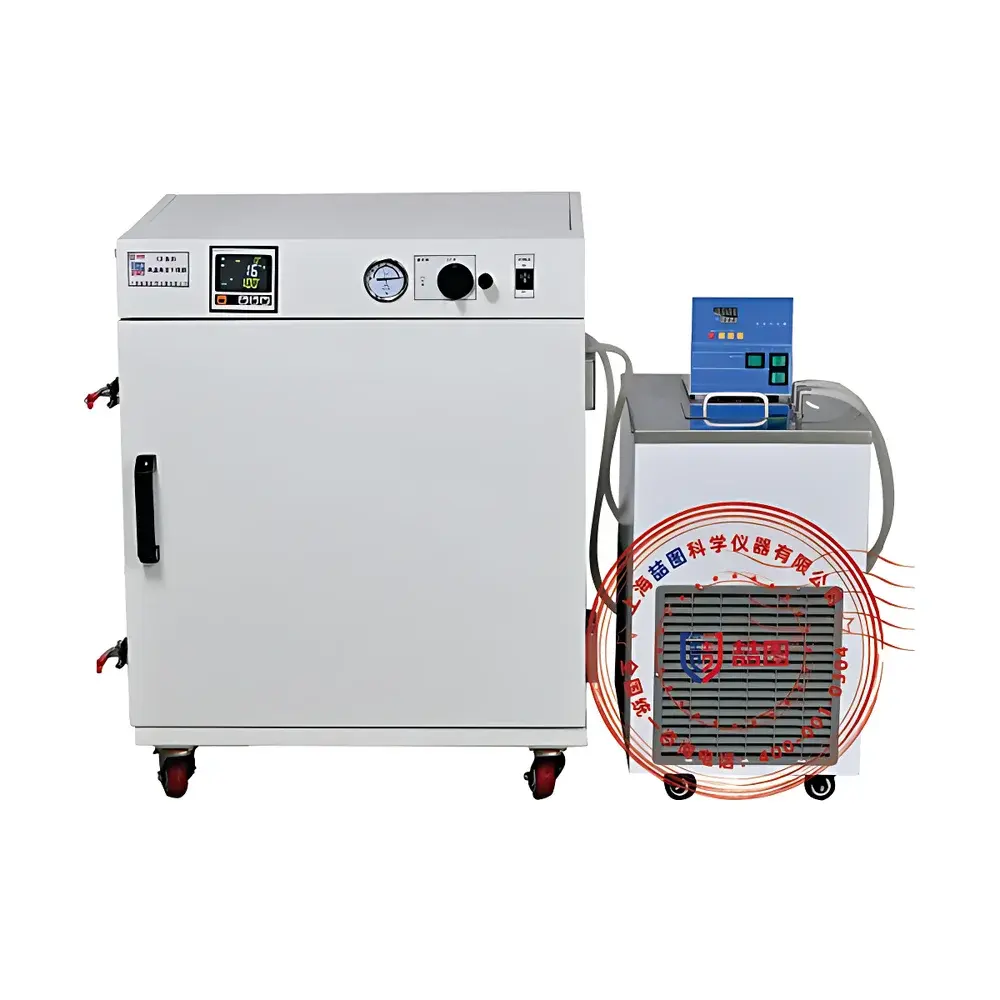
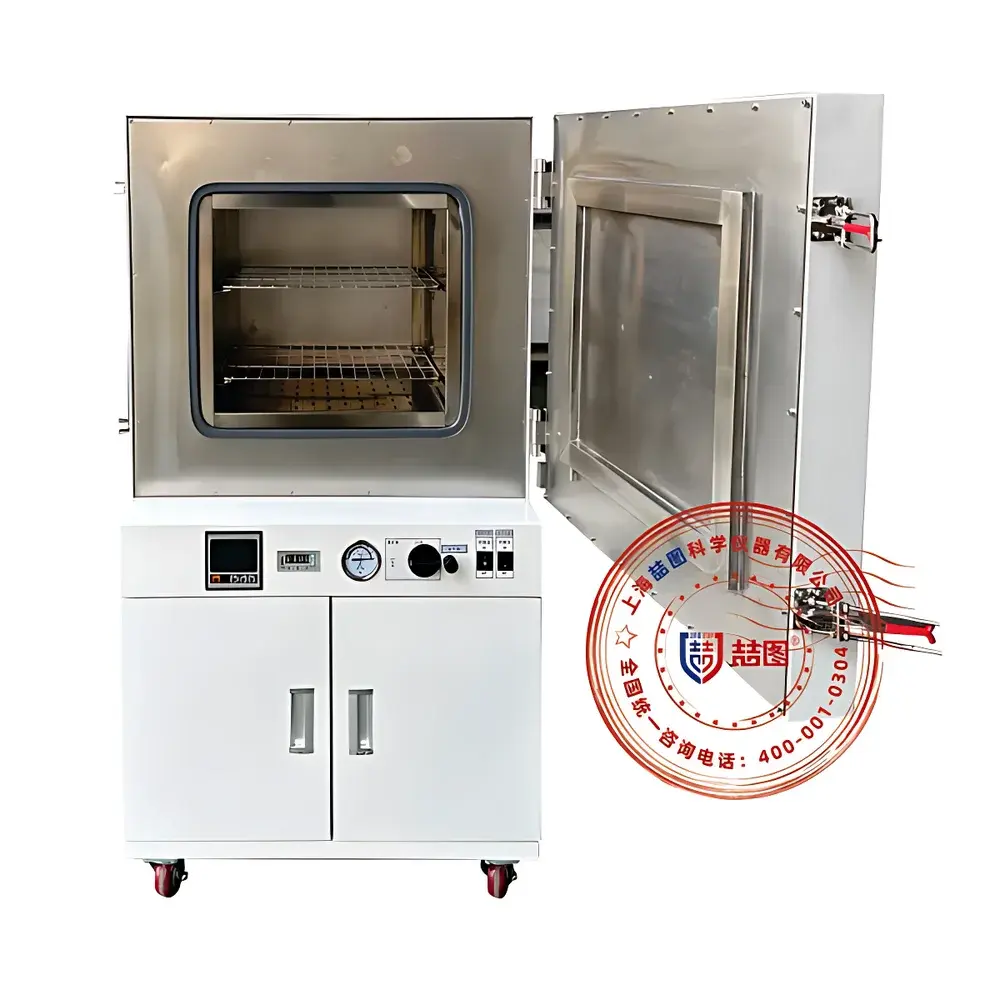
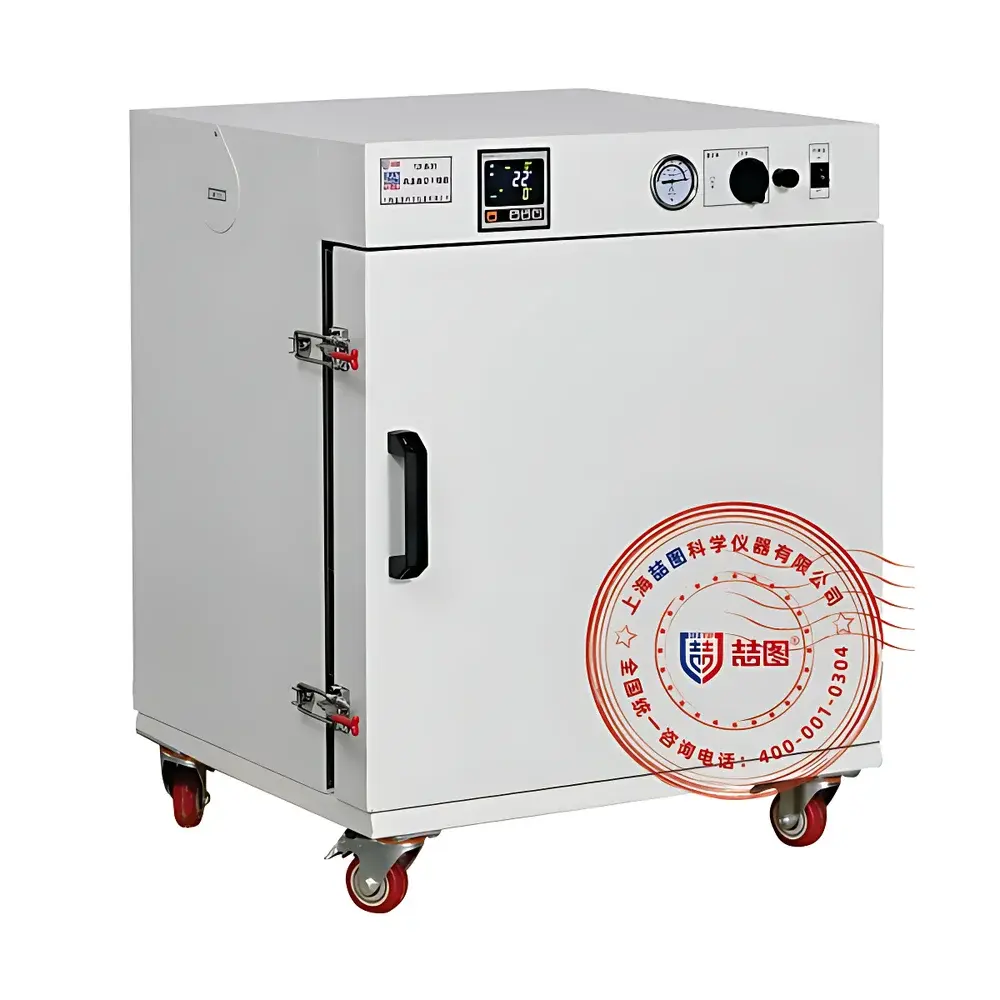
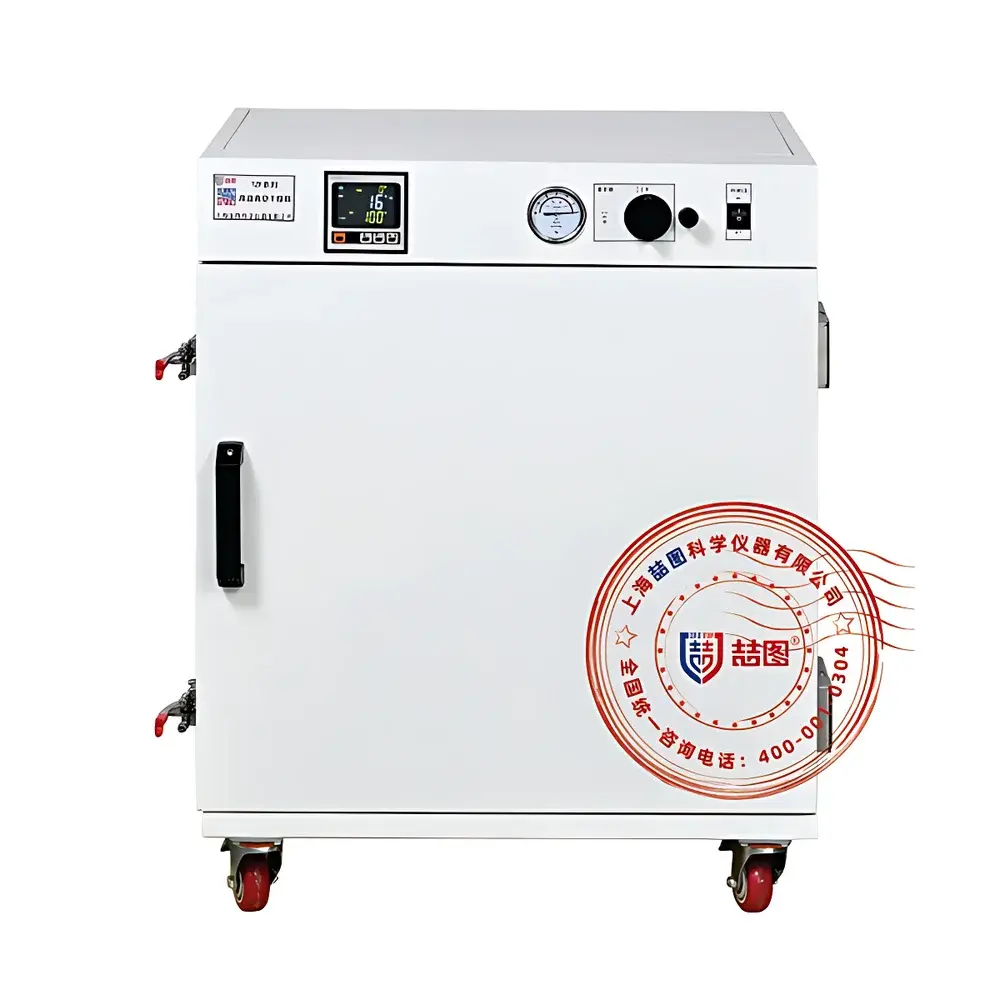
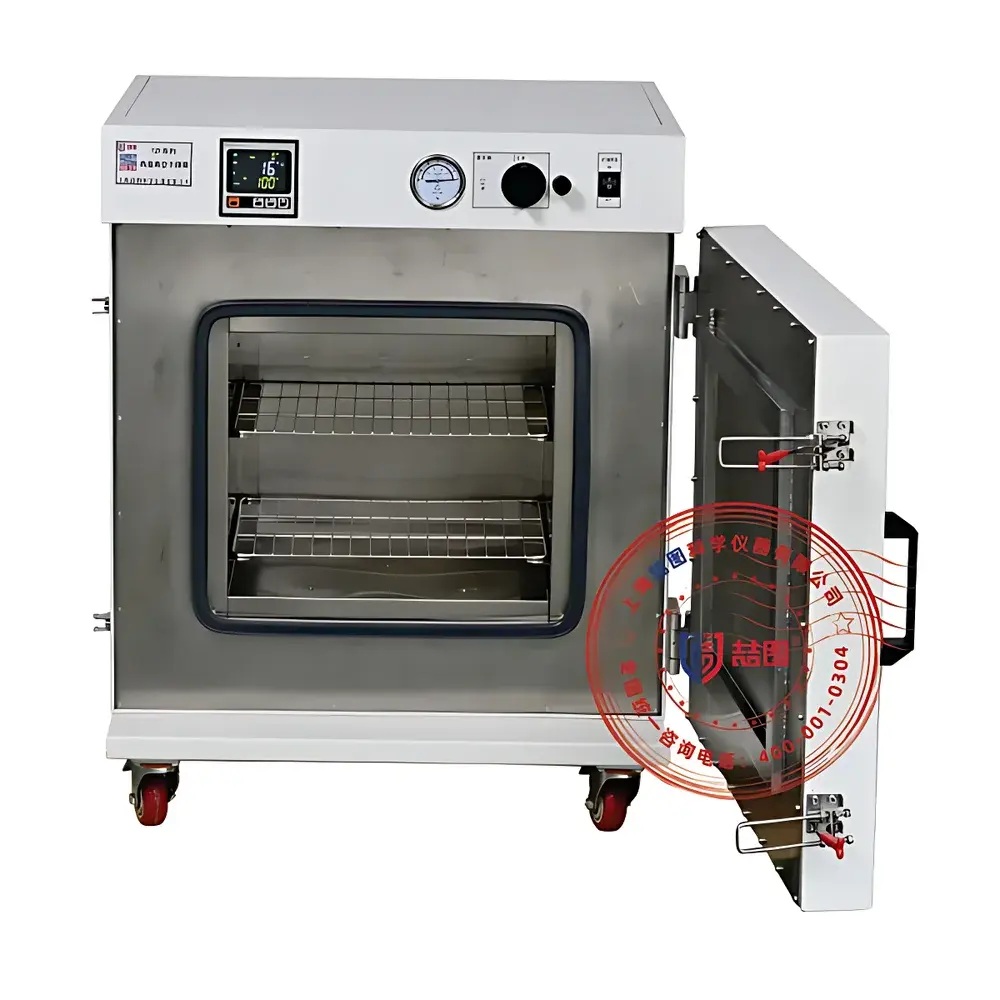
DRETOP UR4-90JV High-Temperature Vacuum Drying Oven
| Brand | DRETOP |
|---|---|
| Origin | Shanghai, China |
| Manufacturer Type | Direct Manufacturer |
| Product Category | Domestic |
| Model | UR4-90JV |
| Instrument Type | Vacuum Oven |
| Temperature Range | RT +10°C to 400°C |
| Temperature Uniformity | ±1°C |
| Temperature Fluctuation | ±1°C |
| Control Range | RT +10°C to 400°C |
| Chamber Dimensions (W×D×H) | 450 × 450 × 450 mm |
| Temperature Resolution | 0.1°C |
| Operating Ambient Temperature | 5–40°C |
| Interior Material | Stainless Steel (304) |
| Heating Method | Forced-Air Circulation |
| Vacuum Level | ≤133 Pa |
Overview
The DRETOP UR4-90JV High-Temperature Vacuum Drying Oven is a precision-engineered thermal processing system designed for controlled dehydration, thermal stabilization, degassing, and annealing under reduced-pressure conditions. It operates on the fundamental principle of lowering the boiling point of volatile components—including water, solvents, and residual monomers—by maintaining a stable vacuum environment (≤133 Pa), thereby enabling efficient drying of heat-sensitive, oxidation-prone, or particulate materials without thermal degradation or structural disturbance. Unlike conventional convection ovens, the UR4-90JV eliminates convective airflow within the chamber, ensuring zero sample displacement during processing—a critical requirement for powders, thin-film substrates, battery electrode coatings, semiconductor wafers, and aerospace composites. Its maximum operating temperature of 400°C supports applications ranging from polymer crosslinking and ceramic sintering aids to pre-bake steps in MEMS packaging and cathode/anode conditioning in lithium-ion battery R&D.
Key Features
- Stainless steel (AISI 304) double-walled chamber with argon arc welded seams and high-integrity door sealing—ensuring long-term vacuum integrity and resistance to thermal cycling fatigue.
- Dual-stage rotary lock mechanism with high-temperature silicone door gasket and integrated water-cooled jacket—maintains seal integrity at elevated temperatures and extends gasket service life.
- Forced-air circulation heating system with rear-mounted fan and optimized baffle design—delivers uniform thermal distribution (±1°C) across the 90 L working volume (450 × 450 × 450 mm).
- Microprocessor-based PID temperature controller with 0.1°C resolution, programmable ramp/soak profiles, and over-temperature deviation alarm—compliant with GLP documentation requirements for traceable thermal validation.
- Integrated digital vacuum display (optional S-type split-panel or T-type color touchscreen configuration)—enables real-time monitoring and logging of vacuum pressure alongside temperature setpoints and elapsed time.
- Multi-layer thermal insulation using high-density glass fiber between inner and outer walls—reduces surface temperature rise and improves energy efficiency per ASTM C177 test methodology.
Sample Compatibility & Compliance
The UR4-90JV accommodates diverse sample forms—including loose powders, coated foils, ceramic green bodies, PCB assemblies, and encapsulated sensor modules—without risk of dispersion or oxidation. Its inert, low-oxygen vacuum environment mitigates fire hazards associated with solvent-laden or reactive metal samples (e.g., Li-metal anodes, Mg alloys), satisfying safety prerequisites outlined in NFPA 484 and IEC 60079-11. The chamber’s stainless steel construction meets FDA-recommended material criteria for non-leaching surfaces in materials qualification studies. Optional nitrogen purge capability supports controlled-atmosphere processing aligned with ISO 8502-9 (surface cleanliness) and USP (sterile processing validation). All electrical systems conform to IEC 61000-6-3 (EMC emission limits) and IEC 61010-1 (safety requirements for laboratory equipment).
Software & Data Management
The T-type controller variant includes embedded data logging with timestamped CSV export via USB port, supporting audit-ready record retention per 21 CFR Part 11 requirements when paired with user-defined electronic signatures and access controls. Logged parameters include chamber temperature, vacuum pressure, elapsed process time, and alarm events. The system supports up to 16 segmented programs with independent ramp rates, dwell times, and vacuum hold sequences—enabling reproducible multi-step protocols such as solvent removal → inert gas backfill → controlled cool-down. Optional RS485 Modbus RTU interface enables integration into centralized lab automation platforms (e.g., LabVantage, Thermo Fisher SampleManager) for SOP-driven batch execution and electronic batch record (EBR) generation.
Applications
- Battery R&D: Electrode drying, electrolyte impregnation, and SEI layer formation under inert vacuum prior to cell assembly.
- Semiconductor Manufacturing: Wafer bake-out, photoresist pre-hardbake, and outgassing of die-attach adhesives.
- Advanced Materials: Thermal debinding of MIM (metal injection molding) parts, ceramic matrix composite densification, and graphene oxide reduction.
- Pharmaceutical Development: Solvent residue removal from lyophilized APIs, moisture control in excipient blends, and stability testing under accelerated vacuum conditions.
- Aerospace Engineering: Outgassing verification of adhesives, sealants, and composite layups per ECSS-Q-ST-70-02C.
- Academic Research: Kinetic studies of thermal decomposition, vacuum pyrolysis of biomass precursors, and low-temperature annealing of 2D materials.
FAQ
What vacuum level can the UR4-90JV achieve, and how is it maintained?
The system achieves and sustains ≤133 Pa (1 Torr) using a standard oil-sealed rotary vane vacuum pump (included), supported by optional J-type intermediate condensate trap or Q-type dual-stage cold trap for high-moisture or solvent-rich samples.
Is the chamber suitable for oxygen-sensitive processes?
Yes—the sealed stainless steel chamber, combined with optional N₂ purging, enables operation under inert atmosphere; residual O₂ levels can be reduced to <10 ppm with proper pump-down and purge cycles.
How is temperature uniformity validated across the chamber volume?
Uniformity is verified per ISO 14644-3 Annex B using nine calibrated PT100 sensors placed at standardized locations (center, six faces, and four corners); results are documented in factory calibration certificates.
Can the UR4-90JV be integrated into a GMP-compliant workflow?
With T-type controller, password-protected parameter editing, electronic audit trail, and configurable alarm thresholds, the unit supports IQ/OQ documentation and aligns with Annex 11 and EU GMP Chapter 4 expectations for computerized system validation.
What maintenance intervals are recommended for sustained vacuum performance?
Vacuum pump oil should be replaced every 500 operational hours; door gaskets inspected quarterly; and internal chamber cleaned after each high-residue run using ethanol or isopropanol—no abrasive agents permitted on stainless surfaces.
Related Products



