
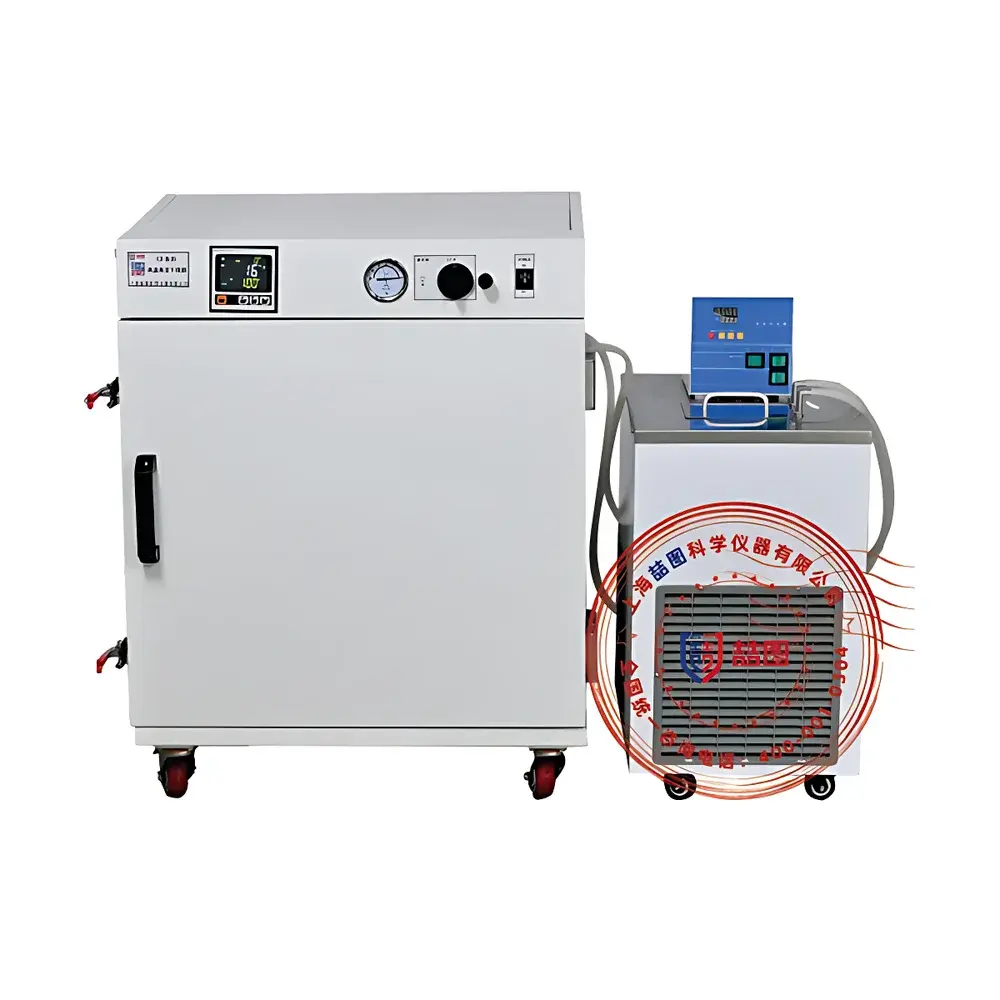
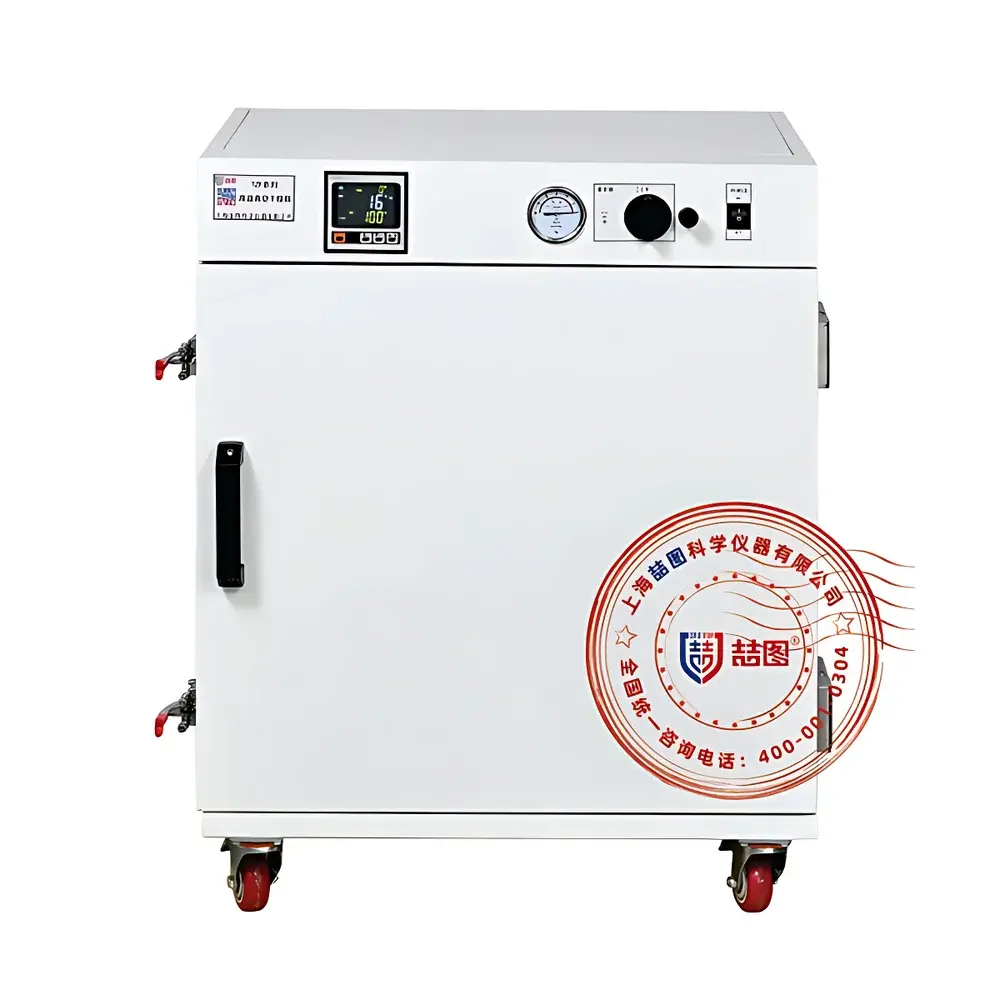
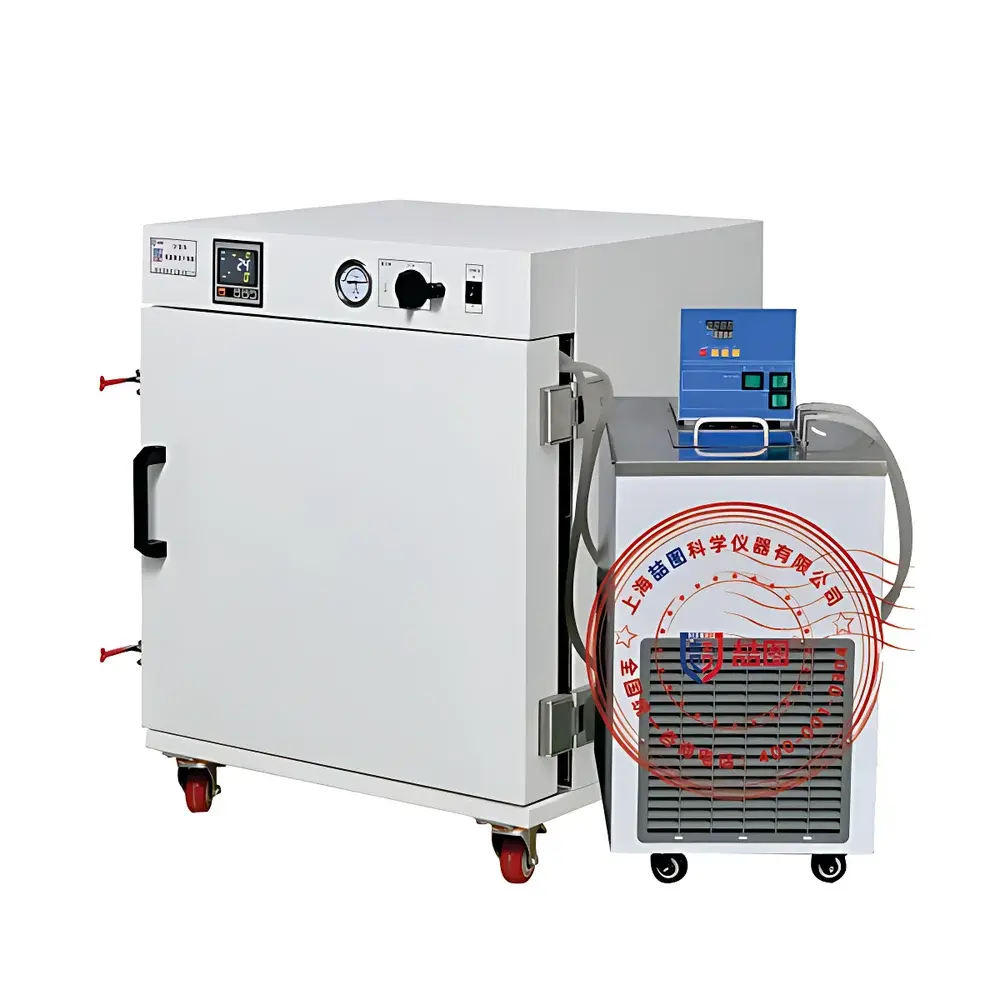
DRETOP UR4-90LV High-Temperature Vacuum Drying Oven
| Brand | DRETOP |
|---|---|
| Origin | Shanghai, China |
| Manufacturer Type | Direct Manufacturer |
| Model | UR4-90LV |
| Instrument Type | Vacuum Oven |
| Temperature Range | RT+10 to 400 °C |
| Temperature Uniformity | ±1 °C |
| Temperature Fluctuation | ±1 °C |
| Temperature Resolution | 0.1 °C |
| Vacuum Degree | ≤133 Pa |
| Inner Chamber Dimensions | 450 × 450 × 450 mm |
| Inner Chamber Material | Stainless Steel (SUS304) |
| Heating Method | External Heating |
| Working Environment Temperature | +5 to 40 °C above ambient |
| Insulation Material | Glass Fiber |
| Safety Protections | Over-Temperature Alarm, Leakage Protection, Short-Circuit Protection, Overload Protection, Power-Failure Data Retention |
Overview
The DRETOP UR4-90LV High-Temperature Vacuum Drying Oven is an engineered thermal processing system designed for precise, oxidation-free drying, annealing, degassing, and moisture removal under controlled vacuum conditions. It operates on the principle of vapor pressure reduction: by evacuating the chamber to ≤133 Pa, the boiling point of water and volatile solvents is significantly lowered—enabling efficient dehydration of heat-sensitive materials at reduced temperatures. This eliminates thermal degradation while ensuring complete solvent removal, residual gas elimination, and structural integrity preservation in critical applications such as semiconductor packaging, lithium-ion battery electrode conditioning, aerospace component outgassing, and high-purity ceramic sintering pre-treatment. The unit is certified for continuous operation up to 400 °C and complies with fundamental safety and electromagnetic compatibility requirements per IEC 61000-6-3 and IEC 61000-6-4.
Key Features
- Stainless steel (SUS304) double-walled inner chamber with argon arc welded seams, ensuring long-term vacuum integrity and corrosion resistance.
- Two-stage rotary latch door mechanism with high-temperature silicone sealing gasket and water-cooled jacket interface—maintains consistent seal performance even during extended high-temperature cycles.
- Microprocessor-based PID temperature controller with 0.1 °C resolution, ±1 °C uniformity, and programmable ramp/soak profiles; includes over-temperature deviation alarm and auto-shutdown.
- Integrated self-diagnostic system displaying real-time fault codes on the backlit LCD interface—reducing downtime and enabling rapid troubleshooting.
- Externally mounted heating elements minimize thermal radiation exposure to samples and improve temperature gradient control across the 90 L working volume (450 × 450 × 450 mm).
- Standard inclusion of B-type vacuum pump protection module—condenses hot vapors prior to entry into the rotary vane pump, extending pump service life and preventing oil contamination.
Sample Compatibility & Compliance
The UR4-90LV accommodates powders, thin-film substrates, porous ceramics, battery cathode/anode sheets, PCB assemblies, and polymer composites without mechanical disturbance—ideal for fragile or fine particulate samples that would be displaced in forced-convection ovens. Its vacuum environment prevents surface oxidation during thermal treatment, making it suitable for applications governed by ASTM E1862 (Standard Test Methods for Measuring Heat Transfer in Vacuum), ISO 2739 (Vacuum Technology – Vocabulary), and USP (Containers – Glass). Optional inert gas inlet (N₂ or Ar) enables controlled atmosphere processing per GMP Annex 1 requirements for sterile device manufacturing. All electrical components meet CE marking directives for low-voltage equipment (2014/35/EU) and EMC (2014/30/EU).
Software & Data Management
The standard controller supports time-based operation with up to 99 segments of programmable temperature/vacuum profiles. For enhanced traceability, optional II-type color touchscreen controllers provide real-time graphical logging, USB data export (CSV format), and audit-trail functionality compliant with FDA 21 CFR Part 11 when paired with user-access controls and electronic signature modules. Data retention persists through power interruption via non-volatile memory. RS485 communication enables integration into centralized lab monitoring systems using Modbus RTU protocol. Optional embedded thermal printer provides hard-copy record of cycle parameters and alarms for GLP/GMP documentation.
Applications
- Electrode drying and binder decomposition in Li-ion and solid-state battery R&D and pilot production.
- Outgassing of optical components, MEMS devices, and vacuum-compatible sensors prior to hermetic sealing.
- Thermal stabilization of catalysts, MOFs, and metal-organic precursors under inert or vacuum conditions.
- Moisture removal from hygroscopic pharmaceutical excipients and lyophilized intermediates without crystallinity loss.
- Pre-bake treatment of silicon wafers and GaAs substrates to eliminate adsorbed H₂O and organic contaminants before epitaxial growth.
- Post-curing degassing of epoxy encapsulants and polyimide films used in aerospace avionics assemblies.
FAQ
What vacuum level can the UR4-90LV achieve, and how is it monitored?
The chamber reaches ≤133 Pa using the standard included rotary vane vacuum pump; vacuum level is displayed via analog gauge (standard) or optional digital vacuum meter with 1 Pa resolution.
Is the oven suitable for processes requiring inert gas purging?
Yes—optional N₂ or Ar inlet valve (with precision flow control) allows for vacuum-to-inert gas cycling, maintaining atmospheric or sub-atmospheric partial pressures during heating.
How does the water-cooled jacket improve operational reliability?
It actively dissipates heat from the door seal region, reducing thermal stress on the silicone gasket and minimizing compression set—extending seal lifetime and sustaining vacuum integrity over repeated thermal cycles.
Can the UR4-90LV be validated for GMP environments?
With IQ/OQ documentation packages, calibrated temperature mapping (per ISO 14644-3), and optional Part 11-compliant software, the system supports qualification for regulated pharmaceutical and medical device manufacturing.
What maintenance intervals are recommended for the vacuum pump and cooling system?
Rotary vane pump oil should be changed every 500 operating hours; the recirculating water chiller (if installed) requires biannual descaling and coolant replacement per manufacturer specifications.



