
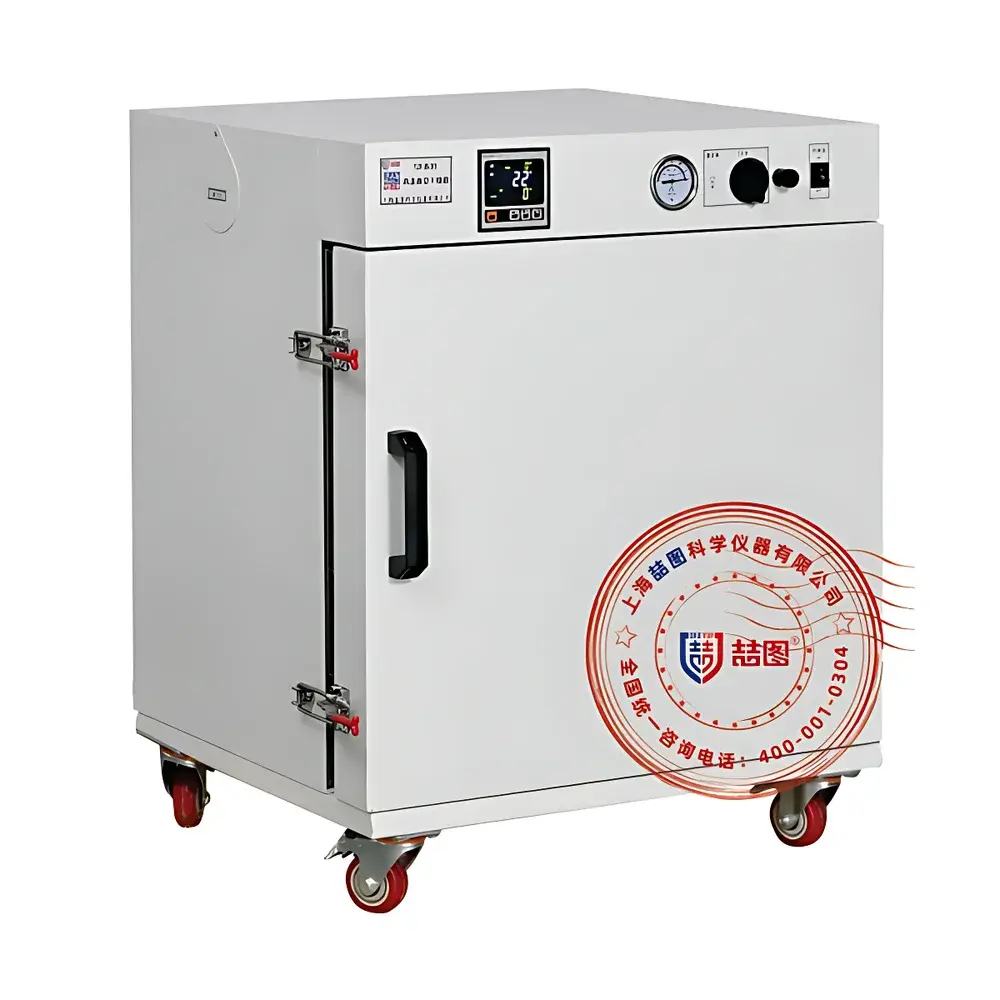
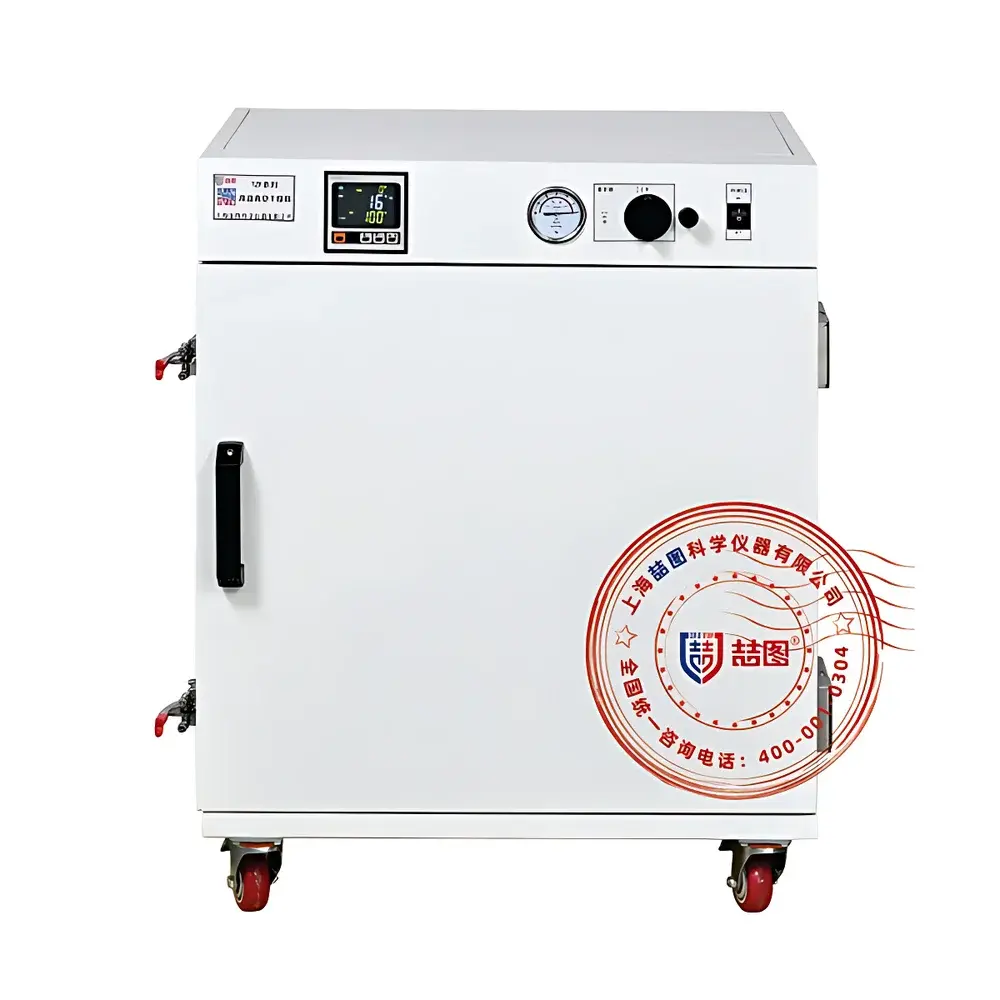
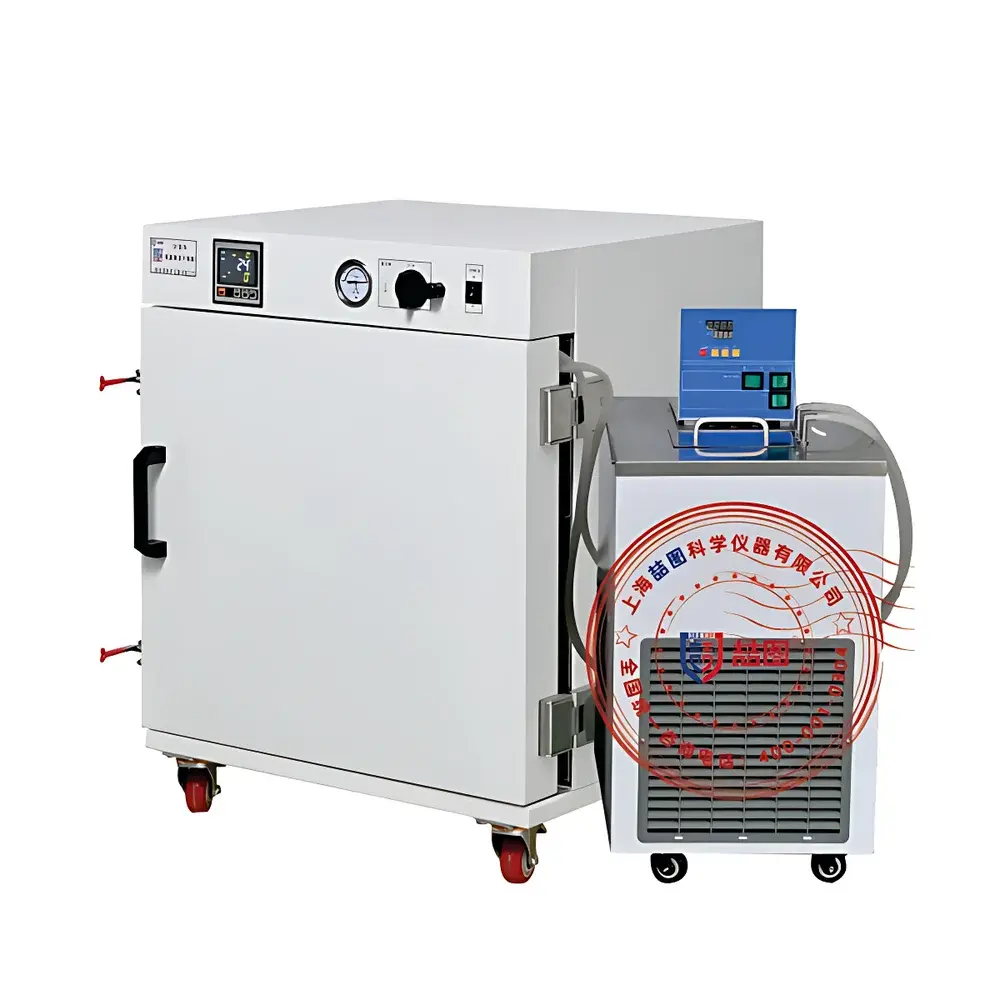
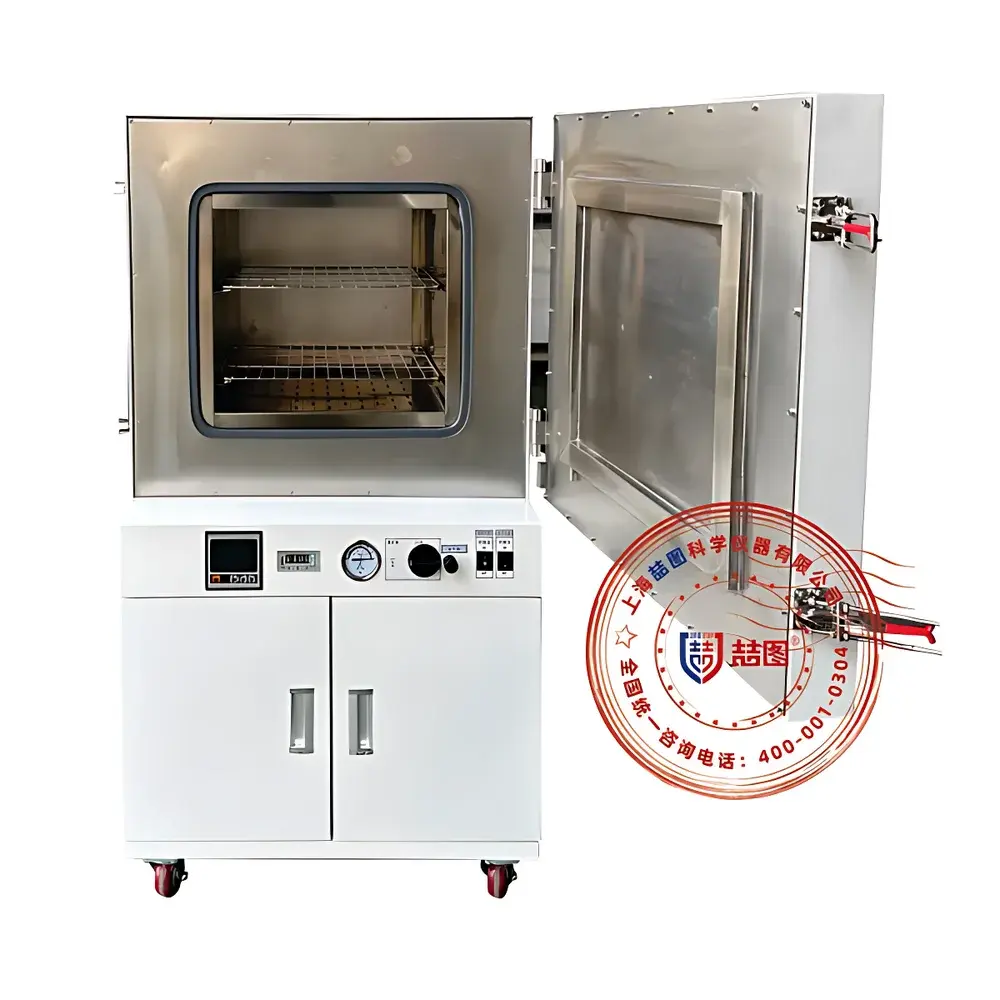
DRETOP UR5-90V High-Temperature Vacuum Drying Oven
| Brand | DRETOP |
|---|---|
| Origin | Shanghai, China |
| Manufacturer Type | Direct Manufacturer |
| Product Category | Domestic |
| Model | UR5-90V |
| Instrument Type | Vacuum Oven |
| Temperature Range | RT +10°C to 500°C |
| Temperature Uniformity | ±1°C |
| Temperature Fluctuation | ±1°C |
| Temperature Resolution | 0.1°C |
| Vacuum Degree | ≤133 Pa |
| Internal Chamber Dimensions (W×D×H) | 450 × 450 × 450 mm |
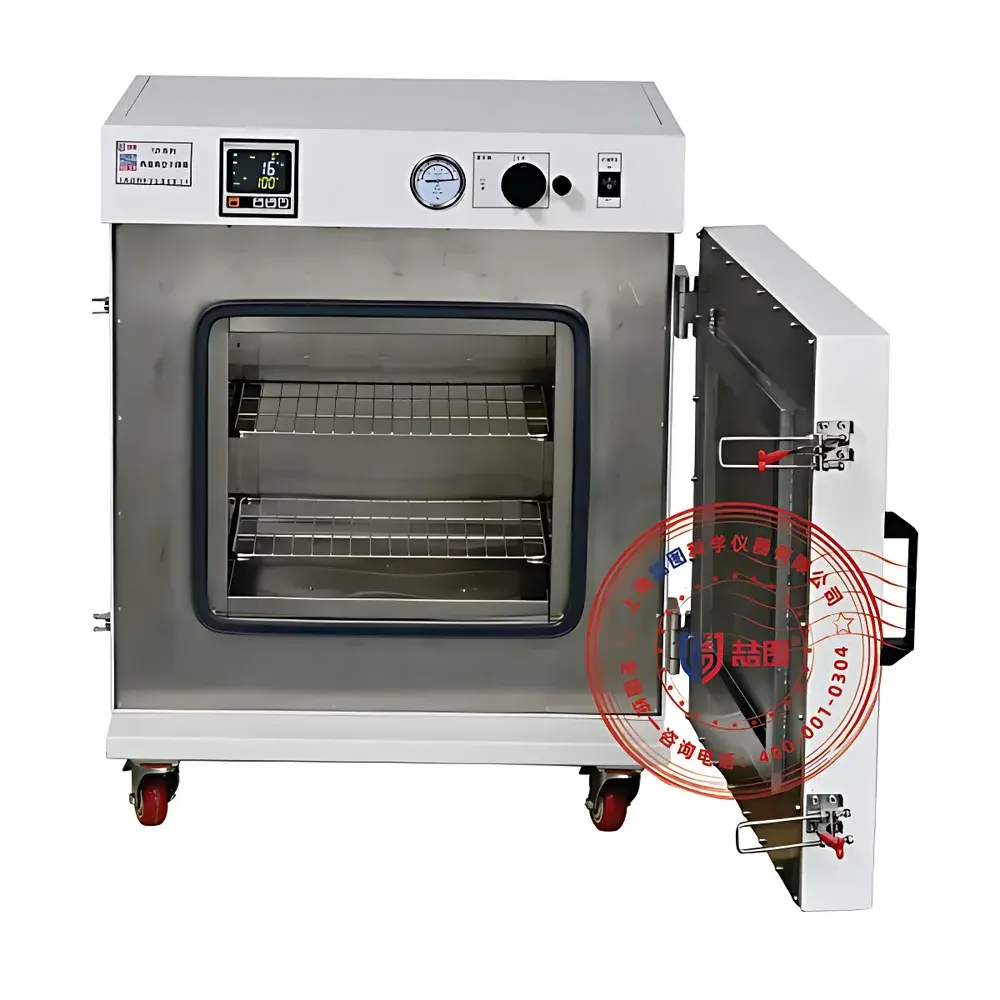
| Construction Material | Stainless Steel Interior |
| Heating Method | Forced-Air Circulation |
| Operating Ambient Temperature | 5–40°C |
| Power Supply | AC 380 V, 50 Hz |
| Rated Power | 4870 W |
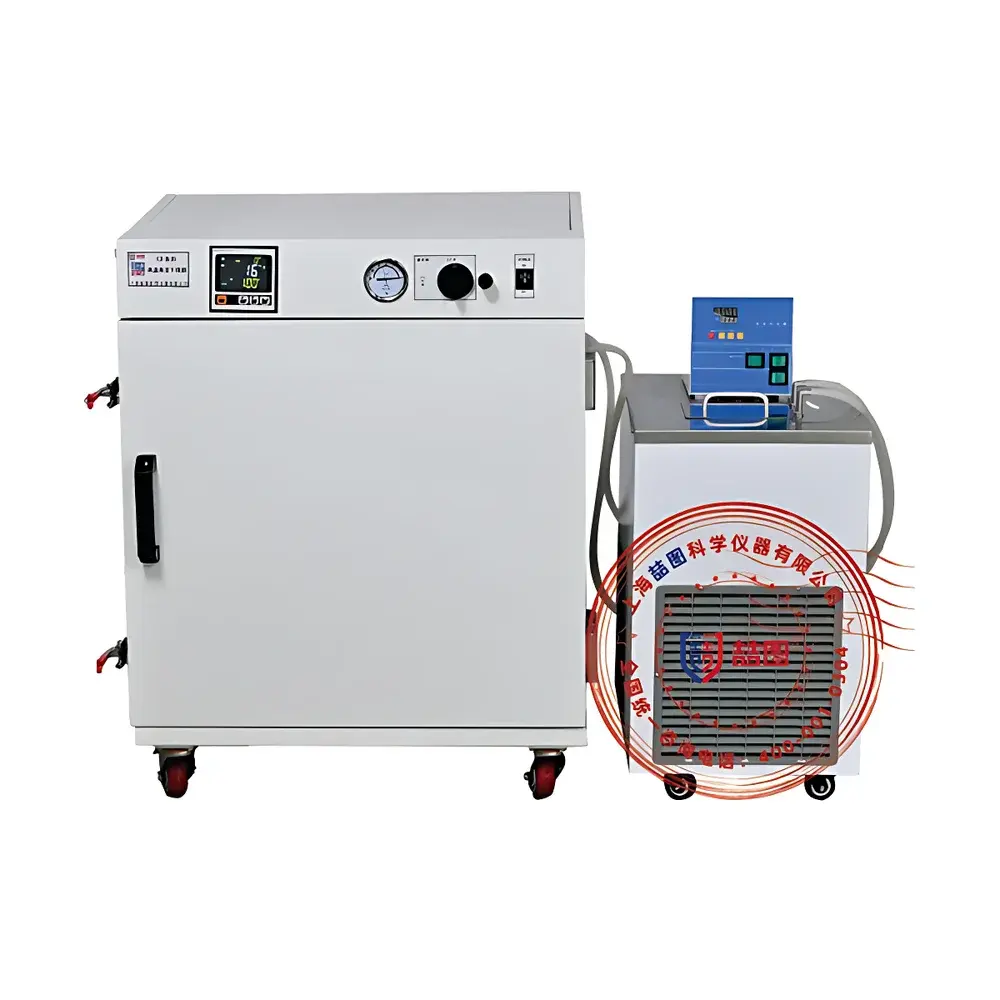
| Standard Accessories | Recirculating Water Cooling Unit, Carbon Steel Soundproof Cabinet, Rotary Vane Vacuum Pump, J-Type Intermediary Condensate Trap |
Overview
The DRETOP UR5-90V High-Temperature Vacuum Drying Oven is an engineered solution for thermal processing under controlled low-pressure environments. It operates on the fundamental principle of vacuum-assisted drying: by reducing ambient pressure inside the chamber—down to ≤133 Pa—the boiling point of volatile components (e.g., solvents, moisture, residual monomers) is significantly lowered, enabling efficient removal at reduced temperatures. This mechanism is critical for preserving thermally labile materials while achieving deep dehydration or solvent-free stabilization. Unlike conventional convection ovens, the UR5-90V eliminates oxidative degradation by excluding atmospheric oxygen during heating, making it indispensable for applications requiring inert or oxygen-free thermal treatment—such as sintering of ceramic precursors, annealing of thin-film semiconductor substrates, outgassing of aerospace-grade composites, and moisture-sensitive battery electrode conditioning. Its maximum operating temperature of 500°C supports high-end material synthesis and post-processing workflows compliant with ASTM E145, ISO 291, and USP standards for thermal stability assessment.
Key Features
- Stainless steel double-walled chamber with argon arc welded seams and high-temperature silicone door gasket ensures long-term vacuum integrity and thermal stability.
- Forced-air circulation system with rear-mounted heating elements and adjustable stainless steel shelves (3-position height adjustment) guarantees uniform heat distribution across the 90 L working volume (450 × 450 × 450 mm).
- Microprocessor-based PID temperature controller with 0.1°C resolution, ±1°C uniformity, and programmable ramp/soak profiles; integrated over-temperature deviation alarm with configurable setpoint threshold.
- Dual-stage rotary latch door mechanism with reinforced compression seal maintains consistent vacuum hold-down performance, verified per ISO 2859-1 sampling inspection protocols.
- Integrated recirculating water cooling jacket for condensate management and door seal protection—reduces localized thermal stress on gaskets and extends service life under repeated 500°C cycling.
- Comprehensive safety architecture: over-current, short-circuit, ground-fault, and over-temperature hardware interlocks; non-volatile memory retains user parameters after power interruption (GLP-compliant data continuity).
Sample Compatibility & Compliance
The UR5-90V accommodates powders, granules, wafers, coated foils, and encapsulated electronic assemblies without risk of displacement—its vacuum-only environment eliminates convective turbulence. It supports GMP-aligned processes through optional audit-trail-enabled controllers (T-type touchscreen variant), meeting FDA 21 CFR Part 11 requirements for electronic record integrity. Chamber materials comply with ISO 10993-5 cytotoxicity testing, and surface finish meets ASME BPE 2023 hygienic design criteria for non-porous, cleanable interiors. The system is routinely deployed in laboratories adhering to ICH Q5C stability guidelines and JEDEC J-STD-033 moisture sensitivity level (MSL) bake protocols.
Software & Data Management
The optional T-type color touchscreen controller provides real-time graphical display of chamber temperature, vacuum pressure, elapsed time, and program phase status. It supports up to 16 segmented heating/vacuum/nitrogen-purge cycles per recipe, with exportable CSV logs timestamped to UTC. All operational events—including door openings, vacuum pump activation, alarm triggers, and parameter modifications—are recorded with user ID and digital signature (where enabled). Data encryption and role-based access control align with ISO/IEC 27001 information security frameworks. Firmware updates are performed via secure USB interface with SHA-256 signature verification.
Applications
- Thermal debinding and sintering support for metal injection molding (MIM) feedstocks.
- Pre-bake conditioning of Li-ion cathode/anode slurries prior to calendaring and cell assembly.
- Outgassing of optical coatings, MEMS packaging substrates, and vacuum-compatible sensor housings.
- Residual solvent removal from pharmaceutical lyophilization intermediates under nitrogen blanket.
- Controlled pyrolysis of polymer-derived ceramics and carbon composite preforms.
- Accelerated aging studies per MIL-STD-810H Method 502.6 (low-pressure storage simulation).
FAQ
What vacuum level can the UR5-90V achieve, and how is it monitored?
The system achieves ≤133 Pa using a certified rotary vane vacuum pump; vacuum pressure is continuously displayed via analog gauge (standard) or digital vacuum meter (optional S/T-type configuration).
Is the chamber suitable for inert gas purging?
Yes—dual-port gas inlet/outlet fittings allow nitrogen or argon purging before vacuum initiation, supporting ASTM F2476 inert-atmosphere drying procedures.
How is temperature uniformity validated across the chamber volume?
Uniformity is verified per ISO 14644-3 Annex B using nine calibrated PT100 sensors positioned at standardized locations; test reports are provided with each unit.
Can the UR5-90V be integrated into a central laboratory monitoring network?
Via optional RS485 Modbus RTU or Ethernet TCP/IP interface (T-type controller), enabling SCADA-level integration with LabVantage or Thermo Fisher SampleManager LIMS.
What maintenance intervals are recommended for sustained vacuum performance?
Vacuum pump oil replacement every 500 operating hours; door gasket inspection and cleaning quarterly; annual calibration of temperature and pressure sensors traceable to NIST standards.



