

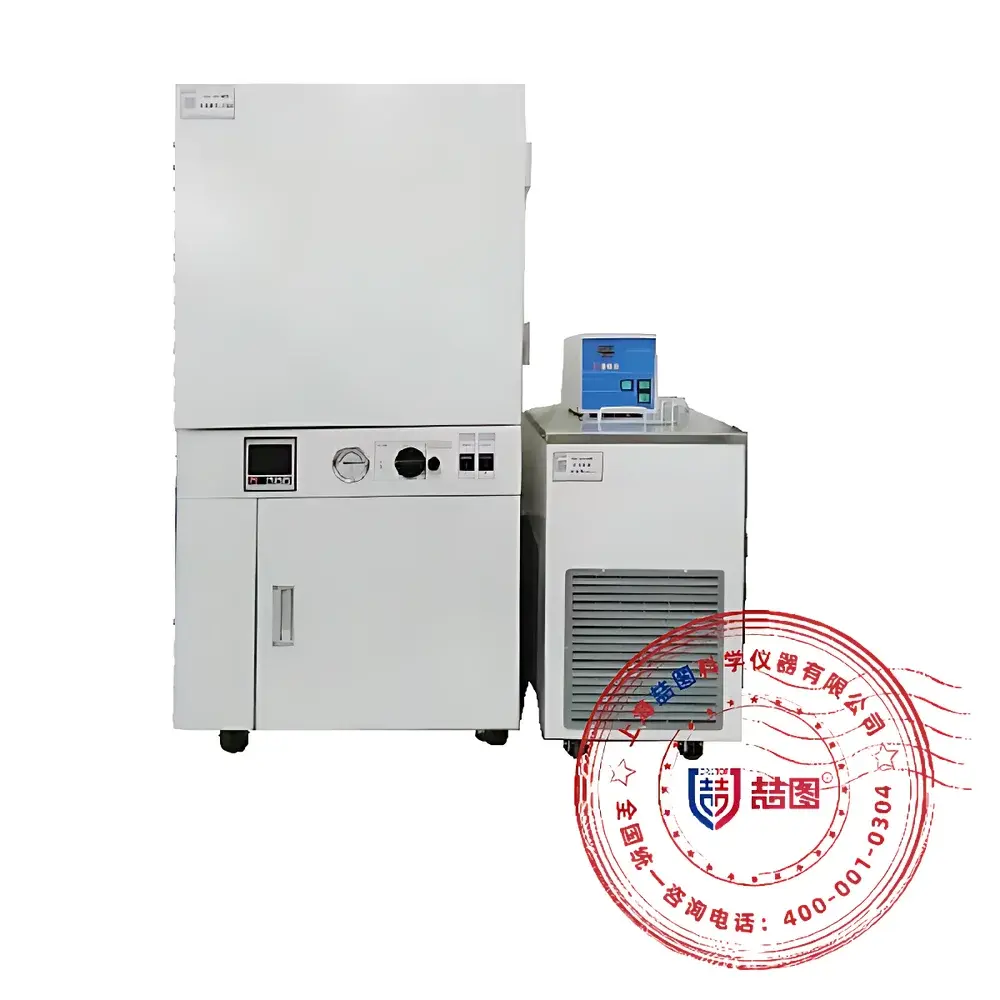
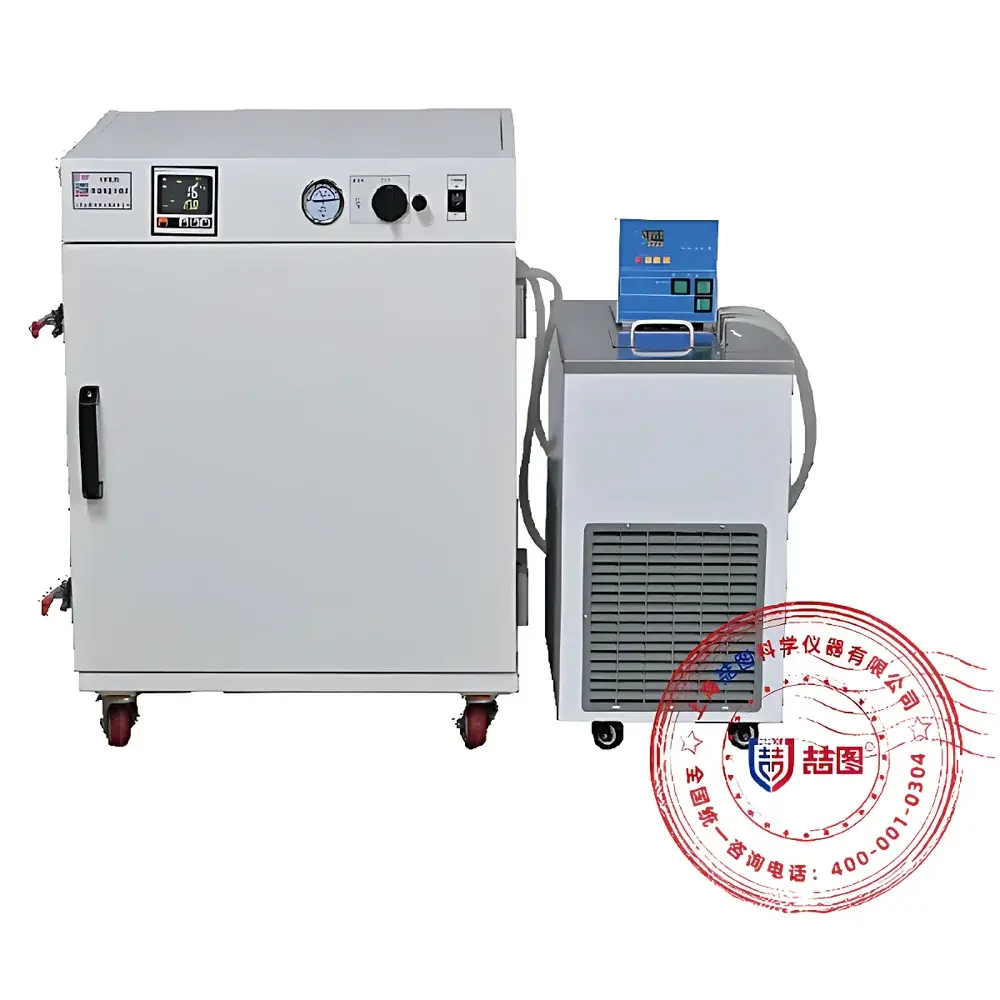
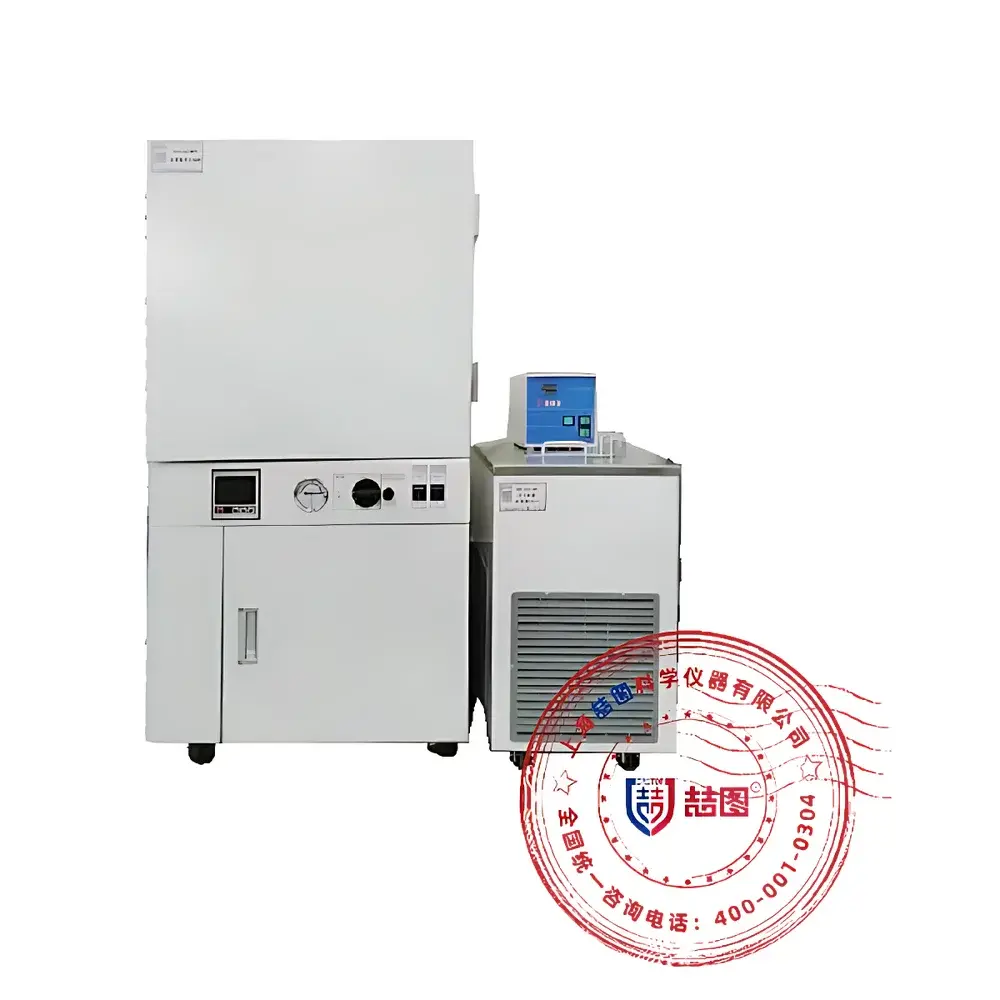
DRETOP UR6-50LS-II Vertical High-Temperature Digital Vacuum Oven
| Brand | DRETOP |
|---|---|
| Origin | Shanghai, China |
| Manufacturer Type | Direct Manufacturer |
| Instrument Type | Vacuum Oven |
| Temperature Range | RT+10 to 600 °C |
| Temperature Uniformity | ±1 °C |
| Internal Chamber Dimensions (W×D×H) | 415 × 370 × 345 mm |
| Temperature Resolution | 0.1 °C |
| Vacuum Level | ≤133 Pa |
| Chamber Material | Stainless Steel (304) |
| Heating Method | Forced Air Circulation with Vacuum Compatibility |
| Operating Ambient Temperature | 5–45 °C |
| Insulation | High-Density Glass Fiber |
| Safety Features | Over-Temperature Alarm, Dual-Limit Temperature Protection, Short-Circuit/Overload/Electrical Leakage Protection, Power-Fail Data Retention |
Overview
The DRETOP UR6-50LS-II is a vertically oriented, high-temperature digital vacuum oven engineered for precision thermal processing under controlled low-pressure environments. It operates on the fundamental principle of vacuum-assisted drying and heat treatment: by reducing ambient pressure inside the chamber to ≤133 Pa, the boiling point of volatile components—particularly water and solvents—is significantly lowered, enabling efficient moisture removal, solvent evaporation, or thermal stabilization at temperatures substantially below atmospheric boiling thresholds. This makes the UR6-50LS-II especially suitable for applications where oxidation sensitivity, thermal degradation, or particle dispersion must be rigorously avoided. Unlike forced-air convection ovens, this system maintains a static vacuum environment—eliminating convective airflow that could disturb fine powders, fragile substrates, or nanostructured samples. Its maximum operating temperature of 600 °C supports advanced material annealing, ceramic sintering pre-treatment, semiconductor wafer outgassing, cathode/anode drying in lithium-ion battery R&D, and aerospace-grade component encapsulation validation.
Key Features
- Stainless steel (AISI 304) double-walled chamber with argon arc welded seams, ensuring structural integrity and long-term vacuum integrity at elevated temperatures.
- Dual-stage rotary latch door mechanism with high-temperature silicone sealing gasket and optional water-cooled jacket—maintains consistent seal compression and prevents gasket thermal aging during extended 600 °C cycles.
- Microprocessor-based PID temperature controller with 0.1 °C resolution, ±1 °C uniformity across the 50 L working volume (415 × 370 × 345 mm), and programmable ramp-soak profiles.
- Integrated vacuum monitoring via digital vacuum gauge (standard S-series); optional all-in-one color touchscreen HMI supports synchronized vacuum hold, nitrogen purge, and temperature ramp scheduling.
- Modular safety architecture: independent mechanical over-temperature cut-off, real-time fault-code diagnostics on LCD display, and automatic shutdown upon vacuum loss or thermal runaway.
- Energy-efficient insulation using high-purity glass fiber with ≥80 mm thickness between chamber and outer casing—reducing surface temperature rise and minimizing standby heat loss.
Sample Compatibility & Compliance
The UR6-50LS-II accommodates diverse sample forms—including ceramic pastes, electrode slurries, metal oxide powders, polymer films, MEMS devices, and hermetically sealed test packages—without risk of displacement or oxidation. Its vacuum-compatible design meets core requirements for ASTM E145 (Standard Specification for Gravity-Convection and Forced-Ventilation Ovens), ISO 17025-compliant calibration traceability (when paired with external Class I thermocouples), and GLP/GMP documentation readiness. Optional accessories—including inert gas inlet valves (N₂/Ar), RS485/USB data logging interfaces, and FDA 21 CFR Part 11–compliant audit trail modules—enable deployment in regulated pharmaceutical stability studies, battery cell qualification per UN 38.3, and aerospace material certification per AMS 2750E.
Software & Data Management
The standard digital control interface provides real-time visualization of chamber temperature, vacuum level, elapsed time, and setpoint status. For advanced process control, the optional integrated touchscreen HMI supports up to 99 programmable segments with vacuum hold, inert gas backfill, and cooling rate modulation. All operational parameters—including temperature ramps, dwell times, vacuum decay logs, and alarm events—are timestamped and exportable as CSV files via USB port. When configured with optional embedded printer or network-enabled data server module, the system generates compliant electronic records aligned with ALCOA+ principles (Attributable, Legible, Contemporaneous, Original, Accurate, Complete, Consistent, Enduring, Available).
Applications
- Lithium-ion battery R&D: Cathode/anode slurry drying, separator thermal stabilization, and electrolyte impregnation under inert vacuum to prevent LiPF₆ decomposition.
- Semiconductor manufacturing: Wafer bake-out, photoresist dehydrating, and die-attach curing without oxidation or particle contamination.
- Advanced materials science: Precursor powder dehydration prior to CVD/ALD, metal-organic framework (MOF) activation, and aerogel supercritical drying preparation.
- Aerospace & defense: Moisture removal from composite layups, conformal coating degassing, and pyrotechnic charge conditioning under vacuum-nitrogen hybrid atmosphere.
- Academic & government labs: Thermal gravimetric analysis (TGA) sample pre-conditioning, catalyst support calcination, and geochemical sample dehydration for isotopic analysis.
FAQ
What is the maximum continuous operating temperature, and is it validated per industry standards?
The UR6-50LS-II is rated for continuous operation up to 600 °C. Temperature uniformity (±1 °C) and stability are verified per internal factory protocol using NIST-traceable PT100 sensors at nine spatial points; full validation kits compliant with IQ/OQ protocols are available upon request.
Can the chamber accommodate custom fixtures or internal instrumentation?
Yes—the interior features adjustable stainless steel shelf rails (two removable shelves standard) and 12 mm-diameter pass-through ports (optional) for thermocouple feedthroughs, pressure transducers, or gas sampling lines.
Is the vacuum system compatible with corrosive vapors or high-moisture loads?
For high-humidity applications, the optional W-series liquid condensate trap (3 L capacity, refrigerated or ambient) intercepts vapor upstream of the vacuum pump; for acidic or solvent-laden effluents, an oil mist filter and cold trap integration are supported.
Does the unit support remote monitoring and integration into lab-wide SCADA systems?
Equipped with RS485 Modbus RTU as standard, the UR6-50LS-II interfaces seamlessly with industrial PLCs, LIMS platforms, and centralized environmental monitoring networks—enabling real-time telemetry and automated batch release logic.
What maintenance intervals are recommended for long-term vacuum integrity and thermal accuracy?
Seal gaskets should be inspected every 500 operational hours above 400 °C; vacuum gauge calibration is recommended annually; and chamber emissivity verification (via blackbody reference) is advised biannually for critical thermal processes.



