
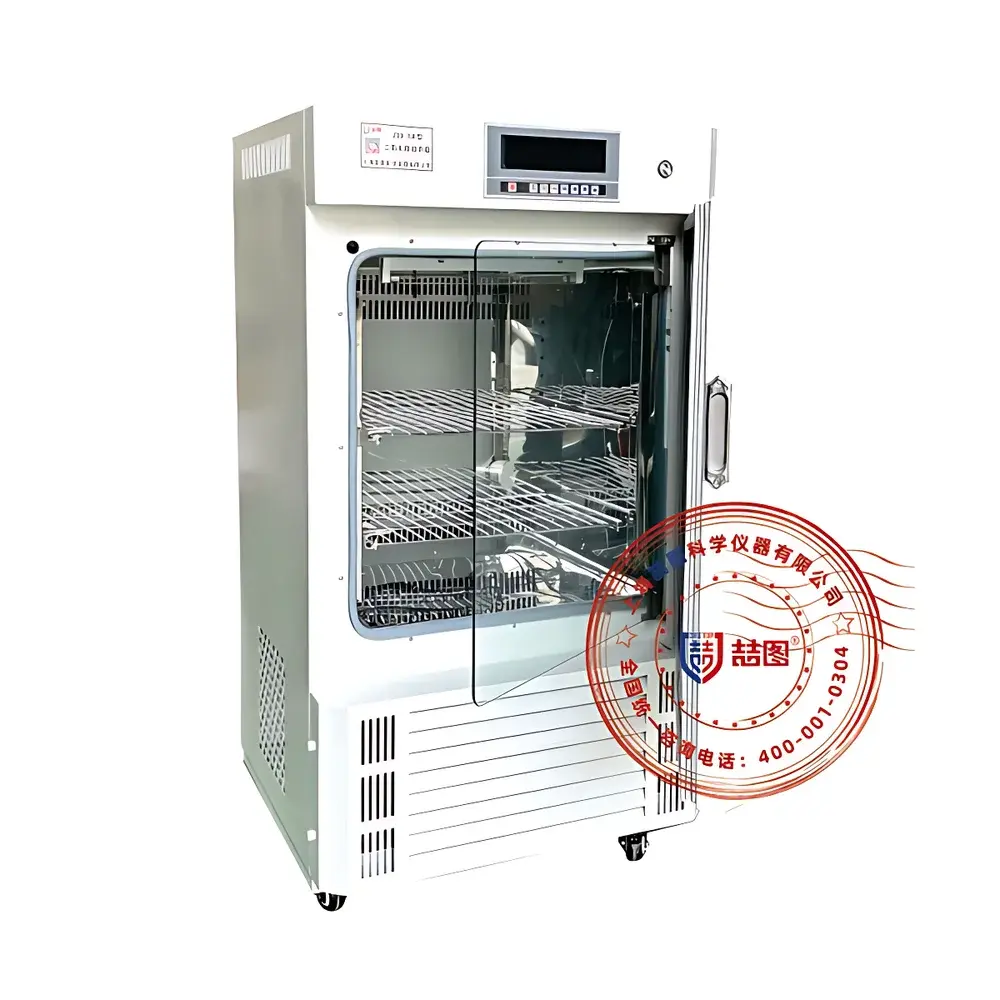
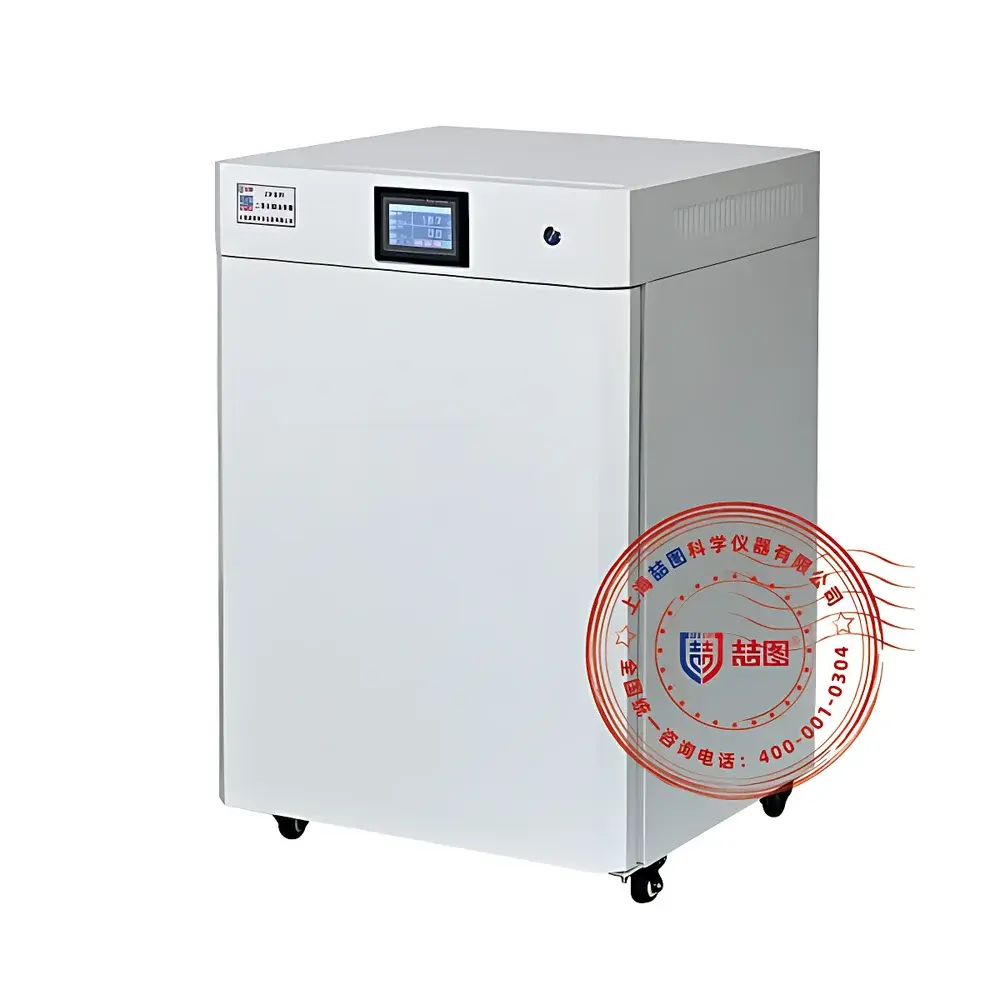
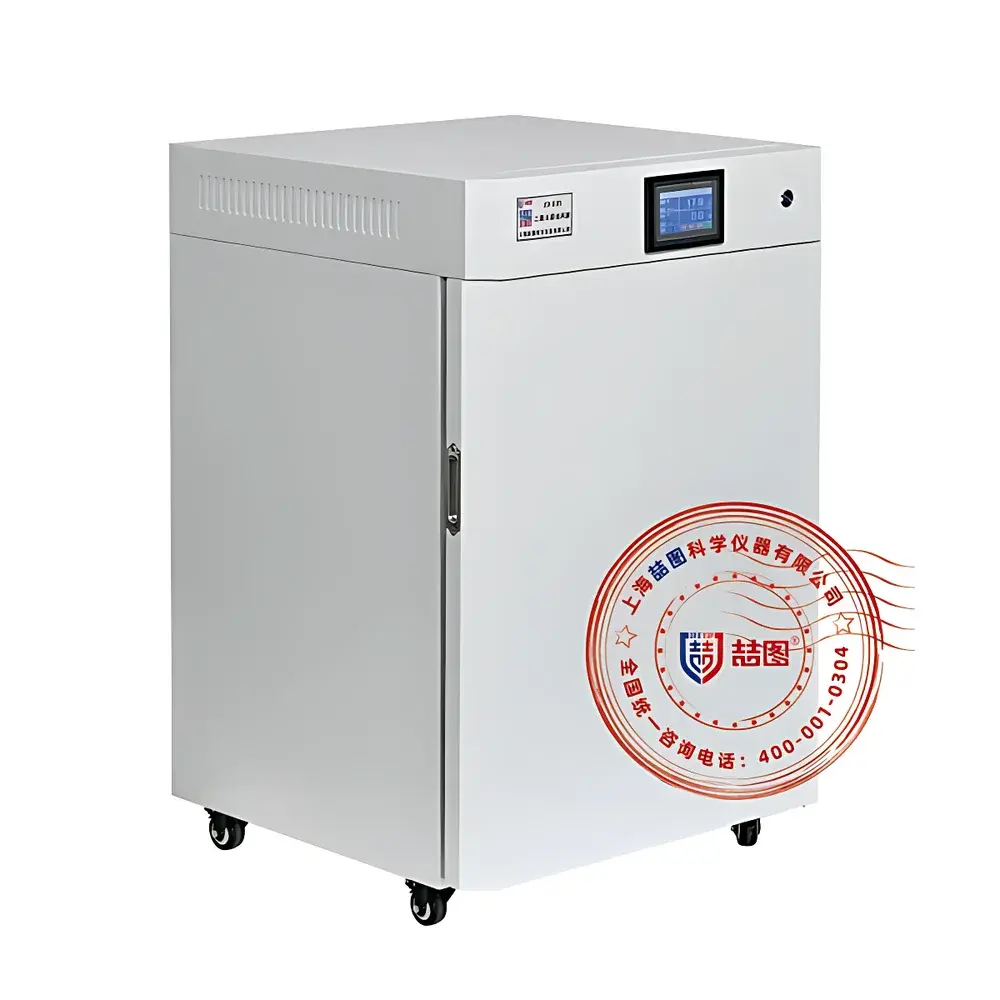
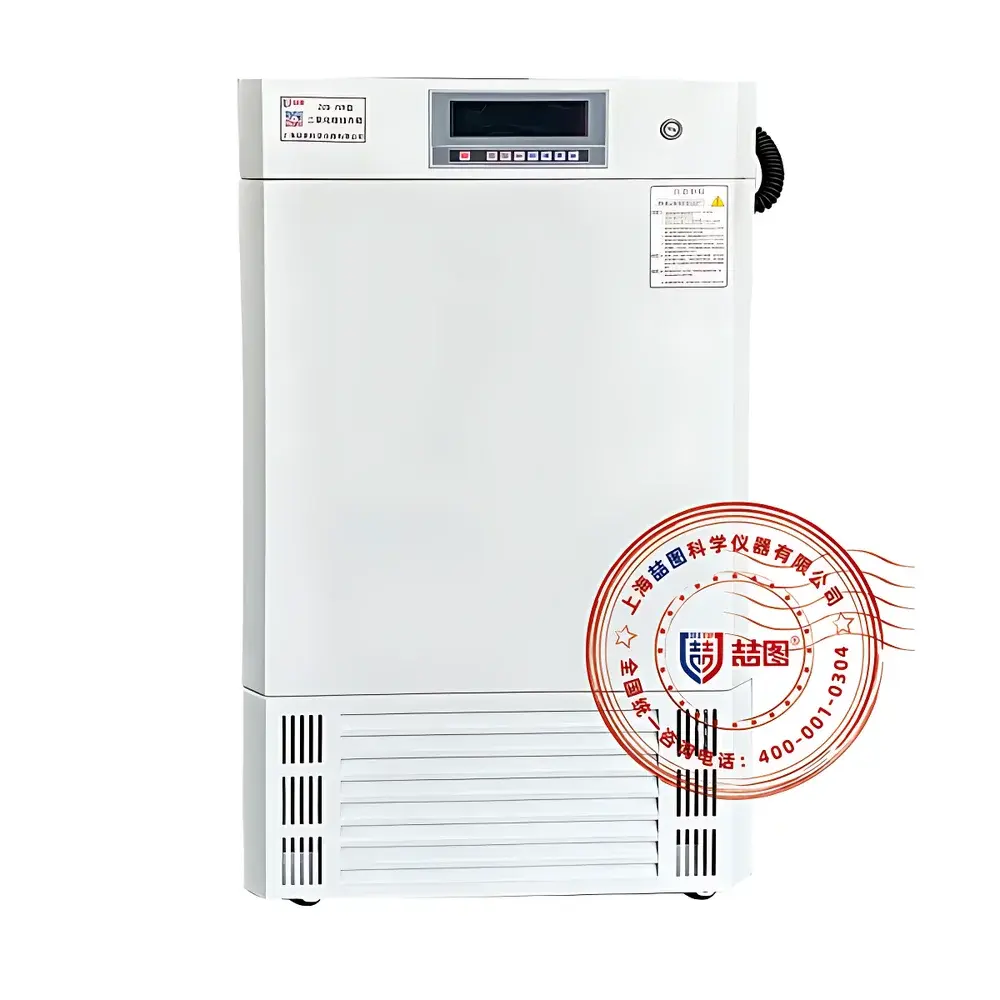
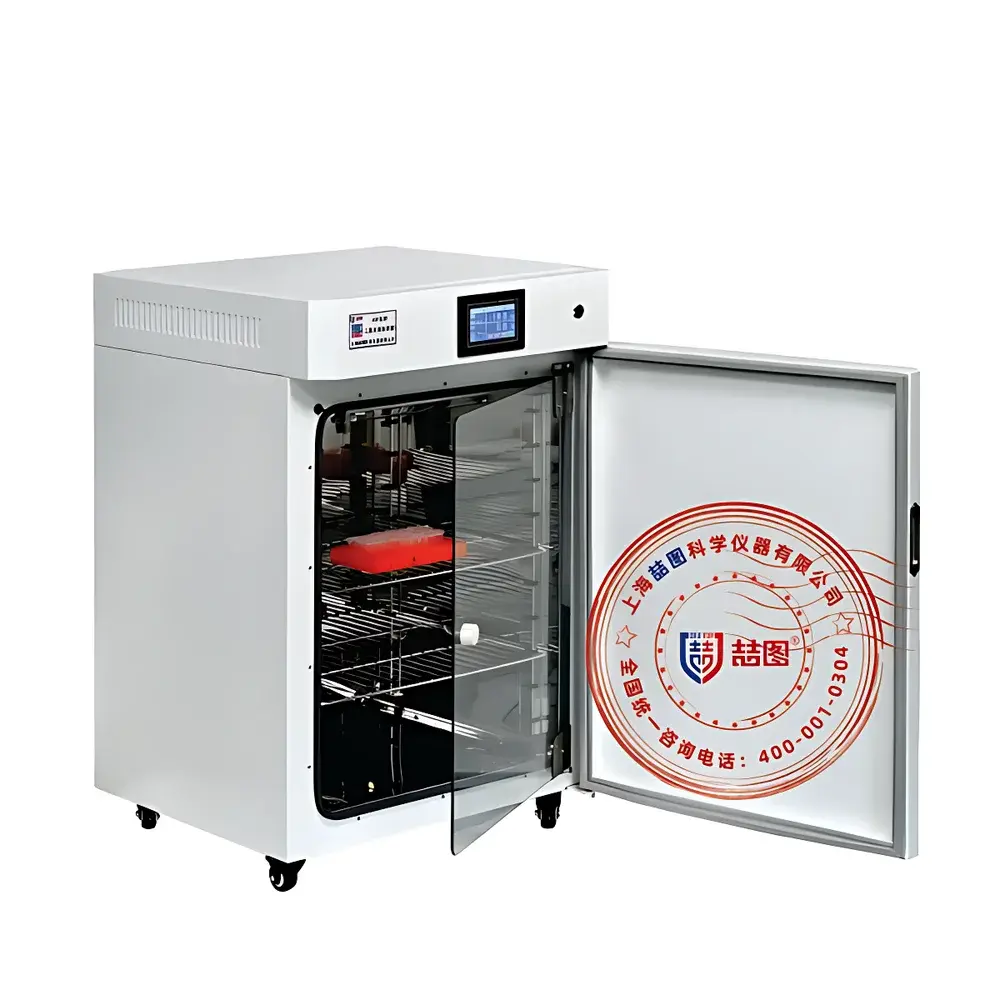
DRETOP ZCQ-270T CO₂ Incubator
| Brand | DRETOP |
|---|---|
| Origin | Shanghai, China |
| Manufacturer Type | Direct Manufacturer |
| Instrument Type | Air-Jacketed CO₂ Incubator |
| CO₂ Detection | Infrared (IR) Sensor |
| Temperature Control Range & Accuracy | RT + 5°C to 60°C |
| CO₂ Concentration Control Range & Accuracy | 0–20% vol, ±0.1% vol |
| Humidity Control | 95% RH ±3% RH |
| Chamber Capacity | 270 L |
| Internal Dimensions (W×D×H) | 600 × 600 × 750 mm |
| Standard Configuration | UV Germicidal Lamp (Optional 90°C High-Temperature Humid Heat Sterilization) |
Overview
The DRETOP ZCQ-270T CO₂ Incubator is an air-jacketed, microprocessor-controlled environmental chamber engineered for reliable, long-term mammalian cell culture under physiologically relevant conditions. It maintains precise regulation of three critical parameters—temperature, CO₂ concentration, and relative humidity—to replicate in vivo tissue environments. The system operates on a convection-based heating principle, where independent heaters within the outer jacket rapidly condition ambient air before circulating it through the chamber via optimized airflow channels. CO₂ concentration is continuously monitored using a non-dispersive infrared (NDIR) sensor with temperature and pressure compensation, ensuring high accuracy (±0.1% vol) and immunity to catalytic poisoning or O₂ dependency. Humidity is sustained at 95% RH ±3% RH via a stainless-steel water reservoir with large surface-area evaporation design, enabling rapid recovery (<3 min) after door openings. This incubator meets fundamental requirements for GLP-compliant cell culture workflows and supports applications requiring ISO 5 (Class 100) clean-air integrity when used with optional HEPA-filtered air intake.
Key Features
- Air-jacketed thermal architecture enables fast temperature recovery: ≤6 minutes to re-stabilize at 37°C following a 30-second door opening.
- Infrared CO₂ sensor with automatic zero-point calibration, temperature compensation, and overvoltage/reverse-polarity protection ensures long-term measurement stability and operational safety.
- Large-capacity internal water pan (stainless steel) integrated into a reservoir-style base structure maximizes evaporation area and accelerates humidity recovery post-door access.
- Anti-tilt adjustable shelving system maintains horizontal alignment even when trays are extended halfway—preventing media spillage during routine handling.
- Electropolished mirror-finish stainless-steel interior with seamless, radius-cornered construction minimizes microbial harborage points and simplifies decontamination protocols.
- Dual-glass viewing door with integrated anti-condensation heating eliminates interior fogging, reducing contamination risk from moisture-mediated aerosol transmission.
- Intelligent LCD interface supports multiple timing modes—including run time, constant-temperature time, and combined temp/humidity hold—enabling protocol-driven experimental execution.
Sample Compatibility & Compliance
The ZCQ-270T accommodates standard T-75, T-150, and 100-mm Petri dishes, multi-well plates (6–96-well), roller bottles, and flasks up to 5 L volume. Its chamber geometry (600 × 600 × 750 mm) allows flexible stacking of up to four full-size shelves (included), each rated for 15 kg load capacity. All internal surfaces comply with ISO 8573-1:2010 Class 4 particulate cleanliness when operated with the standard 0.3 µm HEPA inlet filter (99.998% efficiency). While not certified to UL 61010-1 or IEC 61000-6-3 out-of-the-box, the unit adheres to electromagnetic compatibility principles suitable for shared laboratory infrastructure. It supports validation documentation packages aligned with FDA 21 CFR Part 11 data integrity expectations when paired with optional RS485 serial output and external audit-trail logging software.
Software & Data Management
The embedded controller records real-time temperature, CO₂, and humidity values at user-defined intervals (1–60 min), storing up to 30 days of compressed historical data onboard. Optional RS485 interface enables integration with LabVantage, STARLIMS, or custom SCADA systems for centralized monitoring and automated alarm escalation (e.g., SMS/email alerts on deviation events). Data export is supported via USB flash drive in CSV format, preserving timestamped metadata including sensor calibration logs and system event flags (door open/close, sterilization cycle start/stop). For regulated environments, optional firmware upgrade provides electronic signature support, user-access level management (admin/operator/guest), and immutable audit trails compliant with ALCOA+ principles.
Applications
This incubator serves as a foundational platform for primary and immortalized mammalian cell lines (e.g., HeLa, CHO-K1, HEK293), stem cell expansion (hESC, iPSC), hybridoma monoclonal antibody production, and in vitro fertilization (IVF) embryo culture. It is routinely deployed in academic core facilities, biopharma QC labs conducting lot-release testing per USP , and contract research organizations performing cytotoxicity screening (ISO 10993-5) and genotoxicity assays (OECD 471/473). Its stable 5% CO₂ / 37°C / 95% RH setpoint fidelity supports reproducible metabolic profiling, secretome analysis, and 3D spheroid formation studies where microenvironmental drift directly impacts phenotypic outcomes.
FAQ
Is the ZCQ-270T suitable for GMP manufacturing environments?
Yes—when configured with optional RS485 connectivity, electronic log archiving, and validated sterilization cycles (UV + 90°C humid heat), it meets baseline infrastructure requirements for ancillary cell culture support in non-classified GMP areas.
What maintenance is required for the IR CO₂ sensor?
The NDIR sensor requires no consumables or periodic replacement; annual verification against NIST-traceable gas standards is recommended to maintain ±0.1% accuracy.
Can humidity be monitored in real time?
Standard configuration provides setpoint control only; optional humidity display module adds continuous readout and deviation alarms.
Does the unit support remote diagnostics?
With RS485 and compatible gateway hardware, remote parameter adjustment, firmware updates, and diagnostic status polling are fully supported.
How does the anti-condensation door heating function interact with energy consumption?
The door heater draws <15 W during active operation and activates only when ambient dew point exceeds chamber conditions—contributing <3% to total daily energy use under typical lab conditions.



