
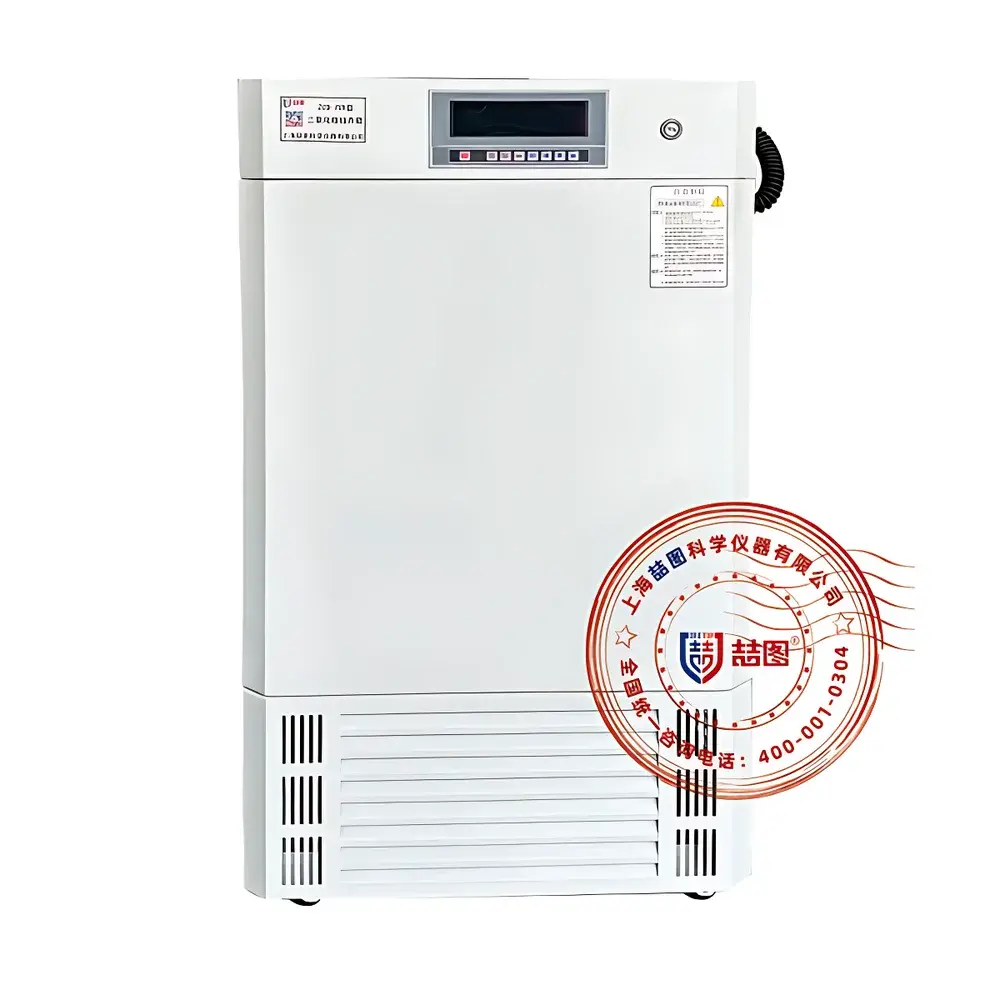
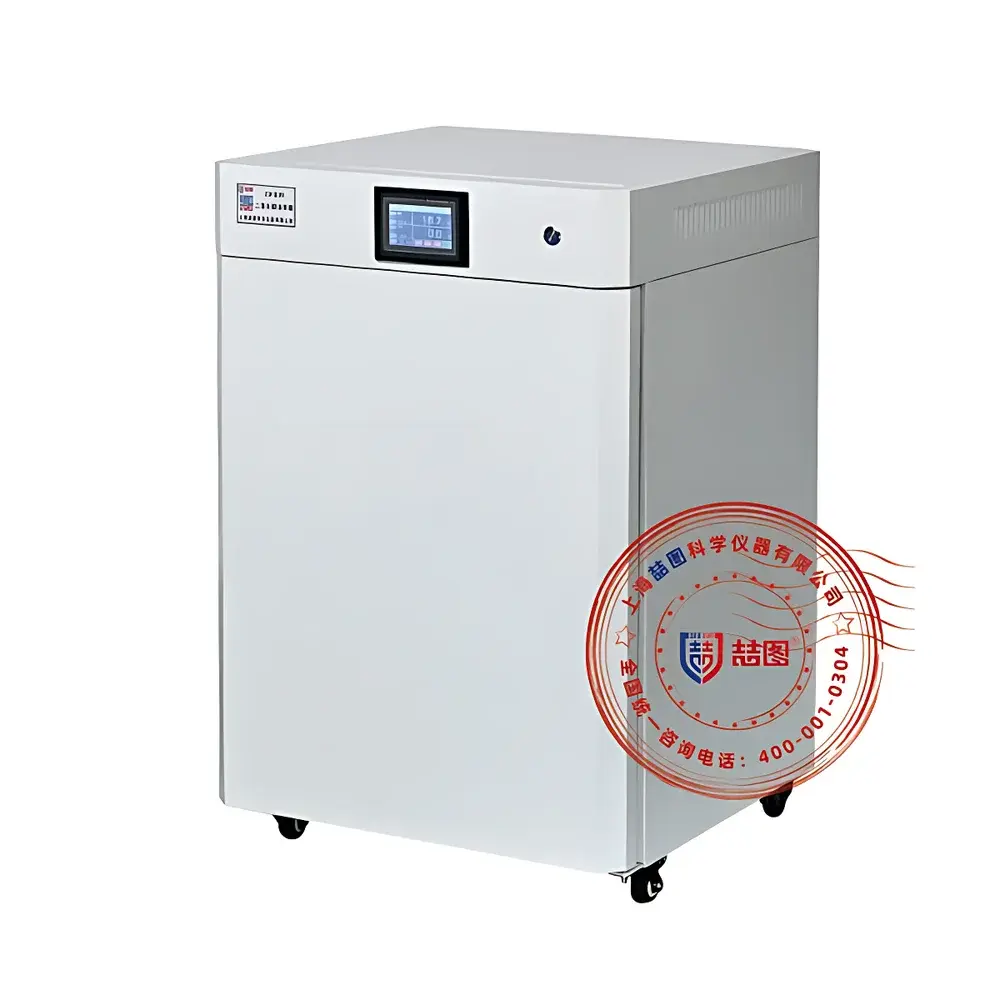
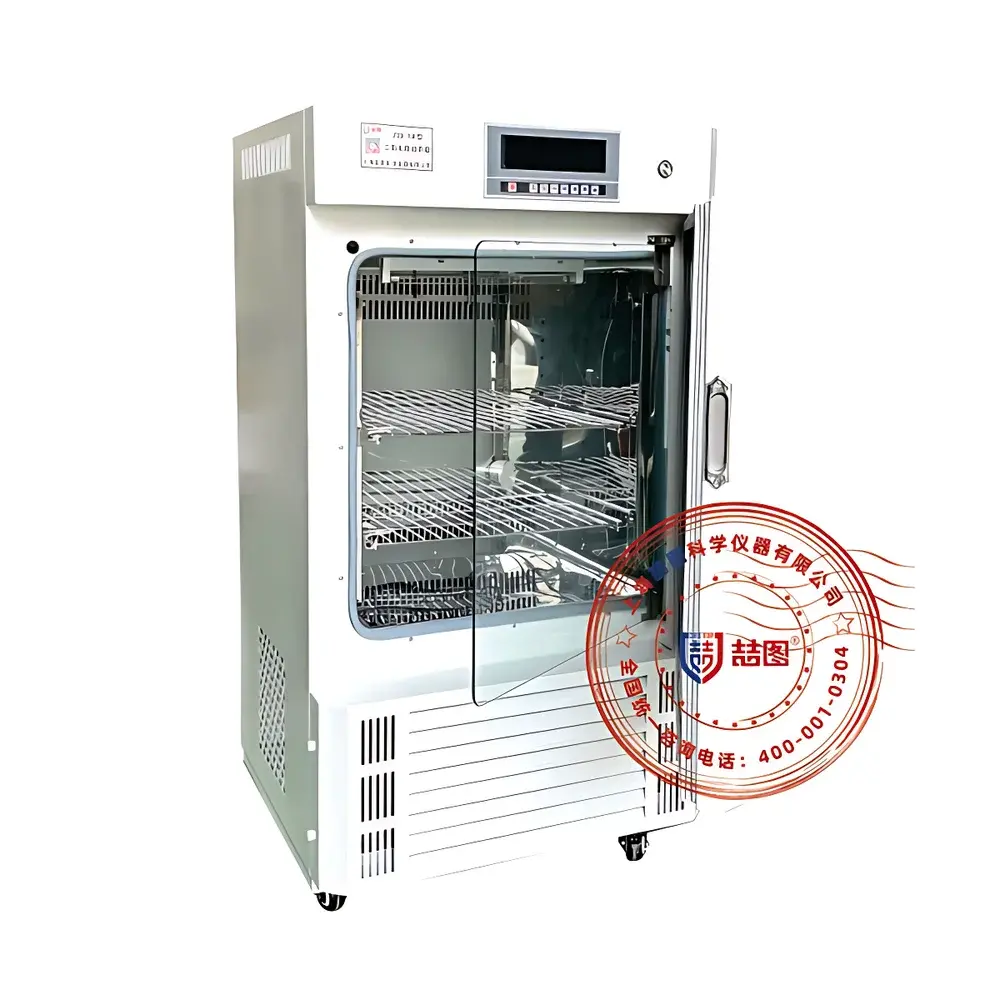
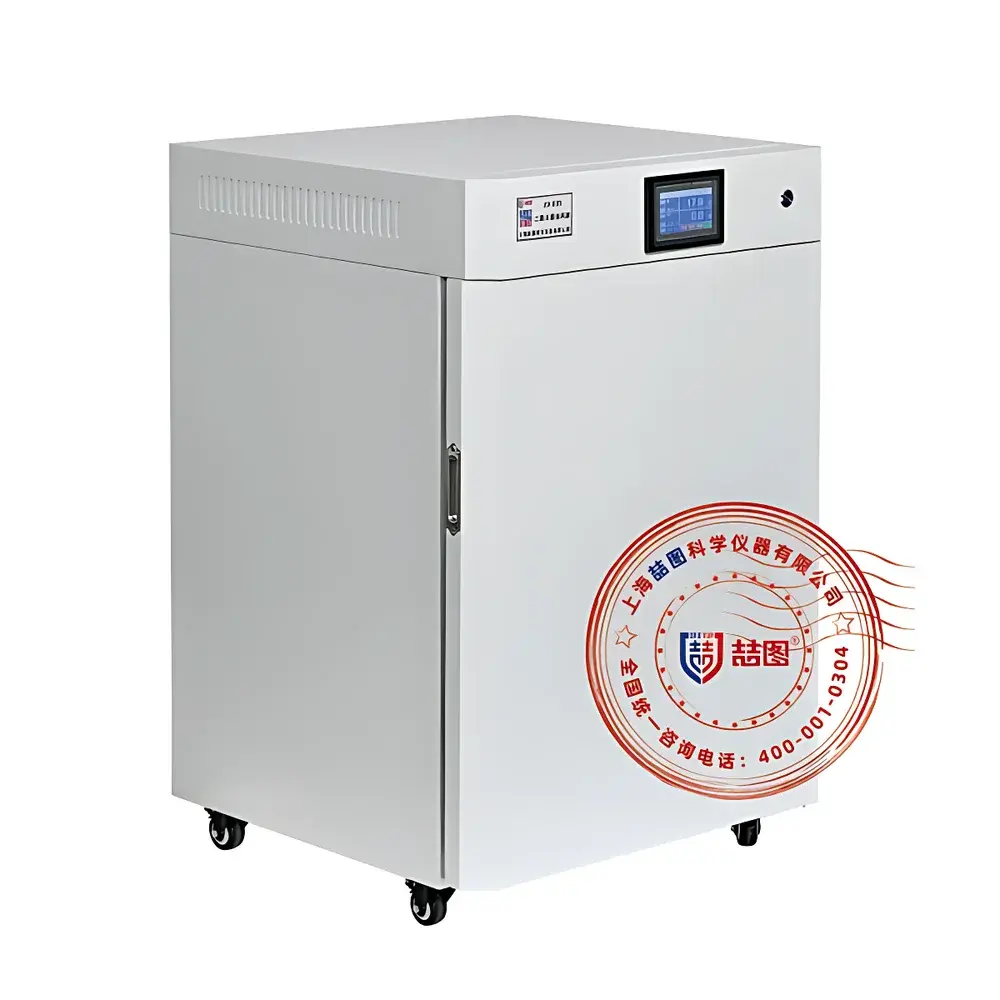
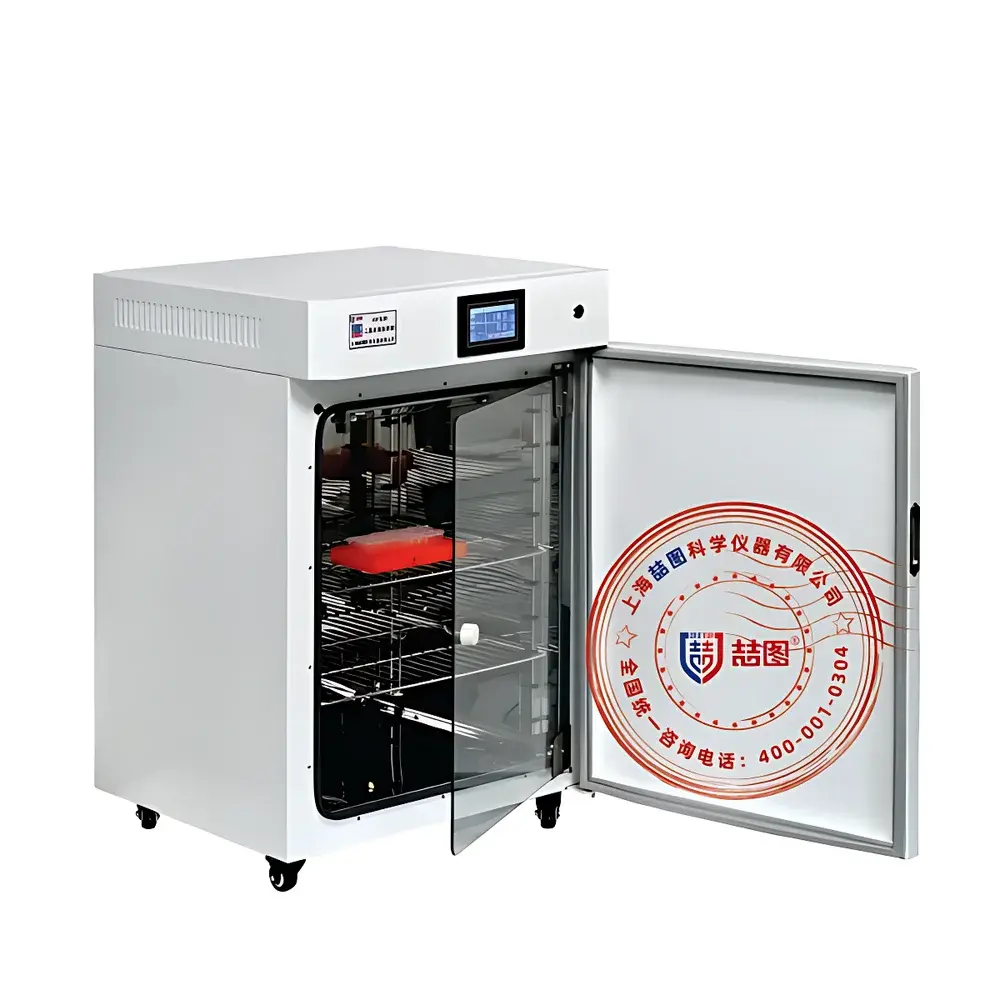
DRETOP ZCQ-50CS Gas-Jacketed CO₂ Incubator
| Brand | DRETOP |
|---|---|
| Origin | Shanghai, China |
| Instrument Type | Gas-Jacketed CO₂ Incubator |
| CO₂ Detection | Infrared (IR) Sensor |
| Temperature Control Range & Accuracy | RT+5°C to 60°C, ±0.2°C |
| Temperature Uniformity | ±0.2°C |
| CO₂ Concentration Control Range & Accuracy | 0–20% vol, ±0.1% vol |
| Humidity Control | 95% RH ±3% RH |
| Chamber Capacity | 50 L |
| External Dimensions (W×D×H) | 545 × 465 × 710 mm |
| Standard Configuration | RS485 Communication Interface, Silicone Tube Port |
Overview
The DRETOP ZCQ-50CS is a precision-engineered gas-jacketed CO₂ incubator designed for reliable, long-term in vitro cell and tissue culture under physiologically relevant conditions. It maintains tightly regulated environmental parameters—temperature (typically 37°C), CO₂ concentration (commonly 5% vol), and high relative humidity (≥95% RH)—to replicate the extracellular microenvironment essential for mammalian cell viability, proliferation, and functional integrity. Unlike water-jacketed models, the ZCQ-50CS employs a direct gas-jacket heating system, where independent heating elements surround the inner chamber and rapidly heat ambient air, enabling fast thermal recovery after door openings—a critical advantage in high-throughput labs with frequent access requirements. Its infrared CO₂ sensor delivers stable, oxygen-independent measurement with no catalytic poisoning risk, ensuring consistent gas control across extended operation cycles. The unit complies with fundamental design principles outlined in ISO 13485 for medical device manufacturing environments and supports GLP-compliant workflows through traceable calibration, alarm logging, and configurable setpoint limits.
Key Features
- Gas-jacketed thermal architecture with independent heating elements for rapid temperature stabilization and recovery (≤6 min to 37°C after 30-sec door opening)
- High-stability infrared CO₂ sensor with auto-zero calibration, temperature compensation, and immunity to humidity-induced drift
- Integrated humidity management via large-surface-area stainless steel water reservoir; achieves and sustains ≥95% RH with ±3% RH uniformity
- Electropolished mirror-finish stainless steel interior with seamless, radius-rounded corners and removable, autoclavable shelving for contamination control and cleaning validation
- Anti-tilt shelf design ensures horizontal positioning even when extended halfway—preventing media spillage during handling
- Double-glazed, heated inner glass door with dedicated anti-condensation circuit to eliminate moisture film formation and associated microbial ingress risks
- Standard RS485 serial interface for integration into centralized lab monitoring systems (e.g., SCADA, LIMS) and remote parameter logging
- Intelligent controller with multi-mode timing functions (run timer, hold timer, humidity-hold timer) and password-protected parameter locking
Sample Compatibility & Compliance
The ZCQ-50CS accommodates standard T-25, T-75, and 6-/12-/96-well culture vessels, Petri dishes, and roller bottles on two adjustable stainless steel shelves. Its chamber geometry (345 × 355 × 410 mm internal) allows unobstructed airflow distribution validated per ASTM E1873-22 (Standard Guide for Performance Testing of CO₂ Incubators). The unit meets IEC 61010-1 safety requirements for laboratory equipment and incorporates redundant safeguards: over-temperature cut-off, low-water-level alarm (for optional humidification reservoir monitoring), audible/visual high/low CO₂ and temperature alarms, and power-loss memory retention. While not certified to FDA 21 CFR Part 11 out-of-the-box, its data logging capability (via RS485 + external software) supports audit-trail implementation for GMP-aligned bioprocessing and QC applications.
Software & Data Management
The embedded microprocessor controller provides local configuration via a backlit LCD interface with intuitive menu navigation. All operational parameters—including setpoints, real-time readings, alarm history, and runtime logs—are accessible without external software. For advanced data governance, the RS485 port enables bidirectional communication with third-party platforms supporting Modbus RTU protocol. Users may configure automated data export intervals, generate time-stamped CSV reports, and map variables (e.g., chamber temperature, CO₂ %, door-open events) to enterprise LIMS or ELN systems. Optional firmware upgrades support enhanced timestamp resolution (1-second granularity) and extended event buffer depth (≥10,000 entries), facilitating root-cause analysis during deviation investigations per ISO/IEC 17025 Clause 7.7.
Applications
This incubator serves core workflows in academic research, pharmaceutical development, and clinical diagnostics laboratories. It supports primary and immortalized mammalian cell lines (e.g., HEK293, CHO-K1, MCF-7), stem cell expansion (including iPSCs under feeder-free conditions), hybridoma culture for monoclonal antibody production, and assisted reproductive technologies (ART) including IVF embryo culture. Its stability profile makes it suitable for cytokine secretion assays, cytotoxicity screening, and long-term differentiation studies requiring uninterrupted environmental fidelity. The absence of ozone-generating UV lamps and compatibility with ethanol-based surface disinfection protocols align with biosafety level 2 (BSL-2) containment practices.
FAQ
What distinguishes gas-jacketed from water-jacketed CO₂ incubators?
Gas-jacketed systems use electrically heated air surrounding the chamber for faster temperature recovery and lower maintenance—ideal for labs with frequent door openings. Water-jacketed units provide superior thermal inertia during power outages but require periodic water replacement and microbial monitoring.
Does the ZCQ-50CS support regulatory compliance for GMP environments?
Yes—the unit’s alarm logging, parameter lockout, and RS485 data export enable integration into Part 11–compliant electronic record systems when paired with validated software and procedural controls.
Can humidity be monitored in real time?
The standard configuration maintains humidity at 95% RH ±3% via passive evaporation; optional humidity display modules (sold separately) provide continuous digital readouts calibrated to NIST-traceable hygrometers.
Is UV sterilization included as standard equipment?
A low-ozone UV-C lamp is factory-installed for periodic air and reservoir surface decontamination; exposure cycles are programmable and interlocked with door position sensors for operator safety.
What maintenance is required for the IR CO₂ sensor?
The sensor requires no routine recalibration under normal operation; zero-point verification is recommended annually using certified 0% CO₂ gas, and full calibration every 24 months using dual-point (0% and 5%) reference standards.



