
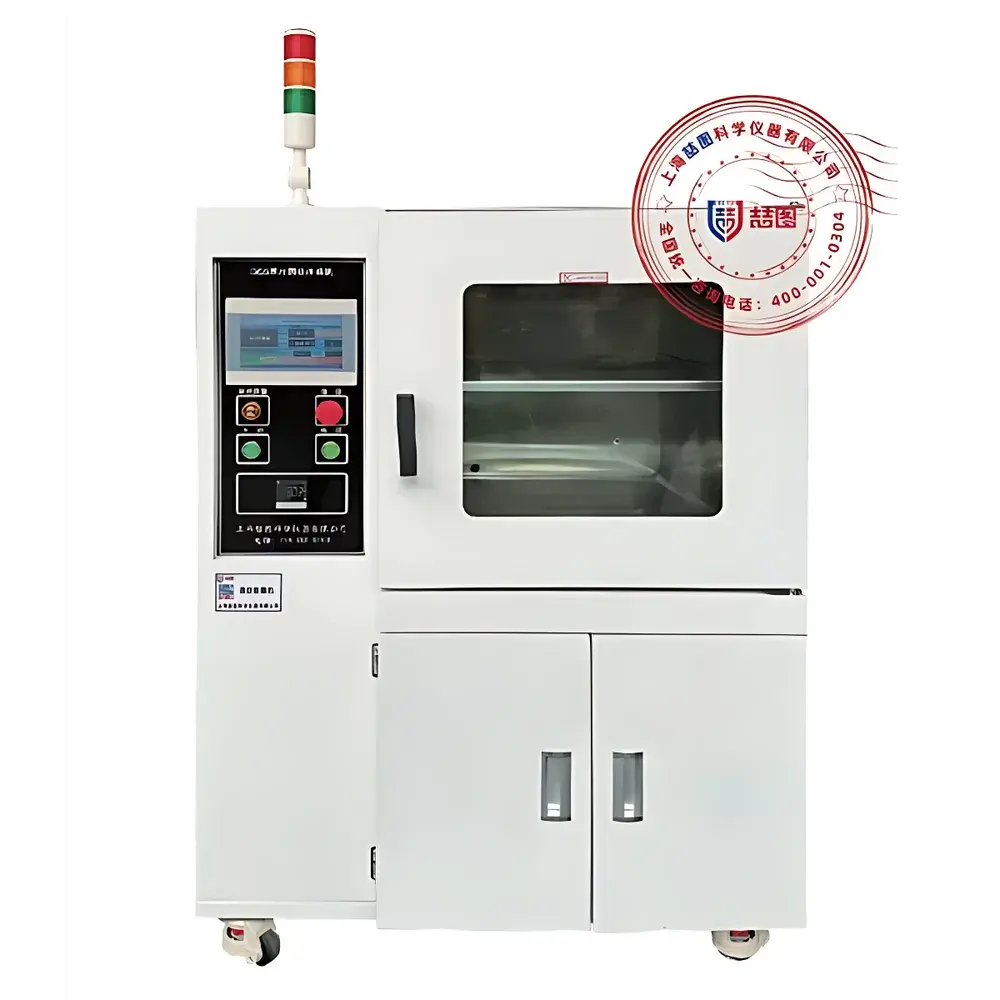
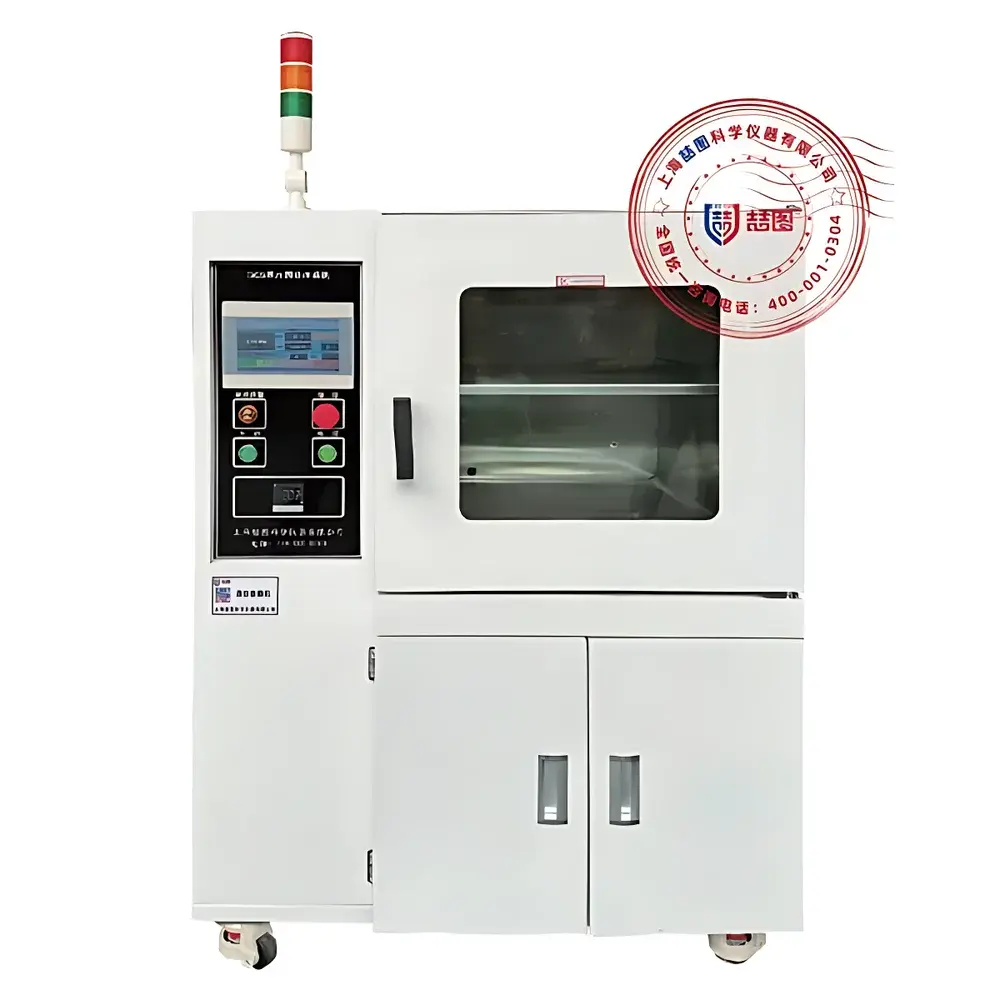
DRETOP ZDM-215V Vacuum Coating System
| Brand | DRETOP |
|---|---|
| Origin | Shanghai, China |
| Manufacturer Type | Direct Manufacturer |
| Country of Origin | China |
| Model | ZDM-215V |
| Price Range | USD 5,600 – 16,800 |
| Power Supply | AC 220 V, 50 Hz |
| Control System | PLC-based intelligent touchscreen interface |
| Temperature Range | RT +10 °C to 200 °C |
| Temperature Resolution | 0.1 °C |
| Temperature Uniformity | ±0.1 °C |
| Ultimate Vacuum | ≤133 Pa |
| Chamber Dimensions (W×D×H) | 550 × 550 × 650 mm |
| Internal Volume | 210 L |
| Sample Capacity | Up to 4 standard wafer cassettes (e.g., 4 × 25-wafer FOUPs or equivalent) |
| Chamber Material | 304 stainless steel interior |
| Viewing Window | Tempered glass with O-ring sealed viewport |
| Sealing | Integrated silicone rubber gasket |
| Process Compatibility | Thermal evaporation, magnetron sputtering, pulsed laser deposition (PLD), molecular beam epitaxy (MBE), and plasma-enhanced chemical vapor deposition (PECVD) modules (modular integration supported) |
| Exhaust Treatment | Integrated HMDS/organic solvent recovery system compliant with RoHS & REACH |
Overview
The DRETOP ZDM-215V Vacuum Coating System is a modular, high-integrity physical vapor deposition (PVD) and low-pressure chemical vapor deposition (CVD) platform engineered for research laboratories and pilot-scale production environments in semiconductor fabrication, optical thin-film engineering, photovoltaics, and advanced materials development. Its core architecture implements a robust stainless-steel vacuum chamber (550 × 550 × 650 mm, 210 L volume) designed to maintain stable process conditions under dynamic pressure regimes—from rough vacuum (≤133 Pa) up to high-vacuum configurations when integrated with optional secondary pumping stages. The system operates on fundamental principles of controlled vapor-phase transport, surface adsorption kinetics, and energy-assisted film nucleation—enabling precise stoichiometric control over metallic (Al, Cu, Ag), oxide (Al₂O₃, TiO₂), nitride (TiN, SiN), and transparent conductive (ITO, AZO) thin films. Unlike single-process legacy tools, the ZDM-215V supports multi-technique co-deposition via interchangeable source modules, making it suitable for developing graded interfaces, multilayer anti-reflective stacks, and functional electrode architectures.
Key Features
- Modular PVD/CVD architecture supporting thermal evaporation, DC/RF magnetron sputtering, electron-beam evaporation, pulsed laser deposition (PLD), and plasma-enhanced CVD (PECVD) within a unified chamber footprint.
- PLC-driven automation with 7-inch color touchscreen HMI offering programmable ramp-soak profiles, real-time vacuum monitoring (Pirani gauge), and closed-loop temperature regulation (RT+10 °C to 200 °C, ±0.1 °C stability).
- High-integrity vacuum integrity: double-sealed tempered glass viewport, one-piece molded silicone door gasket, and corner-reinforced cuboidal chamber geometry optimized for structural rigidity and uniform stress distribution.
- Integrated HMDS and organic solvent recovery subsystem—reducing consumable usage by >40% and ensuring compliance with RoHS Directive 2011/65/EU and REACH Regulation (EC) No. 1907/2006.
- Scalable sample handling: accommodates up to four industry-standard wafer cassettes (e.g., 25-mm or 100-mm wafers), with three-tier adjustable stainless-steel trays and optional planetary rotation fixtures for enhanced thickness uniformity.
- No internal combustible components; all internal surfaces fabricated from electropolished 304 stainless steel—eliminating particle generation and enabling trace-metal-sensitive applications such as quantum dot synthesis and perovskite precursor deposition.
Sample Compatibility & Compliance
The ZDM-215V accepts substrates ranging from silicon wafers (50–200 mm), optical glass blanks (BK7, fused silica), flexible polymer foils (PET, PI), and ceramic carriers. Its chamber design conforms to ISO 14644-1 Class 5 cleanroom-compatible mechanical standards, with zero outgassing polymers and ultra-low particulate emission (<0.1 particles/cm²/min at 0.5 µm). For regulated environments, the system’s data logging architecture supports audit-ready operation under GLP and GMP frameworks—retaining timestamped parameter logs (temperature, pressure, time, power) with user-access controls and exportable CSV/Excel reports. While not FDA 21 CFR Part 11 certified out-of-the-box, its PLC firmware allows third-party validation packages for pharmaceutical-grade thin-film coating processes (e.g., drug-eluting stent coatings).
Software & Data Management
Control logic resides in an industrial-grade Siemens LOGO! or Mitsubishi FX-series PLC, interfaced via Modbus TCP to the embedded HMI. All process recipes—including multi-step vacuum sequences, temperature ramps, gas flow timing (for PECVD), and source power modulation—are stored locally with versioned backups. Real-time data streams (vacuum pressure, heater current, chamber temperature) are logged at 1 Hz resolution and exportable via USB or Ethernet. Optional OPC UA gateway enables integration into LabView, MATLAB, or MES platforms for statistical process control (SPC) and automated recipe dispatching. Historical logs include operator ID, session start/stop timestamps, and anomaly flags (e.g., over-temperature events), satisfying basic traceability requirements per ISO 9001:2015 Clause 8.5.2.
Applications
- Semiconductor R&D: Deposition of barrier layers (TiN), seed layers (Cu), and interconnect metallization for sub-5 nm node test structures; compatible with maskless lithography alignment workflows.
- Optical Thin Films: Fabrication of broadband AR coatings (400–700 nm, R 99.8% reflectance at 1064 nm), and tunable dielectric filters using sequential oxide/nitride layer stacks.
- Emerging Photovoltaics: Scalable deposition of transparent conductive oxides (AZO, ITO) and metal electrodes (Ag nanowire grids) onto large-area perovskite solar cells, supporting roll-to-plate compatibility studies.
- Advanced Packaging: Conformal Al₂O₃ passivation layers for MEMS sensors and GaN-on-Si power devices, validated under JEDEC JESD22-A108 humidity testing protocols.
- Aerospace Optics: Radiation-hardened protective coatings for spaceborne optical payloads, verified against ISO 15860 environmental simulation cycles (thermal vacuum, atomic oxygen exposure).
FAQ
What vacuum level can the ZDM-215V achieve without auxiliary pumping stages?
The base configuration achieves ≤133 Pa using a dual-stage rotary vane pump—sufficient for thermal evaporation and low-energy sputtering. High-vacuum operation (≤1 × 10⁻³ Pa) requires optional turbomolecular pump integration.
Is the system compatible with reactive gas injection for oxide/nitride synthesis?
Yes—two independently controlled MFCs (mass flow controllers) support O₂, N₂, Ar, and forming gas delivery, synchronized with RF power and substrate bias inputs for reactive sputtering and PECVD.
Can the chamber be upgraded for in-situ ellipsometry or QCM monitoring?
The flange layout includes two CF-63 ports and four KF-40 ports, enabling straightforward integration of spectroscopic ellipsometers, quartz crystal microbalances (QCM), or residual gas analyzers (RGA) without structural modification.
What maintenance intervals are recommended for the vacuum system?
Rotary vane pump oil replacement every 500 operational hours; chamber cleaning (citric acid passivation) every 100 coating cycles or quarterly—whichever occurs first.
Does DRETOP provide IQ/OQ documentation for GMP-compliant installations?
Factory-issued IQ templates and electronic OQ checklists are supplied; full validation support (including PQ execution) is available through authorized service partners upon request.



