
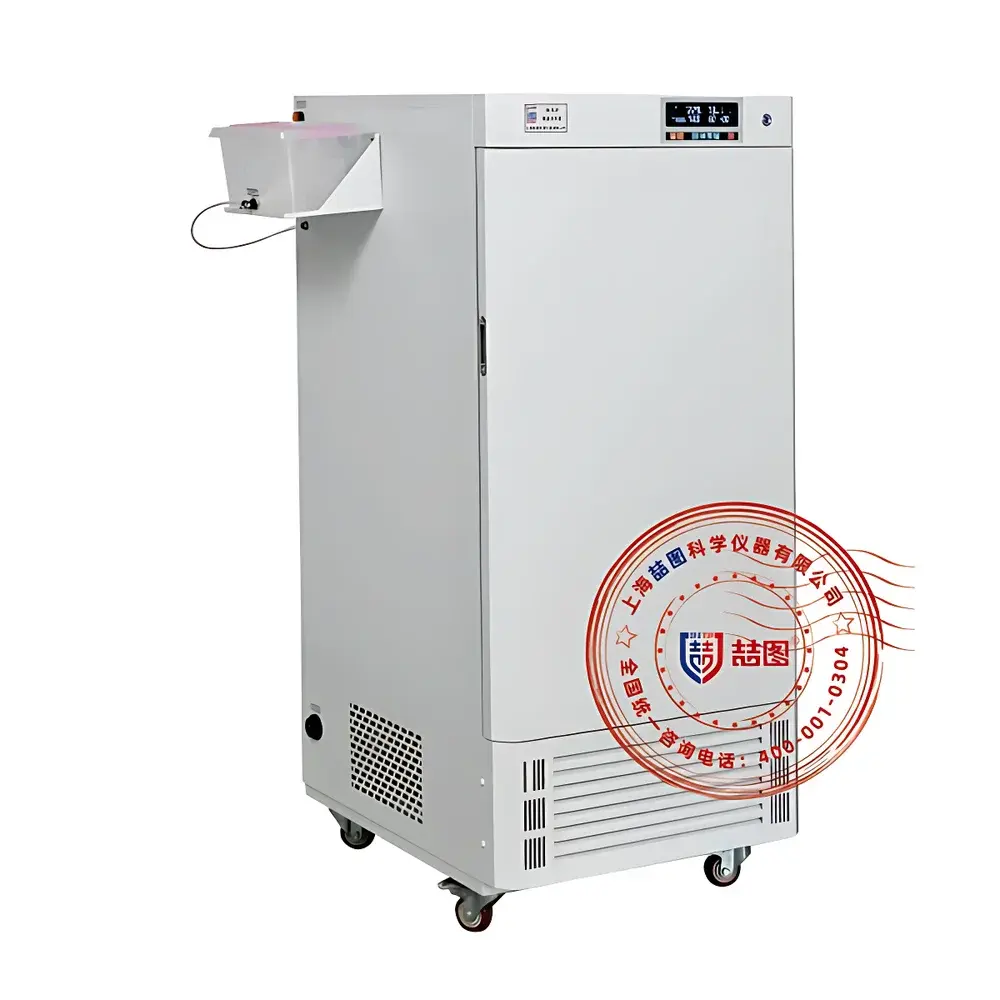
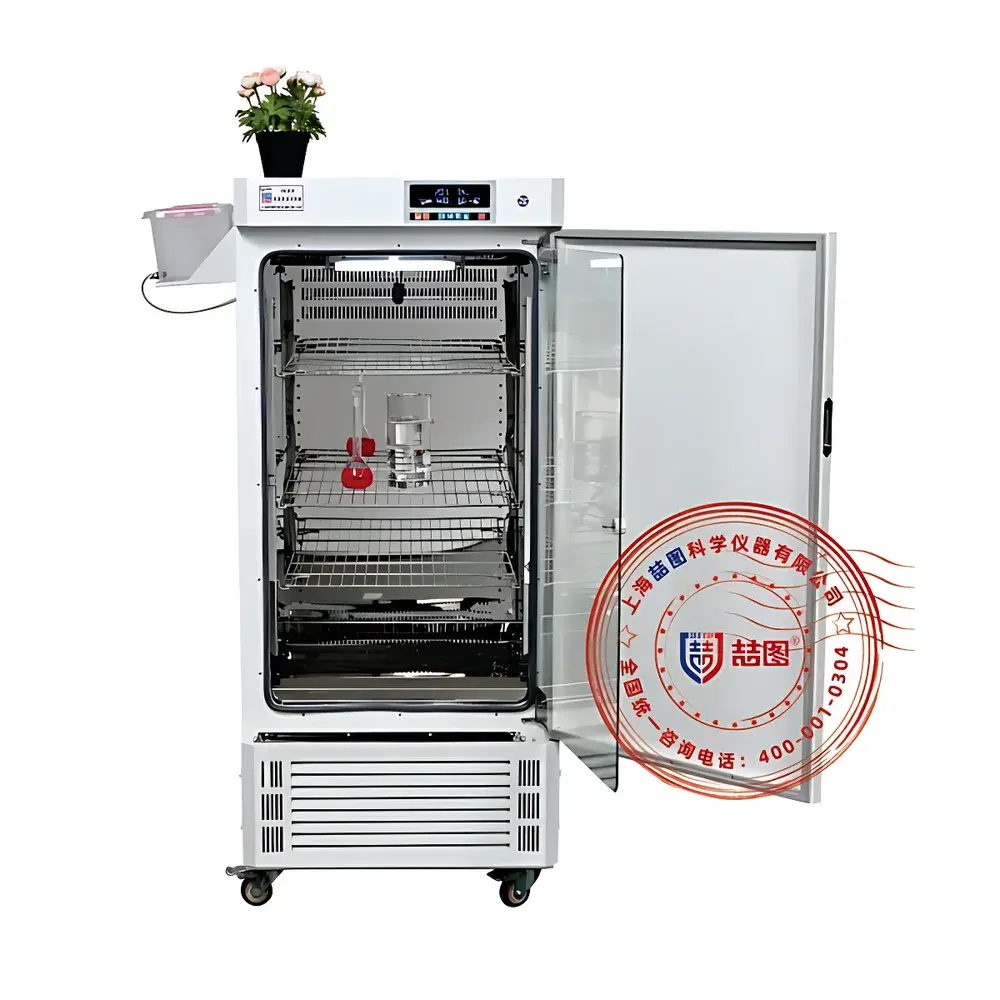
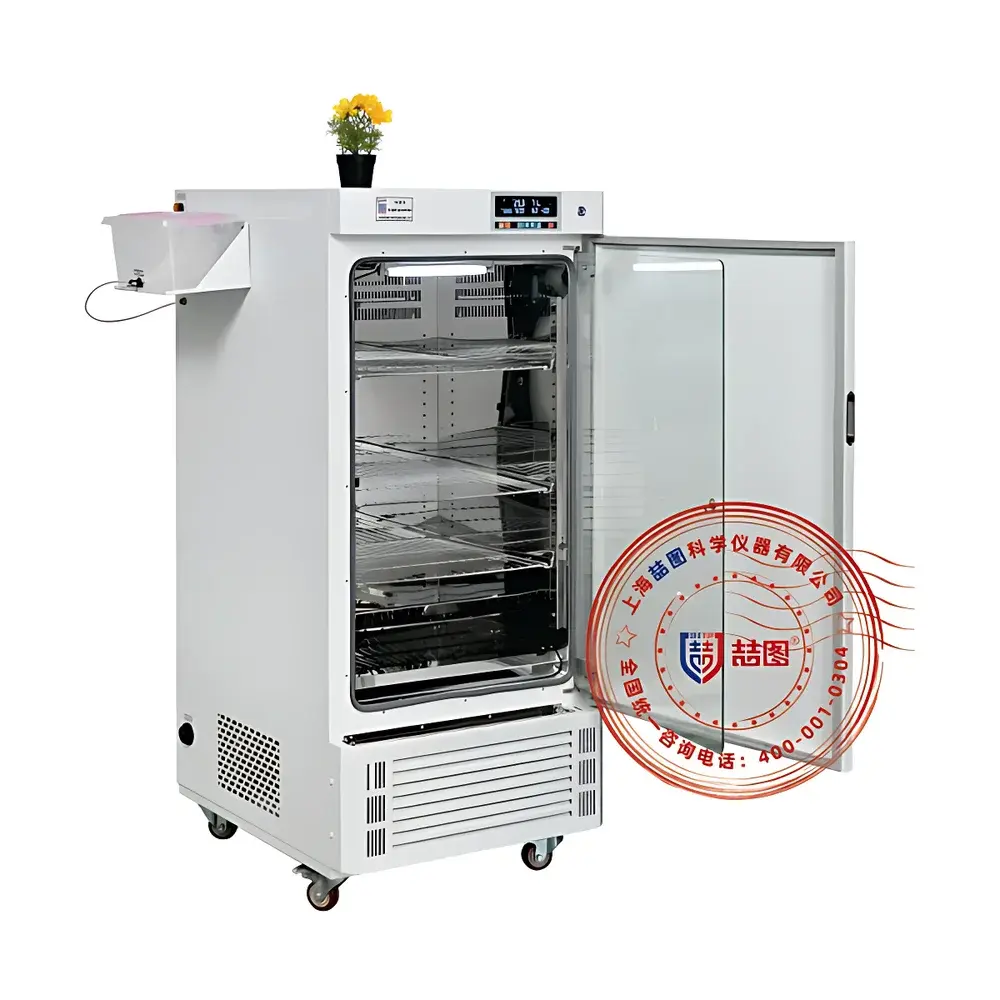
DRETOP ZHS-150HC Temperature and Humidity Controlled Incubator
| Brand | DRETOP |
|---|---|
| Origin | Shanghai, China |
| Manufacturer Type | Direct Manufacturer |
| Product Category | Domestic |
| Model | ZHS-150HC |
| Heating Method | Air-Jacketed |
| Cooling Method | Compressor-Based Refrigeration |
| Humidification Water Tank | External Reservoir |
| Temperature Range (with Humidification) | 0–65°C |
| Temperature Range (without Humidification) | 0–65°C |
| Temperature Uniformity | ±0.5°C at High Temp / ±1.0°C at Low Temp |
| Humidity Range | 40–95% RH |
| Humidity Accuracy | ±3% RH |
| Chamber Capacity | 150 L |
| Internal Dimensions (W×D×H) | 480 × 390 × 780 mm |
Overview
The DRETOP ZHS-150HC Temperature and Humidity Controlled Incubator is an engineered environmental simulation platform designed for precise, long-term maintenance of biological, pharmaceutical, and material samples under tightly regulated thermal and hygroscopic conditions. Built upon a dual-loop microprocessor-controlled architecture, it integrates independent PID algorithms for temperature and humidity regulation—ensuring stable setpoint adherence across extended operational cycles. The unit employs air-jacketed heating for rapid thermal response and uniform chamber distribution, coupled with a hermetically sealed compressor-based refrigeration system enabling active cooling down to 0°C. Its external humidification reservoir minimizes internal condensation risks while supporting continuous operation in high-humidity regimes (up to 95% RH). This incubator conforms to core functional requirements outlined in ISO 14644-1 (cleanroom classification support), ASTM E2922-22 (environmental stress testing for packaging), and USP (stability testing of pharmaceuticals), making it suitable for GLP-compliant stability studies, accelerated aging trials, and microbiological cultivation where reproducible ambient replication is critical.
Key Features
- Air-jacketed heating system with Ni-Cr alloy heaters ensures rapid warm-up and minimal thermal gradient (<±0.5°C at 37°C, per IEC 61000-4-3 validation protocols)
- Compressor-driven refrigeration circuit using R134a (CFC-free) refrigerant, compliant with EU F-Gas Regulation (EU) No 517/2014 and EPA SNAP program requirements
- External detachable water reservoir with level sensor and auto-refill interface—eliminates internal tank contamination and simplifies routine maintenance
- 30-segment programmable controller supporting time-dependent ramp-soak-hold profiles; retains settings after power interruption via non-volatile EEPROM memory
- Double-door observation window: inner tempered glass + outer magnetic gasket seal, reducing heat loss by >25% versus single-glass designs (tested per ISO 8503-2 surface roughness standards)
- Stainless steel 304 interior chamber with removable, height-adjustable shelves; corner radii ≥R10 mm to facilitate ISO 14644-1 Class 5-compatible cleaning and sterilization
- Forward-facing贯流 (axial-flow) fan array with optimized duct geometry achieves ≥90% volumetric air exchange per minute, verified by tracer gas decay testing (ASTM E2658-21)
Sample Compatibility & Compliance
The ZHS-150HC accommodates standard ISO/IEC 7810 ID-1 format sample trays, Petri dish stacks (up to 100 mm diameter), vial racks (2 mL–50 mL), and stability test chambers (e.g., ICH Q1A-aligned aluminum foil-wrapped packages). Its validated operating envelope supports ICH Q5C cell line storage (2–8°C), Q1A(R3) long-term stability (25°C/60% RH), and accelerated conditions (40°C/75% RH). All electrical components meet CE EN 61010-1:2019 safety standards; humidity control subsystem complies with ISO 8503-2 surface finish specifications for low particulate shedding. The unit includes factory calibration certificates traceable to NIM (National Institute of Metrology, China) standards, with optional UKAS-accredited third-party verification available.
Software & Data Management
Equipped with RS485 Modbus RTU interface as standard, the ZHS-150HC enables integration into centralized laboratory monitoring systems (e.g., LabVantage, Thermo Fisher SampleManager). Optional data logging module records temperature/humidity at user-defined intervals (1 sec–24 hr), storing ≥30 days of high-resolution data onboard. Audit trail functionality meets FDA 21 CFR Part 11 requirements—including electronic signature capture, operator ID tagging, and immutable event logs for alarm triggers, parameter changes, or door openings. Export formats include CSV and PDF reports compliant with ALCOA+ principles (Attributable, Legible, Contemporaneous, Original, Accurate, Complete, Consistent, Enduring, Available).
Applications
- Pharmaceutical stability testing per ICH Q1A–Q1E guidelines, including real-time and accelerated protocols
- Microbial growth assessment for QC release testing (USP , EP 2.6.12) under controlled humidity to simulate tropical or arid storage environments
- Polymer degradation analysis (ISO 11357-3) requiring simultaneous thermal and moisture stress exposure
- Seed germination and plant tissue culture under photoperiod-independent climate control
- Textile and packaging material aging per ASTM D4332 (conditioning atmospheres) and ISO 2231
- Electronic component reliability screening under high-humidity bias conditions (JEDEC JESD22-A101)
FAQ
What is the maximum allowable ambient temperature for continuous operation?
The unit is rated for ambient temperatures up to 30°C (86°F) at 60% RH. Operation above this requires derating per manufacturer’s thermal load curve—consult technical bulletin TB-ZHS-2023-04.
Can the incubator maintain 0°C with 95% RH simultaneously?
No. At sub-ambient temperatures, condensation risk limits practical humidity control to ≤80% RH below 10°C. Full 40–95% RH range is guaranteed only between 15°C and 45°C.
Is the stainless steel interior electropolished?
No. The 304 SS chamber features a #4 brushed finish (Ra ≤0.8 µm), validated for cleanability per ISO 14644-1 but not electropolished; electropolishing is available as a custom option.
Does the unit support remote firmware updates?
Firmware updates require local USB connection and authenticated access via DRETOP’s secure engineering portal; over-the-air updates are disabled by default for cybersecurity compliance (IEC 62443-3-3 SL2).
What is the mean time between failures (MTBF) for the compressor module?
Based on accelerated life testing (MIL-HDBK-217F), the Danfoss SC10B compressor assembly has an MTBF of 32,500 hours at 25°C ambient, assuming scheduled oil change every 18 months.




