

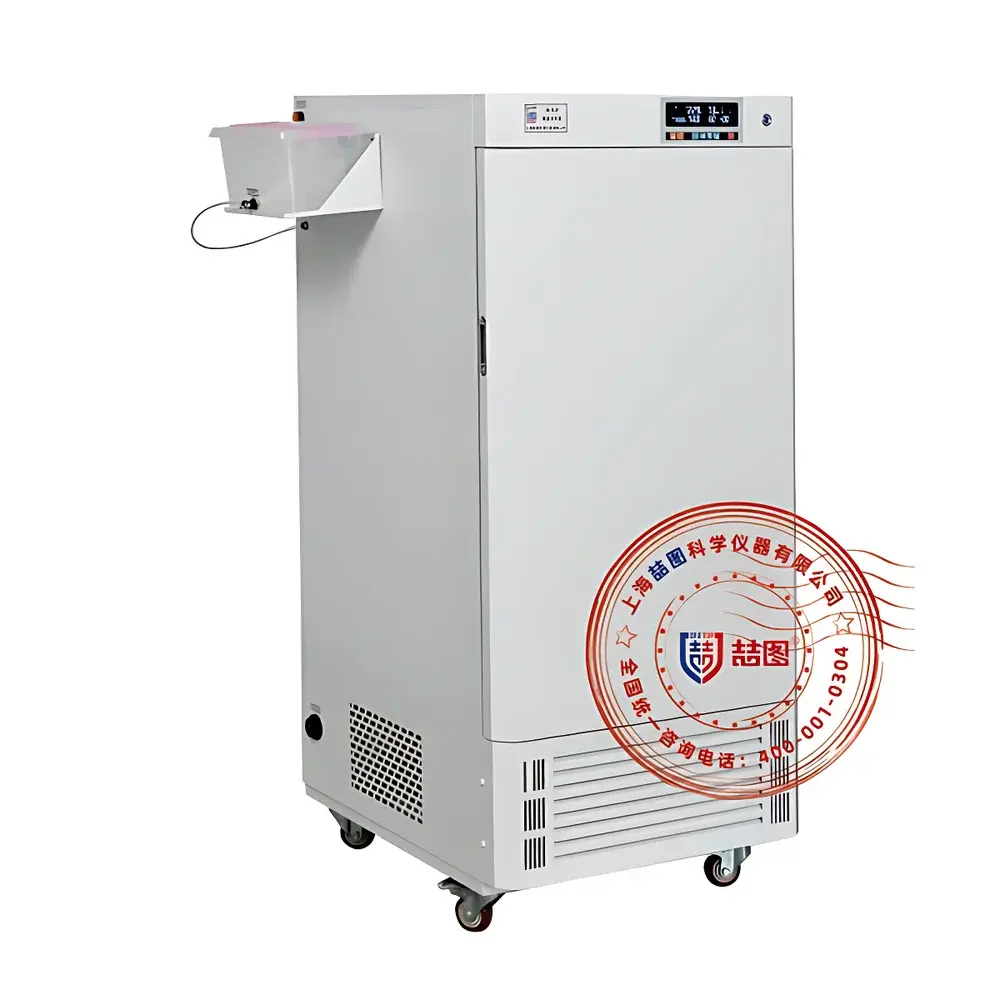
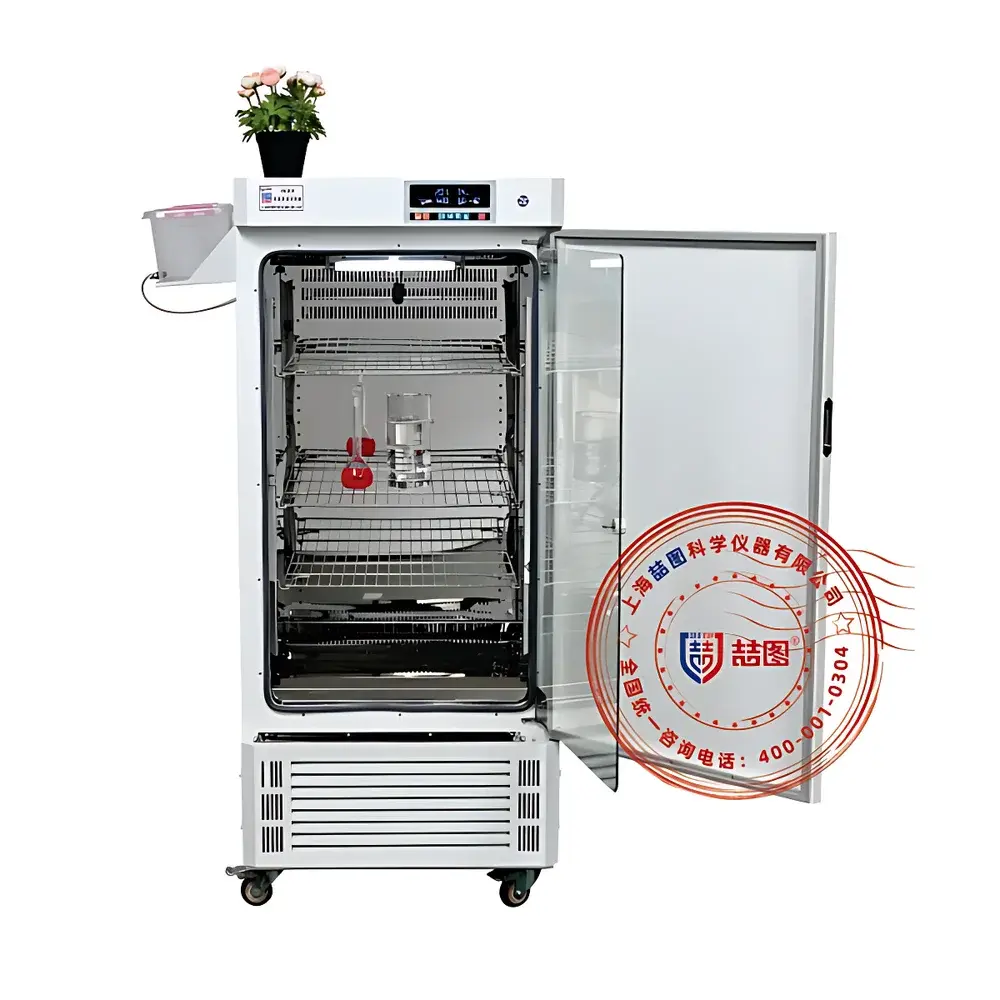
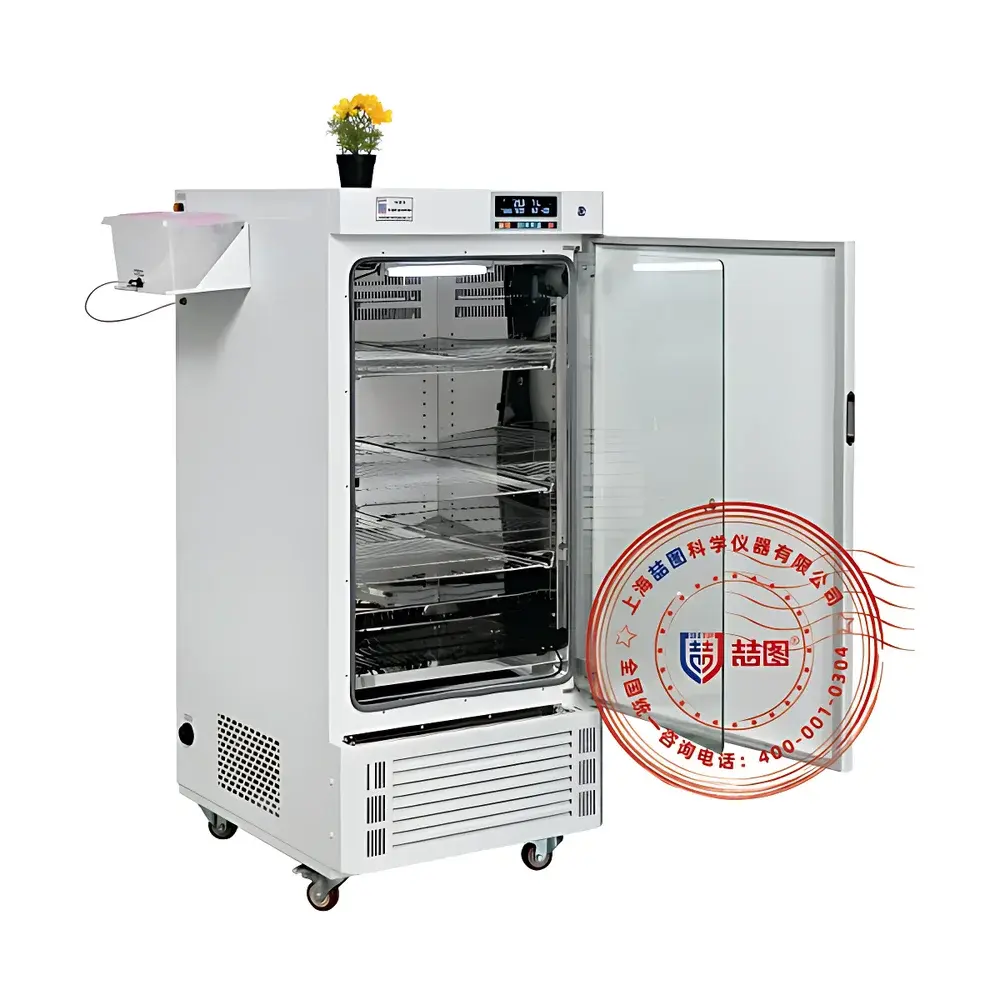
DRETOP ZHS-250HC Temperature and Humidity Controlled Incubator
| Brand | DRETOP |
|---|---|
| Origin | Shanghai, China |
| Manufacturer Type | Direct Manufacturer |
| Product Category | Domestic |
| Model | ZHS-250HC |
| Heating Method | Air-Jacketed Heating |
| Cooling Method | Compressor-Based Refrigeration |
| Humidification Water Tank | External Reservoir |
| Temperature Range (with Humidification) | 0–65°C |
| Temperature Range (without Humidification) | 0–65°C |
| Temperature Fluctuation | ±0.5°C at High Temp / ±1°C at Low Temp |
| Humidity Range | 40–95% RH |
| Humidity Accuracy | ±3% RH |
| Chamber Capacity | 250 L |
| Internal Dimensions (W×D×H) | 580 × 500 × 850 mm |
Overview
The DRETOP ZHS-250HC Temperature and Humidity Controlled Incubator is engineered for precision environmental simulation in life science laboratories, pharmaceutical stability testing, and industrial material evaluation. It operates on a dual-control principle—combining air-jacketed heating with compressor-based refrigeration—to deliver stable, programmable thermal conditions across a broad operational envelope (0–65°C). Integrated humidity control utilizes an external water reservoir system coupled with a PID-regulated evaporative humidifier, enabling dynamic regulation within 40–95% RH at ±3% RH accuracy. Unlike basic incubators, the ZHS-250HC maintains independent thermal and hygric control loops, minimizing cross-interference between temperature and humidity setpoints—a critical requirement for ICH Q1A–Q1E-compliant stability studies and long-term accelerated aging protocols.
Key Features
- Microprocessor-based P.I.D. temperature and humidity controller with 30-segment programmable logic, supporting time-dependent ramp-and-soak profiles for ISO 17025-aligned test sequences.
- Large backlit LCD interface with intuitive touch-key operation; real-time display of chamber setpoints, actual values, elapsed time, and alarm status.
- Stainless steel interior chamber (304 grade) with removable, height-adjustable shelves; seamless corners and smooth welds facilitate cleaning and meet GLP-compliant decontamination standards.
- Dual-door observation window: inner tempered glass pane with magnetic door seal and outer insulated panel to minimize thermal bridging and condensation during high-humidity operation.
- Air-jacketed heating system with Ni-Cr alloy heaters ensures rapid thermal recovery after door opening and eliminates hot spots common in direct-heating designs.
- Optimized internal airflow via axial贯流 (cross-flow) fan and baffle-guided ducting, promoting uniform temperature distribution (validated per ASTM E2875–13 guidelines).
- Compressor cooling module features start-delay protection, cycle-interval safeguarding, and eco-friendly R134a refrigerant compliant with EU F-Gas Regulation (EU) No 517/2014.
Sample Compatibility & Compliance
The ZHS-250HC accommodates standard microbiological culture vessels (Petri dishes, flasks, multiwell plates), pharmaceutical blister packs, textile swatches, and polymer film samples up to 250 L volume. Its design supports regulatory workflows under USP , ICH Q5C (stability of biotechnological/biological products), and ISO 11737-1 (microbiological validation of sterilization processes). The unit meets electromagnetic compatibility requirements per IEC 61326-1 and safety standards per IEC 61010-1. Optional RS485 interface enables integration into facility-wide BMS systems for audit-ready data logging in accordance with FDA 21 CFR Part 11 when paired with validated third-party software.
Software & Data Management
While the ZHS-250HC operates autonomously via its embedded controller, optional RS485 communication allows connection to PC-based monitoring platforms (e.g., LabVIEW or custom SCADA). All parameter changes, alarm events, and runtime logs are timestamped and stored in non-volatile memory. Power-loss recovery preserves active programs and setpoints. For GxP environments, users may deploy external validated data acquisition systems to capture continuous temperature/humidity traces with electronic signatures, audit trails, and user-access controls—fulfilling ALCOA+ principles for raw data integrity.
Applications
- Pharmaceutical stability testing per ICH Q1 guidelines (long-term, intermediate, and accelerated conditions)
- Microbial growth studies requiring simultaneous control of temperature and relative humidity
- Textile and packaging material aging under controlled hygrothermal stress
- Seed germination and plant tissue culture under reproducible ambient conditions
- Accelerated corrosion testing of metallic components per ASTM D2247
- Validation of sterilization process parameters for medical device packaging
FAQ
What is the maximum allowable ambient temperature for reliable operation?
The unit is rated for ambient temperatures between 15–30°C. Operation above 30°C may reduce cooling capacity and extend time-to-setpoint, particularly at low target temperatures (80% RH).
Can the ZHS-250HC be used for sterile applications?
It is not a Class II biosafety cabinet; however, the stainless steel chamber and autoclavable shelves support post-cycle sterilization using vaporized hydrogen peroxide (VHP) or 70% ethanol wipe-downs—common practice in QC labs performing environmental monitoring.
Is humidity calibration traceable to NIST standards?
The factory calibration uses NIST-traceable hygrometers. End-users must perform periodic verification using certified reference salts (e.g., saturated LiCl, MgCl₂, NaCl solutions) per ISO 17025 Clause 6.5.2.
Does the unit support remote monitoring via Ethernet or Wi-Fi?
No native Ethernet/Wi-Fi interface is included; connectivity requires external RS485-to-Ethernet gateways configured per user IT policies.
What maintenance intervals are recommended for optimal performance?
External water reservoir should be refilled daily during continuous humidification; compressor oil and refrigerant levels require annual inspection by certified HVAC-R technicians; HEPA filters (if installed as optional accessory) must be replaced every 6 months.




