
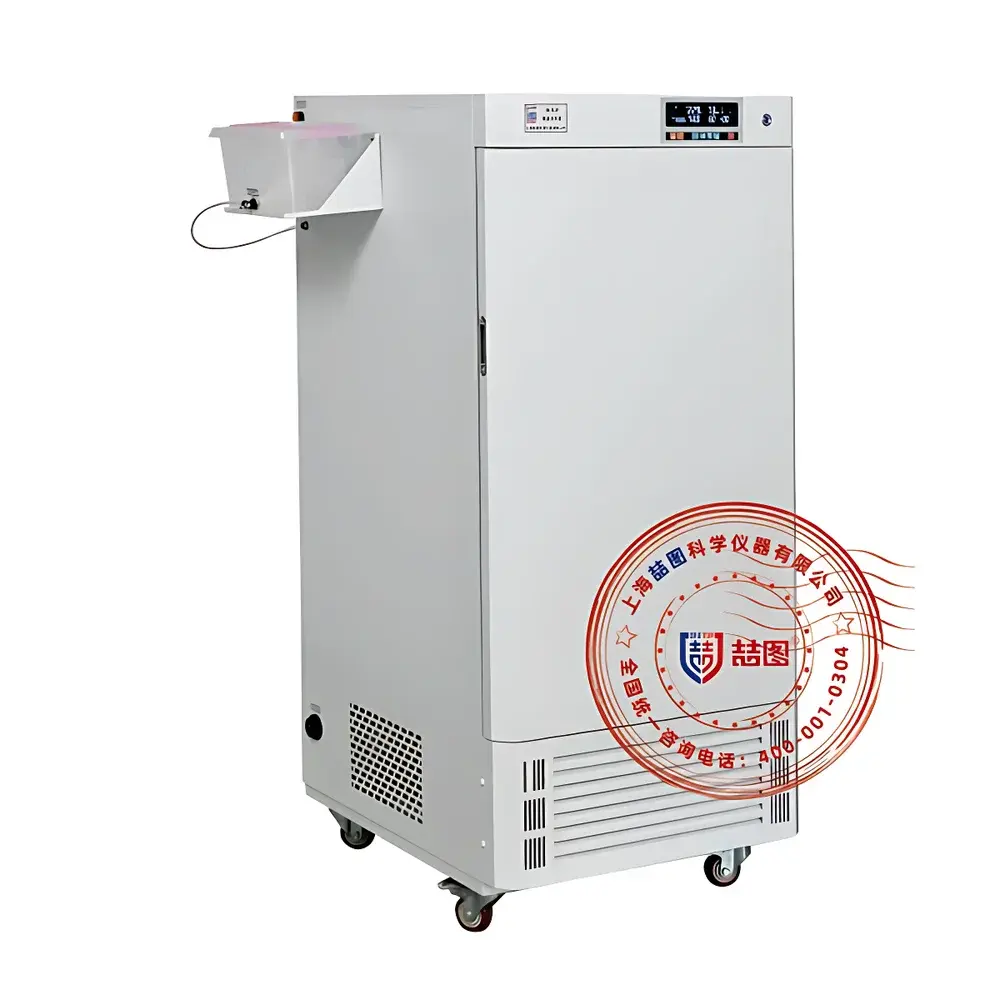
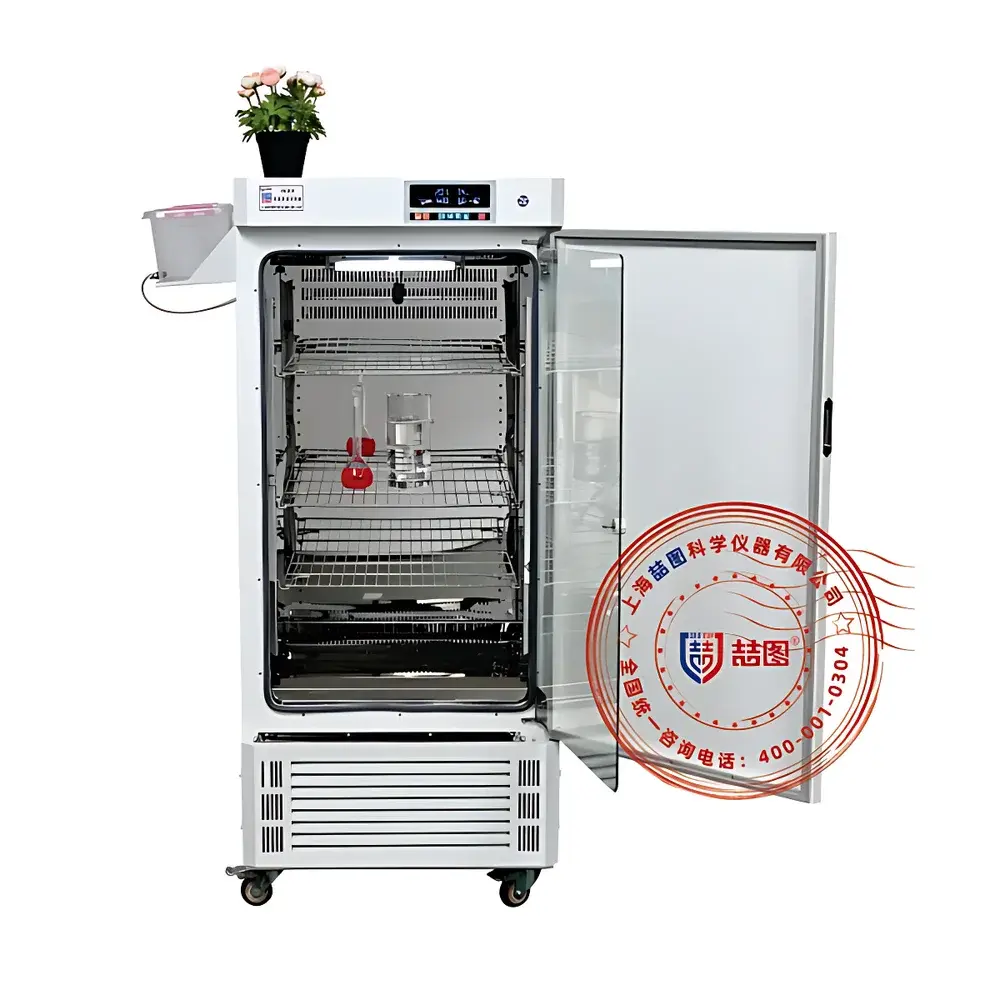
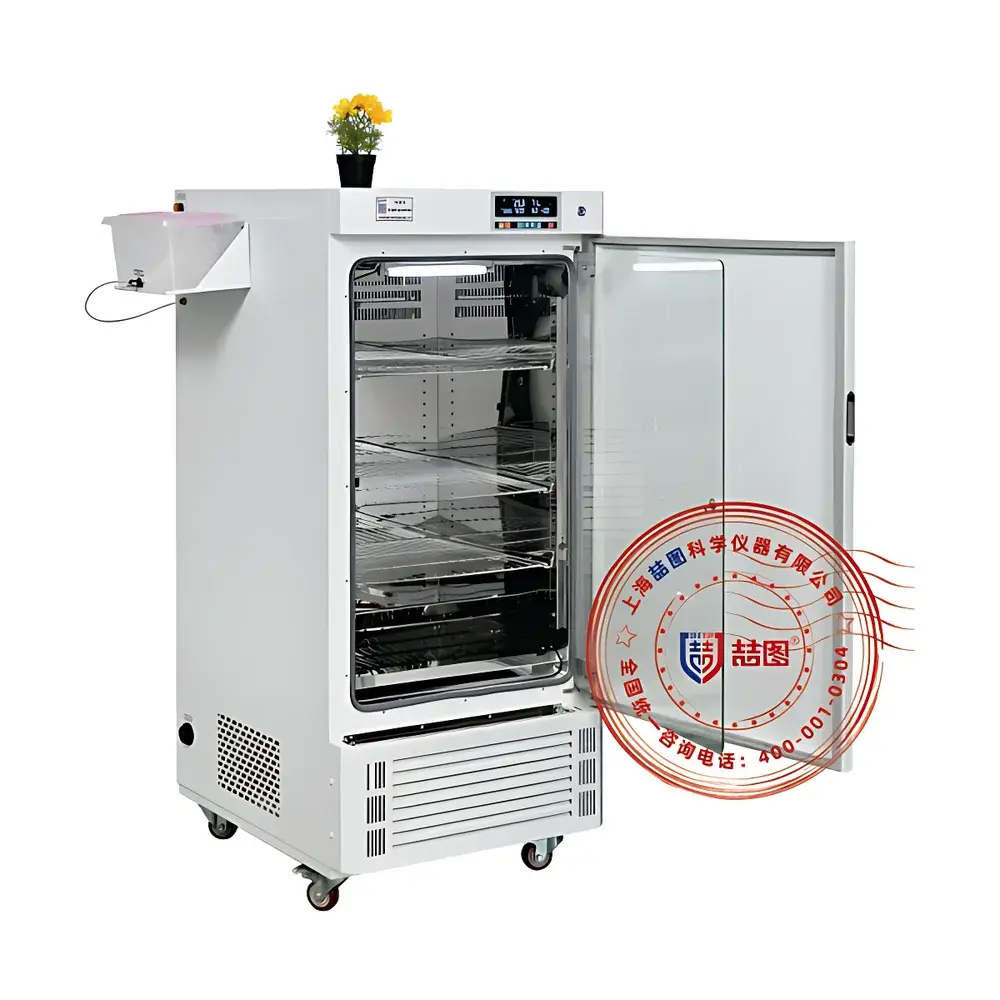
DRETOP ZHS-300SC Temperature and Humidity Controlled Incubator
| Brand | DRETOP |
|---|---|
| Origin | Shanghai, China |
| Manufacturer Type | Direct Manufacturer |
| Product Category | Domestic |
| Model | ZHS-300SC |
| Heating Method | Air-jacketed Heating |
| Cooling Method | Compressor-based Refrigeration |
| Humidification Water Tank | External Reservoir |
| Temperature Range (with Humidification) | 15–45 °C |
| Temperature Range (without Humidification) | 10–45 °C (customizable to 0–65 °C) |
| Temperature Fluctuation | ±0.5 °C at high setpoints |
| Humidity Range | 50–95 %RH |
| Humidity Accuracy | ±3 %RH |
| Chamber Capacity | 300 L |
| Internal Dimensions (W×D×H) | 580×500×950 mm |
Overview
The DRETOP ZHS-300SC Temperature and Humidity Controlled Incubator is an engineered environmental simulation platform designed for reproducible, long-term stability testing and biological cultivation under precisely regulated thermal and hygroscopic conditions. Based on air-jacketed heating and compressor-driven refrigeration architecture, the system maintains stable temperature and relative humidity profiles across its 300 L stainless-steel chamber—enabling compliance-critical applications in pharmaceutical stability studies (ICH Q1–Q5), microbiological growth assays, textile conditioning, food packaging shelf-life evaluation, and material aging tests. Its dual-control algorithm synchronizes independent PID loops for temperature and humidity, minimizing cross-coupling effects and ensuring traceable environmental fidelity over extended operational cycles.
Key Features
- Air-jacketed heating system with Ni-Cr alloy heaters ensures rapid thermal response and reduced internal temperature gradients compared to direct-heating designs.
- Compressor-based cooling circuit utilizes eco-friendly R134a refrigerant (non-ozone-depleting, GWP-compliant), integrated with programmable power modulation to sustain stable sub-ambient operation without thermal shock.
- External humidification reservoir enables continuous water replenishment without opening the chamber—reducing contamination risk and preserving setpoint integrity during prolonged runs.
- 30-segment programmable controller supports time-dependent ramp/soak profiles, enabling automated multi-condition testing sequences (e.g., ICH Zone IVb cycling: 30 °C/75 %RH → 40 °C/75 %RH → 50 °C/75 %RH).
- Double-door observation window: inner tempered glass + outer magnetic door seal provides enhanced thermal insulation and visual monitoring without compromising chamber integrity.
- Modular refrigeration unit incorporates start-delay protection, compressor cycle interval control, and automatic defrost management—extending service life and reducing maintenance frequency.
- Stainless-steel interior (SUS304) with removable, height-adjustable shelves facilitates thorough cleaning, autoclave-compatible decontamination, and flexible load configuration.
Sample Compatibility & Compliance
The ZHS-300SC accommodates standard ISO/IEC 17025-compliant sample configurations—including Petri dishes, multi-well plates, vials, ampoules, and packaged product units—within its uniformly ventilated chamber. Internal airflow employs optimized axial fan distribution and baffle-guided laminar circulation, mitigating localized condensation and ensuring <±1.5 °C spatial uniformity (per ASTM E2876-22 verification methodology). The incubator supports GLP/GMP-aligned workflows through optional RS485 interface (Modbus RTU protocol) for integration into centralized environmental monitoring systems (EMS), and is compatible with 21 CFR Part 11-compliant data loggers when paired with external validation-grade sensors.
Software & Data Management
While the ZHS-300SC operates via embedded microprocessor control (no proprietary software required), its RS485 port enables bidirectional communication with third-party SCADA platforms or LIMS systems. Users may configure alarm thresholds (temperature/humidity deviation, sensor fault, door-open duration), assign unique device IDs, and schedule automated data export intervals. Optional accessories—including calibrated NIST-traceable temperature/humidity probes, USB data loggers with audit trail functionality, and external thermal printers—facilitate IQ/OQ documentation and regulatory submission readiness per FDA, WHO, and EU Annex 15 requirements.
Applications
- Pharmaceutical stability testing per ICH guidelines (long-term, accelerated, intermediate conditions)
- Microbial culture maintenance and viability assessment (e.g., ATCC strain preservation, fungal sporulation studies)
- Textile and polymer hygrothermal aging per ISO 22196, ASTM D746, and AATCC TM147
- Food packaging permeability and barrier performance evaluation under controlled RH gradients
- Seed germination and plant tissue culture under defined climatic regimes
- Electronics component reliability screening (moisture-induced failure analysis)
FAQ
What is the maximum allowable ambient temperature for reliable operation?
The unit is rated for installation in environments up to 32 °C ambient, provided adequate ventilation clearance (≥100 mm rear/side, ≥200 mm top) is maintained.
Can humidity be maintained below 50% RH?
No—the ZHS-300SC is configured for humidification only; dehumidification requires external desiccant or refrigerant-based auxiliary systems.
Is calibration certificate included with shipment?
A factory calibration report (traceable to national standards) is supplied; full ISO/IEC 17025-certified calibration requires on-site service by accredited providers.
How is temperature uniformity validated across the chamber volume?
Uniformity is verified using a 9-point thermocouple mapping protocol (per ASTM E2876), conducted during factory acceptance testing and recommended annually post-installation.
Does the incubator support remote monitoring via Ethernet or Wi-Fi?
Native Ethernet/Wi-Fi capability is not integrated; however, RS485-to-Ethernet gateways (e.g., Moxa NPort series) enable networked access when deployed within existing lab infrastructure.




