
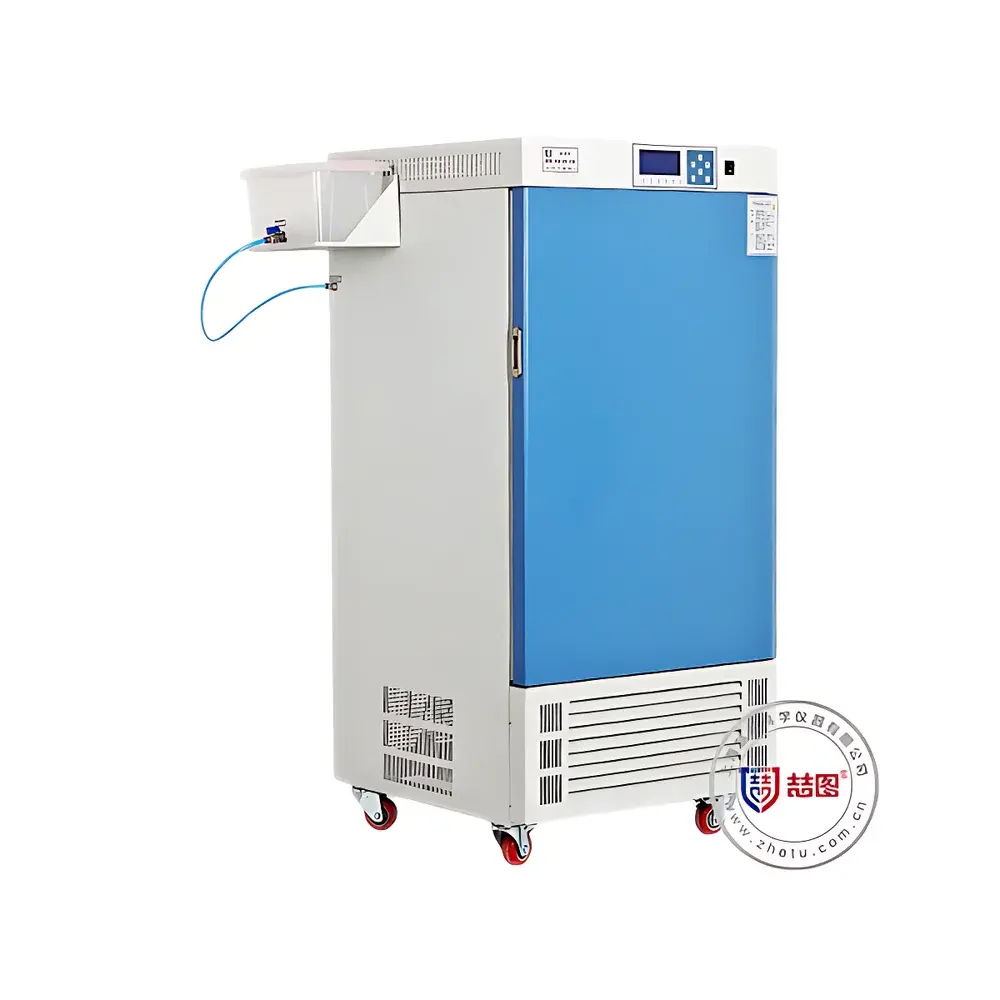
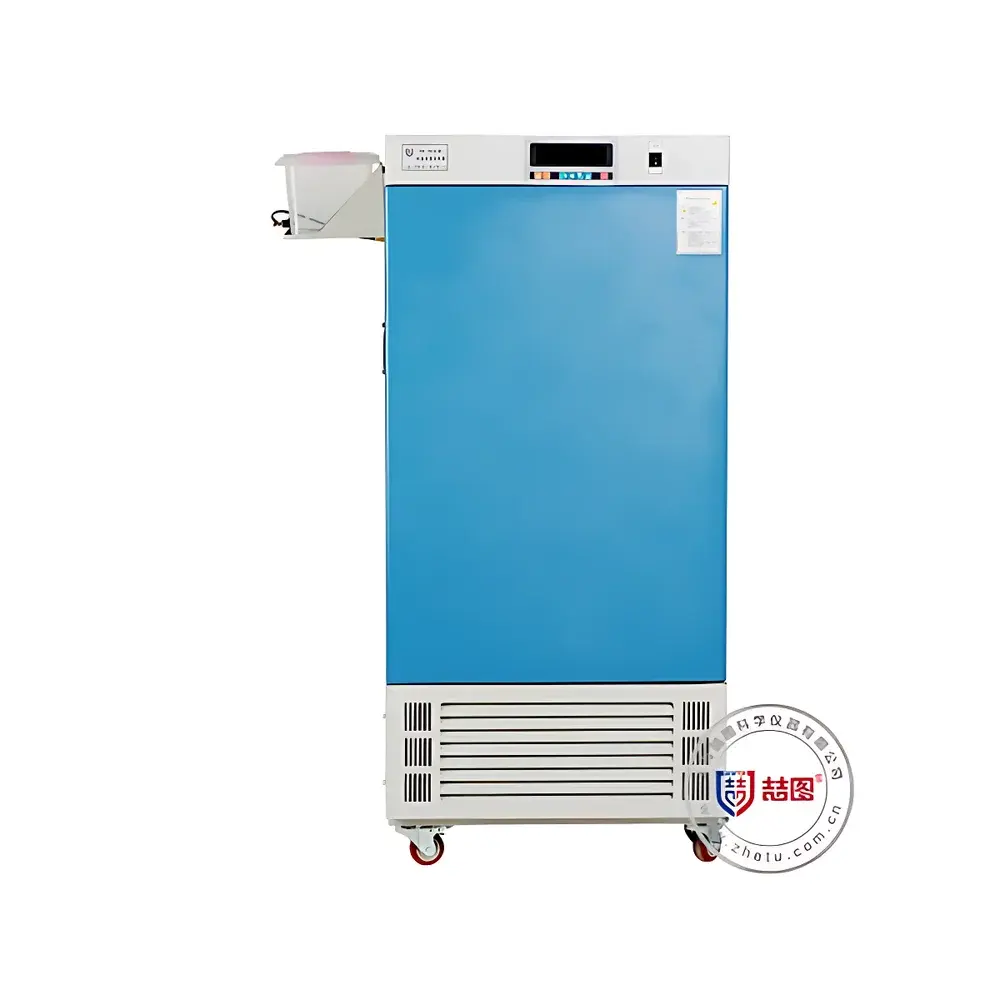
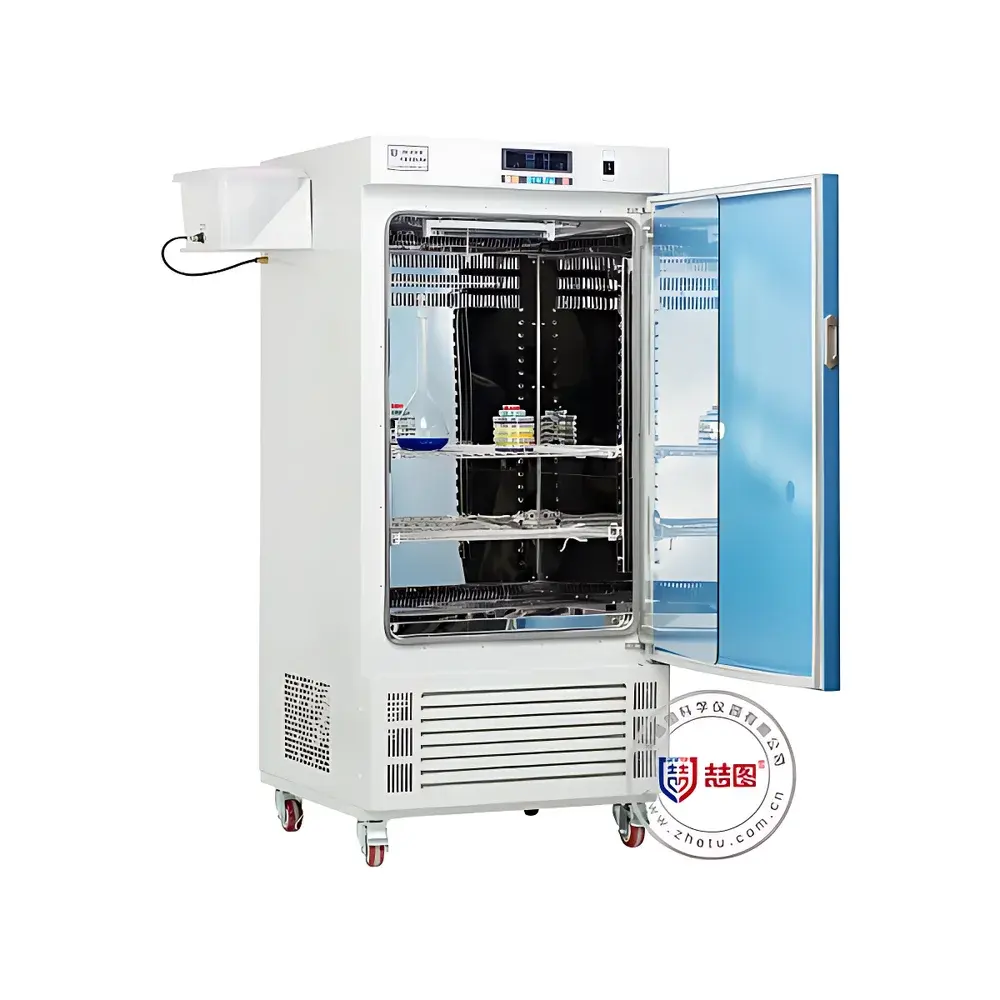
DRETOP ZHS.CP-150 Multi-Function CO₂ Incubator with Integrated Environmental Control
| Brand | DRETOP |
|---|---|
| Origin | Shanghai, China |
| Manufacturer Type | Direct Manufacturer |
| Instrument Type | Air-Jacketed CO₂ Incubator |
| CO₂ Detection | Infrared (IR) Sensor |
| Temperature Control Range | 10–45 °C (unhumidified), 15–45 °C (humidified) |
| CO₂ Concentration Range | 0–20% |
| Humidity Control Range | 50–85% RH (customizable to 40–95% RH) |
| Chamber Capacity | 150 L |
| External Dimensions (W×D×H) | 605 × 625 × 1375 mm |
| Power Supply | AC 220 V, 50 Hz |
| Heating System | Independent NiCr Alloy Heater |
| Cooling System | Optimized Refrigeration Module with Compressor Protection |
| Humidification Method | Steam-Based Automatic Humidifier |
| Air Filtration | HEPA-Grade Filter (≥0.3 µm, 99.998% efficiency) |
| UV Sterilization | Ozone-Free UV Lamp (mounted on ceiling) |
| Control Interface | Optional LCD or Full-Color Touchscreen |
| Programmability | 99-Cycle, 30-Stage Multi-Step Controller |
| Data Logging | USB/RS485 Interface (optional) |
| Safety Features | Dual-Limit Temperature Protection, Power-Failure Recovery, Auto-Defrost, Door-Open Recovery (CO₂ ≤3 min, Temp ≤8 min) |
Overview
The DRETOP ZHS.CP-150 is an air-jacketed, multi-function CO₂ incubator engineered for precision cell culture under dynamically configurable environmental conditions. Unlike conventional CO₂-only incubators, the ZHS.CP-150 integrates programmable temperature, CO₂ concentration, and relative humidity control into a single platform—enabling operation as a standard CO₂ incubator, a humidified CO₂ incubator, or—when equipped with optional modules—a fully functional biochemical, climate-simulating, or light-regulated incubation system. Its measurement architecture centers on dual-critical feedback loops: an infrared (IR) CO₂ sensor delivering drift-free, temperature- and humidity-independent gas concentration monitoring; and a microprocessor-driven P.I.D. thermal regulation system with independent heating and refrigeration circuits. The chamber employs a mirror-polished stainless-steel interior with seamless quarter-radius corners to minimize microbial retention and support ISO 14644-compliant cleaning protocols. Designed for GLP/GMP-aligned laboratories, the unit meets IEC 61010-1 safety standards and supports audit-ready operation through non-volatile parameter memory, power-failure recovery, and configurable alarm thresholds.
Key Features
- Air-jacketed thermal design with ceramic fiber insulation ensures stable thermal uniformity and low energy consumption, complying with EU Ecodesign Directive 2009/125/EC.
- Infrared CO₂ sensing technology enables rapid equilibration (<3 min to ±0.1% of setpoint after 30-second door opening) and eliminates cross-sensitivity to ambient humidity or temperature fluctuations.
- Steam-based automatic humidification system with reservoir-style water tray achieves 50–85% RH (extendable to 40–95% RH upon request), maintaining ±3–5% RH accuracy across the operating range.
- Ozone-free UV lamp mounted on the chamber ceiling irradiates recirculated air and humidification vapor, reducing airborne and surface bioburden in accordance with ISO 14698-1 guidance for biocontamination control.
- HEPA-grade inlet filter (≥0.3 µm, 99.998% efficiency) prevents particulate ingress during active air exchange, critical for ISO Class 5 cleanroom-integrated workflows.
- Double-door configuration with tempered glass inner door and magnetic nanocomposite gasket minimizes condensation and thermal leakage while enabling full-field visual inspection without compromising chamber stability.
- Modular refrigeration system includes compressor delay-on/delay-off logic, automatic defrost cycle (non-energy-consuming), and redundant thermal protection to extend service life beyond 360 continuous operational hours.
- P.I.D. temperature controller with 0.1 °C resolution, ±0.5 °C uniformity specification, and programmable ramp-soak profiles supports USP and ASTM E2923-21 validation requirements.
Sample Compatibility & Compliance
The ZHS.CP-150 accommodates standard tissue culture flasks (T25–T225), Petri dishes (35–150 mm), multiwell plates (6–96-well), and roller bottles up to 1000 mL. Its stainless-steel interior and removable, autoclavable shelves (2 standard trays included) facilitate Aseptic Technique compliance per USP . The IR CO₂ sensor is validated per ISO 8573-1:2010 for trace gas measurement integrity, and the humidification system conforms to ISO 14644-3 Annex B for controlled environment moisture delivery. All electrical components meet CE marking requirements under Directive 2014/30/EU (EMC) and 2014/35/EU (LVD). For regulated bioprocessing environments, optional RS485/USB data logging supports 21 CFR Part 11-compliant electronic records when paired with validated third-party software.
Software & Data Management
The incubator features an embedded microcontroller running a real-time operating system (RTOS) with non-volatile flash memory for parameter retention. Standard firmware supports time-stamped event logging—including door openings, temperature excursions, CO₂ deviations, and alarm triggers—with storage capacity for ≥30 days of 1-minute interval data. Optional USB or RS485 interfaces enable connection to laboratory information management systems (LIMS) or SCADA platforms. Firmware updates are performed via secure authenticated firmware packages; no internet connectivity is required during operation. Audit trail functionality records user-initiated changes with timestamp, operator ID (if integrated with network authentication), and pre-/post-change values—fulfilling ALCOA+ principles for data integrity in FDA- and EMA-inspected facilities.
Applications
The ZHS.CP-150 serves diverse life science applications requiring tightly coupled environmental parameters: mammalian cell line maintenance (e.g., CHO, HEK293, HeLa), primary neuronal culture under physiological CO₂/humidity, stem cell expansion under hypoxic-mimetic conditions (via precise 1–5% CO₂ tuning), co-culture experiments demanding synchronized temperature-humidity-CO₂ ramps, and developmental biology studies requiring diurnal light-temperature cycling (with optional GC/RQ-series lighting modules). Its robust thermal recovery profile makes it suitable for high-throughput core facilities where multiple users access the chamber hourly. The modular architecture also supports custom integration—for example, mounting external gas mixers for O₂/CO₂/N₂ tri-gas control or interfacing with perfusion bioreactor controllers via analog I/O.
FAQ
What CO₂ sensor technology does the ZHS.CP-150 use, and why is IR preferred over thermal conductivity?
It uses a dual-beam infrared (IR) sensor calibrated to NIST-traceable standards. IR detection provides superior specificity, long-term stability (>2 years without recalibration), and immunity to ambient humidity and temperature shifts—unlike thermal conductivity sensors, which require frequent zeroing and exhibit drift in humidified environments.
Can the incubator maintain sterility during frequent door openings in shared lab environments?
Yes. The combination of HEPA filtration, ozone-free UV irradiation of recirculated air, rapid CO₂ and temperature recovery (<3 min and <8 min respectively), and anti-condensation door heating collectively mitigate contamination risk per ISO 14644-1 Class 5 operational guidelines.
Is humidity control validated across the full 40–95% RH range?
Factory calibration covers 50–85% RH. Extended-range operation (40–95% RH) is available as a customer-specific configuration and requires on-site verification using traceable hygrometers per ISO/IEC 17025-accredited procedures.
Does the unit support 21 CFR Part 11 compliance for electronic records?
The hardware supports audit-trail-capable data logging. Full Part 11 compliance requires implementation of validated third-party software, role-based access control, electronic signatures, and periodic review protocols—none of which are embedded in the base firmware but are architecturally supported via RS485/USB interfaces.
What maintenance intervals are recommended for optimal performance?
HEPA filters should be replaced every 6 months under continuous use; UV lamps every 12 months; and internal chamber disinfection with 70% ethanol or hydrogen peroxide vapor performed weekly. Compressor oil and refrigerant integrity checks are advised annually by authorized DRETOP service engineers.




