
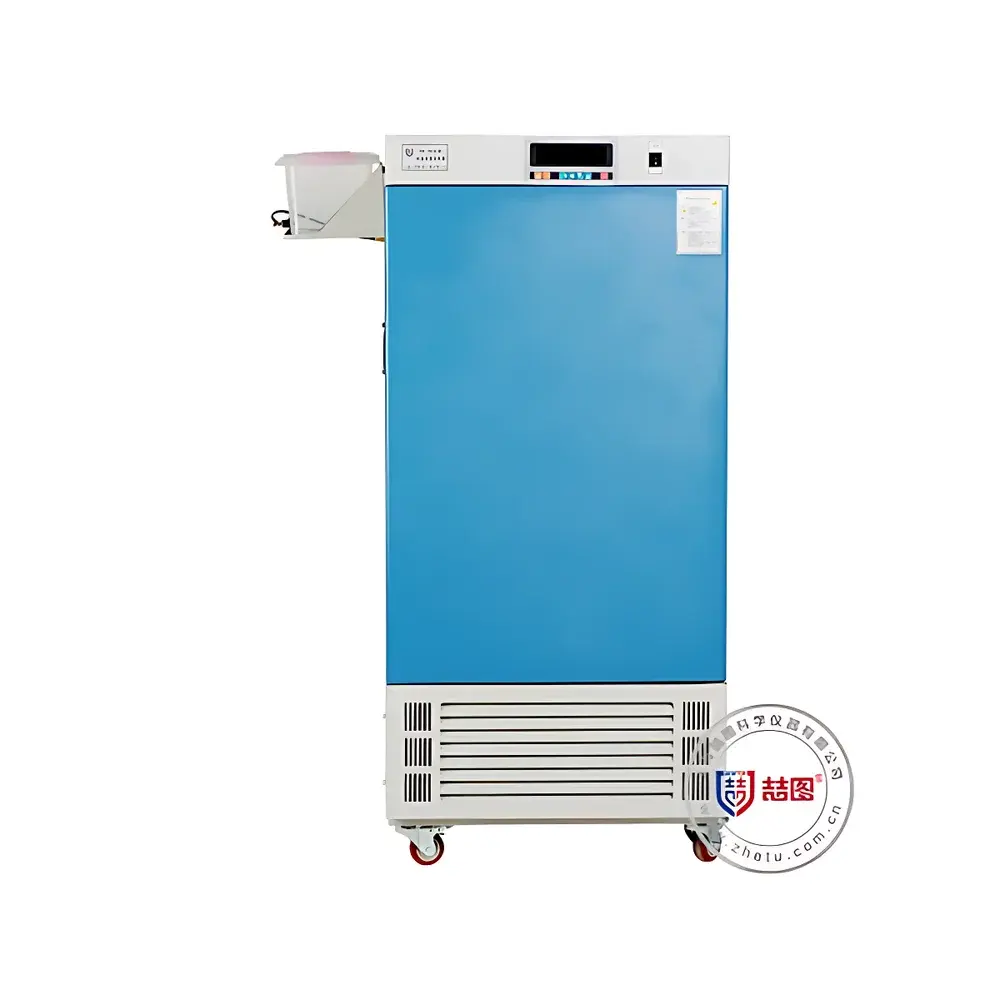
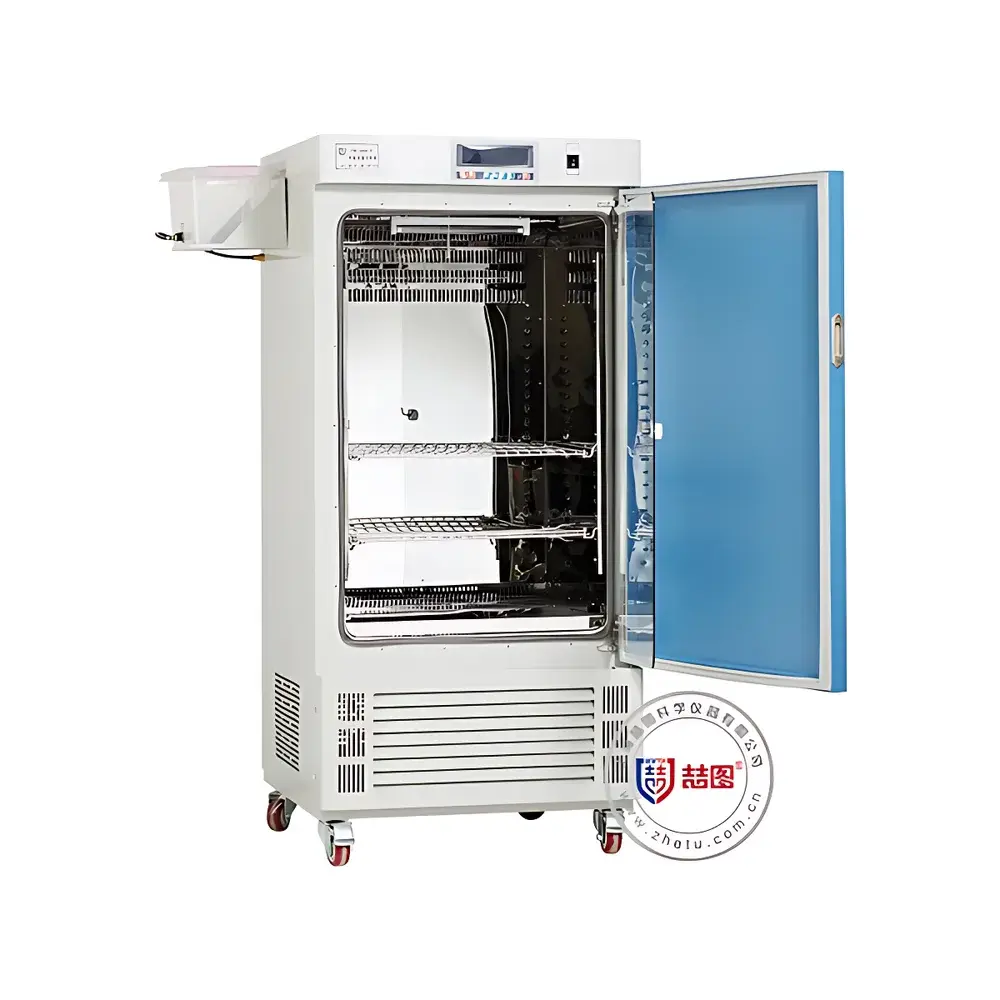
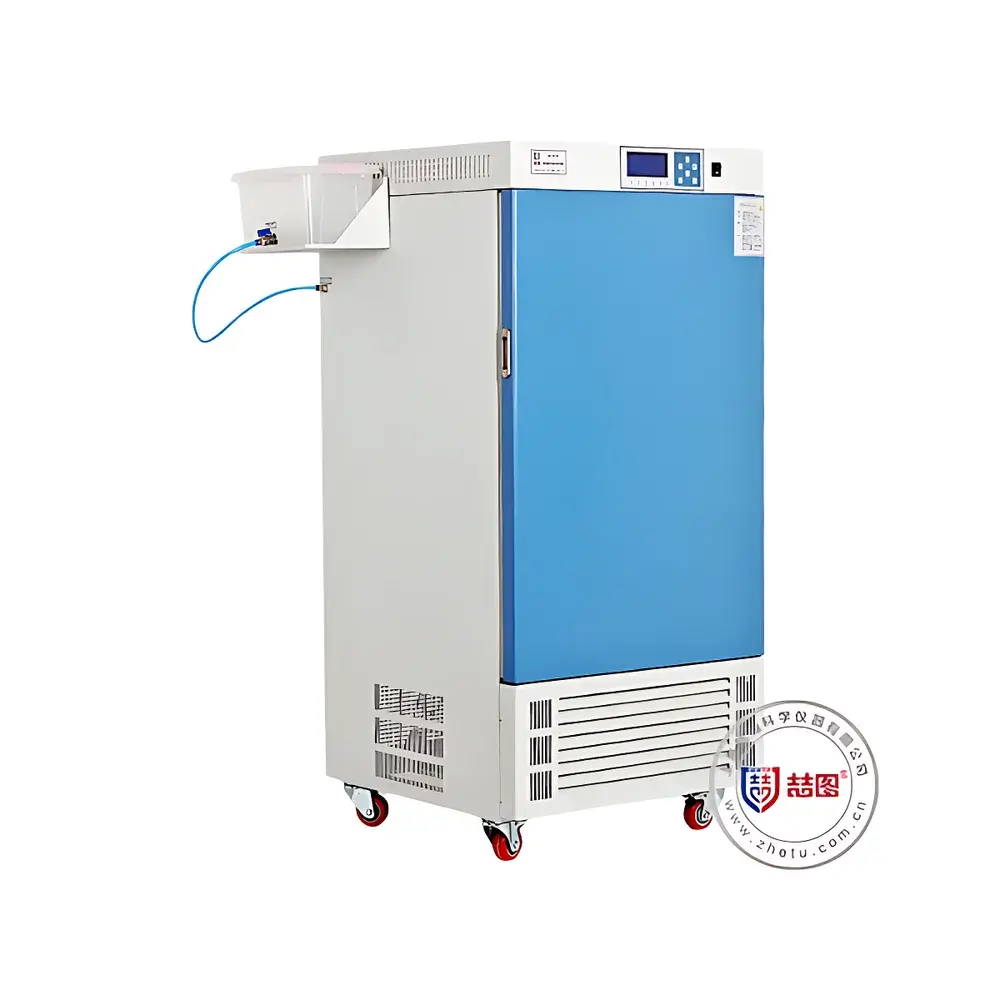
DRETOP ZHS.CP-250 Multifunctional CO₂ Incubator
| Brand | DRETOP |
|---|---|
| Origin | Shanghai, China |
| Manufacturer Type | Direct Manufacturer |
| Instrument Type | Air-jacketed CO₂ Incubator |
| CO₂ Detection | Infrared (IR) Sensor |
| Temperature Control Range | 0–65 °C |
| CO₂ Concentration Range | 0–20% |
| Chamber Capacity | 250 L |
| External Dimensions (W×D×H) | 580 × 500 × 850 mm |
| Internal Chamber Dimensions (W×D×H) | 580 × 500 × 850 mm |
| Air Filtration | HEPA-grade filter (≥0.3 µm, 99.998% efficiency) |
| Door Design | Dual-pane tempered glass with magnetic seal and nano-material gasket |
| Cooling System | Modular compressor-based refrigeration with auto-defrost |
| Humidity Control | None (non-humidified configuration) |
| Power Supply | AC 220 V, 50 Hz |
| Input Power | 1250 W |
| Temperature Uniformity | Not specified |
| Temperature Recovery | ≤8 min to 37 °C after 30-sec door opening |
| CO₂ Recovery | ≤3 min to 5% setpoint after 30-sec door opening |
| UV Sterilization | Ozone-free UV lamp integrated in chamber ceiling |
| Control Interface | Optional LCD or full-color touchscreen (DCP-series variant) |
Overview
The DRETOP ZHS.CP-250 Multifunctional CO₂ Incubator is an air-jacketed, microprocessor-controlled environmental chamber engineered for reliable, long-term cell culture under tightly regulated CO₂, temperature, and optional ancillary conditions—including light intensity and programmable diurnal cycles (in GC/RQ-series variants). Unlike standard CO₂ incubators limited to temperature and gas control, the ZHS.CP-250 platform supports modular expansion into biochemical, photoperiodic, or climate-simulated operation—making it suitable for advanced applications in stem cell research, circadian biology, plant tissue culture, and developmental toxicology. Its core measurement architecture relies on a dual-wavelength infrared (IR) CO₂ sensor, which provides stable, humidity- and temperature-insensitive concentration monitoring across the full 0–20% range. The air-jacketed thermal design—combined with ceramic fiber insulation, heated inner door, and P.I.D.-regulated nickel-chromium heating elements—ensures minimal thermal drift and rapid recovery following routine access. All internal surfaces are constructed from electropolished stainless steel with seamless, radius-corner transitions to inhibit microbial adhesion and simplify decontamination.
Key Features
- Air-jacketed thermal management system with ceramic fiber insulation and heated inner door to suppress condensation and maintain uniform chamber conditions
- Infrared CO₂ sensor with real-time feedback loop; recovers to 5% setpoint in ≤3 minutes after 30-second door opening
- Ozone-free UV lamp mounted in ceiling cavity for continuous sterilization of circulating air and water reservoir vapor
- HEPA-grade inlet air filter (≥0.3 µm, 99.998% efficiency) integrated into rear air intake path
- Modular refrigeration unit with compressor protection logic (start delay, stop interval, auto-defrost)
- Dual-pane tempered glass inner door with magnetic sealing and nano-composite gasket for low thermal leakage
- Microcomputer-based P.I.D. temperature controller with ±0.5 °C stability, 0.1 °C resolution, and 9999-minute timer
- Multi-segment programmable controller supporting up to 99 cycles, each with 30 definable steps (time, temperature, light level)
- Stainless steel interior with removable, adjustable shelving and anti-tilt shelf guides to prevent media spillage
- Rolling chassis with dual-mode mobility: swivel casters + lockable leveling feet for vibration-dampened placement
Sample Compatibility & Compliance
The ZHS.CP-250 accommodates standard T-25, T-75, and multi-well plates, as well as roller bottles and Petri dishes, within its 250 L working volume. Its non-humidified configuration eliminates condensation-related risks during extended CO₂-dependent assays involving serum-free or low-protein media. While not certified to ISO 13485 or FDA 21 CFR Part 11 out-of-the-box, the system’s architecture supports audit-ready operation when paired with optional RS485/USB data logging modules and external validation protocols. It complies with IEC 61010-1 safety standards for laboratory equipment and meets electromagnetic compatibility requirements per EN 61326-1. For GLP/GMP environments, users may implement third-party IQ/OQ/PQ documentation packages aligned with ASTM E2500 and USP guidelines.
Software & Data Management
The DCP-series touchscreen interface provides intuitive graphical navigation, real-time trend plotting, and event-driven alarm logging—including temperature deviation, CO₂ excursion, door-open duration, and UV lamp runtime. Optional USB or RS485 connectivity enables direct integration with LIMS or ELN platforms; recorded datasets include timestamped temperature, CO₂ %, and operational status flags. Firmware supports parameter backup and restore via USB drive, ensuring continuity after power loss or maintenance reset. Audit trail functionality—when enabled via external software—is compatible with electronic signature workflows compliant with 21 CFR Part 11 Annex 11 requirements.
Applications
- Mammalian cell line maintenance (e.g., HeLa, CHO, HEK293) under 5% CO₂ at 37 °C
- Long-term primary neuronal or mesenchymal stem cell expansion requiring minimal environmental perturbation
- Photobiomodulation studies using programmable LED arrays (red/blue spectrum, 0–30,000 lx)
- Circadian rhythm entrainment experiments via synchronized temperature/light cycling (RQ-series)
- Plant callus induction and somatic embryogenesis under controlled CO₂ and illumination
- Microbial co-culture systems where aerobic and capnophilic species require shared environmental parameters
- Regulatory preclinical assay support where reproducible, documented incubation conditions are mandated
FAQ
Does the ZHS.CP-250 include humidity control?
No—the base ZHS.CP-250 model is configured without active humidification. Humidity-capable variants (e.g., DCP-250SH) are available upon request.
What is the CO₂ sensor technology and why is IR preferred?
It uses a dual-beam non-dispersive infrared (NDIR) sensor. IR detection remains unaffected by ambient humidity or temperature fluctuations, ensuring accuracy during frequent door openings typical in high-throughput labs.
Can this incubator be validated for GMP use?
Yes—while factory calibration is traceable to NIST standards, formal IQ/OQ/PQ must be performed on-site using qualified thermocouples, CO₂ analyzers, and protocol templates aligned with ISO 14644 and EU GMP Annex 15.
Is remote monitoring supported?
Not natively—but optional RS485 or USB interfaces allow connection to SCADA systems or custom Python/Node-RED scripts for real-time telemetry and alerting.
What safety protections are built into the cooling system?
Compressor start/stop delays, thermal overload cutoffs, pressure-sensing interlocks, and automatic defrost cycles prevent ice accumulation and mechanical stress during continuous 360+ hour operation.





