
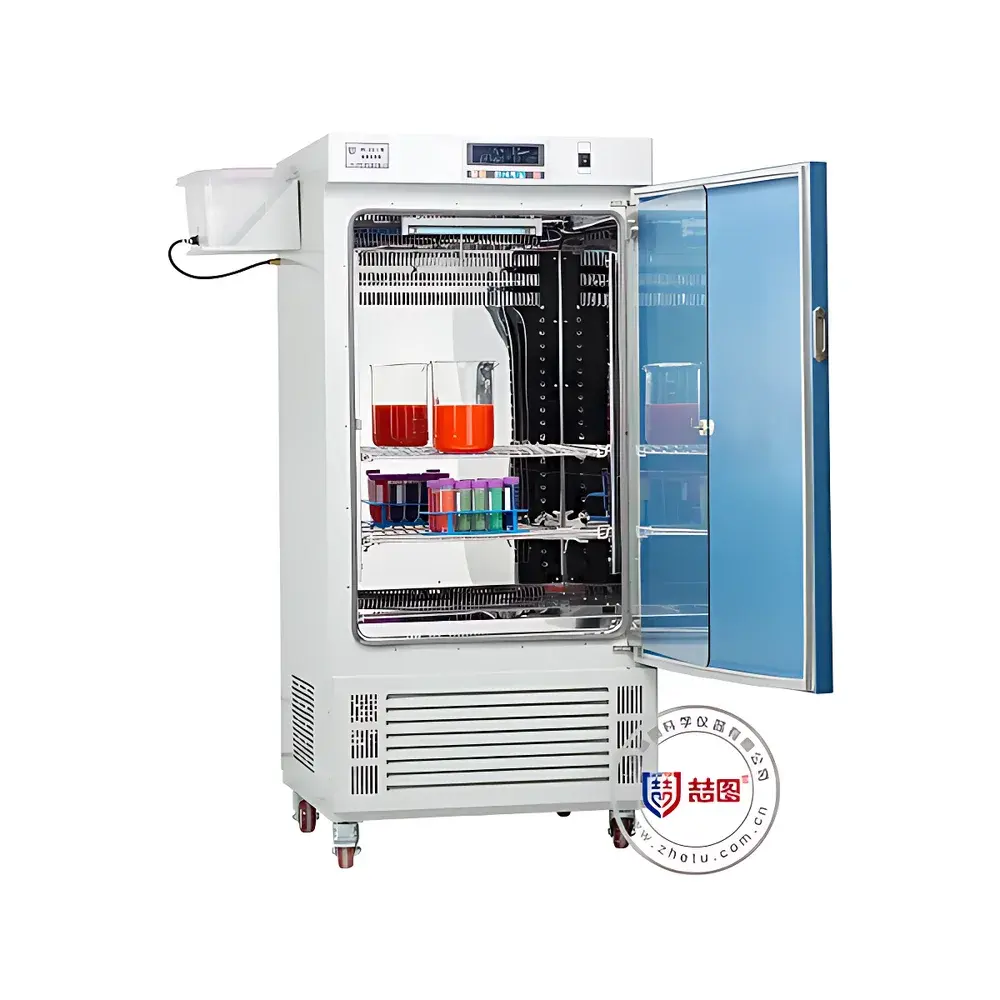
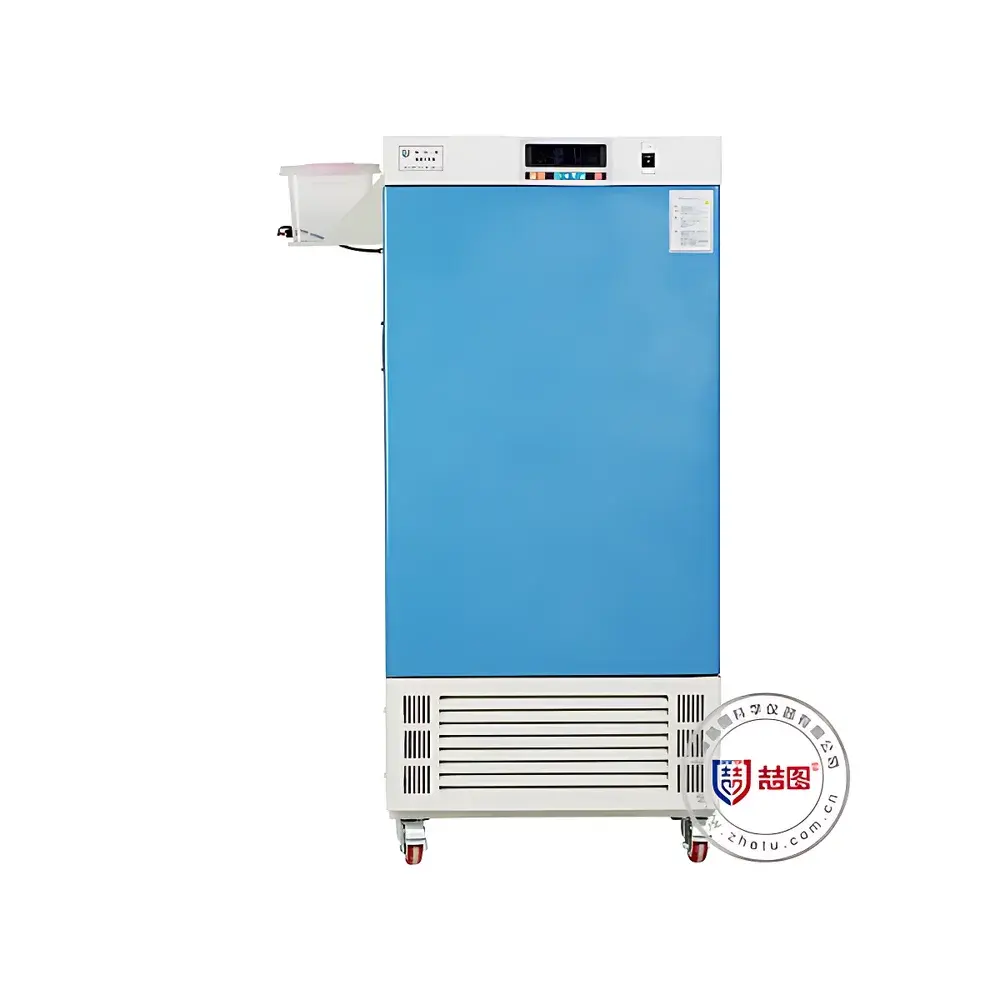
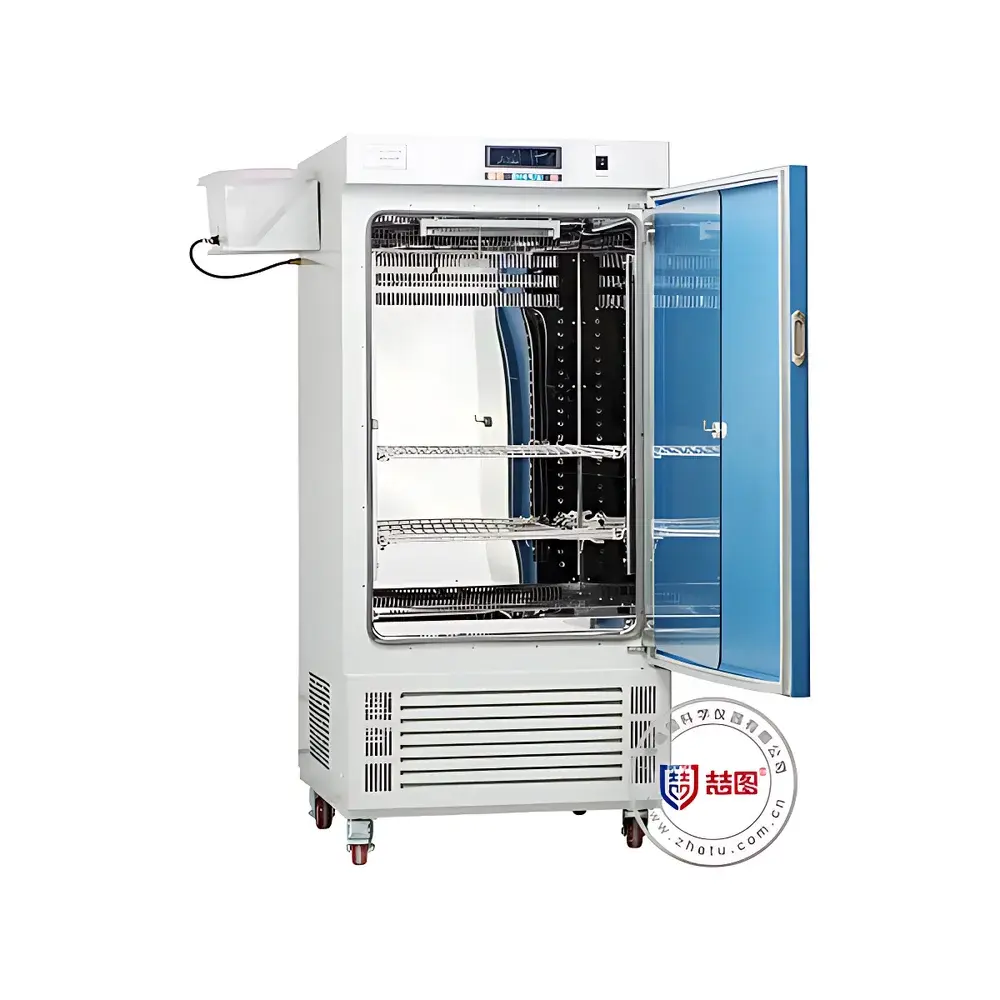
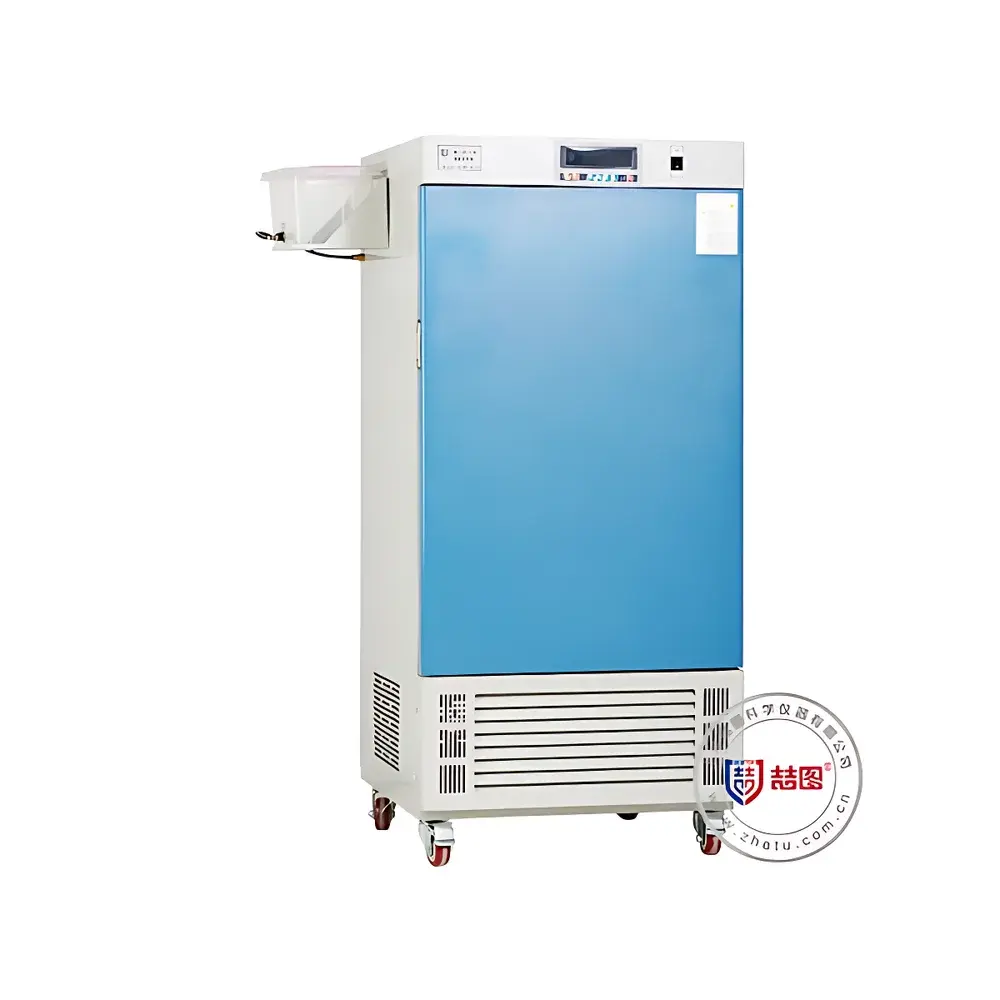
DRETOP ZMJ-100-II Mold Incubator
| Brand | DRETOP |
|---|---|
| Origin | Shanghai, China |
| Manufacturer Type | Direct Manufacturer |
| Model | ZMJ-100-II |
| Control Interface | Digital Touchscreen |
| Air Circulation | Forced Convection |
| Temperature Range | 15–45°C (with humidification), 10–45°C (without humidification) |
| Temperature Fluctuation | ±0.5°C |
| Temperature Uniformity | ±1°C (empty chamber @ 25°C) |
| Humidity Range | 55–85% RH |
| Humidity Fluctuation | ±5% RH |
| Chamber Capacity | 100 L |
| External Dimensions (W×D×H) | 580 × 610 × 1180 mm |
| Internal Dimensions (W×D×H) | 450 × 380 × 590 mm |
Overview
The DRETOP ZMJ-100-II Mold Incubator is a precision-engineered environmental chamber designed specifically for the controlled cultivation of filamentous fungi, yeasts, and other moisture-sensitive microorganisms under reproducible temperature and humidity conditions. Unlike general-purpose incubators, this unit integrates calibrated humidification, high-stability PID temperature regulation, and UV-based air sterilization to meet the stringent requirements of mycological research, pharmaceutical stability testing, and materials biodegradation assessment. Its operational principle relies on forced-air convection combined with a closed-loop humidity control system—ensuring rapid equilibration and minimal spatial gradient across the 100 L working volume. The chamber is routinely deployed in BOD analysis, microbial challenge studies, antimicrobial efficacy evaluation (e.g., ISO 846, ASTM G21), and accelerated mold growth testing per IEC 60068-2-52 and MIL-STD-810H methods. All thermal and hygrometric performance data are validated under ISO/IEC 17025-accredited test conditions at 20°C ambient and 50% RH.
Key Features
- Microprocessor-based P.I.D. temperature controller with 0.1°C resolution and programmable timer (1–9999 minutes); supports dual-stage alarm thresholds for over-temperature and under-temperature deviation.
- Integrated ultraviolet germicidal irradiation (UV-C, 254 nm) mounted at the chamber ceiling—operates during idle cycles to suppress airborne fungal spores and bacterial contaminants without chemical residue.
- Double-door design: outer magnetic door seal with nano-composite insulation gasket; inner tempered glass door enabling full-field visual monitoring without thermal disturbance or condensation buildup.
- Stainless steel mirror-finish interior (AISI 304) with radius-corner geometry—facilitating cleaning validation and minimizing microbial adhesion sites per FDA cGMP Annex 1 guidelines.
- Modular refrigeration system featuring imported hermetic compressor, optimized evaporator-condenser layout, and non-energy-consuming auto-defrost cycle—ensuring long-term reliability and reduced maintenance intervals.
- EC-type axial flow fan with laminar airflow calibration—guarantees ±1°C temperature uniformity (empty load, 25°C) and eliminates cold/hot spots critical for colony isolation consistency.
- Energy-efficient operation using R134a refrigerant (non-ozone-depleting, GWP < 1430) compliant with EU F-Gas Regulation (EU) No 517/2014 and China’s GB/T 7725-2004 standards.
Sample Compatibility & Compliance
The ZMJ-100-II accommodates standard Petri dishes (90 mm and 150 mm), multi-well plates, slant tubes, liquid culture flasks (up to 500 mL), and solid agar blocks. Adjustable stainless steel shelving (3-tier configuration, 50 mm spacing increments) allows flexible load arrangement while maintaining unobstructed airflow. The unit complies with key regulatory frameworks including ISO 14644-1 (Class 8 cleanroom compatibility when used with HEPA-filtered air supply), USP for environmental monitoring in sterile compounding, and GLP Annex III requirements for data integrity and instrument qualification. Humidity control meets ISO 8573-1 Class 4 specifications for compressed air dew point management during extended incubation runs.
Software & Data Management
The II-series model includes factory-installed programmable logic control supporting up to 30 segmented temperature/humidity profiles—enabling fully autonomous execution of complex protocols such as cyclic damp-heat aging (e.g., IEC 60068-2-30). Optional RS485 interface (Modbus RTU protocol) enables bidirectional communication with SCADA systems or LIMS platforms. Time-stamped temperature and relative humidity logs (CSV export via USB port) satisfy 21 CFR Part 11 audit trail requirements when paired with DRETOP’s optional authentication-enabled software suite. Real-time graphing, alarm event logging, and password-protected parameter lockdown ensure traceability and operator accountability.
Applications
- Mycological research: Aspergillus niger, Penicillium chrysogenum, and Cladosporium spp. propagation under standardized ISO 16000-10 exposure conditions.
- Pharmaceutical QC: Accelerated stability testing of excipients and finished dosage forms per ICH Q1A(R2) guidance.
- Materials science: Evaluation of polymer, textile, and coating resistance to fungal colonization (ASTM D3273, JIS Z 2911).
- Environmental microbiology: Water quality BOD₅ determination and sediment toxicity screening using fungal bioindicators.
- Defense & aerospace: Corrosion resistance validation of avionics housings and composite laminates per MIL-STD-810H Method 508.6.
FAQ
What is the maximum allowable ambient temperature for continuous operation?
The unit is rated for uninterrupted use at ambient temperatures up to 32°C and relative humidity ≤ 80% RH (non-condensing), per IEC 60068-2-14.
Does the UV lamp require periodic replacement, and what is its service life?
The UV-C lamp has a nominal lifetime of 8,000 hours; output intensity decays gradually and should be verified annually using a calibrated radiometer per ISO/IEC 17025 procedures.
Can the incubator maintain set humidity without active heating?
Yes—the humidification system operates independently within the specified 15–45°C range; however, stable RH control below 20°C requires auxiliary heating to prevent condensation-induced sensor drift.
Is the device suitable for GMP-regulated environments?
When equipped with optional electronic audit trail software, calibrated NIST-traceable sensors, and IQ/OQ documentation packages, it fulfills Annex 11 and EU GMP Chapter 4 requirements for computerized system validation.
How is temperature uniformity verified during installation qualification?
DRETOP provides a 9-point thermocouple mapping kit (PT100 Class A) and IQ protocol template aligned with ASTM E2874–13 for spatial temperature profiling across the entire chamber volume.




