

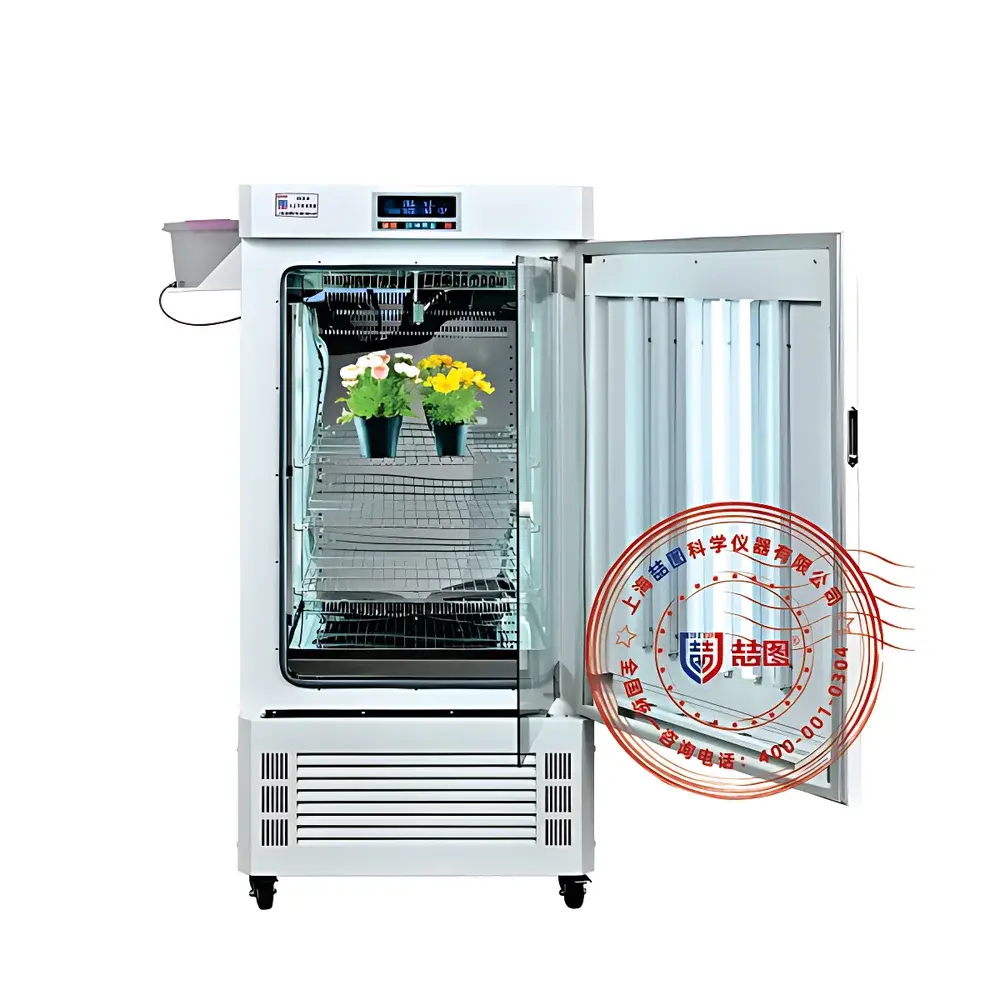
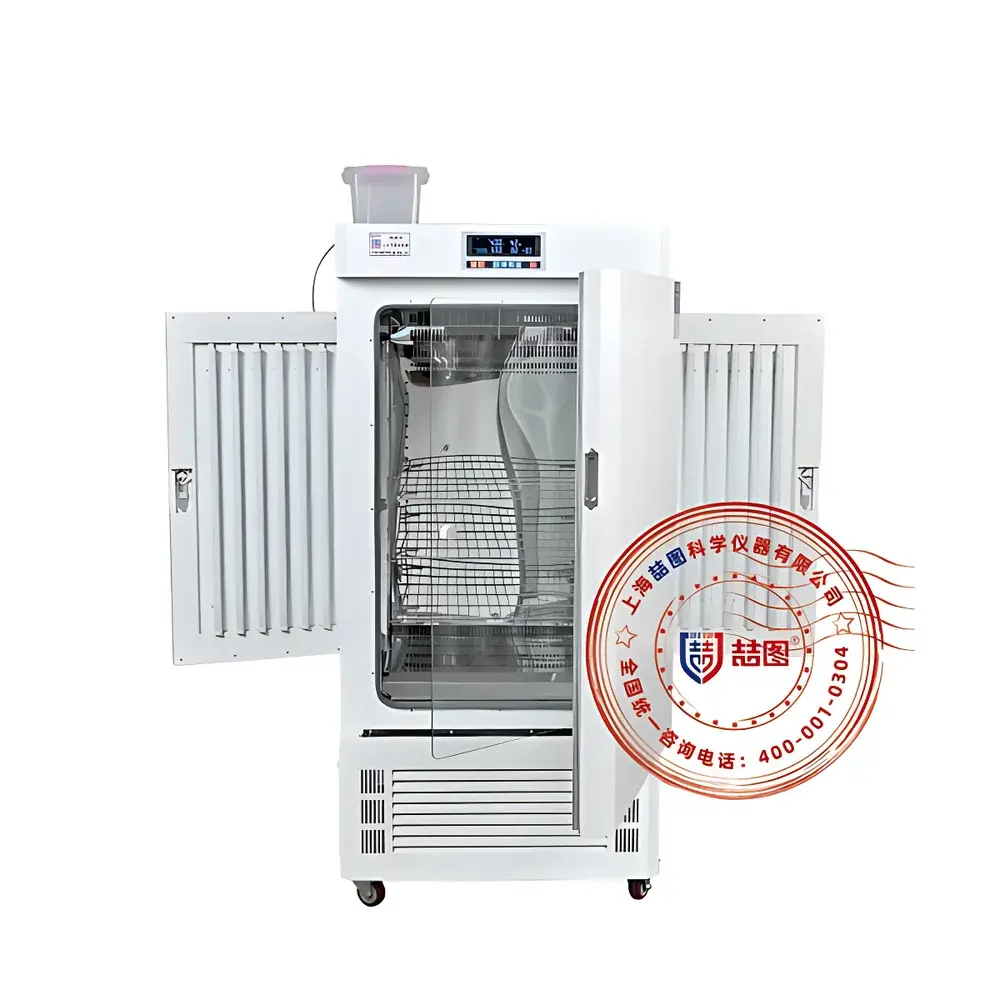
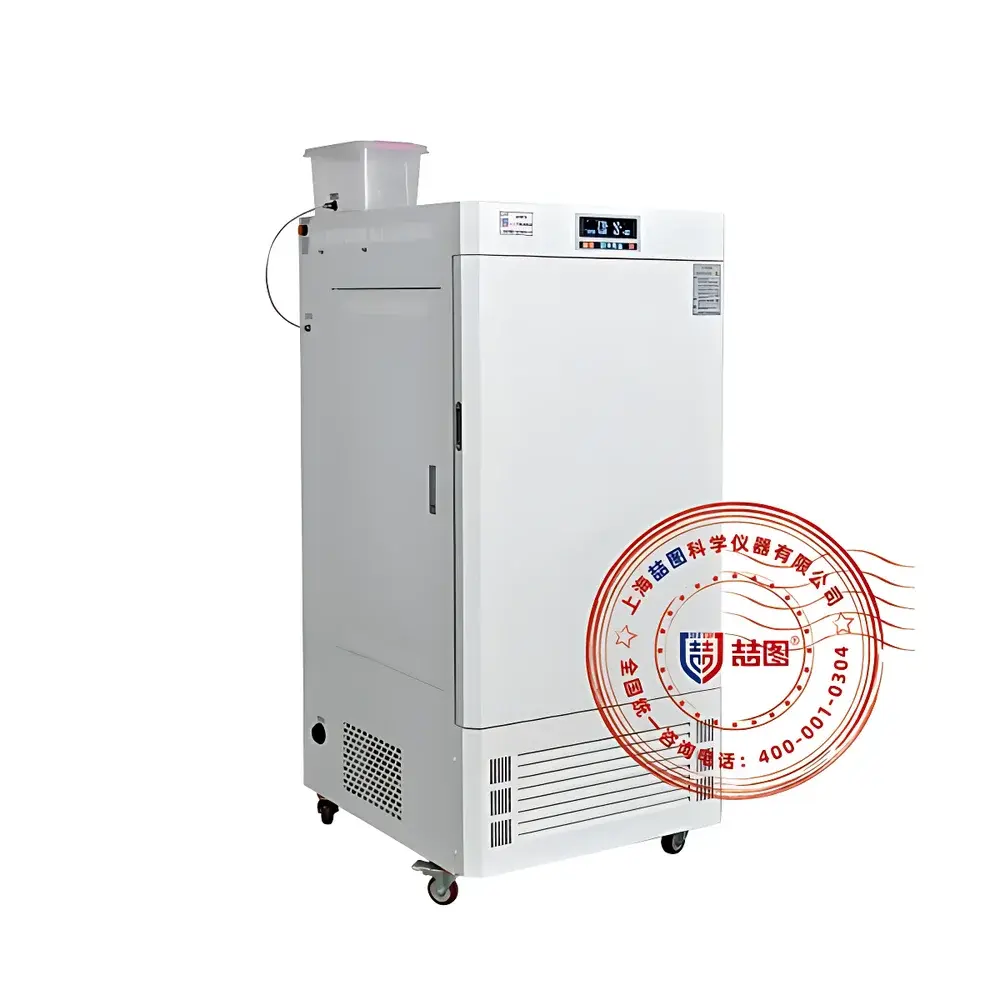
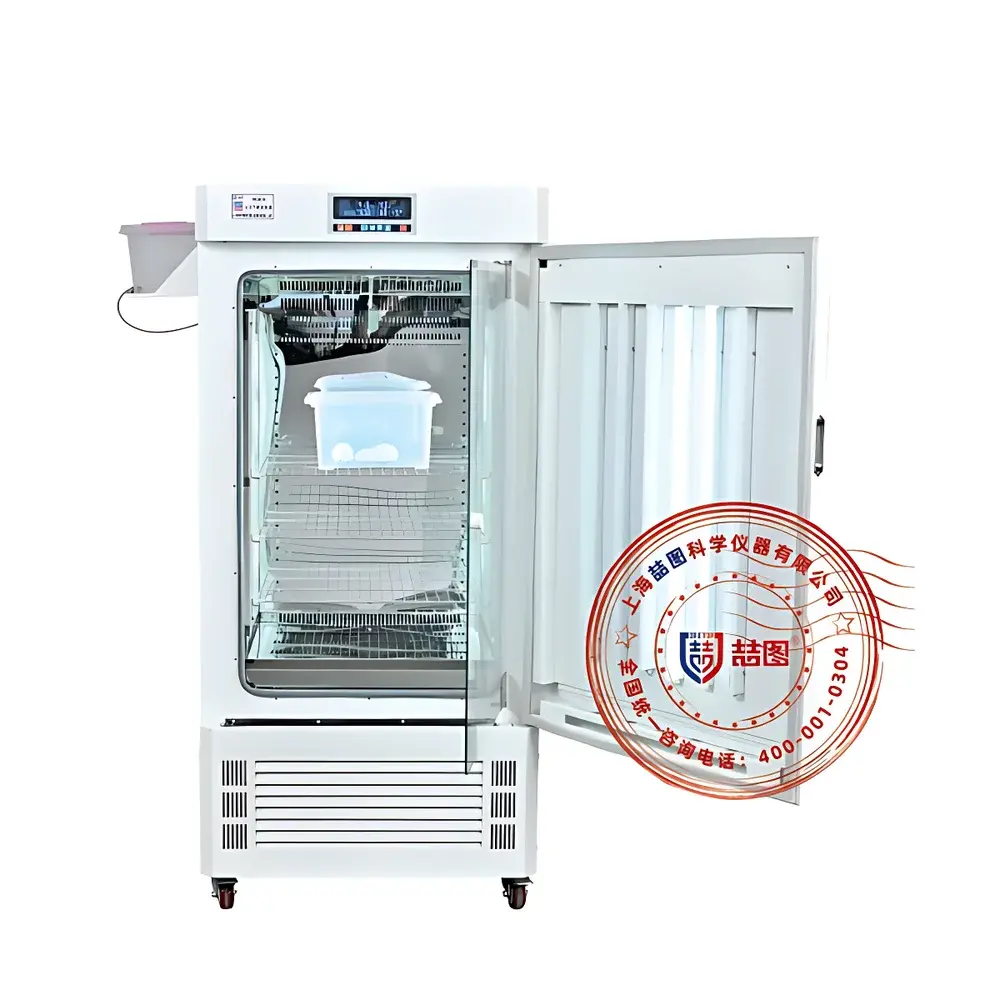
DRETOP ZRQ-1000AI Intelligent Artificial Climate Incubator
| Brand | DRETOP |
|---|---|
| Origin | Shanghai, China |
| Manufacturer Type | Direct Manufacturer |
| Instrument Type | Fully Automated (Programmable) |
| Capacity | 1000 L |
| Temperature Range | 10–50 °C (with illumination), 0–50 °C (without illumination) |
| Humidity Range | 30–95 % RH |
| Illuminance Range | 0–25,000 lx |
| External Dimensions (W×D×H) | 1410 × 890 × 1950 mm |
| Refrigerant | CFC-free eco-friendly refrigerant |
| Control System | Color TFT touchscreen with 30-segment programmable logic |
| Lighting System | Multi-spectral LED array (R/G/B/W/V configurable) |
| Air Circulation | Dual-axis laminar airflow with axial fans |
| Safety Features | Dual-stage temperature/humidity alarms, door-open detection, power-fail memory, auto-defrost, compressor thermal protection |
Overview
The DRETOP ZRQ-1000AI Intelligent Artificial Climate Incubator is a high-precision, fully programmable environmental simulation system engineered for reproducible, long-term biological experimentation under tightly controlled photoperiodic, thermal, and hygric conditions. Based on the principle of active climate emulation—integrating solid-state LED spectral lighting, PID-regulated dual-circuit refrigeration/heating, and closed-loop humidity control via ultrasonic humidification—the ZRQ-1000AI delivers stable, traceable environmental profiles essential for plant phenotyping, seed germination studies, microbial culture standardization, insect rearing, BOD incubation, and preclinical biostability testing. Its 1000 L working volume supports multi-tiered experimental scalability while maintaining compliance with core requirements of ISO 17025-accredited laboratories, GLP-compliant study protocols, and OECD Test Guidelines (e.g., TG 208, 227) for terrestrial plant testing.
Key Features
- 30-segment programmable controller enabling precise time- and condition-based sequencing of temperature, humidity, illumination intensity, and spectral composition across diurnal cycles.
- Multi-spectral LED lighting system with independently addressable red (620–780 nm), blue (420–490 nm), green (490–570 nm), white (400–830 nm), and violet (380–450 nm) channels—configurable per user-defined ratios to replicate natural or experimental light spectra.
- Intelligent P.I.D. climate control with real-time adaptive compensation for door opening, load variation, and ambient drift; temperature stability ±0.5 °C, humidity control resolution 0.1 % RH.
- Dual-door observation design: outer magnetic seal door with nano-thermal insulation gasket and inner tempered glass door—enabling non-intrusive monitoring without compromising internal uniformity.
- Stainless steel interior (304 grade), adjustable stainless steel shelves, and rounded internal corners facilitate autoclave-compatible cleaning and eliminate microbial harborage zones.
- Comprehensive data integrity architecture: minute-interval logging (temperature, humidity, illuminance, alarm status, UV exposure), encrypted local storage, and timestamped audit trail compliant with FDA 21 CFR Part 11 Annex 11 principles.
Sample Compatibility & Compliance
The ZRQ-1000AI accommodates heterogeneous sample formats—including Petri dishes, multi-well plates, tissue culture flasks, hydroponic trays, and small-organism enclosures—within its uniformly ventilated chamber. Its operational envelope meets ASTM E1826 (Standard Practice for Laboratory Environmental Chambers), ISO 8573-1 (compressed air quality for humidification systems), and ICH Q5C (stability testing of biotechnological products). The unit is CE-marked for EMC and LVD directives and conforms to EN 61000-6-3/6-4 for electromagnetic compatibility in laboratory environments. Optional validation packages support IQ/OQ/PQ documentation aligned with GMP Annex 15 and USP .
Software & Data Management
The embedded color touchscreen interface supports bilingual operation (English/Chinese), hierarchical password protection (three-tier access levels), and screen-lock timeout to prevent unintended input. Real-time trend visualization displays the past 60 minutes of temperature and illuminance data; historical logs are exportable via USB 2.0 as CSV or PDF. Alarm records—including high/low temperature, humidity deviation, illumination shortfall, door-open duration, and water reservoir depletion—are time-stamped and retained for ≥12 months. Firmware updates are performed offline via secure firmware signature verification. Remote monitoring integration (Modbus RTU/TCP) is available upon request for centralized lab infrastructure management.
Applications
- Plant science: Controlled-environment phenotyping, photomorphogenesis assays, circadian rhythm studies, and abiotic stress modeling (drought, heat, low-light).
- Microbiology: Standardized aerobic/anaerobic culture incubation per CLSI M22-A3 and ISO 7218, including BOD5 determination under defined oxygen and temperature regimes.
- Agricultural R&D: Seed viability testing, tissue culture propagation (e.g., orchid meristems), and post-harvest physiology experiments.
- Entomology & aquaculture: Developmental staging of Drosophila, Tribolium, or Artemia under species-specific thermal-hygric-photo profiles.
- Regulatory compliance: Stability storage per ICH Q1A(R3) for pharmaceutical intermediates and reference standards at 25 °C/60 % RH or 30 °C/65 % RH.
FAQ
What is the temperature uniformity specification across the 1000 L chamber?
Temperature uniformity is validated per ISO 16750-2:2012 methodology and typically achieves ≤±0.8 °C at setpoint (25 °C, 60 % RH) when measured at nine standardized points (center + eight corners); full validation report available upon request.
Can the LED spectrum be customized beyond the standard RGBW configuration?
Yes—custom spectral combinations including UVA (320–400 nm), UVB (280–320 nm), and far-red (700–750 nm) modules can be integrated at order stage; spectral output is calibrated and certified with NIST-traceable spectroradiometer reports.
Is remote access or network connectivity supported out-of-the-box?
The base unit operates standalone; Ethernet or Wi-Fi-enabled remote supervision modules are optional accessories supporting SNMP v3 and TLS 1.2-secured data transmission.
How does the system handle condensation during high-humidity cycling?
An integrated anti-condensation heating film on the inner glass door, combined with dynamic dew-point tracking in the humidification algorithm, prevents fogging and ensures optical clarity throughout 30–95 % RH operation.
What maintenance intervals are recommended for long-term reliability?
Compressor oil and refrigerant charge require inspection every 24 months; ultrasonic humidifier transducers and HEPA-grade air filters should be replaced annually; calibration of temperature/humidity sensors is advised every 6 months per ISO/IEC 17025 internal procedure.
Related Products




