
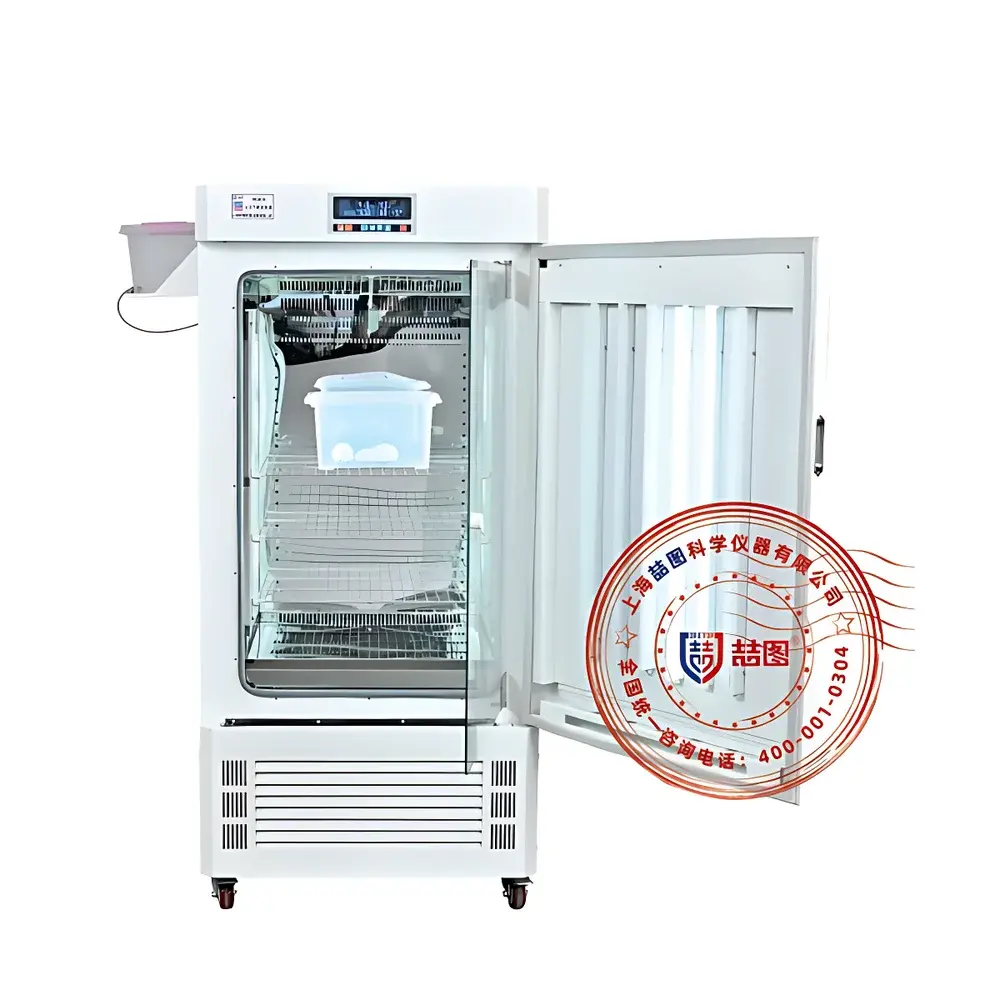
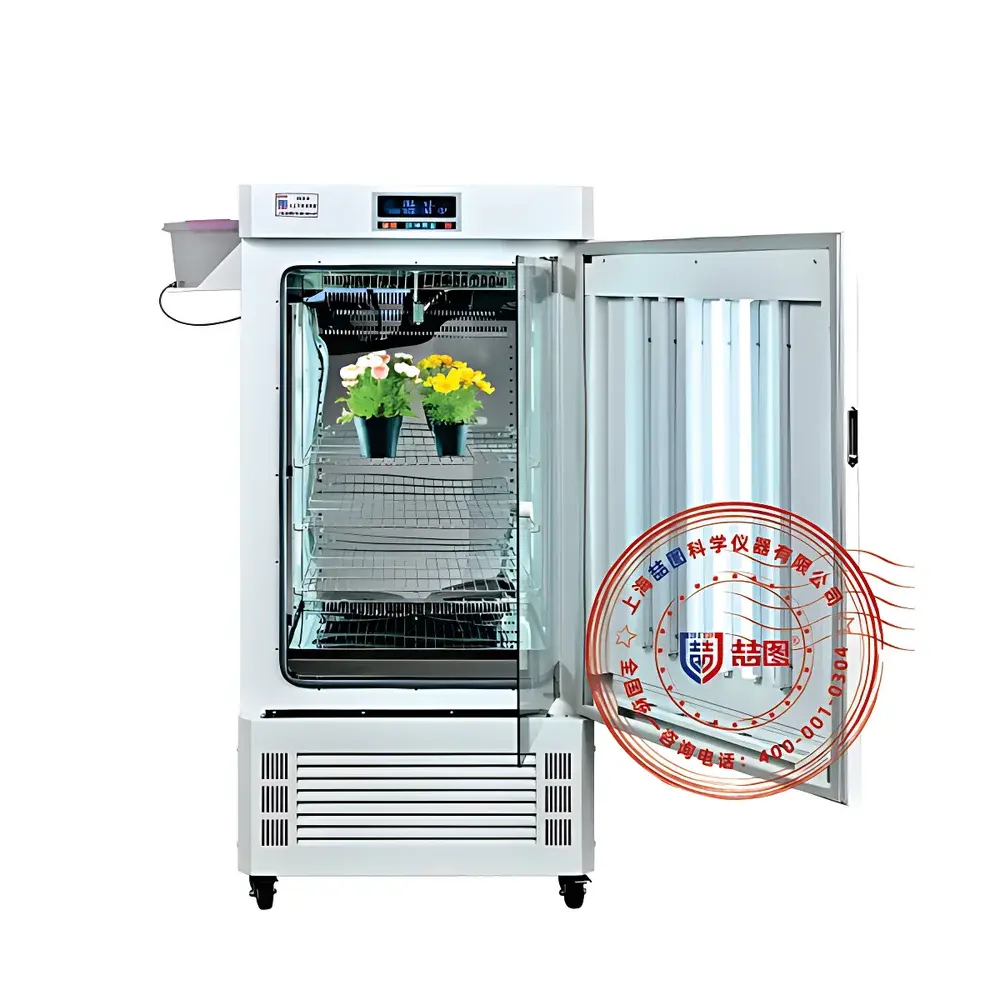
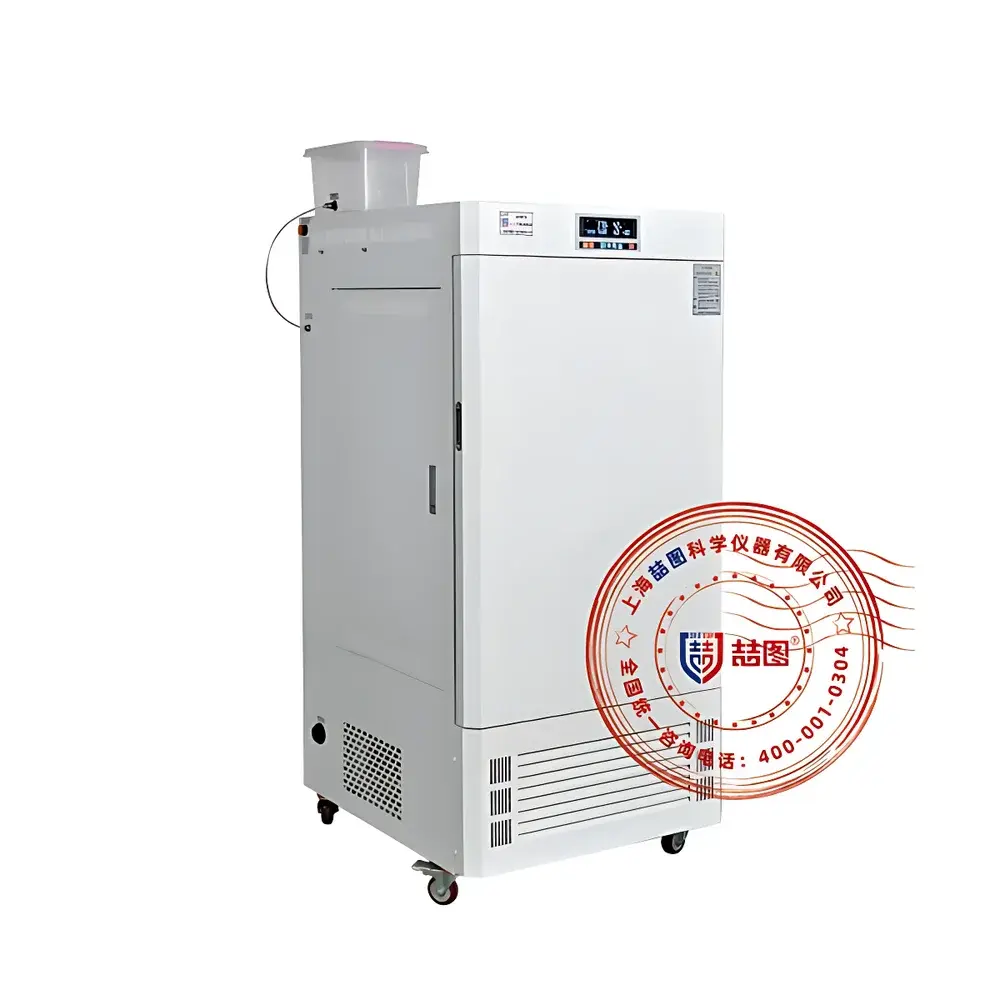
DRETOP ZRQ-250VTS Artificial Climate Incubator
| Brand | DRETOP |
|---|---|
| Origin | Shanghai, China |
| Manufacturer Type | Direct Manufacturer |
| Instrument Type | Fully Automatic Programmable Incubator |
| Capacity | 250 L |
| Temperature Range | 10–65°C (with illumination), 0–50°C (without illumination) |
| Temperature Uniformity | ±0.5°C |
| Humidity Range | 30–95% RH |
| Illumination Intensity | 0–15,000 lx |
| External Dimensions | 780 × 745 × 1560 mm |
| Control Interface | Color Touchscreen |
| Light Source | Aluminum-Substrate SMD LED Panels |
| Illumination Mode | Vertical Illumination with Adjustable Shelf-Mounted Light Bars |
| Illumination Control | Digital Lux Display, Stepless Intensity Adjustment |
Overview
The DRETOP ZRQ-250VTS Artificial Climate Incubator is a fully programmable, multi-parameter environmental simulation system engineered for precision-controlled plant physiology, microbiological culture, entomological rearing, and BOD testing applications. It integrates independent regulation of temperature, relative humidity, and spectrally tunable LED illumination within a single chamber—enabling reproducible emulation of diurnal cycles, seasonal light regimes, and controlled stress environments. Unlike conventional incubators limited to thermal regulation, the ZRQ-250VTS employs a dual-mode thermal management architecture: refrigeration-based cooling (using R134a-free eco-friendly refrigerant) combined with nickel-chromium heating elements and PID-driven fuzzy logic control. This ensures stable setpoint adherence across dynamic illumination states—critical when simulating photoperiod-dependent developmental transitions in photomorphogenesis or circadian rhythm studies.
Key Features
- Color touchscreen controller with intuitive GUI supporting up to 30 programmable segments per cycle, enabling precise scheduling of temperature, humidity, and illumination intensity over time.
- Vertical illumination system using high-efficiency aluminum-substrate SMD LED panels mounted directly on adjustable shelves—allowing fine-tuned vertical positioning (±15 mm micro-adjustment) to optimize photon flux distribution across sample height.
- Triple-layer thermal insulation: outer cold-rolled steel cabinet, inner 304 stainless-steel chamber, and nano-composite magnetic door seal—achieving ≤0.5°C spatial temperature uniformity (measured per ISO 15271:2021 Annex B) and minimizing thermal leakage during door opening.
- Intelligent defrost management: automated periodic defrost cycles triggered by evaporator frost accumulation sensors—ensuring uninterrupted refrigeration performance without manual intervention.
- Robust safety architecture including over-temperature/over-humidity alarms, power-fail data retention (EEPROM-backed parameter memory), compressor delay protection (≥3 min start-stop interval), and real-time fault logging compliant with GLP audit requirements.
- Energy-optimized air circulation: low-noise axial fan coupled with laminar baffle design—guaranteeing uniform airflow velocity (<0.2 m/s variation across chamber volume) and eliminating localized hot/cold spots.
Sample Compatibility & Compliance
The ZRQ-250VTS accommodates standard tissue culture vessels (e.g., Petri dishes, Magenta boxes, multi-well plates), hydroponic trays, insect rearing cages (up to 20 cm height), and BOD bottles. Its stainless-steel interior (electropolished finish, Ra ≤ 0.8 µm) supports autoclave-compatible cleaning protocols and meets ISO 14644-1 Class 8 cleanroom compatibility for low-bioburden applications. The unit complies with IEC 61000-6-3 (EMC emissions), IEC 61000-6-2 (immunity), and UL 61010-1 safety standards. Humidity control accuracy (±3–5% RH deviation at 60% RH, 25°C) aligns with ASTM E104-20 for hygrometric validation. Optional IQ/OQ documentation packages are available for FDA 21 CFR Part 11–compliant installation and operational qualification.
Software & Data Management
Data logging occurs at user-defined intervals (1–60 min) with timestamped storage of temperature, humidity, illumination intensity, and alarm events on internal 4 GB flash memory—retaining ≥12 months of continuous operation records. USB export enables CSV-formatted data transfer for integration into LIMS or statistical analysis platforms (e.g., JMP, GraphPad Prism). Remote monitoring via optional Ethernet/Wi-Fi module supports Modbus TCP protocol for SCADA-level integration. Audit trail functionality logs all parameter modifications—including operator ID, timestamp, pre-change/post-change values—meeting ALCOA+ principles for data integrity in regulated environments.
Applications
- Plant science: Photoperiod-controlled germination assays, shade avoidance response quantification, and LED spectral optimization studies (R:G:B:V:W ratios configurable per experimental group).
- Microbiology: Aerobic/anaerobic culture under defined humidity (e.g., fungal sporulation at 90% RH), thermotolerance profiling across 0–65°C gradients.
- Entomology: Diapause induction via programmed temperature-humidity-light cycling; larval development rate analysis under variable photoperiods.
- Environmental testing: Standardized BOD5 determination per ISO 5815-1:2019; algal growth inhibition assays under controlled PAR irradiance.
- Biopharma: Stability testing of biologics under ICH Q1A(R2) intermediate conditions (25°C/60% RH) with illumination stress (1.2 million lux·hr).
FAQ
What illumination spectra are supported, and can custom wavelengths be configured?
The ZRQ-250VTS uses modular SMD LED arrays emitting discrete peaks in red (630–660 nm), blue (440–470 nm), green (520–540 nm), violet (400–420 nm), and white (4000 K CCT). Custom spectral blends (e.g., 4:1 R:B ratio for lettuce photomorphogenesis) are factory-configurable upon order.
Is the humidity system validated per ISO 17025 requirements?
Yes—optional NIST-traceable hygrometer calibration certificates (including uncertainty budgets per GUM) are available. Chamber humidity mapping reports document spatial uniformity across nine predefined test points.
How does the system handle power interruptions during long-term experiments?
Upon power restoration, the controller resumes the last active program segment with no parameter reset. All logged data remains intact due to non-volatile memory architecture and automatic battery-backed real-time clock.
Can the incubator operate continuously for >30 days without maintenance?
Yes—validated for unattended 24/7 operation up to 90 days. Compressor duty cycle is dynamically throttled based on thermal load, and auto-defrost prevents ice accumulation beyond 72-hour intervals.
What regulatory documentation is provided for GMP/GLP compliance?
Standard delivery includes Factory Acceptance Test (FAT) report, electrical safety certification, and material declarations (RoHS/REACH). IQ/OQ/PQ protocols, 21 CFR Part 11 validation packages, and raw calibration data are available as add-on services.
Related Products




