
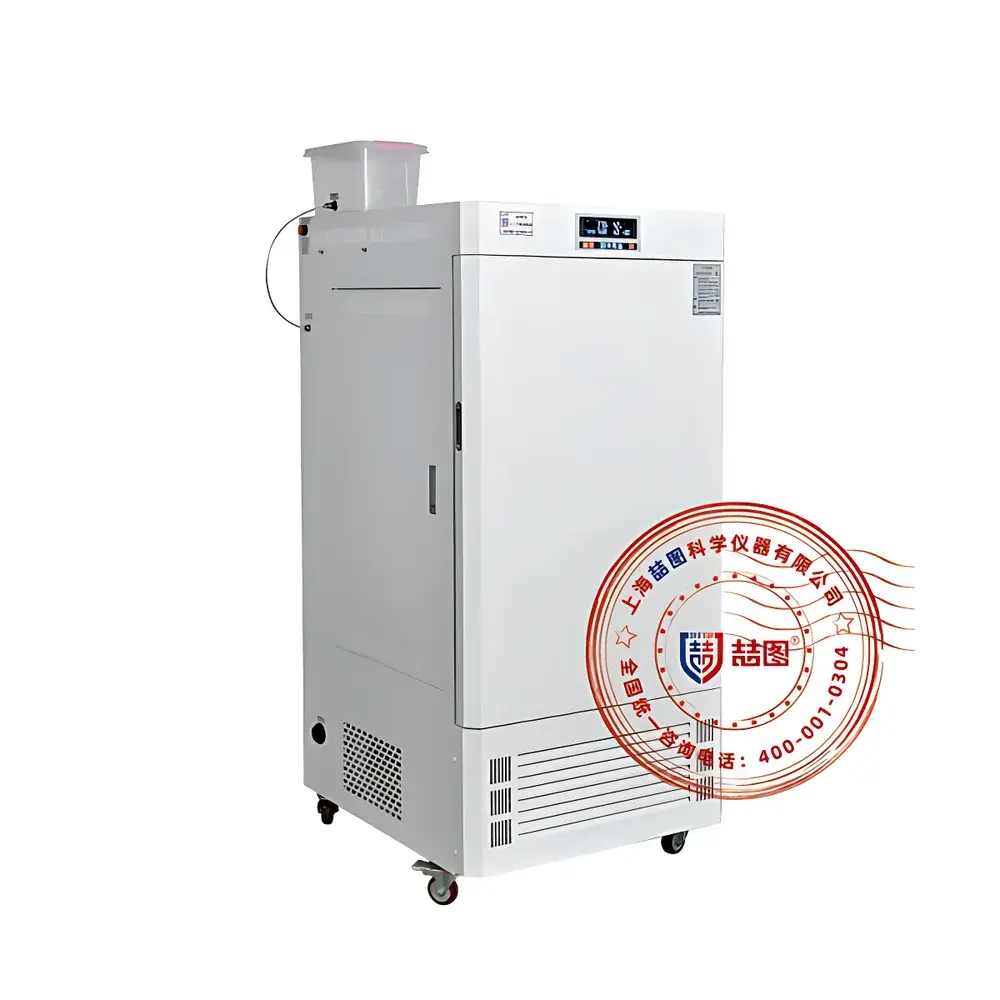
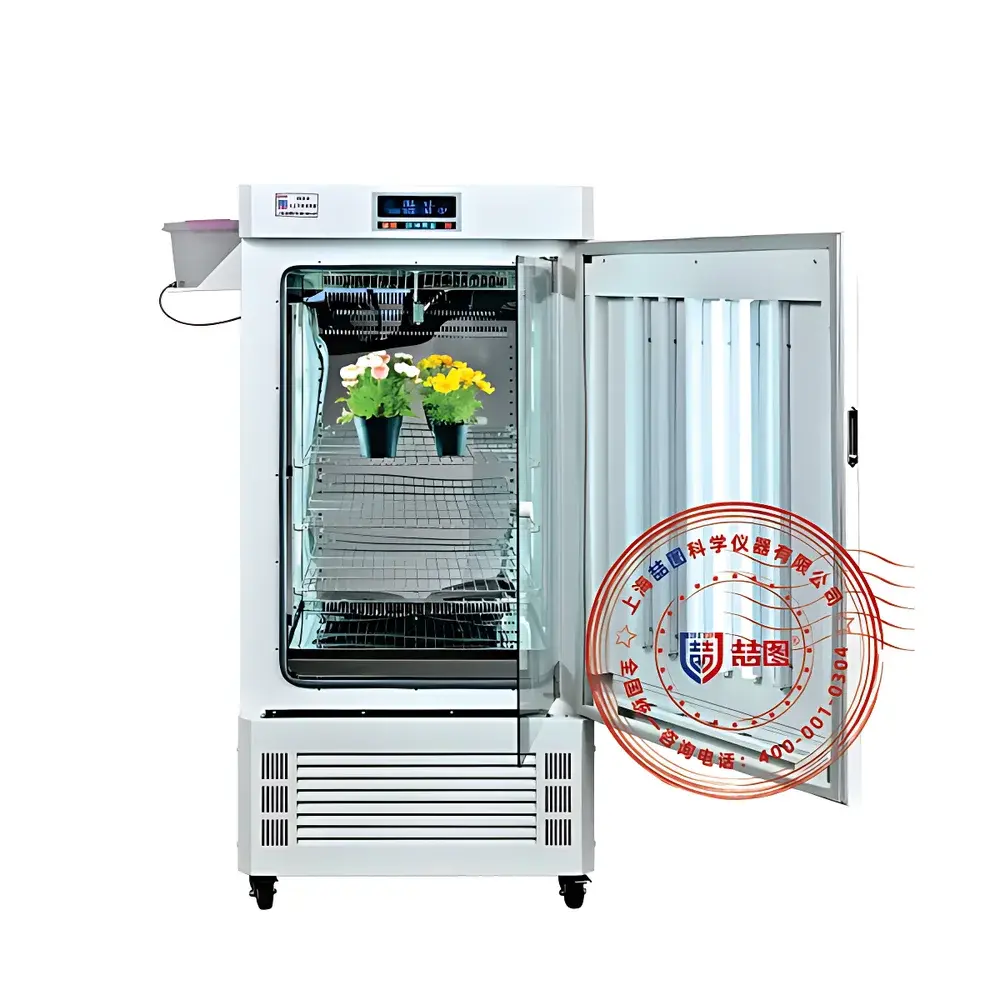
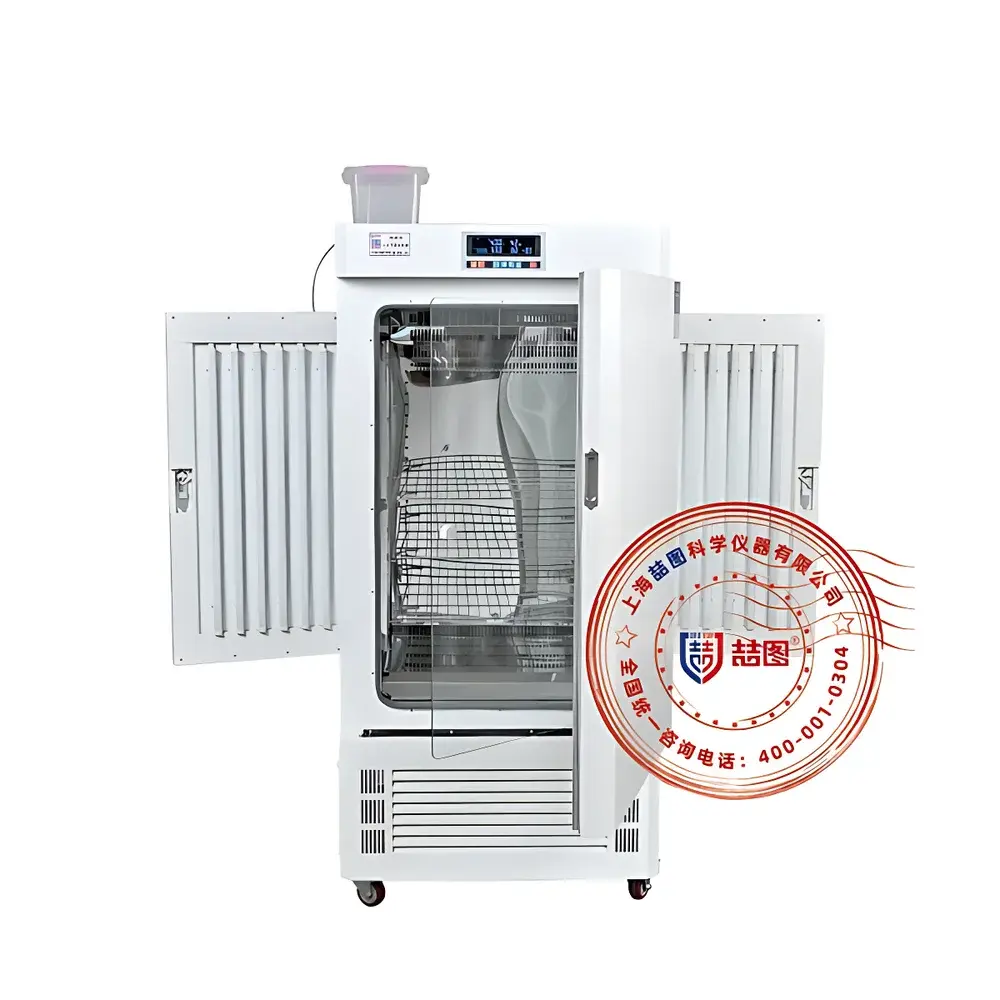
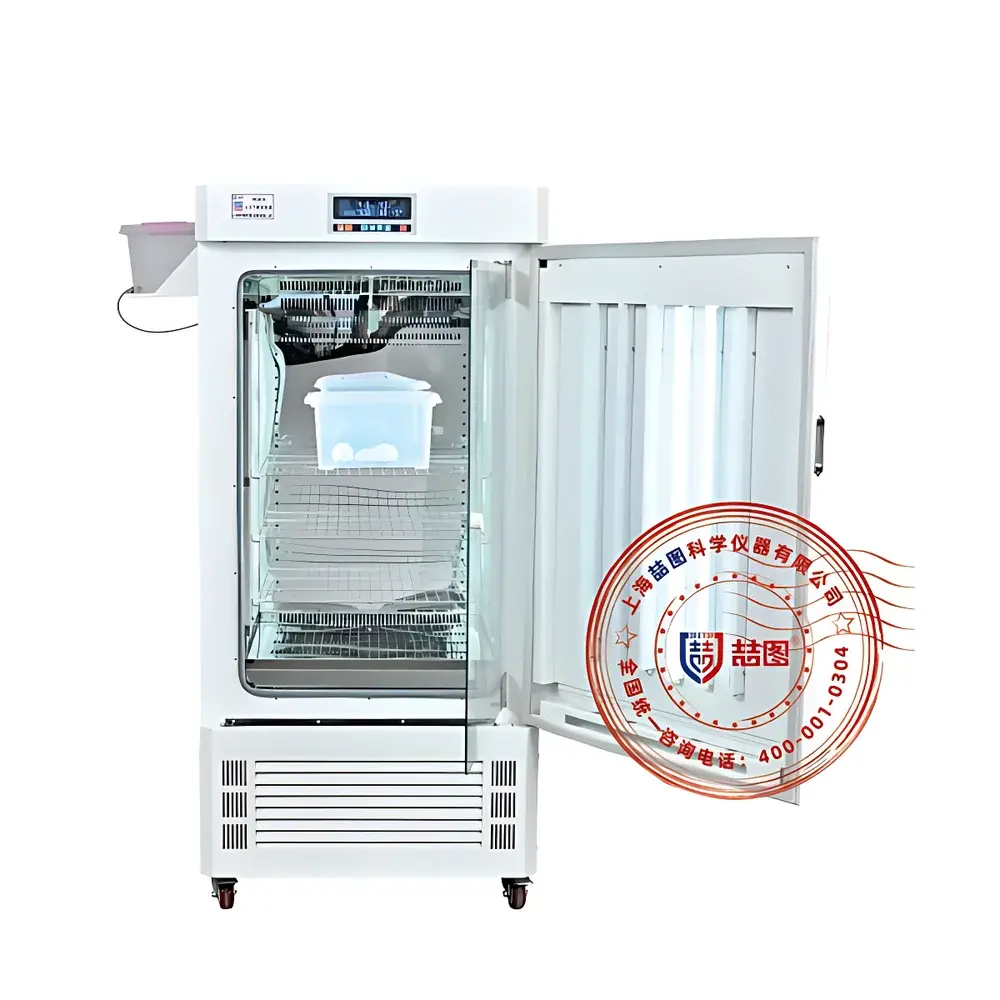
DRETOP ZRQ-400 Artificial Climate Incubator
| Brand | DRETOP |
|---|---|
| Origin | Shanghai, China |
| Manufacturer Type | Direct Manufacturer |
| Instrument Type | Fully Automated (Programmable) |
| Capacity | 400 L |
| Temperature Range | 10–50 °C (with illumination), 0–50 °C (without illumination) |
| Humidity Range | 30–95 % RH |
| Illumination Intensity | 0–25,000 lx |
| External Dimensions (W×D×H) | 910 × 855 × 1830 mm |
| Power Supply | AC 220 V, 50 Hz |
| Control System | Color Touchscreen Interface (AI Series) |
| Illumination Source | Adjustable Multi-Spectral LED Array (White, Red, Blue, Green, Violet Configurable) |
| Air Circulation | Dual-axis forced convection with axial fan and optimized duct design |
| Refrigerant | CFC-free, eco-friendly R134a |
| Heating Element | Nickel-Chromium Alloy Sheathed Heater |
| Safety Features | Over-temperature alarm, door-open detection, low-water alarm, power-fail data retention, programmable password protection |
Overview
The DRETOP ZRQ-400 Artificial Climate Incubator is a fully programmable, multi-parameter environmental simulation system engineered for precision-controlled life science research. It integrates independent regulation of temperature, relative humidity, spectral illumination intensity, and timing sequences within a single sealed chamber—enabling reproducible emulation of diurnal cycles, seasonal light regimes, and controlled microclimates. Based on the principle of active thermoelectric-humidification coupling and digitally modulated solid-state LED irradiation, the ZRQ-400 delivers stable, traceable, and auditable environmental conditions essential for plant phenotyping, seed germination studies, microbial culture standardization, BOD testing, insect rearing, and tissue culture protocols. Its architecture complies with fundamental requirements of GLP-compliant laboratories, supporting structured experimental workflows under ISO/IEC 17025-aligned quality management frameworks.
Key Features
- Full-spectrum, multi-channel LED illumination system with independently configurable red (620–780 nm), blue (420–490 nm), green (490–570 nm), violet (380–450 nm), and white (400–830 nm) light sources—enabling wavelength-specific photobiological experiments;
- 30-segment programmable controller supporting dual-mode scheduling: fixed-point operation or dynamic day/night cycling with independent setpoints for temperature, humidity, and light intensity;
- High-fidelity microprocessor-based PID control algorithm with adaptive tuning, delivering ±0.5 °C temperature stability and ±3–5 % RH humidity accuracy across the full operating range;
- Dual-door observation design featuring tempered glass inner door and magnetic nano-sealed outer door—minimizing thermal disturbance during sample monitoring;
- Stainless steel interior chamber (304 grade) with adjustable, removable stainless steel shelves; radius-rounded corners and seamless welds for effective autoclave-compatible cleaning and bio-contamination prevention;
- Eco-optimized refrigeration loop using R134a refrigerant and high-efficiency hermetic compressor with auto-defrost cycle and compressor runtime protection logic;
- Integrated data logging with 1-minute sampling interval, storing temperature, humidity, illumination level, alarm status, and operational events for ≥30 days without external storage;
- Multi-tier security architecture including time-limited access control, three-stage password authentication, screen lock timeout, and audit-trail-enabled parameter change history.
Sample Compatibility & Compliance
The ZRQ-400 accommodates a broad spectrum of biological specimens—from Petri dishes, multi-well plates, and Magenta boxes to larger plant pots (up to Ø25 cm) and small vertebrate/invertebrate enclosures. Its uniform airflow distribution (validated per ASTM E1545-20 Annex A1 methodology) ensures minimal vertical/horizontal gradients in temperature and humidity across the 400 L working volume. The unit meets CE marking requirements for electrical safety (EN 61010-1) and electromagnetic compatibility (EN 61326-1). While not certified to FDA 21 CFR Part 11 out-of-the-box, its embedded logging system supports validation for Part 11 compliance when deployed with qualified electronic signature protocols and backup archival procedures. All firmware and calibration routines are traceable to NIST-traceable reference standards via documented internal verification procedures.
Software & Data Management
The AI-series touchscreen interface provides real-time visualization of environmental parameters via dynamic trend graphs (last 60 minutes), historical data export (CSV format via USB port), and event-triggered alarm notifications (audible + on-screen). Logged datasets include timestamped values for chamber temperature, relative humidity, illumination intensity (in lux), door-open duration, water tank status, and system fault codes. User-defined report templates allow extraction of daily summaries, deviation alerts, and compliance checklists aligned with ISO 17025 clause 7.7 (result reporting). Remote monitoring is achievable via optional RS485 Modbus RTU integration for SCADA-level laboratory infrastructure interoperability.
Applications
- Controlled-environment plant physiology: photomorphogenesis, shade avoidance responses, circadian rhythm entrainment, and abiotic stress modeling (drought, heat, cold acclimation);
- Standardized seed germination assays per ISTA Rules and OECD Seed Health Testing Guidelines;
- Microbial growth kinetics under defined hygrothermal-light conditions for antibiotic susceptibility profiling or biofilm formation studies;
- BOD5 incubation per APHA Standard Methods 5210B, maintaining strict 20 ± 0.5 °C and darkness requirements;
- Insect colony maintenance (e.g., Drosophila, Tribolium) with precise photoperiod control for developmental staging;
- Preclinical cell culture support for light-sensitive assays (e.g., optogenetics vector expression, photodynamic therapy screening).
FAQ
What is the maximum illumination intensity achievable at the center of the chamber?
The ZRQ-400 achieves up to 25,000 lx at the geometric center under full-white LED output, measured per CIE S 023/E:2013 photometric practice using a calibrated lux meter.
Can the unit operate continuously for extended periods (e.g., >30 days)?
Yes—the system is rated for uninterrupted operation with built-in thermal overload protection, compressor duty-cycle limiting, and redundant sensor validation to ensure long-term stability.
Is humidity control available during illumination cycles?
Yes. Humidity generation and regulation remain fully active regardless of illumination state; the control system dynamically compensates for latent heat load introduced by LED drivers.
Does the incubator support third-party software integration?
Via RS485 Modbus RTU (optional module), it enables bidirectional communication with LabArchives, LabVantage, or custom Python/Node-RED automation pipelines.
How is calibration verified and maintained?
Factory calibration certificates are provided for temperature, humidity, and illumination sensors. Users may perform field verification using NIST-traceable portable references; recalibration intervals are recommended annually or after major maintenance.



