
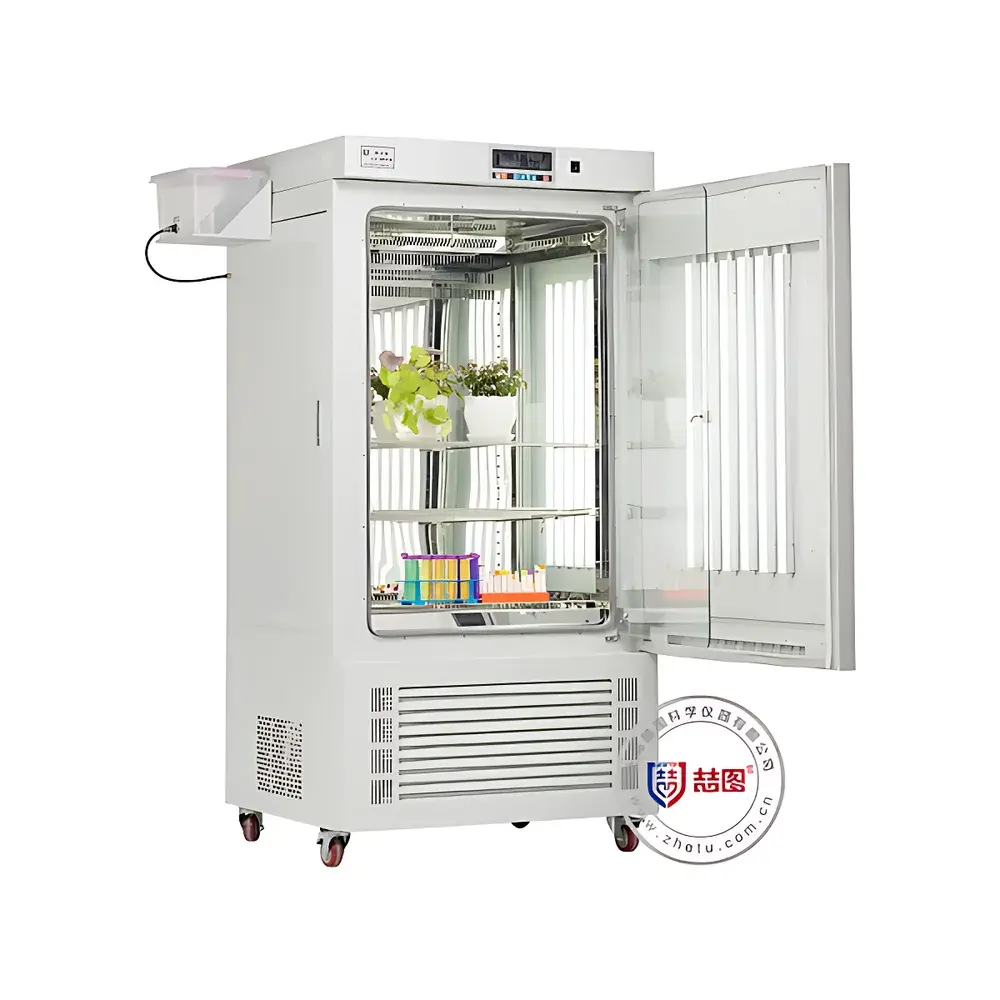
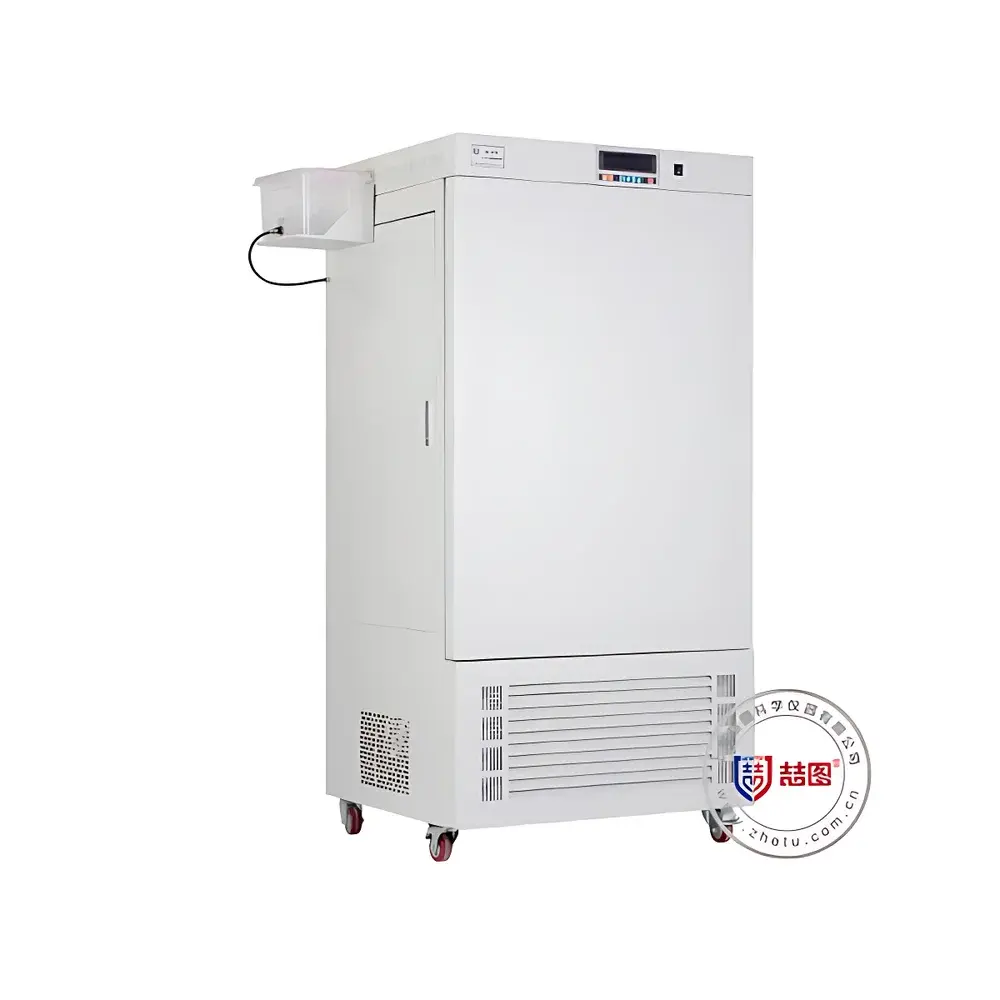
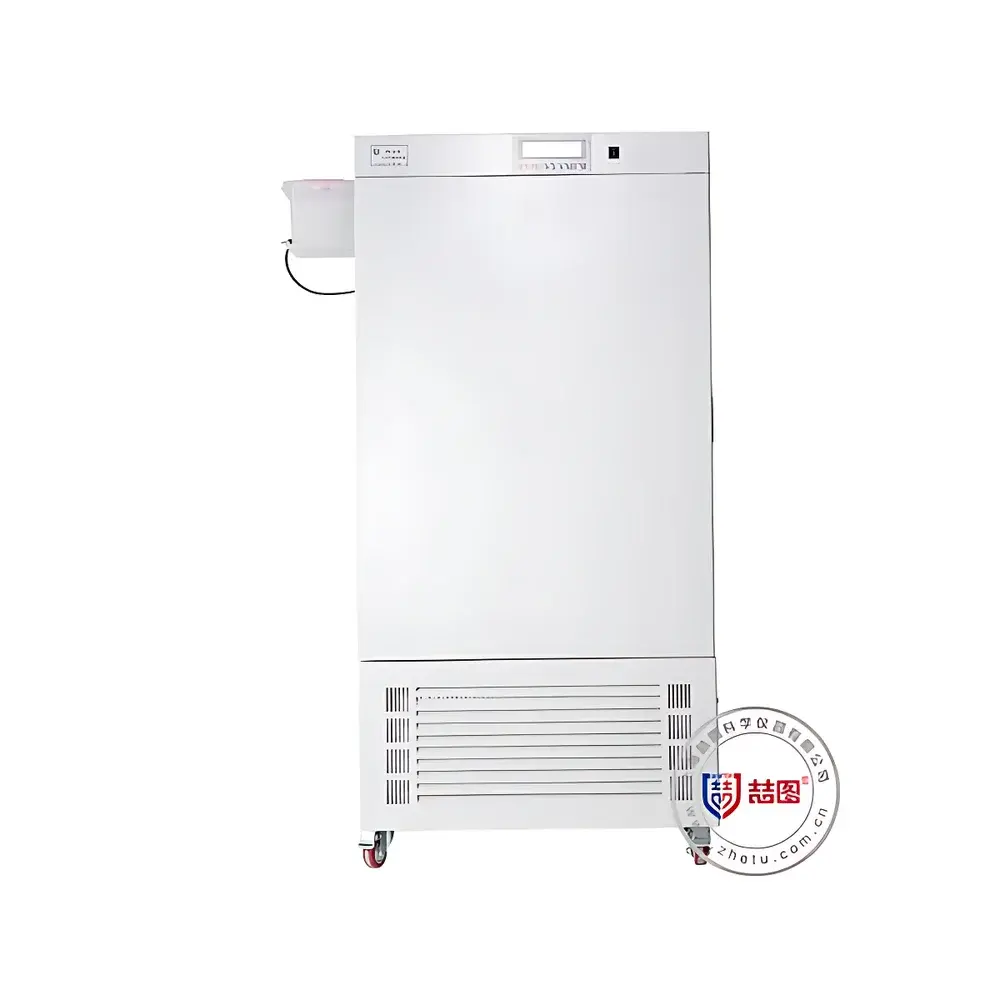
DRETOP ZRQ.CP-400 Multifunctional Water-Jacketed CO₂ Incubator
| Brand | DRETOP |
|---|---|
| Origin | Shanghai, China |
| Manufacturer Type | Direct Manufacturer |
| Instrument Type | Water-Jacketed CO₂ Incubator |
| CO₂ Detection | Infrared (IR) Sensor |
| Temperature Control Range | 10–50 °C (with illumination), 0–60 °C (without illumination) |
| Temperature Uniformity | Not specified |
| CO₂ Concentration Control Range | 0–20% vol |
| Humidity Control Range | 50–95% RH |
| Humidity Accuracy | ±3–5% RH |
| Chamber Capacity | 400 L |
| External Dimensions (W×D×H) | 680 × 550 × 1050 mm |
| Heating Method | Water-jacketed |
| Humidification Method | Reservoir-based natural evaporation |
| Sterilization Options | Optional 90 °C moist-heat cycle and ozone-free UV lamp |
| Lighting | Adjustable white-light illumination (0–25,000 lx) |
| Control System | Microprocessor-based with programmable day/night cycles, timer modes (run time, constant-temp time, constant-humidity time), and environmental compensation algorithms |
| Safety Features | Low-water-level cutoff, door-heating anti-condensation, independent over-temperature protection, power-failure memory, and real-time alarm logging |
Overview
The DRETOP ZRQ.CP-400 is a high-integrity, multifunctional water-jacketed CO₂ incubator engineered for demanding cell culture applications requiring simultaneous control of carbon dioxide concentration, temperature, relative humidity, and photoperiod. Unlike standard CO₂ incubators, the ZRQ.CP-400 integrates full-spectrum white-light illumination (0–25,000 lx) with precise diurnal cycling capability—enabling simulation of natural light-dark transitions essential for chronobiological studies, plant tissue culture, and circadian rhythm investigations. Its water-jacketed thermal architecture provides superior thermal stability during power interruptions: the integrated water reservoir acts as a high-thermal-mass buffer, maintaining chamber setpoint within ±0.5 °C for >4 hours after complete power loss—a critical advantage in regions with unstable grid infrastructure or for long-term unattended experiments. The system employs non-oxygen-dependent infrared (IR) CO₂ sensing, eliminating catalytic sensor drift and cross-sensitivity to volatile organic compounds or ambient oxygen fluctuations. This ensures stable CO₂ regulation (±0.1% vol accuracy) even during frequent door openings, with recovery to 5% CO₂ achieved in ≤3 minutes post-closure.
Key Features
- Water-jacketed thermal design with ceramic fiber insulation and mirror-polished stainless-steel interior (304 grade), featuring seamless corner radii for contamination control and ease of decontamination.
- Dual-mode humidification system: large-area reservoir base with optimized evaporation surface area; achieves ≥95% RH at 37 °C and recovers to target humidity within ≤8 minutes after 30-second door opening.
- Integrated anti-condensation door heating prevents moisture accumulation on inner glass, mitigating microbial ingress pathways without compromising optical clarity.
- Programmable lighting module supports user-defined irradiance profiles and timed photoperiods (e.g., 16h light / 8h dark), compatible with phytochrome-sensitive assays and stem cell differentiation protocols.
- Comprehensive safety architecture: low-water-level interlock with automatic heater shutoff, independent dual-limit temperature monitoring, audible/visual alarms for deviation thresholds, and non-volatile memory retention of all operational parameters during power failure.
- Modular construction enables vertical stacking (with structural reinforcement kit) and optional left/right hinge reversal to accommodate constrained lab layouts.
Sample Compatibility & Compliance
The ZRQ.CP-400 accommodates standard tissue culture formats—including T-flasks (up to T225), multiwell plates (6–96-well), Petri dishes, roller bottles, and custom bioreactor inserts—within its 400 L working volume. Its ISO Class 5–compatible air filtration (HEPA-grade inlet filter, ≥99.998% efficiency at 0.3 µm) and ozone-free UV sterilization ensure sterility maintenance per ISO 14644-1 and EU GMP Annex 1 requirements. The incubator supports GLP-compliant workflows via configurable alarm logging, user-accessible calibration records (temperature, CO₂, humidity), and optional RS485 interface for integration into centralized laboratory information management systems (LIMS). While not pre-certified to FDA 21 CFR Part 11, its audit-trail-capable firmware (with timestamped event logs and operator ID tagging) meets foundational data integrity criteria for regulated environments.
Software & Data Management
The embedded microcontroller delivers intuitive menu-driven operation via a high-contrast monochrome LCD interface. Three operational modes are supported: fixed-setpoint, day/night cyclic, and multi-step programmable sequences—with up to 32 segments per program. All parameters—including temperature ramp rates, CO₂ setpoints, humidity targets, light intensity, and dwell times—are independently adjustable with 0.1 °C/0.1% RH resolution. Real-time data display includes current values, deviation from setpoint, elapsed run time, and active alarm status. Optional RS485 communication allows remote parameter adjustment, data export (CSV format), and synchronization with external environmental monitoring platforms. Firmware supports traceable calibration using NIST-traceable reference standards, with calibration history stored in non-volatile memory.
Applications
This incubator serves advanced research domains where environmental multiplexing is essential: mammalian stem cell expansion under physiologically relevant O₂/CO₂/humidity gradients; photomodulated differentiation of induced pluripotent stem cells (iPSCs); circadian entrainment studies in primary neuronal cultures; long-term co-culture models involving photosynthetic symbionts; and high-throughput plant protoplast regeneration. Its robust thermal inertia and rapid CO₂ recovery make it suitable for hybrid workflows combining manual interventions (e.g., media changes) with automated imaging systems. Regulatory users leverage its reproducible humidification and validated 90 °C moist-heat cycle (optional) for routine chamber decontamination aligned with USP and ISO 13408-1 sterility assurance guidelines.
FAQ
What distinguishes water-jacketed from air-jacketed CO₂ incubators?
Water-jacketed designs provide superior thermal stability during power outages due to water’s high specific heat capacity; they maintain setpoint longer but require periodic water maintenance. Air-jacketed units offer faster temperature recovery after door openings but lack thermal inertia.
Is the IR CO₂ sensor susceptible to poisoning or drift?
No—the infrared detection principle is inherently immune to catalyst poisoning, oxygen interference, or humidity-induced signal attenuation, ensuring long-term measurement fidelity without recalibration intervals.
Can humidity be controlled independently of temperature?
Yes—the microprocessor decouples humidity actuation from thermal control, enabling stable 50–95% RH operation across the full 0–60 °C range, including sub-ambient conditions when used with optional refrigeration modules.
How is sterility maintained during routine operation?
Sterility is enforced through HEPA-filtered intake air, continuous ozone-free UV irradiation of recirculated air and reservoir vapor, and seamless stainless-steel chamber geometry minimizing microbial harborage sites.
Does the incubator support regulatory compliance documentation?
It generates timestamped operational logs, stores calibration metadata, and permits configuration of alarm thresholds—all accessible via front-panel interface or RS485 export—to support internal audit readiness and quality system documentation.





