
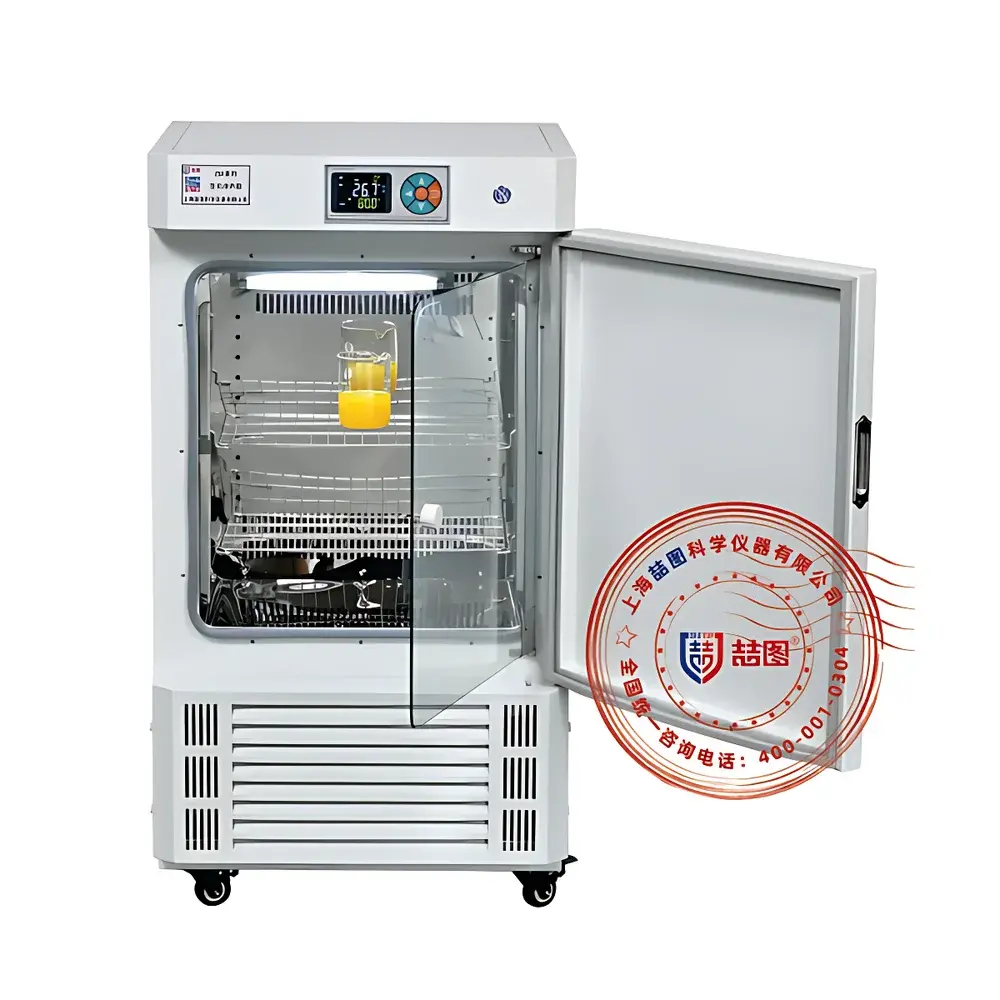
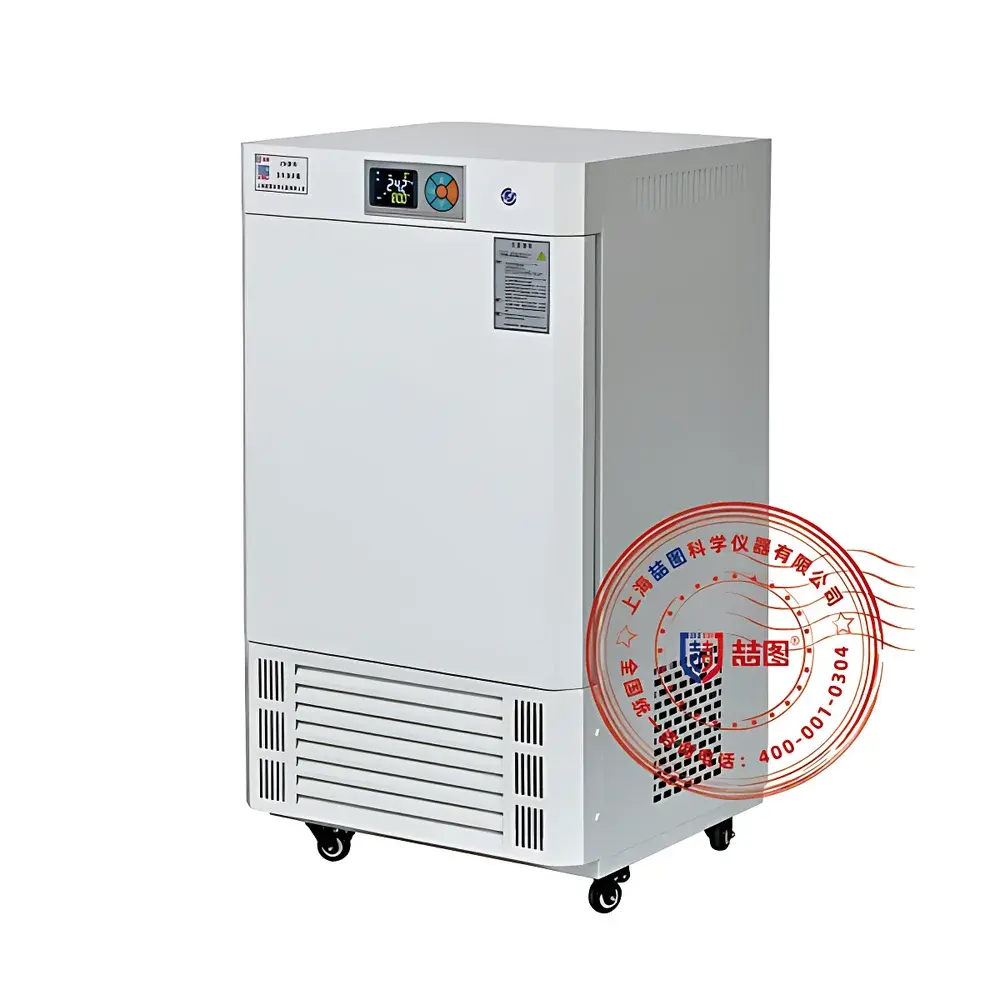
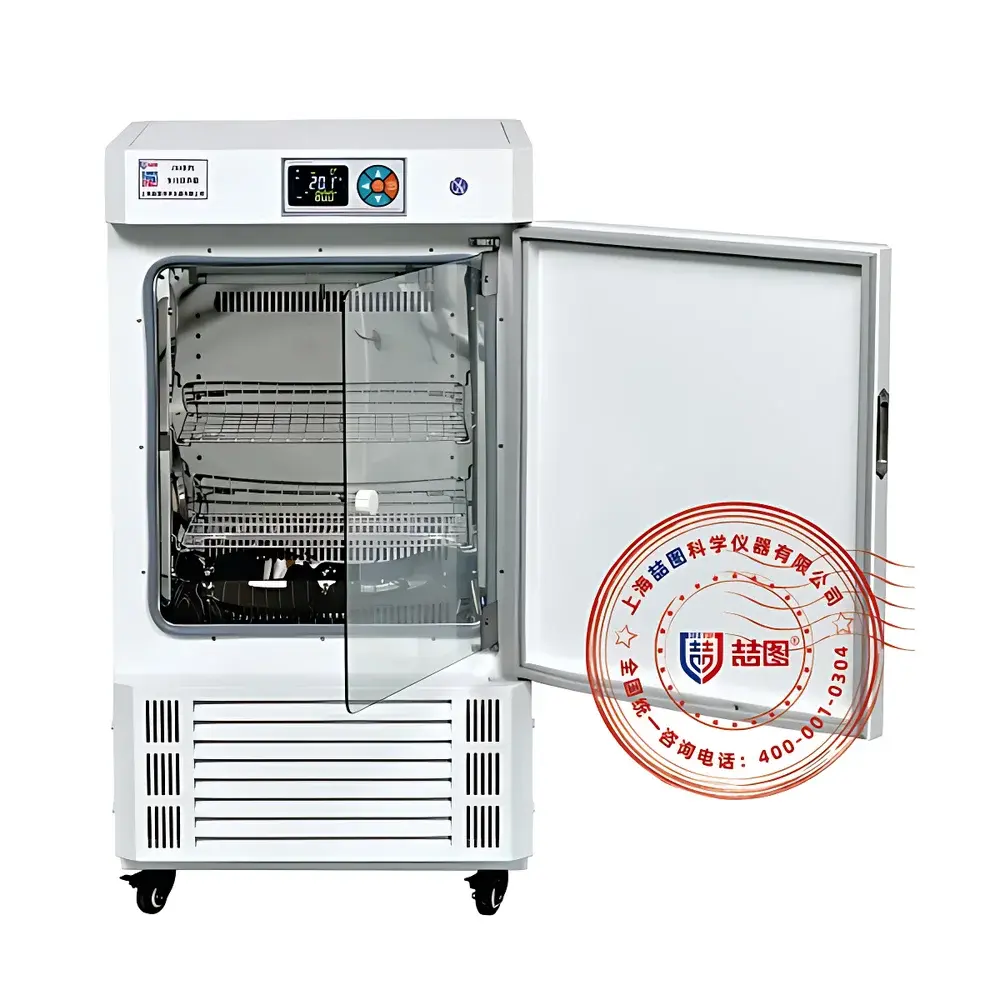
DRETOP ZSH-150 Biochemical Incubator
| Brand | DRETOP |
|---|---|
| Origin | Shanghai, China |
| Manufacturer Type | Direct Manufacturer |
| Model | ZSH-150 |
| Heating Method | Air-jacketed (ambient-air heating) |
| Cooling Method | Compressor-based refrigeration |
| Air Circulation | Forced convection (ducted axial fan system) |
| Temperature Range | 0–70 °C |
| Temperature Accuracy | ±0.1 °C |
| Temperature Uniformity | ±1 °C (empty chamber, at 25 °C) |
| Temperature Fluctuation | ±0.5 °C |
| Chamber Capacity | 150 L |
| External Dimensions (W×D×H) | 620 × 645 × 1374 mm |
| Power Supply | AC 220 V, 50 Hz |
| Input Power | 1350 W |
| Interior Dimensions (W×D×H) | 680 × 550 × 950 mm |
| Shelving | 3 adjustable stainless-steel shelves |
| Insulation | High-density polyurethane foam (≥60 mm thickness) |
| Refrigerant | R134a (CFC-free, ozone-friendly) |
Overview
The DRETOP ZSH-150 Biochemical Incubator is a precision-engineered, dual-mode temperature-controlled environment chamber designed for stable, long-term incubation of biological and biochemical samples under rigorously maintained thermal conditions. Utilizing an air-jacketed heating system combined with a hermetically sealed, high-efficiency compressor-based refrigeration unit, the ZSH-150 achieves bidirectional temperature regulation across a broad operational range of 0–70 °C — enabling year-round use in diverse laboratory settings without seasonal performance compromise. Its forced convection architecture employs a ducted axial fan and optimized internal airflow channels to ensure uniform thermal distribution, critical for reproducible microbial growth, enzymatic assays, BOD determination, and cell-based studies where spatial temperature gradients may introduce experimental bias. The incubator complies with fundamental design principles outlined in ISO 15195:2013 (laboratory equipment — requirements for temperature-controlled chambers) and supports GLP-compliant workflows through configurable alarm thresholds, parameter retention, and power-failure recovery logic.
Key Features
- Microprocessor-based P.I.D. temperature controller with 0.1 °C resolution and real-time digital display; user interface includes intuitive touch-sensitive keys and multi-parameter screen layout.
- Air-jacketed heating system ensures rapid thermal response and minimal overshoot during setpoint transitions; independent compressor cooling provides precise sub-ambient capability down to 0 °C.
- Triple-layer door construction: outer magnetic seal gasket, middle insulating layer, and inner tempered glass viewport — minimizing heat loss and enabling non-intrusive observation without thermal disturbance.
- Stainless-steel interior chamber (304 grade) with seamless welding and fully removable, height-adjustable shelves — facilitating thorough cleaning, autoclave-compatible decontamination, and residue-free maintenance.
- Robust mechanical design featuring heavy-duty casters with directional lock mechanism and reinforced cold-rolled steel outer casing — ensuring stability during transport and long-term benchtop operation.
- Compressor protection suite including start-delay circuitry, stop-interval control, and self-diagnostic monitoring — extending service life and reducing unplanned downtime.
Sample Compatibility & Compliance
The ZSH-150 accommodates standard microbiological culture vessels (Petri dishes, test tubes, flasks), BOD bottles (with optional IP67-rated BOD socket), and multi-well plates. Its 150 L working volume supports up to three full-height stainless-steel shelves, each rated for ≥15 kg load capacity. The chamber’s ±1 °C uniformity (measured per ASTM E2737-20 Annex A1 protocols at 25 °C, empty load) meets acceptance criteria for ISO/IEC 17025-accredited calibration laboratories performing environmental validation. Optional accessories — including RS485 serial interface, independent overtemperature cut-off module, and GLP-compliant data logging via external USB recorder — enable integration into regulated environments governed by FDA 21 CFR Part 11 and EU Annex 11 requirements.
Software & Data Management
While the ZSH-150 operates via embedded firmware without proprietary cloud software, its RS485 communication port (optional) supports Modbus RTU protocol for integration with third-party SCADA or LIMS platforms. All operational parameters — including setpoint, actual temperature, elapsed time, and alarm status — are retained in non-volatile memory during power interruption and automatically restored upon restart. The controller logs timestamped event records (e.g., door open/close, overtemperature alert, compressor activation) accessible via front-panel navigation — satisfying basic audit-trail requirements for ISO 9001 and GxP-aligned quality systems. For advanced traceability, users may connect a compatible thermal printer (optional) to generate hard-copy session reports compliant with ALCOA+ data integrity principles.
Applications
- Biochemical oxygen demand (BOD5) testing per APHA Standard Methods 5210B and ISO 5815-1:2019.
- Microbial cultivation for pharmaceutical QC (e.g., sterility testing per USP , microbial limit tests per USP ).
- Enzyme kinetics and protein stability studies requiring tightly controlled thermal profiles.
- Seed germination, plant tissue culture, and entomological rearing protocols governed by OECD TG 208 and EPPO PM 7/102 guidelines.
- Environmental simulation for ecotoxicology assays (e.g., algal growth inhibition per ISO 8692).
- Educational labs conducting undergraduate microbiology, molecular biology, and environmental science experiments.
FAQ
What is the minimum operating temperature, and does it support sub-ambient conditions?
Yes — the ZSH-150 achieves stable operation from 0 °C to 70 °C, enabled by its dedicated compressor-based refrigeration system.
Is the incubator suitable for BOD testing, and what accessories are required?
Yes — when equipped with the optional IP67-rated BOD socket, the unit provides isolated, moisture-resistant power delivery to BOD bottles inside the chamber.
How is temperature uniformity validated, and what standards apply?
Uniformity is verified using nine calibrated PT100 sensors per ASTM E2737-20 Annex A1 methodology; results are documented in factory acceptance test reports supplied with each unit.
Can the ZSH-150 be integrated into a centralized lab monitoring network?
Via the optional RS485 interface and Modbus RTU protocol, it supports read-only parameter polling and alarm status reporting within existing building management or LIMS infrastructures.
Does the unit comply with energy efficiency and environmental regulations?
Yes — it uses R134a refrigerant (zero ODP, low GWP), meets China’s GB 12021.2-2015 energy labeling requirements, and conforms to IEC 60335-2-89 safety standards for laboratory appliances.




