
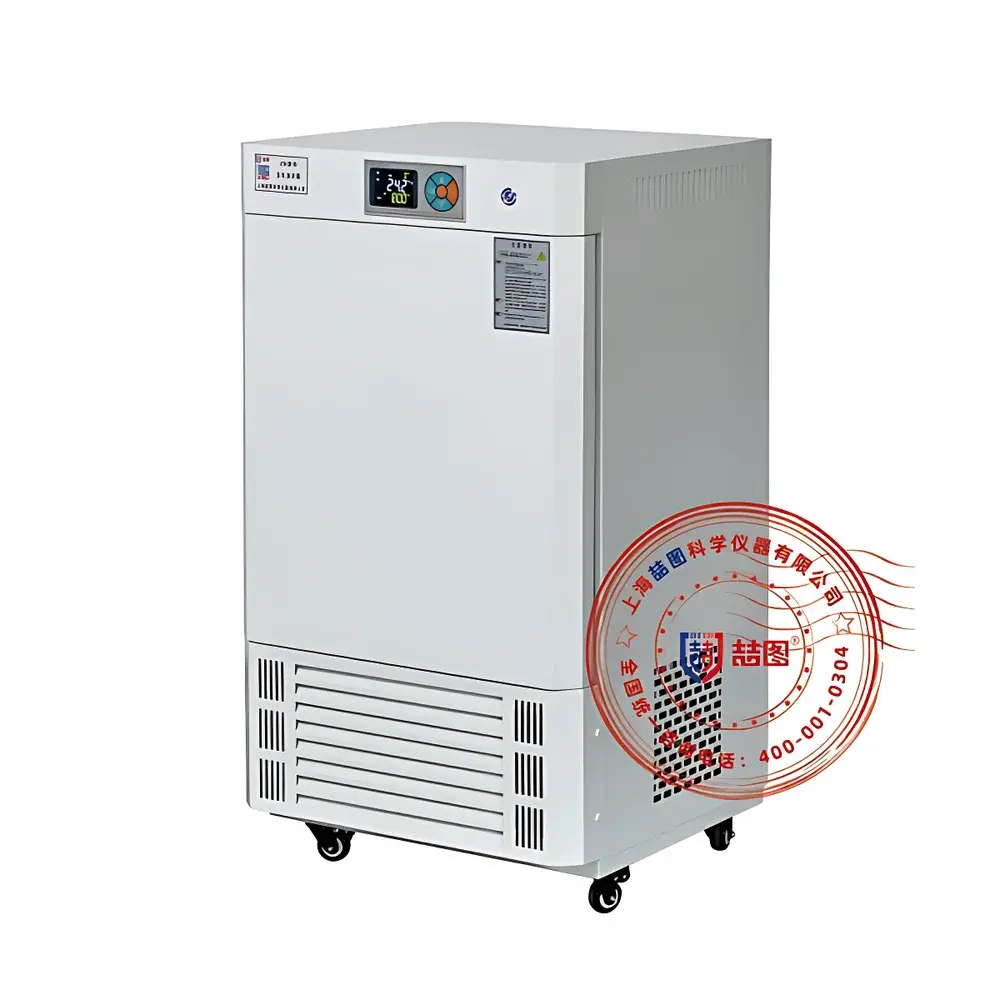
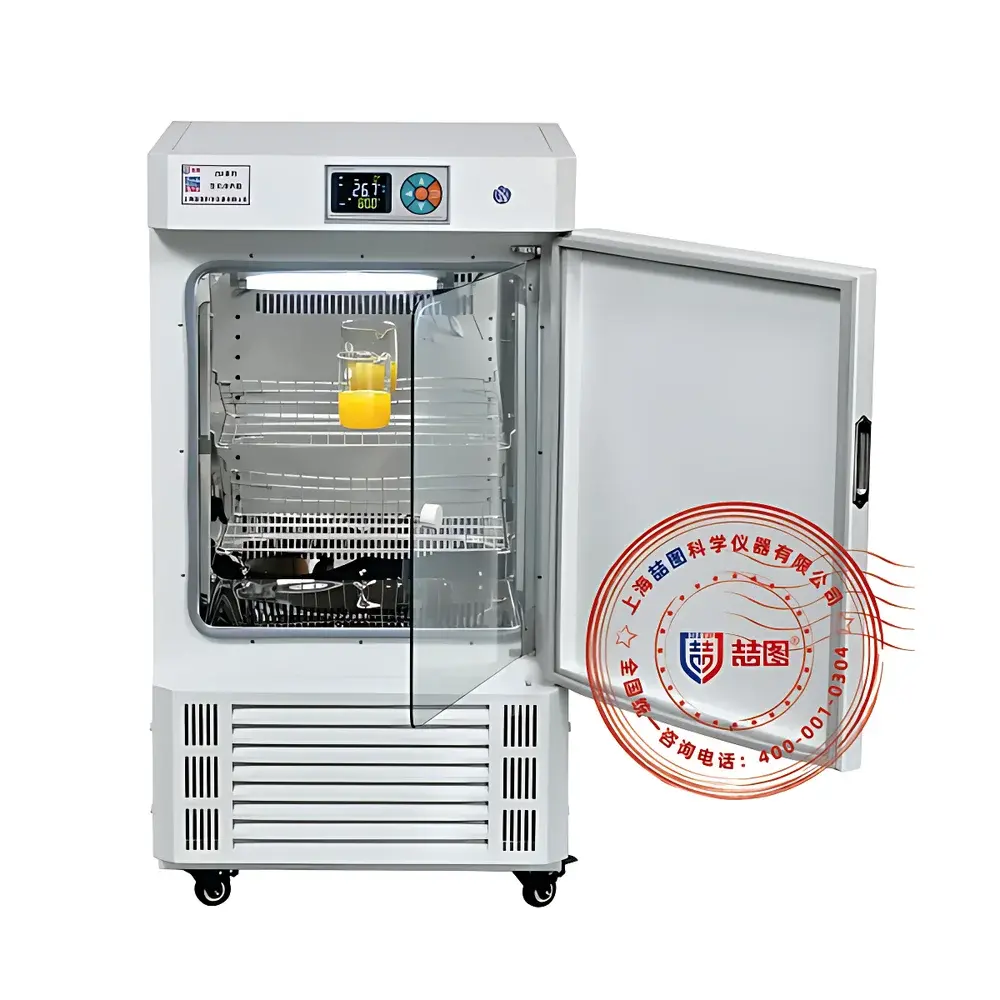
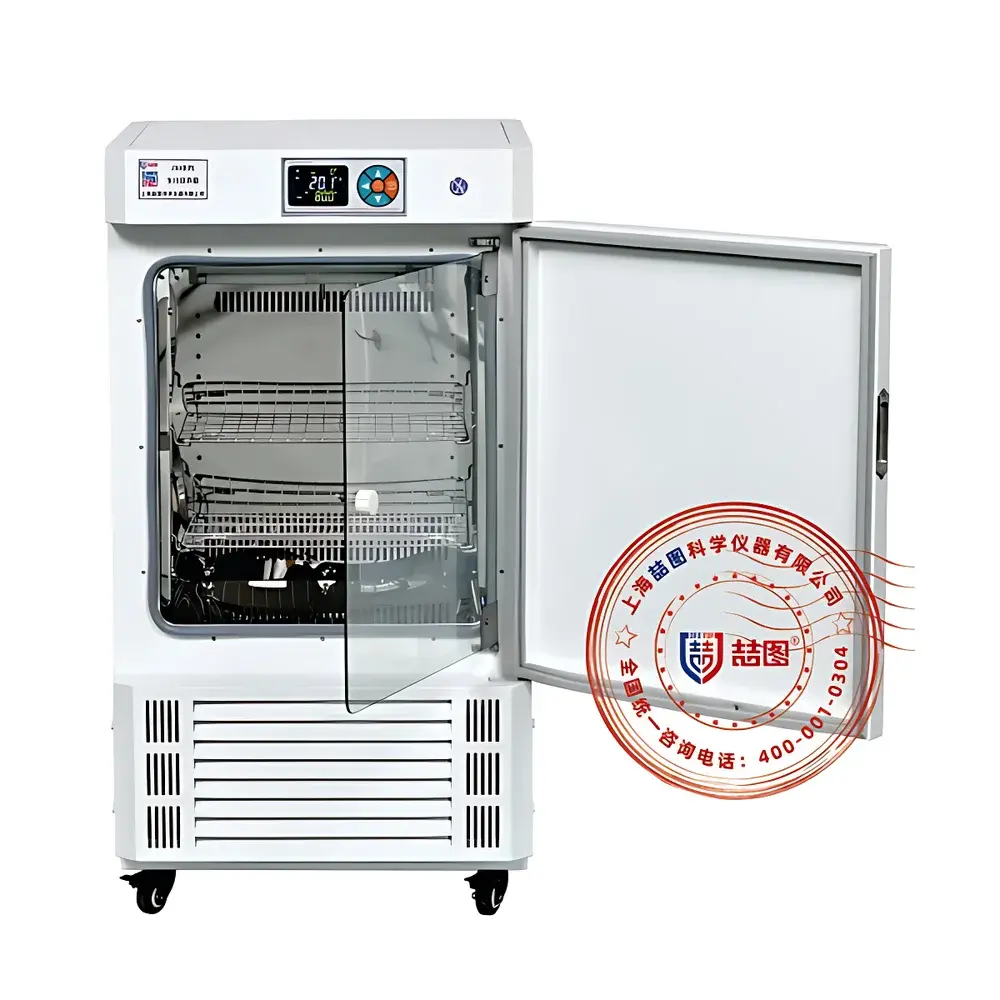
DRETOP ZSH-150P Programmable Biochemical Incubator
| Brand | DRETOP |
|---|---|
| Origin | Shanghai, China |
| Manufacturer Type | Direct Manufacturer |
| Product Category | Domestic |
| Model | ZSH-150P |
| Heating Method | Air-jacketed Heating |
| Cooling Method | Compressor-based Refrigeration |
| Air Circulation | Forced Convection |
| Temperature Range | 0°C to 70°C |
| Temperature Fluctuation | ±0.5°C |
| Temperature Uniformity | ±1°C (empty chamber @ 25°C) |
| Capacity | 150 L |
| External Dimensions (W×D×H) | 620 × 645 × 1374 mm |
Overview
The DRETOP ZSH-150P Programmable Biochemical Incubator is an engineered environmental control system designed for precise, stable, and reproducible temperature regulation in life science laboratories. Based on air-jacketed heating and compressor-driven refrigeration, the unit maintains bidirectional thermal control across a broad operational range (0°C to 70°C), enabling year-round use in diverse experimental contexts—from low-temperature microbial preservation to elevated-temperature enzyme activity assays. Its forced convection architecture—implemented via optimized internal airflow channels and a high-efficiency centrifugal blower—ensures uniform thermal distribution (±1°C at 25°C, empty load) while minimizing vertical and horizontal gradients. The incubator complies with fundamental design principles outlined in ISO 15195:2013 (laboratory equipment — performance requirements for incubators) and supports routine adherence to GLP (Good Laboratory Practice) workflows through traceable parameter logging and alarm-triggered event capture.
Key Features
- Microprocessor-based P.I.D. temperature control system with 0.1°C resolution and programmable ramp-soak profiles (up to 9999 minutes per segment);
- Air-jacketed heating structure combined with eco-friendly R134a refrigerant (F-series compatible), ensuring rapid thermal response and energy-efficient operation;
- Stainless steel interior chamber (304 grade) with removable, height-adjustable shelves; smooth-welded corners and seamless construction prevent microbial harborage;
- Dual-door observation window: inner tempered glass panel with magnetic door seal and outer insulating frame, reducing heat loss and condensation;
- Four-directional casters (two swivel with locking brakes) and adjustable leveling feet for flexible placement and vibration-dampened stability;
- Integrated safety protocols including over-temperature alarm, power-failure memory retention, compressor delay start (≥3 min), and automatic restart after voltage recovery.
Sample Compatibility & Compliance
The ZSH-150P accommodates standard microbiological culture vessels—including Petri dishes, test tubes, flasks, and multi-well plates—within its 150 L working volume. Its uniform airflow profile minimizes localized desiccation, making it suitable for extended BOD5 incubations (per ASTM D5210 and ISO 5815-1), fungal growth studies, and cell line maintenance under non-CO₂ conditions. The unit meets electrical safety requirements per IEC 61010-1:2010 and incorporates grounding continuity verification. Optional BOD-rated sockets (IPX4-rated, 24 V AC isolated output) enable in-chamber powered measurements without compromising chamber integrity. All firmware and hardware configurations support audit-ready documentation for GLP/GMP-regulated environments, including timestamped parameter changes and alarm logs exportable via RS485 interface.
Software & Data Management
The ZSH-150P employs a dedicated programmable controller with real-time LCD display showing setpoint, actual temperature, elapsed time, and active program stage. Up to 10 multi-step programs (each with up to 99 segments) can be stored locally. Event-driven data logging records temperature deviations, alarm triggers, and door-open intervals with UTC timestamps. When equipped with optional RS485 communication, the incubator integrates into centralized lab monitoring systems compliant with Modbus RTU protocol. Data exports are structured as CSV files compatible with LIMS platforms and satisfy basic FDA 21 CFR Part 11 requirements for electronic record integrity when paired with user-authenticated access controls (via external authentication gateway).
Applications
- Biochemical oxygen demand (BOD) testing in water quality laboratories following APHA Standard Methods 5210B;
- Microbial enumeration and strain propagation in clinical, environmental, and food safety labs;
- Enzyme kinetics studies requiring stable sub-ambient or elevated temperatures (e.g., amylase, protease, or lipase assays);
- Seed germination and plant tissue culture under controlled photoperiod-independent thermal conditions;
- Long-term stability testing of diagnostic reagents and pharmaceutical intermediates per ICH Q1A(R2);
- Educational use in undergraduate biology and biotechnology curricula for hands-on incubation methodology training.
FAQ
What is the minimum operating temperature of the ZSH-150P?
The unit achieves stable operation down to 0°C, verified under continuous load conditions with ambient room temperature ≤25°C and relative humidity ≤70% RH.
Can this incubator be used for BOD5 analysis without modification?
Yes—when fitted with the optional BOD socket kit, the ZSH-150P provides isolated 24 V AC power inside the chamber for dissolved oxygen meters or stirrer motors, fulfilling core requirements of EPA Method 405.1.
Is temperature calibration traceable to national standards?
The factory calibration uses NIST-traceable reference thermometers; users may perform field verification using Class A PT100 probes per ISO/IEC 17025 guidelines.
Does the unit support remote monitoring via Ethernet or Wi-Fi?
No native Ethernet/Wi-Fi interface is included; however, third-party RS485-to-Ethernet gateways enable network integration in existing infrastructure.
What maintenance is required to sustain long-term performance?
Biannual inspection of condenser coil cleanliness, gasket integrity, and fan motor lubrication is recommended; compressor oil level and refrigerant charge are sealed-for-life and require no routine servicing.





