
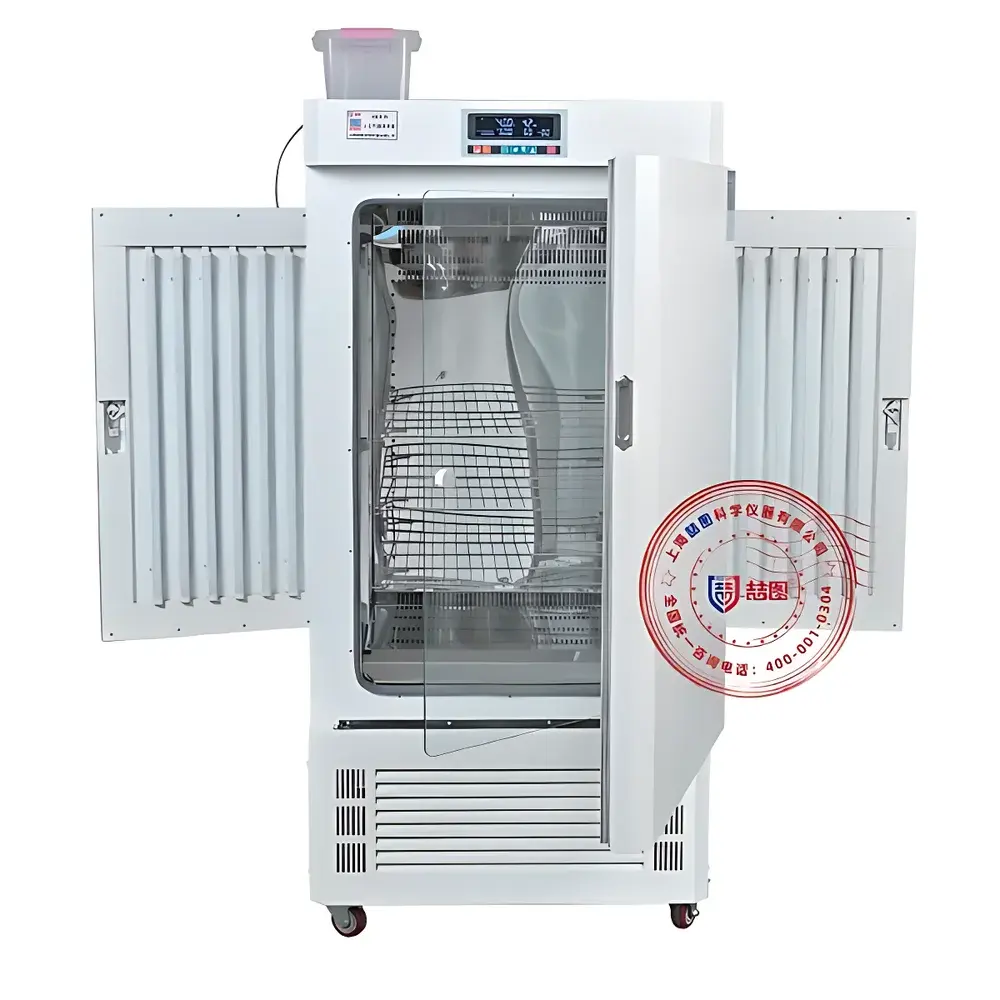
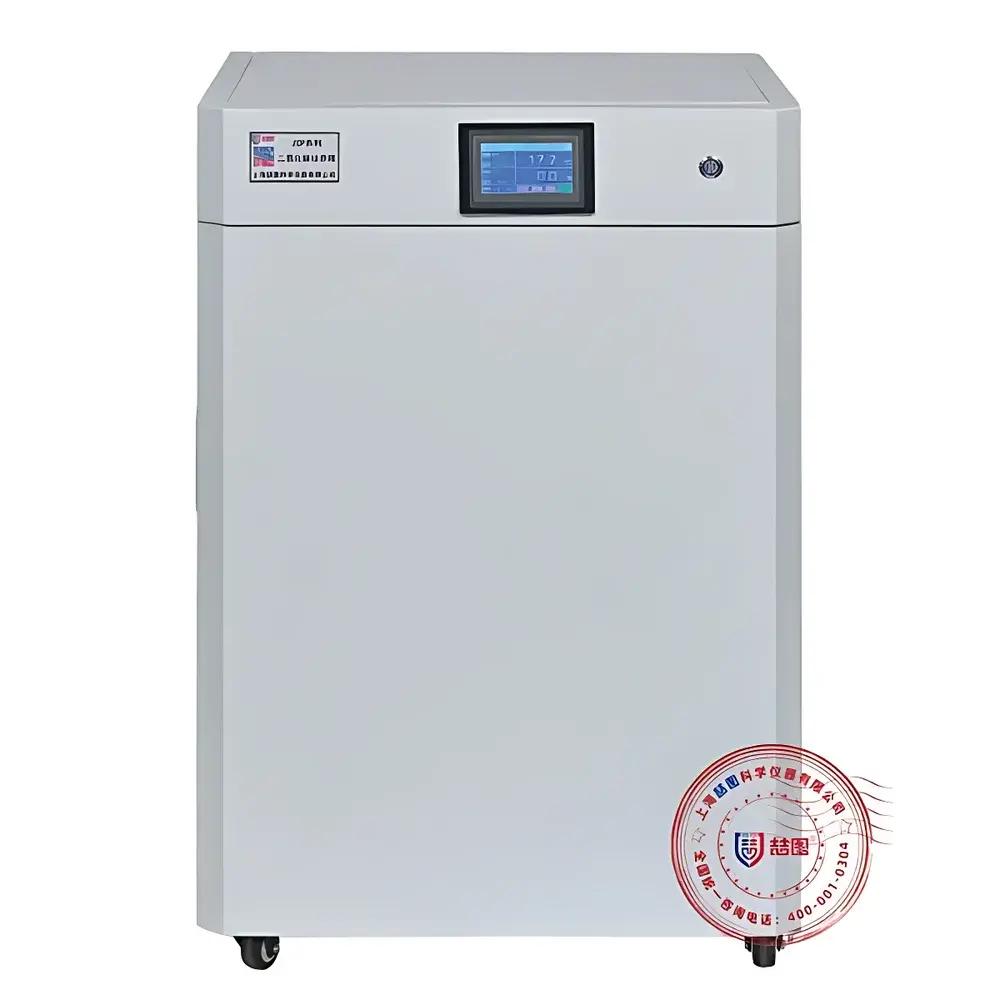
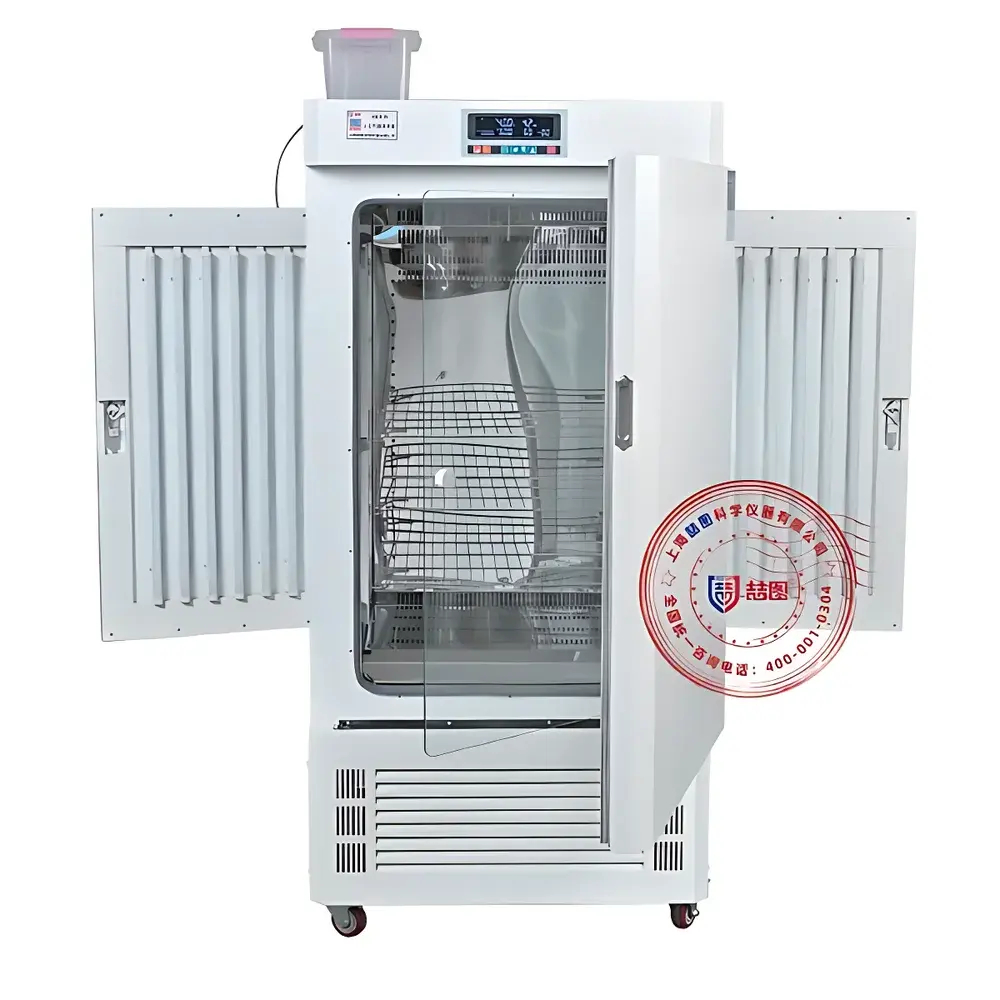
DRETOP ZSH.CP-150 Multi-Function CO₂ Incubator
| Brand | DRETOP |
|---|---|
| Origin | Shanghai, China |
| Manufacturer Type | Direct Manufacturer |
| Instrument Type | Air-Jacketed CO₂ Incubator |
| CO₂ Detection | Infrared (IR) Sensor |
| Temperature Control Range | 0–65 °C |
| CO₂ Concentration Range | 0–20% |
| Chamber Capacity | 150 L |
| External Dimensions (W×D×H) | 605 × 625 × 1375 mm |
| Internal Dimensions (W×D×H) | 480 × 400 × 780 mm |
| Power Supply | AC 220 V, 50 Hz |
| Input Power | 900 W |
| Temperature Uniformity | Not specified |
| Humidity Control | None |
| Display Interface | LCD or optional color touchscreen |
| Air Filtration | HEPA-grade filter (≥0.3 µm, 99.998% efficiency) |
| Recovery Time (CO₂) | <3 min to 5% setpoint after 30-sec door opening |
| Recovery Time (Temp) | <8 min to 37 °C after 30-sec door opening |
| Continuous Operation | ≥360 hours |
| UV Sterilization | Ozone-free internal UV lamp |
| Safety Features | Over-temperature alarm, power-loss data retention, compressor protection logic, auto-defrost |
Overview
The DRETOP ZSH.CP-150 Multi-Function CO₂ Incubator is an air-jacketed, microprocessor-controlled environmental chamber engineered for reliable, long-term cell culture under physiologically relevant conditions. It integrates core CO₂ incubation functionality with configurable modular capabilities—supporting optional configurations for biochemical, photoperiodic, or artificial climate operation—without compromising structural integrity or regulatory compliance. Its measurement architecture relies on a dual-channel feedback loop: an infrared (IR) CO₂ sensor provides real-time, temperature- and humidity-compensated gas concentration monitoring, while a high-stability P.I.D. thermal controller regulates heating via independent nickel-chromium alloy heaters. The chamber’s air-jacketed design ensures rapid thermal recovery and minimal spatial gradient, critical for maintaining consistent pH in bicarbonate-buffered media. All operational parameters—including temperature, CO₂ setpoints, and programmable cycles—are managed through a validated microcontroller platform compliant with GLP documentation requirements.
Key Features
- Stainless steel mirror-finish interior with seamless quarter-radius corners and removable, autoclavable shelving for contamination control and ease of decontamination.
- Air-jacketed thermal architecture with ceramic fiber insulation and double-sealed magnetic door gasket (nano-composite sealing material) minimizes heat loss and prevents condensation on the inner glass door.
- Infrared CO₂ sensing technology delivers stable, drift-resistant concentration monitoring across full operating range (0–20%), unaffected by ambient humidity or frequent door access.
- Ozone-free ultraviolet germicidal irradiation system mounted in the chamber ceiling continuously sterilizes recirculated air and humidification reservoir vapor, reducing airborne microbial load.
- High-efficiency particulate air (HEPA) filtration at the intake port removes ≥99.998% of particles ≥0.3 µm, meeting ISO Class 5 cleanroom air quality standards for entry air.
- Programmable multi-segment controller supporting up to 99 cycles, each with 30 definable steps; time resolution down to 1 minute, duration up to 9999 minutes per step.
- Compressor-based cooling system with modular design, built-in delay timers, and automatic defrost logic ensures stable low-temperature operation and extended service life.
- Integrated castor-and-leveling-foot mobility system enables precise positioning, vibration-dampened stability, and secure anchoring during extended runs.
Sample Compatibility & Compliance
The ZSH.CP-150 accommodates standard T-25, T-75, and multi-well plates within its 150 L chamber volume (480 × 400 × 780 mm internal). Its stainless steel construction complies with ISO 13485 manufacturing standards for medical device-associated laboratory equipment. While humidity control is not integrated in this base configuration, the chamber supports optional external humidification modules compatible with ASTM E2912-22 guidelines for controlled-humidity biological testing environments. The IR CO₂ sensor meets IEC 61000-4-3 immunity requirements for electromagnetic interference in shared lab infrastructure. Data logging via RS485/USB interfaces supports 21 CFR Part 11-compliant audit trails when paired with validated third-party software platforms.
Software & Data Management
The incubator features embedded firmware with non-volatile memory that retains all user-defined parameters—including temperature setpoints, CO₂ targets, alarm thresholds, and cycle programs—during power interruption. Optional communication interfaces (RS485 or USB) enable connection to LIMS or SCADA systems for centralized parameter monitoring and automated report generation. Firmware supports timestamped event logging for door openings, temperature excursions, CO₂ deviations, and UV lamp activation cycles—essential for GLP/GMP traceability. No cloud connectivity or proprietary vendor software is required; raw data export follows CSV or Modbus RTU protocols for interoperability with institutional data management frameworks.
Applications
This incubator serves primary and secondary cell culture workflows requiring CO₂-regulated pH stabilization, including mammalian monolayer expansion, stem cell maintenance, hybridoma propagation, and organoid differentiation assays. Its programmable thermal profiles support circadian rhythm studies (when configured with optional light modules), while its rapid CO₂ recovery (<3 min) makes it suitable for high-throughput labs with multiple concurrent users. The absence of active humidification aligns with applications where condensation risk must be minimized—such as long-term imaging experiments or co-culture systems using transwell inserts. Validation-ready design facilitates IQ/OQ documentation per ISO/IEC 17025 and USP analytical instrument qualification protocols.
FAQ
Does the ZSH.CP-150 include active humidity control?
No—this model is configured as a CO₂ + temperature-only incubator. Humidity regulation requires upgrade to the DCP-150SH or DCP-150GC series.
What is the CO₂ sensor calibration interval recommended by DRETOP?
Annual calibration against NIST-traceable reference gas (5.0 ± 0.1% CO₂ in air) is advised; field verification using zero-air and span-gas challenges may be performed quarterly.
Can the incubator operate continuously for more than 7 days?
Yes—rated for uninterrupted operation exceeding 360 hours (15 days) under nominal load and ambient conditions of 20–25 °C.
Is the UV lamp cycle programmable?
UV irradiation is manually initiated and timed via front-panel controls; no automated scheduling is included in standard firmware.
What safety certifications does the unit hold?
CE marking (2014/30/EU EMC Directive, 2014/35/EU LVD Directive), RoHS 2011/65/EU compliance, and GB 4793.1–2019 (China’s safety standard for laboratory equipment) are documented in the technical file.






