
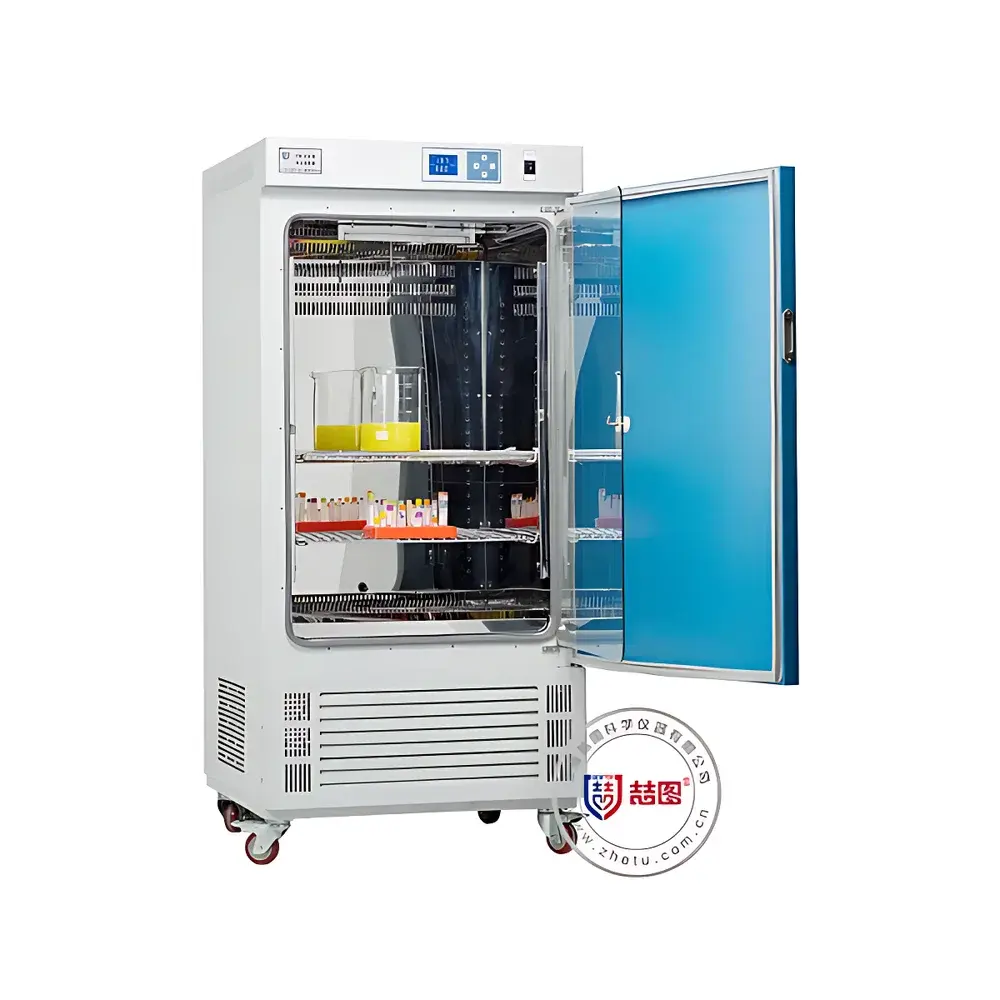
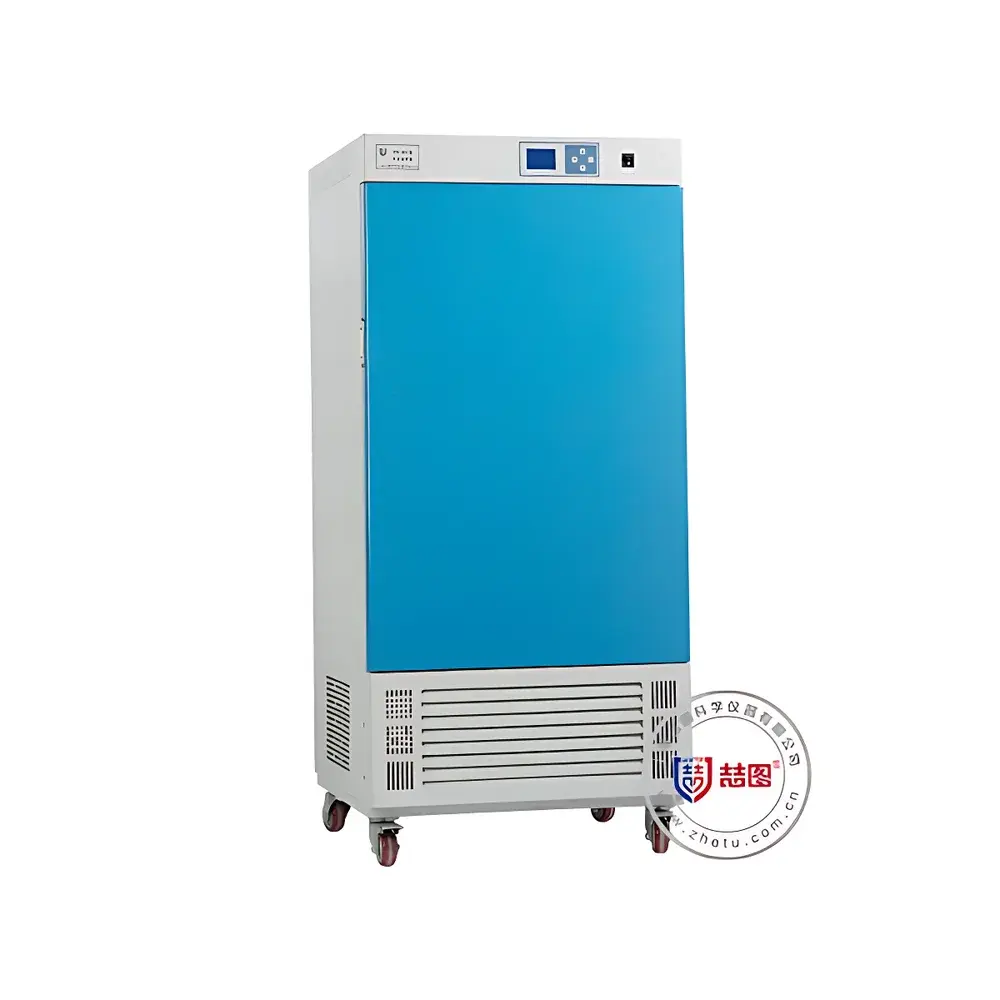
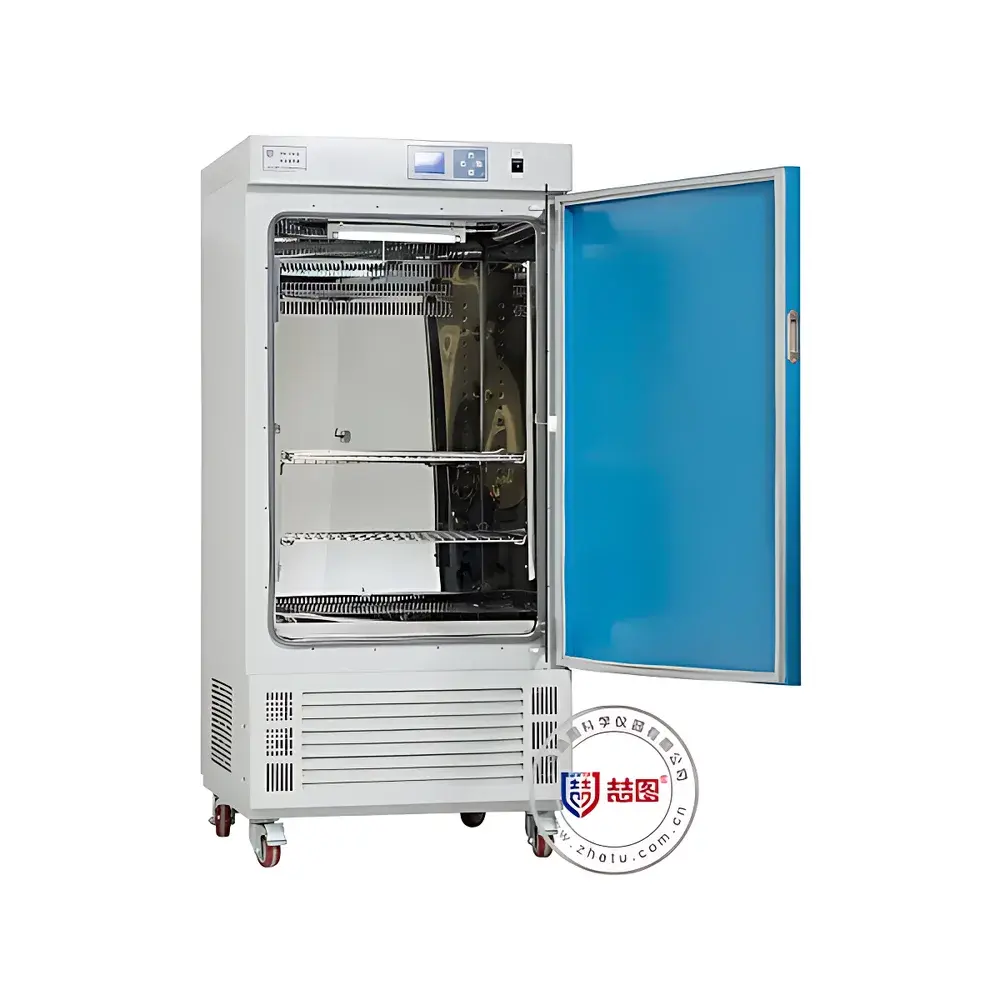
DRETOP ZSH.CP-800 Multi-Function CO₂ Incubator
| Brand | DRETOP |
|---|---|
| Origin | Shanghai, China |
| Manufacturer Type | Direct Manufacturer |
| Instrument Type | Air-Jacketed CO₂ Incubator |
| CO₂ Detection | Infrared (IR) Sensor |
| Temperature Control Range | 0–65 °C |
| CO₂ Concentration Range | 0–20% |
| Chamber Capacity | 800 L |
| External Dimensions (W×D×H) | 1025 × 1145 × 1800 mm |
| Internal Chamber Dimensions (W×D×H) | 900 × 850 × 1050 mm |
| Power Supply | AC 220 V, 50 Hz |
| Input Power | 2500 W |
| Temperature Uniformity | Not specified |
| Humidity Control | None (uncontrolled) |
| Air Filtration | HEPA-grade filter (≥0.3 µm, 99.998% efficiency) |
| Recovery Time (CO₂) | <3 min to 5% setpoint after 30-sec door opening |
| Recovery Time (Temp) | <8 min to 37 °C after 30-sec door opening |
| Safety Features | Over-temperature cutoff, power-loss data retention, programmable alarm thresholds, P.I.D. temperature control |
| Optional Configurations | Illumination (LED, 0–30,000 lx, multi-level), programmable diurnal cycles (RQ series), integrated USB/RS485 interface, side access ports (25–100 mm), UV sterilization lamp (ozone-free) |
Overview
The DRETOP ZSH.CP-800 Multi-Function CO₂ Incubator is an air-jacketed, microprocessor-controlled environmental chamber engineered for precision cell culture under physiologically relevant conditions. It operates on the principle of infrared (IR) CO₂ sensing—providing stable, temperature- and humidity-independent gas concentration monitoring—and integrates robust thermal management via a dual-zone air-jacket system with ceramic fiber insulation. Unlike water-jacketed designs, its air-jacket architecture enables rapid thermal recovery and eliminates condensation-related contamination risks. The unit supports CO₂-regulated mammalian cell culture at standard physiological setpoints (e.g., 37 °C, 5% CO₂), while offering configurable expansion into photobiological or biochemical simulation modes through optional illumination modules (ZGC series) or programmable diurnal temperature/light cycles (ZRQ series). Its 800 L working volume accommodates high-throughput workflows in academic core facilities, biopharma QC labs, and contract research organizations requiring scalable, GxP-aligned incubation infrastructure.
Key Features
- Mirror-polished stainless-steel interior with seamless, radius-corner construction ensures cleanability and long-term corrosion resistance—critical for ISO 13485-compliant environments.
- Infrared CO₂ sensor with real-time feedback loop maintains concentration stability even during frequent door openings; achieves ≤3 min recovery to 5% CO₂ after 30-second exposure.
- Air-jacket thermal design with ceramic fiber insulation delivers superior thermal inertia and uniformity, minimizing spatial gradients across the 900 × 850 × 1050 mm chamber.
- Dual-door configuration: outer magnetic seal with nano-composite gasket + inner tempered glass door with anti-condensation heating—eliminates fogging and prevents microbial ingress.
- Ozone-free UV-C lamp mounted in ceiling cavity sterilizes recirculated air and humidification reservoir vapor, reducing airborne bioburden without generating hazardous byproducts.
- HEPA-grade inlet filtration (≥0.3 µm, 99.998% efficiency) safeguards internal sterility against ambient particulates and aerosolized contaminants.
- P.I.D. temperature controller with 0.1 °C resolution and ±0.5 °C stability, coupled with programmable 99-cycle, 30-segment timing logic for unattended overnight or multi-day experiments.
- Modular refrigeration system with compressor delay/start-interval protection, automatic non-energy-consuming defrost, and redundant safety cutoffs ensures >360-hour continuous operation reliability.
Sample Compatibility & Compliance
The ZSH.CP-800 accommodates standard T-flasks (up to 175 cm²), multi-well plates (6–96-well), Petri dishes, roller bottles, and custom bioreactor vessels on four adjustable stainless-steel shelves. Its absence of active humidity control makes it suitable for applications where moisture-sensitive reagents or dry-cell protocols are employed—such as certain stem cell differentiation assays or primary neuron cultures requiring low-RH stabilization. While not certified to UL 61010-1 or IEC 61000-6-3 out-of-the-box, the unit’s electrical architecture complies with CE marking requirements for laboratory equipment. For GLP/GMP environments, optional RS485/USB logging interfaces support 21 CFR Part 11–compliant audit trails when paired with validated third-party software. All materials contacting the chamber interior meet USP Class VI biocompatibility standards.
Software & Data Management
The incubator features a color touchscreen HMI (Human-Machine Interface) with intuitive icon-driven navigation, supporting multilingual UI (English, German, Spanish, Chinese). Built-in memory retains up to 10,000 timestamped data points (temperature, CO₂, door status, alarms) with automatic overwrite cycling. Optional USB or RS485 connectivity enables integration with LIMS or ELN systems; raw CSV export facilitates statistical process control (SPC) analysis per ISO 20914 guidelines. Programmable alarm thresholds trigger visual/audible alerts and relay outputs for external HVAC interlocks. Power-fail recovery preserves all user-defined parameters—including multi-stage programs—ensuring experimental continuity after grid interruption.
Applications
- Mammalian cell line maintenance (HEK293, CHO, HeLa) under standardized 37 °C / 5% CO₂ conditions.
- Stem cell expansion and directed differentiation where precise thermal and gas setpoints govern lineage commitment.
- Microbial co-culture studies requiring controlled atmospheric composition without humidity interference.
- Photobiomodulation research using optional LED arrays (red/blue spectra, 0–30,000 lx) for circadian rhythm modeling or light-activated optogenetic constructs.
- Regulatory batch testing in pharmaceutical manufacturing, where traceable incubation logs support FDA submissions under ICH Q5D.
- Long-duration toxicity screening (e.g., 72-hr IC₅₀ assays) leveraging 360+ hour uninterrupted runtime capability.
FAQ
Does the ZSH.CP-800 include active humidity control?
No—it is configured as a CO₂- and temperature-regulated incubator only. Humidity remains ambient and unregulated. For humidity-dependent protocols, consider the DCP-800SH variant.
What is the CO₂ sensor technology, and why is IR preferred over thermal conductivity?
It uses a dual-beam non-dispersive infrared (NDIR) sensor, which offers immunity to temperature/humidity drift and superior long-term calibration stability versus thermal conductivity sensors—critical for ISO/IEC 17025-accredited labs.
Can the incubator be validated for GMP use?
Yes—when equipped with optional data logging and alarm history export, it supports IQ/OQ documentation per ASTM E2500 and EU Annex 15 requirements. DRETOP provides factory calibration certificates traceable to NIST standards.
Is the UV lamp safe for routine use with cultured cells?
The ozone-free 254 nm UV-C lamp operates only during idle cycles (e.g., overnight) and is interlocked to deactivate automatically upon door opening—ensuring no exposure to live cultures.
What safety protections prevent overheating or CO₂ over-concentration?
Independent mechanical over-temperature cutoff (separate from P.I.D. controller), CO₂ high-limit alarm with automatic solenoid shutoff, and door-open duration monitoring with audible alert—all logged and configurable via touchscreen.





