
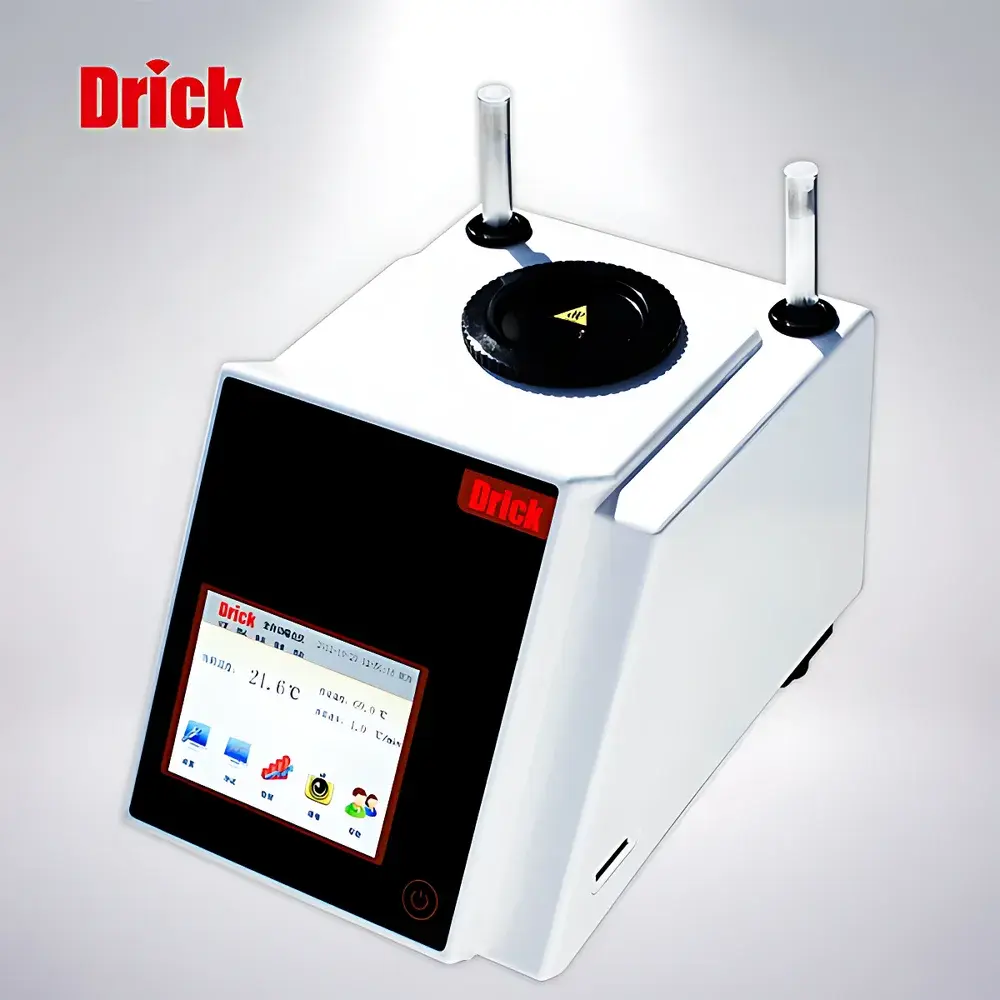
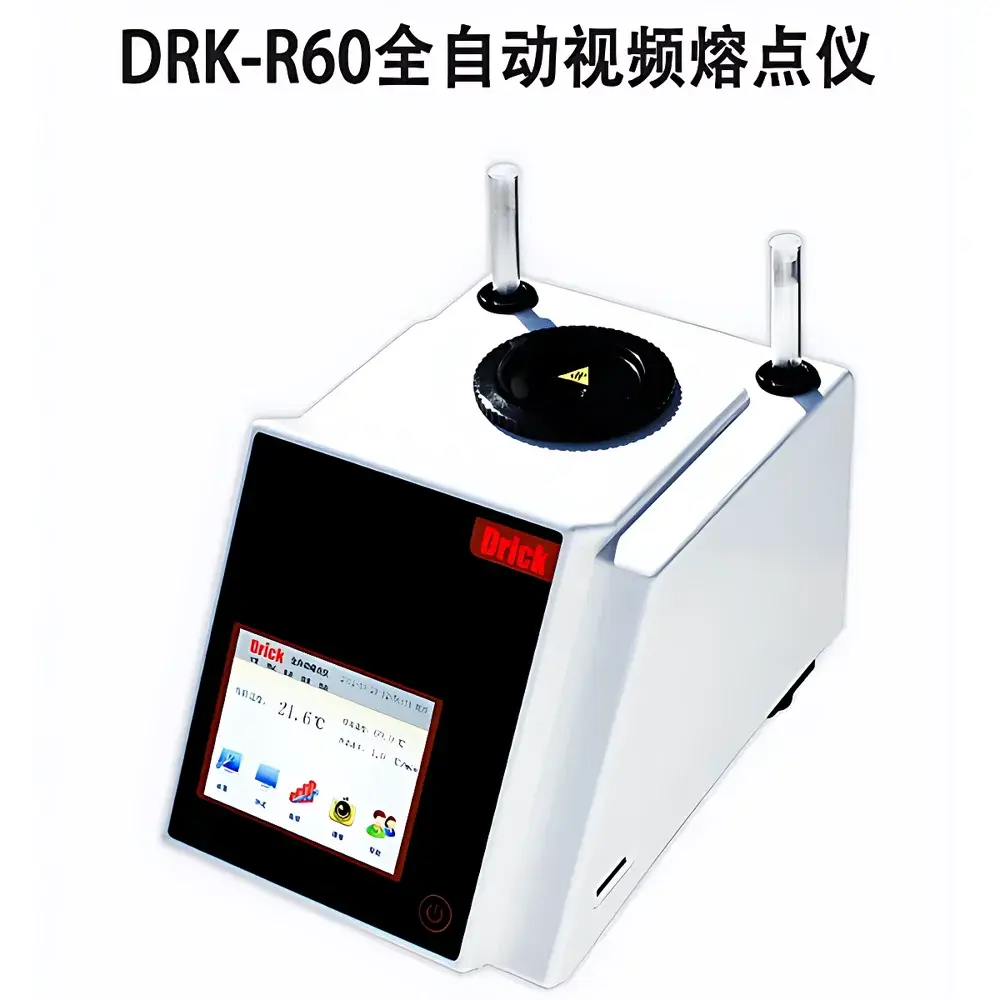
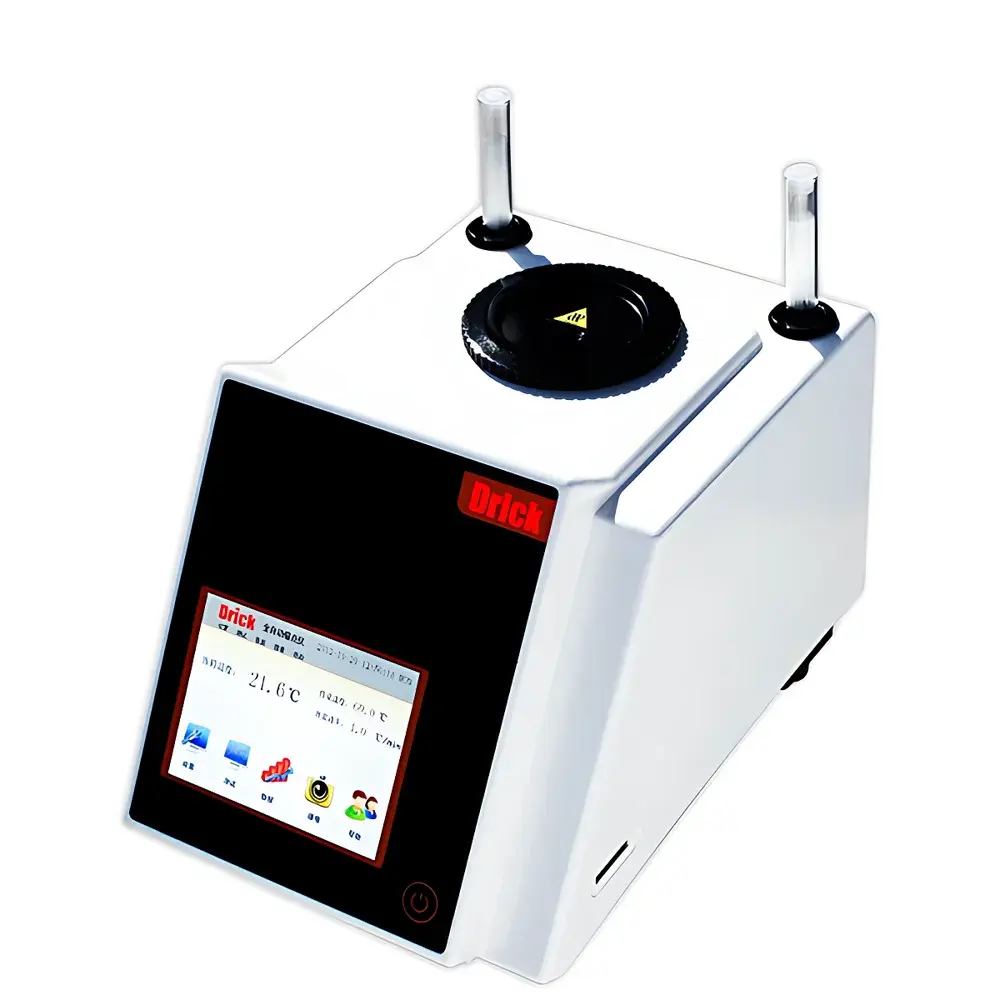
Drick DRK-R60 Automated Video Melting Point Apparatus
| Brand | Drick |
|---|---|
| Origin | Shandong, China |
| Manufacturer Type | Direct Manufacturer |
| Model | DRK-R60 |
| Temperature Range | Ambient to 350 °C |
| Heating Rate | 0.1–20 °C/min (200-step continuous adjustment) |
| Temperature Repeatability | ±0.1 °C (at 0.1 °C/min heating rate) |
| Temperature Accuracy | ±0.3 °C (<250 °C) |
| Capillary Dimensions | OD 1.4 mm, ID 1.2 mm |
| Sample Capacity | 2 samples per batch (up to 4 samples simultaneously with dual-channel observation) |
Overview
The Drick DRK-R60 Automated Video Melting Point Apparatus is a precision thermal analysis instrument engineered for reliable, real-time determination of melting behavior in crystalline organic compounds, pharmaceuticals, polymers, and fine chemicals. It employs high-resolution digital video microscopy coupled with programmable Peltier-based temperature control to capture and analyze the complete melting process—starting from initial crystal collapse (onset of melting) through full liquefaction (end of melting). Unlike traditional analog capillary melt point devices, the DRK-R60 digitizes the entire thermal transition event, enabling objective, operator-independent identification of onset, clear point, and endset temperatures. Its design complies with core pharmacopeial requirements—including USP <741>, EP 2.2.14, and JP 2.60—making it suitable for quality control laboratories operating under GLP or GMP frameworks.
Key Features
- Full HD video capture (1080p) synchronized with temperature logging at 0.1 °C resolution, allowing frame-by-frame review of morphological changes during phase transition.
- Dual independent heating zones supporting simultaneous analysis of two samples—with optional four-sample throughput via sequential dual-channel acquisition.
- Continuous heating rate control from 0.1 to 20 °C/min across 200 discrete steps, ensuring reproducible thermal ramping for method development and validation.
- Calibration traceable to NIST-traceable reference standards; built-in self-diagnostic routines verify sensor linearity and thermal uniformity before each run.
- Robust aluminum alloy heating block with optimized thermal mass and insulation, minimizing overshoot and improving stability at high-temperature setpoints (up to 350 °C).
- Capillary holder designed for standardized φ1.4 mm OD / φ1.2 mm ID glass tubes—compatible with ASTM D1519 and ISO 6383-1 sample preparation protocols.
Sample Compatibility & Compliance
The DRK-R60 accommodates solid, powdered, or microcrystalline samples loaded into standard thin-wall capillaries. It supports routine testing of APIs, excipients, intermediates, and polymer resins per ICH Q5C and Q6A guidelines. Instrument performance meets ISO/IEC 17025 criteria for calibration and verification, and its temperature accuracy specification (±0.3 °C below 250 °C) aligns with USP general chapter <741> acceptance limits for Class II melting point apparatuses. The system architecture enables audit-ready data storage compliant with FDA 21 CFR Part 11 when integrated with validated LIMS or ELN platforms.
Software & Data Management
The embedded Windows-based software provides intuitive method setup, live video overlay with temperature/time plots, and automated event detection algorithms trained on >5,000 reference melting profiles. All raw video, thermal curves, metadata (operator ID, date/time, method name), and annotated screenshots are saved in encrypted .dmp format. Export options include CSV (for statistical analysis in JMP or Minitab), PDF reports (with digital signature fields), and XML for integration into enterprise QA systems. Audit trails record user actions, parameter modifications, and calibration events—supporting full traceability required by regulatory inspections.
Applications
- Pharmaceutical QC labs verifying identity and purity of active ingredients against monograph specifications.
- Chemical R&D teams characterizing polymorph transitions and eutectic behavior during salt selection studies.
- Academic research groups investigating thermal stability of novel metal-organic frameworks (MOFs) and co-crystals.
- Food science laboratories assessing fat melting profiles in cocoa butter analogs and dairy emulsions.
- Materials science facilities evaluating thermal degradation onset in biodegradable polyesters (e.g., PLA, PHA).
FAQ
What capillary dimensions are supported?
The DRK-R60 is configured for standard capillaries with outer diameter 1.4 mm and inner diameter 1.2 mm, consistent with USP and EP recommendations.
Can the instrument be calibrated using certified reference materials?
Yes—calibration is performed using NIST-traceable standards such as indium (156.6 °C), tin (231.9 °C), and lead (327.5 °C); calibration certificates include uncertainty budgets per ISO/IEC 17025.
Is remote operation or network connectivity supported?
The system includes Ethernet and USB interfaces; optional OPC UA server module enables integration into plant-wide SCADA or MES environments.
How is data integrity ensured during long-duration runs?
All thermal and video streams are written redundantly to internal SSD and external NAS simultaneously; file checksums are verified post-acquisition.
Does the software support multi-user role-based access control?
Yes—administrator, analyst, and reviewer roles enforce separation of duties; password policies and session timeouts comply with ISO 27001 Annex A.9 controls.



