
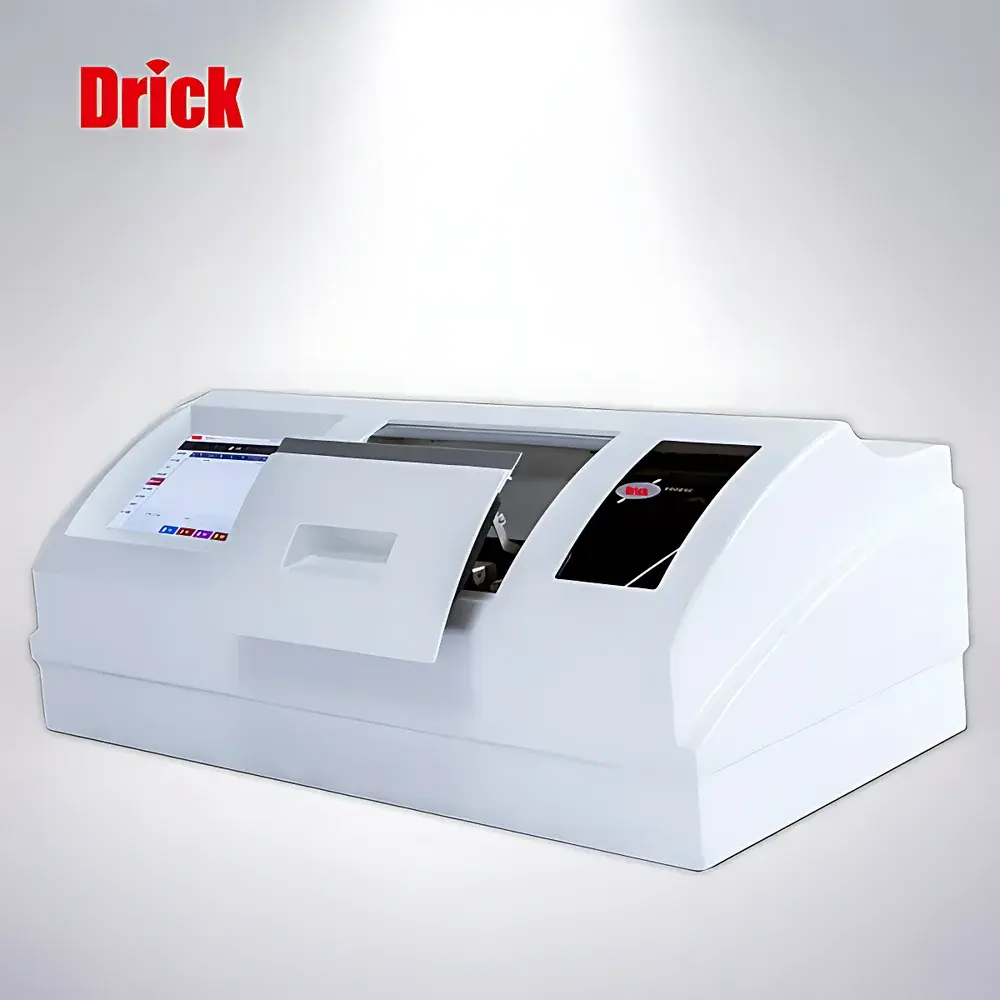
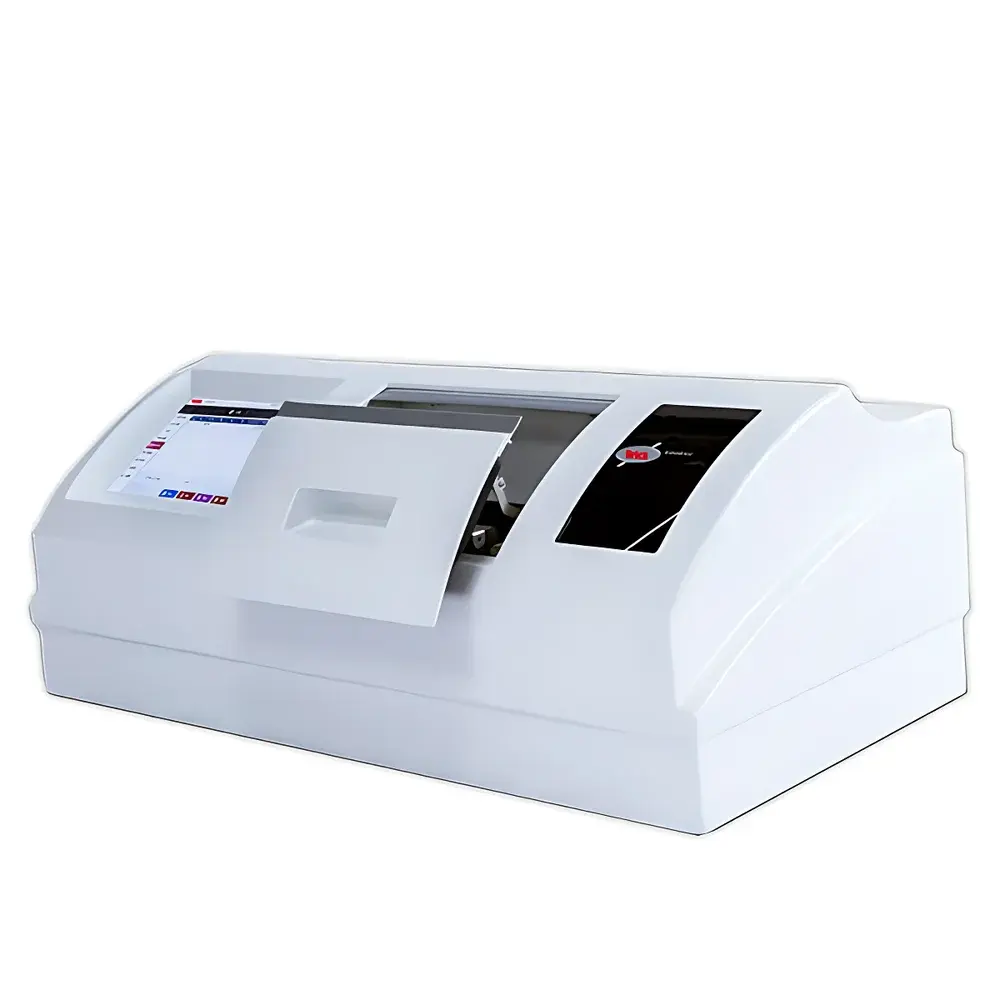
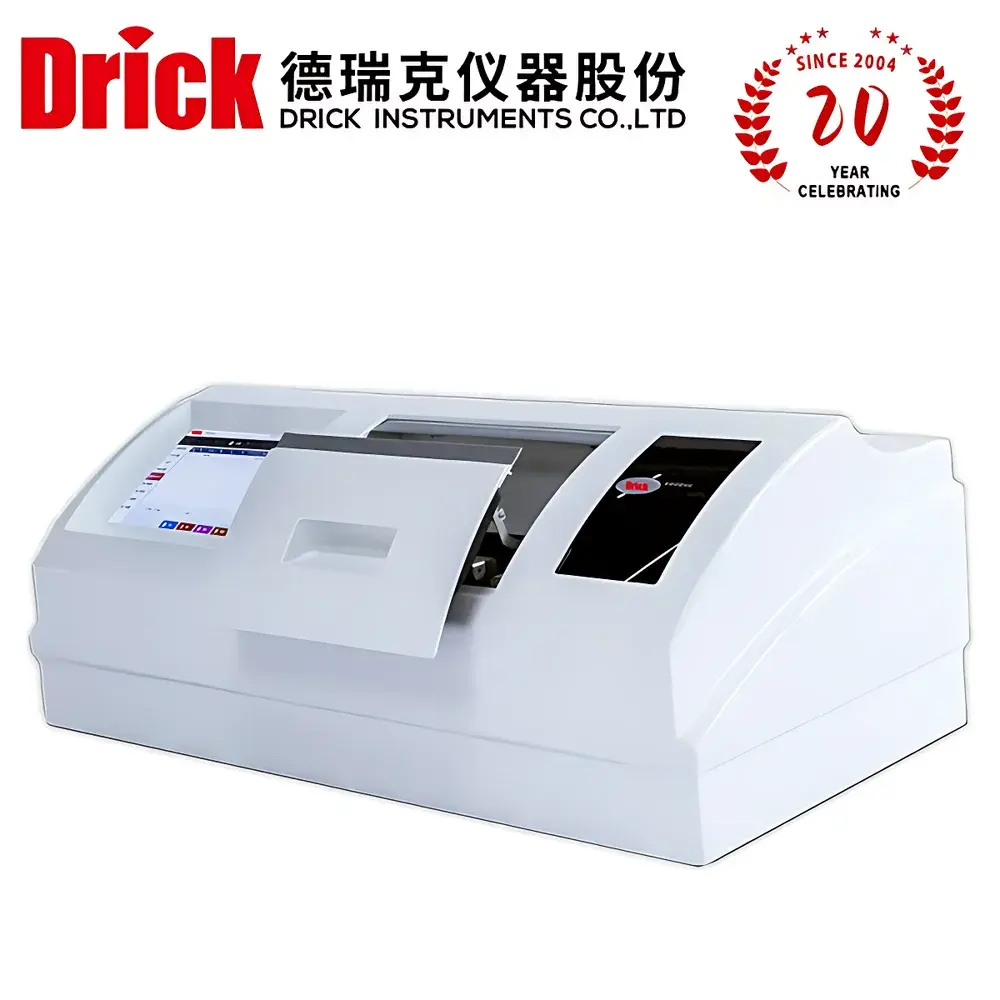
Drick DRK-Z83P Digital Enhanced Automatic Polarimeter
| Brand | Drick |
|---|---|
| Model | DRK-Z83P |
| Type | Automatic Polarimeter |
| Temperature Control | Peltier-controlled (10–55 °C, ±0.1 °C accuracy) |
| Light Source | LED with precision interference filter (589.3 nm) |
| Measurement Range | Optical Rotation ±90°, Sucrose Scale ±259°Z |
| Minimum Readability | 0.001° |
| Accuracy | ±0.004° |
| Repeatability (SD) | 0.002° |
| Sample Volume | As low as 0.8 mL |
| Cell Options | 100 mm & 50 mm thermostatted cells (Hastelloy optional) |
| Display | 8-inch TFT color touchscreen |
| Data Storage | 32 GB internal |
| Compliance | FDA 21 CFR Part 11 (electronic signatures, audit trail, data integrity), GLP/GMP-ready |
| Connectivity | USB, RS232, VGA, Ethernet, Wi-Fi printing |
| Export Formats | PDF, Excel |
| Security | Four-level user permission management, MD5 checksum verification (optional), method library, customizable formulas (optional) |
Overview
The Drick DRK-Z83P Digital Enhanced Automatic Polarimeter is a high-precision, thermally regulated analytical instrument engineered for the quantitative determination of optical rotation in chiral substances. Based on the fundamental principle of plane-polarized light rotation upon transmission through optically active media, the DRK-Z83P delivers traceable, reproducible measurements essential for concentration, purity, and enantiomeric excess assessment. Its design integrates modern solid-state optics—centered on a stable 589.3 nm LED source coupled with a high-transmission interference filter—to eliminate spectral drift and warm-up delays associated with traditional sodium or tungsten lamps. The built-in Peltier temperature control system maintains sample cell temperature within ±0.1 °C across a 10–55 °C range, directly mitigating thermal-induced refractive index fluctuations that compromise measurement fidelity. This architecture ensures compliance with international pharmacopoeial requirements (e.g., USP , EP 2.2.7, JP 6.07) and supports rigorous quality assurance frameworks in regulated environments.
Key Features
- Peltier-based thermostatic control with 0.1 °C resolution and ±0.1 °C stability—enabling precise temperature-dependent optical rotation studies
- Dual-path thermostatted cell support: standard 100 mm and ultra-low-volume 50 mm cells (minimum sample volume: 0.8 mL)
- 8-inch capacitive TFT touchscreen interface with intuitive icon-driven navigation and real-time graphical feedback
- Multi-mode measurement capability: optical rotation (α), specific rotation ([α]), concentration (g/100 mL), sucrose scale (°Z), and user-defined calculation protocols
- FDA 21 CFR Part 11–compliant software architecture featuring electronic signatures, immutable audit trails, role-based access control (four-tier permissions), and cryptographic data integrity checks (MD5 optional)
- Integrated automatic calibration routine with certified quartz control plates; self-diagnostic routines for optical path alignment and detector linearity
- Robust data governance: 32 GB onboard storage, timestamped raw + processed data export (PDF/Excel), configurable auto-backup via Ethernet or Wi-Fi
Sample Compatibility & Compliance
The DRK-Z83P accommodates a broad spectrum of liquid-phase chiral analytes—including pharmaceutical intermediates, APIs, carbohydrates, amino acids, essential oils, and synthetic polymers—across diverse matrix viscosities and optical densities (transmittance down to 0.1%). Its modular cell system supports standard 200 mm tubes, thermostatted 100/50 mm variants, and corrosion-resistant Hastelloy options for aggressive solvents or elevated temperatures. Instrument validation documentation aligns with ICH Q2(R2) guidelines for analytical procedure verification. Full GLP and GMP readiness is assured through preconfigured SOP templates, method versioning, and full traceability from raw signal acquisition to final report generation. All firmware and application logic undergo periodic security patching per ISO/IEC 27001-aligned internal policies.
Software & Data Management
The embedded operating system provides a secure, deterministic runtime environment compliant with FDA 21 CFR Part 11 Annex 11 and EU GMP Annex 11 requirements. Audit trails record all critical events—including user logins, parameter modifications, calibration actions, and report generation—with immutable timestamps and operator attribution. Electronic signatures adhere to PKI-based signing workflows validated against NIST SP 800-63-3 assurance levels. Data export supports dual-format archival: structured Excel files for statistical analysis and digitally signed PDF reports containing embedded metadata (instrument ID, method ID, calibration certificate references, environmental logs). Optional cloud synchronization enables centralized fleet monitoring and remote method deployment via TLS 1.3–secured API endpoints.
Applications
- Pharmaceutical QC/QA: Identity confirmation and assay of chiral drugs (e.g., ibuprofen, levodopa, atenolol) per USP monographs
- Sugar industry: Brix and polarization-based sucrose quantification in cane/beet juice, syrups, and refined products
- Flavor & fragrance: Enantiomeric purity verification of limonene, carvone, and menthol isomers affecting sensory profiles
- Academic research: Kinetic studies of asymmetric reactions, racemization rates, and solvent effects on specific rotation
- Chemical manufacturing: In-process control of stereoselective hydrogenations, enzymatic resolutions, and chiral catalyst performance
FAQ
What wavelength does the DRK-Z83P operate at, and how is spectral purity ensured?
The instrument uses a narrowband LED centered at 589.3 nm, paired with a high-stability interference filter (FWHM ≤ 1 nm) to meet pharmacopoeial sodium-D line equivalence requirements.
Is temperature calibration traceable to national standards?
Yes—Peltier module calibration is performed using NIST-traceable platinum resistance thermometers (PRTs) during factory acceptance testing; users receive a full calibration certificate with uncertainty budget.
Can the DRK-Z83P be integrated into a LIMS environment?
Absolutely—the device supports ASTM E1384-compliant data exchange via HL7 and ASTM E2500-07–aligned instrument drivers over TCP/IP, enabling bidirectional communication with major LIMS platforms.
How is data integrity enforced during power interruption or unexpected shutdown?
All measurements are written to non-volatile memory with atomic commit semantics; unsaved sessions auto-recover on restart with full state restoration, including pending audit entries.
Does the system support multi-language UI and regulatory reporting templates?
The firmware includes English, German, French, Spanish, and Simplified Chinese language packs; pre-built report templates conform to FDA Form 3674, EMA Annex 11 checklists, and WHO TRS 1019 Annex 5 specifications.





