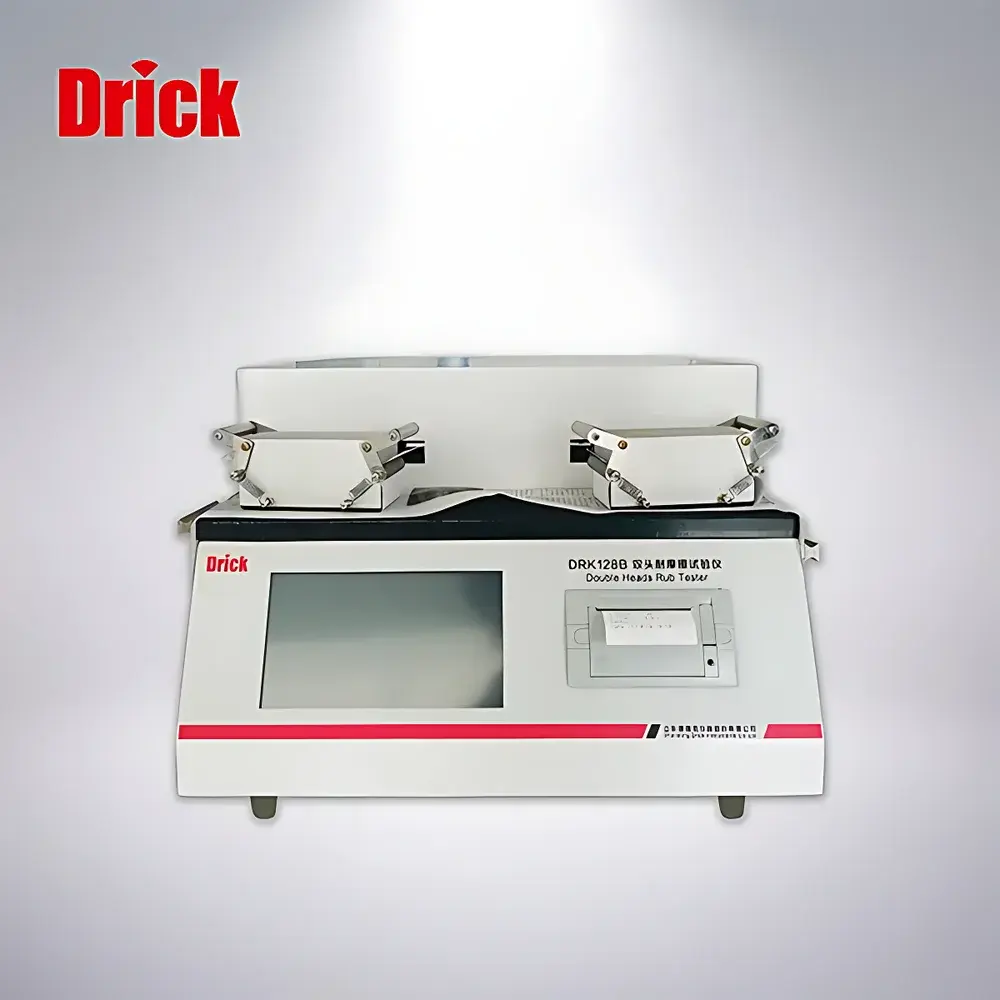
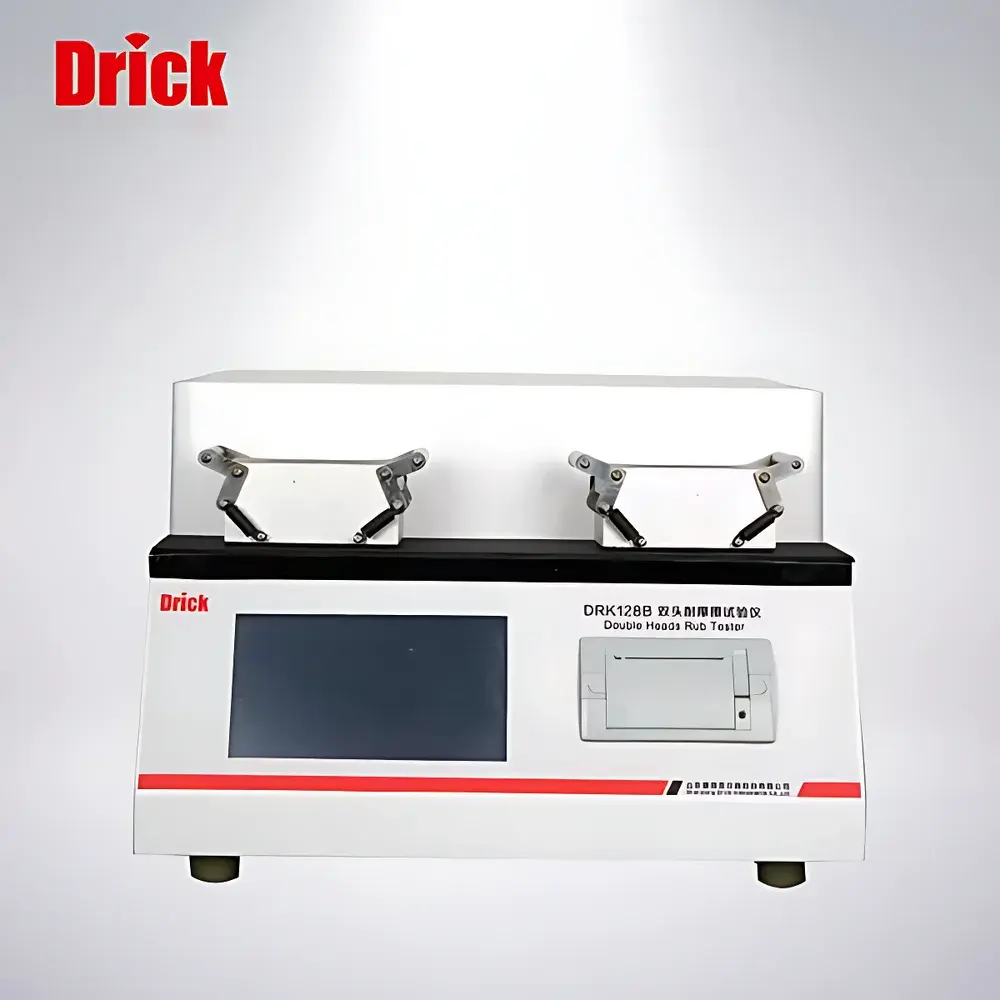
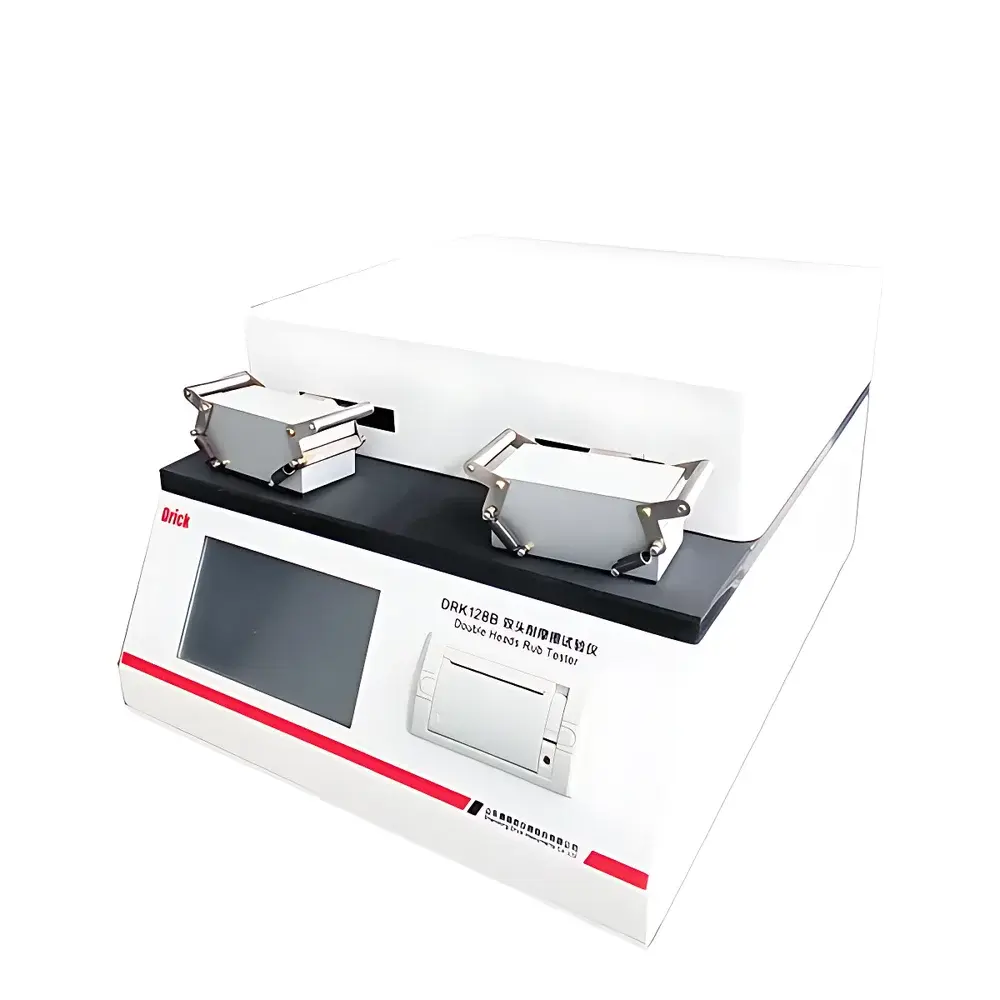
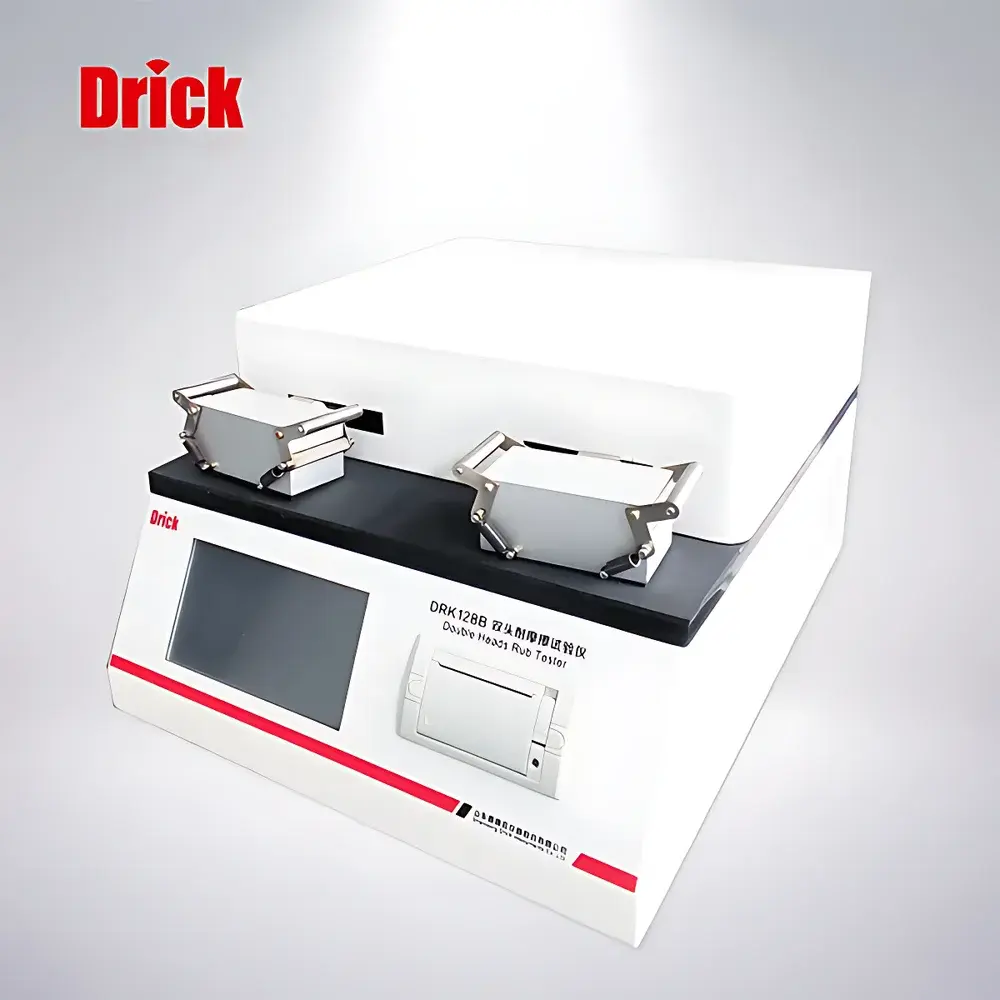
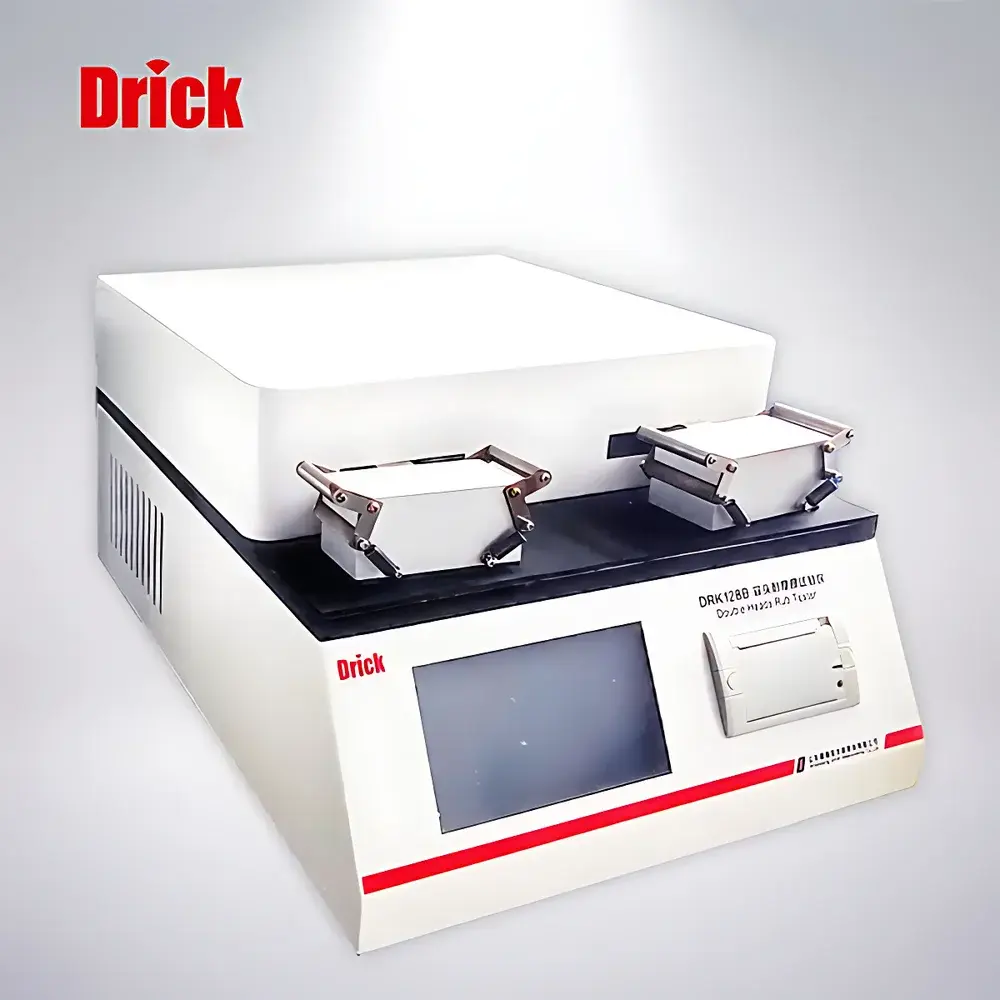
Drick DRK128 Dual-Head Abrasion Tester
| Brand | Drick |
|---|---|
| Origin | Shandong, China |
| Manufacturer Type | OEM/ODM Producer |
| Country of Manufacture | China |
| Model | DRK 128 |
| Price | USD 4,500 (FOB Qingdao) |
| Abrasion Load | 20 ± 0.2 N |
| Oscillation Rate | 43 cycles per minute (cpm) |
| Abrasion Area | 155 mm (L) × 50 mm (B) |
| Cycle Count Range | 1–9999 |
| Specimen Size | 230 mm (L) × 50 mm (B) |
| Power Supply | AC 220 V, 50 Hz |
| Dimensions (W×D×H) | 260 mm × 245 mm × 340 mm |
| Net Weight | 17 kg |
| Compliance | GB/T 7706, ASTM D5264, JIS K5701, TAPPI T476 |
Overview
The Drick DRK128 Dual-Head Abrasion Tester is an electromechanical precision instrument engineered for quantitative evaluation of surface abrasion resistance in printed materials, photosensitive printing plates (PS plates), and coated substrates. It operates on the principle of controlled reciprocating linear oscillation under defined normal load and fixed stroke geometry—simulating real-world mechanical wear conditions such as handling, stacking, transport, and press operation. Unlike single-head testers, the dual-head configuration enables simultaneous parallel testing of two identical or dissimilar specimens under identical environmental and mechanical parameters, significantly improving inter-sample comparability and statistical robustness in quality control workflows. Designed in strict accordance with GB/T 7706 (Chinese national standard for gravure and flexographic ink abrasion resistance), the DRK128 also demonstrates functional equivalence to ASTM D5264 (Standard Test Method for Determining the Abrasion Resistance of Ink Surfaces), JIS K5701 (Japanese Industrial Standard for lithographic plate durability), and TAPPI T476 (Test Method for Rub Resistance of Printing Inks). Its architecture supports both dry abrasion and wet abrasion protocols—including solvent-wetted rub testing and color transfer assessment—making it suitable for R&D validation, incoming material inspection, and production line process monitoring.
Key Features
- Dual-head independent testing stations with synchronized motion control, ensuring identical load application and cycle timing across both samples
- Calibrated vertical load system delivering a stable 20 ± 0.2 N normal force via precision spring-mass assembly and mechanical feedback loop
- Quiet-running linear cam-driven oscillation mechanism operating at a fixed rate of 43 cpm (±1%), with zero backlash and minimal vibration transmission
- Integrated abrasion platform featuring a hardened stainless-steel friction surface (155 mm × 50 mm active area) with uniform surface finish (Ra ≤ 0.4 µm) to ensure consistent contact geometry
- Non-volatile cycle memory function: retains programmed test count and operational state during unexpected power interruption, preventing data loss and enabling resumption without manual recalibration
- Digitally adjustable cycle counter (1–9999) with front-panel LED display and audible end-of-test signal; no software dependency required for basic operation
- Modular base design accommodating non-standard specimen fixtures, custom abrasion media holders, and humidity-controlled test enclosures (OEM/ODM support available)
Sample Compatibility & Compliance
The DRK128 accepts flat rigid or semi-rigid sheet specimens measuring up to 230 mm × 50 mm, including but not limited to offset and flexographic printed paperboard, corrugated packaging, PS plates, polymer-coated films, and metallized substrates. Specimen clamping is achieved via dual spring-loaded edge grips ensuring lateral stability without edge deformation. The instrument satisfies technical requirements for regulatory and audit-ready environments: test records comply with GLP documentation principles; cycle logs are timestamped and immutable when used with optional external data logging modules. While the base unit does not include electronic audit trails, its mechanical repeatability (CV < 2.1% across 10 repeated runs on standardized reference prints per ISO 5725-2) meets foundational metrological criteria for ISO 9001-certified QC laboratories. Optional calibration certificates traceable to CNAS-accredited national standards are available upon request.
Software & Data Management
The DRK128 operates as a standalone hardware platform with embedded microcontroller logic—no proprietary PC software is required for routine operation. All test parameters (cycle count, start/stop command, reset) are managed via tactile membrane keypad and real-time LED display. For laboratories requiring digital integration, optional RS-232 or USB-to-serial interface modules enable ASCII-formatted output of cycle completion signals and cumulative run logs to LIMS or MES systems. Raw data export supports CSV formatting compatible with Excel, JMP, and Minitab for SPC charting (X̄-R, Ppk analysis). When deployed in FDA-regulated environments, the instrument may be validated per IQ/OQ protocols; full 21 CFR Part 11 compliance requires third-party software layer integration (e.g., LabWare LIMS or Thermo Fisher SampleManager), which Drick supports through documented API specifications and hardware handshake protocols.
Applications
- Quantitative assessment of ink rub resistance in gravure, flexo, and offset printed packaging—correlating abrasion cycles to visual grading (ISO 105-X12) or ΔE* color shift (CIE L*a*b*)
- Evaluation of PS plate photosensitive layer durability under simulated press-run conditions, supporting predictive modeling of plate life expectancy
- Comparative testing of coating hardness and adhesion strength across resin formulations (e.g., acrylic vs. polyurethane topcoats)
- Wet abrasion testing using standardized solvents (e.g., ethanol, isopropanol, or proprietary cleaning agents) to simulate post-print cleaning processes
- Edge-blur analysis of halftone dots and fine-line reproduction after mechanical stress, supporting prepress quality gate decisions
- Root-cause investigation of customer complaints related to scuffing, smearing, or delamination in finished goods shipments
FAQ
What standards does the DRK128 directly support out-of-the-box?
GB/T 7706, ASTM D5264, JIS K5701, and TAPPI T476 — all implemented via fixed mechanical parameters (load, speed, stroke length) and specimen geometry.
Can the DRK128 perform variable-load testing?
No — the 20 ± 0.2 N load is mechanically fixed per standard compliance requirements; variable-load configurations require custom engineering and are available under ODM agreement.
Is calibration certification included with shipment?
A factory verification report (including load verification and cycle timing accuracy) is provided; CNAS-traceable calibration certificates are optional and subject to additional lead time and fee.
What maintenance is required for long-term accuracy?
Biannual inspection of cam follower wear, lubrication of linear guide rails with ISO VG 32 mineral oil, and verification of grip tension using calibrated torque screwdriver (2.5 N·m).
Does Drick offer international technical support and spare parts logistics?
Yes — global service network includes regional distributors in Germany, USA, India, and Brazil; critical spares (cams, load springs, LED displays) are stocked with 72-hour air freight availability.