
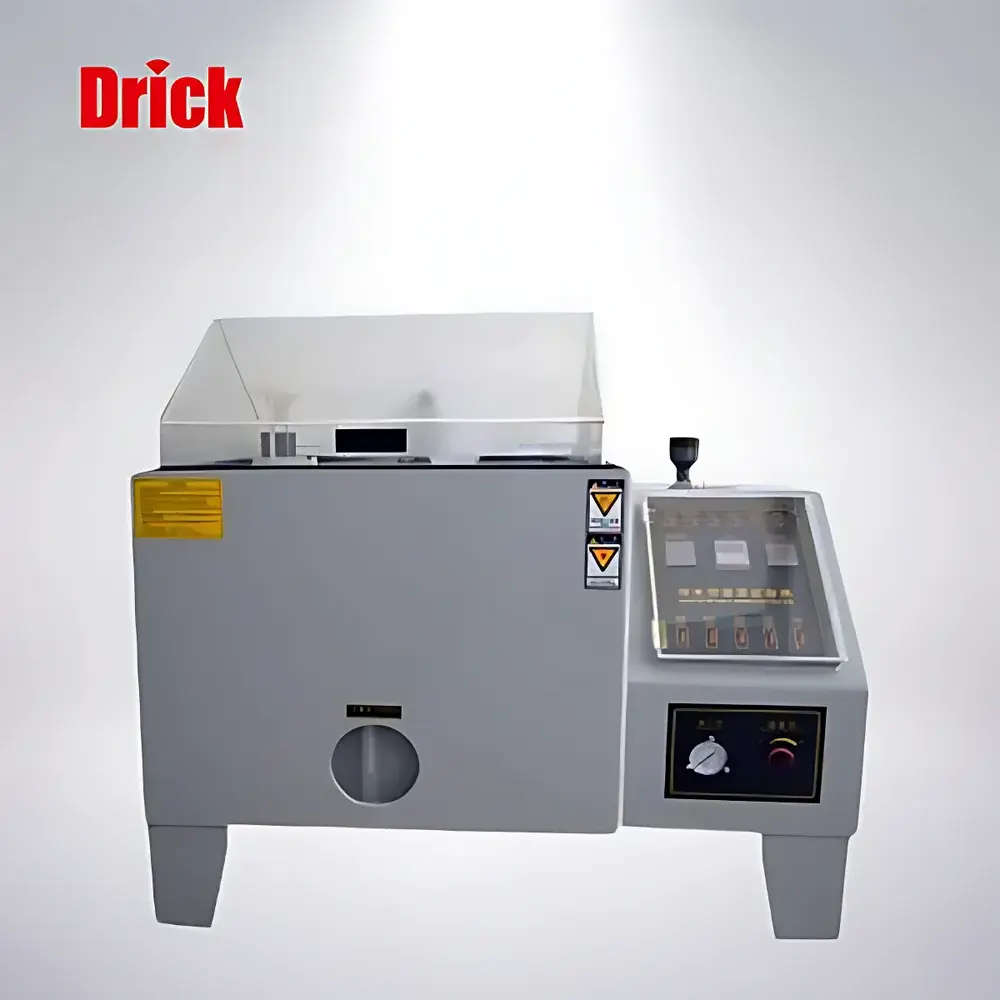
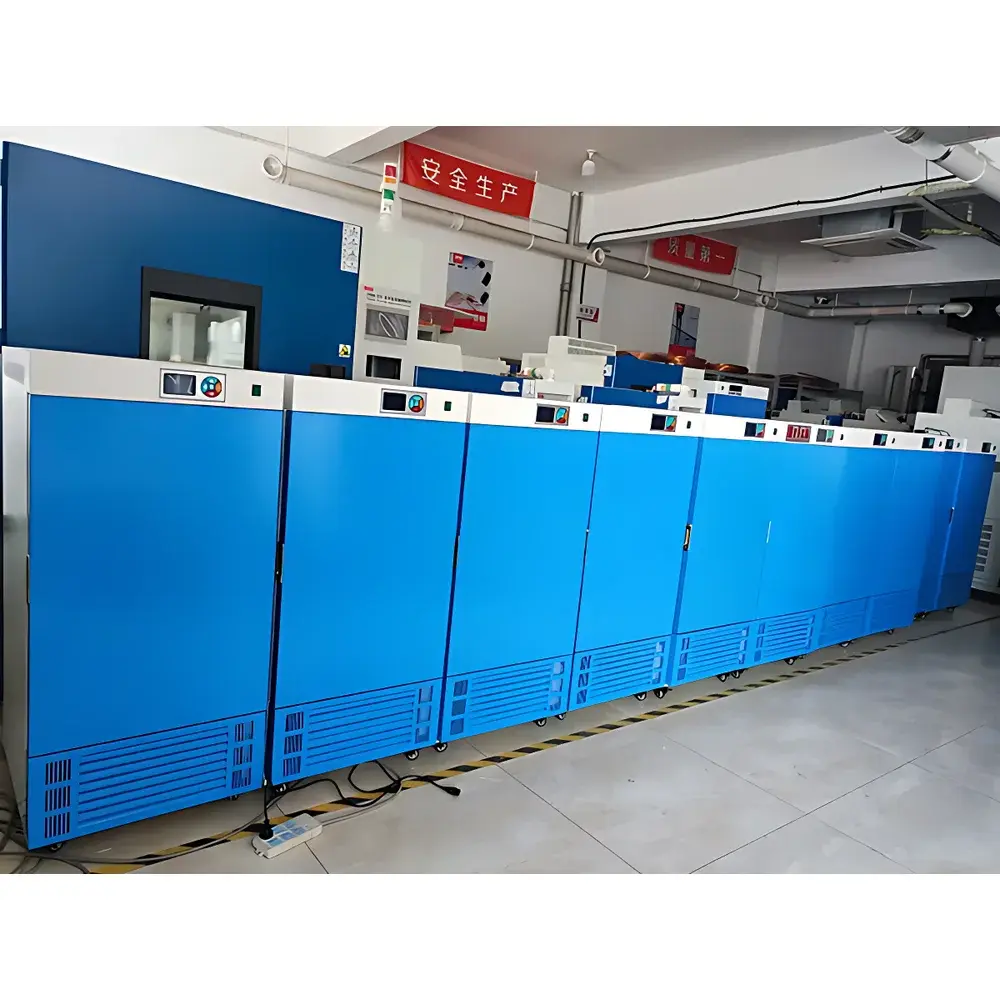
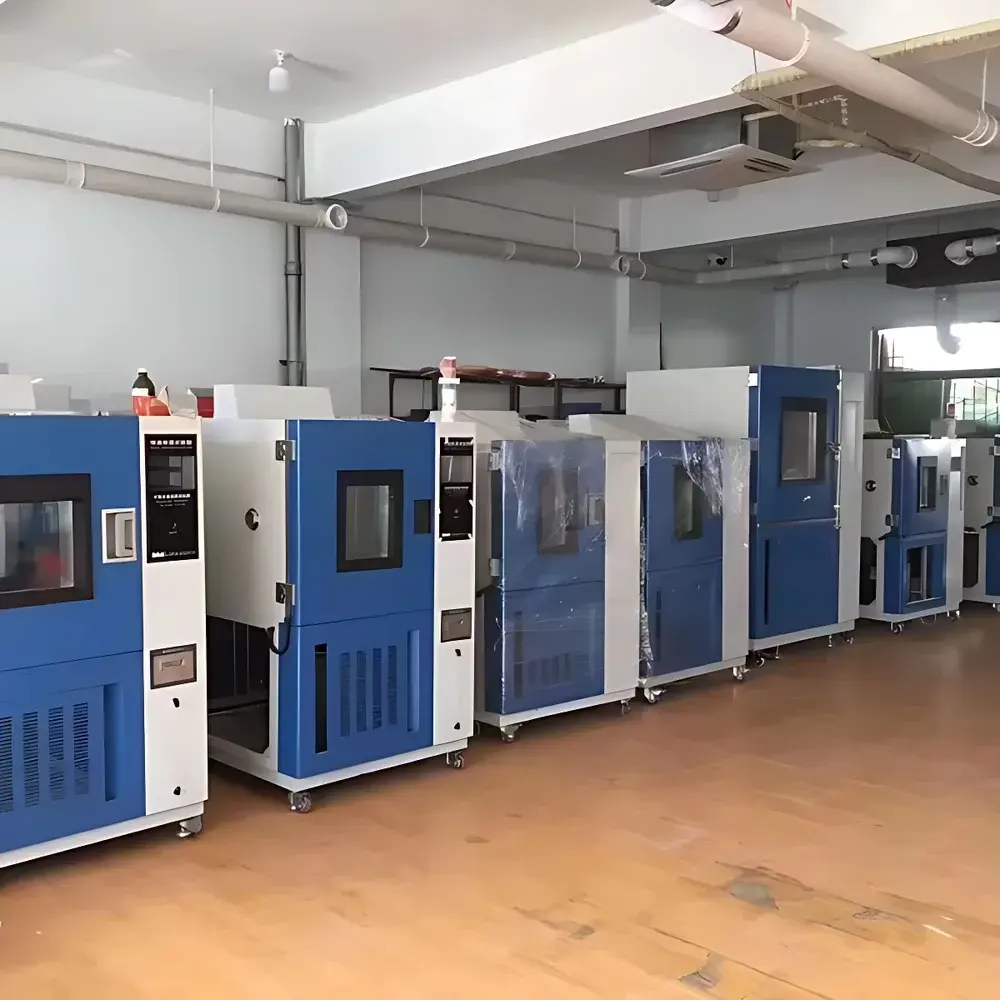
Drick DRK643 Salt Spray Test Chamber
| Brand | Drick |
|---|---|
| Origin | Shandong, China |
| Manufacturer Type | Manufacturer |
| Model | DRK643 |
| Spray Method | Air-atomized nozzle system (ASTM B117-compliant) |
| Fog Collection Rate | 1.0–2.0 mL/80 cm²/h (adjustable & calibrated per ISO 9227) |
| Temperature Range | 35 ± 2 °C (standard test), optionally 50 ± 2 °C (for accelerated testing) |
| Humidity Control | Saturated air chamber with PID-controlled heating & humidification (RH ≥ 95% at test temperature) |
| Chamber Capacity | 108 L (Standard A) / 270 L (Large B) |
| Construction Material | Imported PVC board (≥3 mm thickness, UV-stabilized, corrosion-resistant) |
| Structural Reinforcement | Five-sided thermal insulation + circumferential structural bracing |
| Compliance | ASTM B117, ISO 9227, JIS Z2371, GB/T 2423.17 |
Overview
The Drick DRK643 Salt Spray Test Chamber is an engineered environmental test system designed for standardized accelerated corrosion evaluation of metallic substrates and protective coatings. It operates on the principle of continuous, controlled salt fog generation via compressed-air atomization—adhering strictly to the thermodynamic and fluid-dynamic requirements of ASTM B117 and ISO 9227. The chamber produces a stable, uniformly distributed sodium chloride aerosol (5.0 ± 1.0 % w/w NaCl solution) within a precisely regulated thermal-hygrometric environment. Its core function is to simulate aggressive marine or industrial atmospheric conditions, enabling quantitative assessment of coating integrity, galvanic protection performance, and base metal passivation stability over defined exposure durations (e.g., 24 h, 48 h, 96 h, 500 h, or 1000 h). This device is not a qualitative “rust box” but a metrologically traceable platform for comparative corrosion resistance validation in QC labs, R&D centers, and third-party certification facilities.
Key Features
- Corrosion-resistant construction using high-purity, UV-stabilized imported PVC board (≥3 mm thickness), ensuring long-term chemical inertness against acidic chloride mists and eliminating metal contamination risks.
- Five-sided independent heating system with PID-controlled temperature regulation (±0.5 °C accuracy), guaranteeing spatial uniformity of ±1.0 °C across the entire test zone—critical for reproducible corrosion kinetics.
- Air-saturation chamber integrated with Henry’s Law-based humidification: compressed air is pre-heated and saturated to ≥95% RH prior to entering the atomizing nozzle, eliminating dry-spot formation and ensuring consistent droplet size distribution (median diameter ~1–3 µm).
- Dual-chamber configuration options: Standard A model (108 L internal volume, 600 × 450 × 400 mm test space) and Large B model (270 L, 900 × 600 × 500 mm)—both support full-size automotive trim panels, battery terminal assemblies, and aerospace fastener batches.
- Real-time fault diagnostics via LED status indicators; automatic cut-off on heater overtemperature, low solution level, or compressor failure—ensuring operator safety and data continuity.
Sample Compatibility & Compliance
The DRK643 accommodates flat, curved, or three-dimensional specimens up to 500 mm in height and 600 mm in width, including electroplated steel parts, anodized aluminum housings, powder-coated enclosures, zinc-nickel coated fasteners, and lithium-ion battery cell terminals. All test procedures comply with internationally recognized standards: ASTM B117 (Salt Spray Testing), ISO 9227 (Corrosion tests in artificial atmospheres), JIS Z2371 (Salt water spray testing), and GB/T 2423.17 (Chinese national standard for salt mist testing). For regulated industries—including automotive Tier-1 suppliers and medical device OEMs—the system supports GLP-aligned documentation protocols when paired with external data loggers compliant with FDA 21 CFR Part 11 audit trail requirements.
Software & Data Management
While the DRK643 operates as a standalone hardware platform with analog/digital front-panel controls, it is fully compatible with external PC-based monitoring systems via RS-232 or optional Ethernet interface. Users may integrate temperature, humidity, and runtime data into LIMS or MES platforms using Modbus RTU or ASCII protocol. Calibration certificates for temperature sensors and fog collection funnels are provided with each unit, traceable to NIM (National Institute of Metrology, China) standards. Routine verification follows ISO/IEC 17025 guidelines, including daily fog deposition rate checks (per ISO 9227 Annex A) and weekly chamber temperature uniformity mapping.
Applications
- Validation of cathodic protection efficiency in Zn/Fe, Sn/Fe, and Ni/Cu multilayer plating systems.
- Comparative lifetime assessment of epoxy, polyurethane, and acrylic topcoats applied to cold-rolled steel substrates.
- Functional reliability screening of EV battery pack busbars, cell interconnects, and BMS housings under simulated coastal storage conditions.
- Qualification testing of aviation-grade cadmium-plated alloy steels per AMS 2700 and MIL-STD-810H Method 509.6.
- Process control in electroplating lines—correlating bath chemistry parameters (pH, metal ion concentration, brightener levels) with post-test blistering and creepage metrics.
FAQ
What standards does the DRK643 explicitly support?
ASTM B117, ISO 9227, JIS Z2371, and GB/T 2423.17—all verified during factory acceptance testing.
Can the chamber operate continuously for 1000-hour tests without intervention?
Yes, with a 20-liter reservoir and automated low-level cutoff, plus optional external solution recirculation kits for extended runs.
Is the PVC chamber material certified for long-term NaCl exposure?
Yes—material datasheets confirm ≥10-year service life under continuous 5% NaCl fog at 35 °C, per DIN EN ISO 11357-3 TGA analysis.
How is fog deposition rate calibrated and maintained?
Using four ASTM-approved collection funnels placed at cardinal positions; average collection must fall within 1.0–2.0 mL/80 cm²/h, verified before each test campaign.
Does the system include a dehumidification or drying cycle?
No—DRK643 is optimized for pure salt fog exposure; post-test drying requires external climate-controlled storage or dedicated desiccation chambers.



